
Reviewed · TOURS
2-Day Bus Tour to Shirakawago & Hida No Sato Winter Illumination
The best part of this two-day winter tour from Osaka comes after dark, when Hida no Sato’s thatched farmhouses glow under snow and colored lights. You also get time in Shirakawago, Takayama’s old town, and a hot spring hotel, all without arranging several long transfers yourself. Guides such as Julien and Tamy have been praised for friendly, attentive service, while driver-guide teamwork has helped keep the trip running smoothly.
I like the good mix of scenery and hands-on food. Making Omi beef sushi at Sekigahara breaks up the bus ride, and the next day gives you both historic buildings and free time for lunch in Sanmachi Suji. I also like the comfortable transport plan, with bottled water each day and a hotel only five minutes from JR Takayama Station.
The main caution is the pace. Day one is long, and winter roads can affect timing. The tour price is $318.68 per person, but you still pay for dinner on the first night and lunch on the second, so budget for those separately.
In This Review
- Key points to know before booking
- Why winter makes this Hida trip special
- Leaving Osaka at 8:30 in the morning
- Making Omi beef sushi at Sekigahara
- Shirakawago under snow
- Hida no Sato after sunset
- A hot spring and hotel near Takayama Station
- Morning at Miyagawa Market
- Takayama Jinya and the Edo-period government office
- Sanmachi Suji and lunch on your own
- Hida Bussankan for gifts and local products
- What the $318.68 price really covers
- Guides, drivers, and the group experience
- Practical details that affect your decision
- Is this two-day winter tour right for you?
- FAQ
- Where does the tour start and finish?
- How long is the tour?
- Is Hida no Sato light-up admission included?
- Are meals included?
- How many people can join the tour?
- What happens if bad weather cancels the tour?
Key points to know before booking
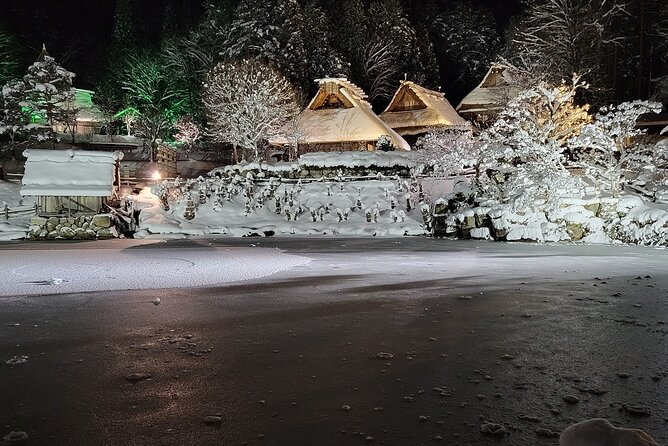
- Hida no Sato after dark: The evening light-up gives you a winter-only view of traditional thatched houses, with admission included.
- Two major Hida towns in one trip: You see Shirakawago, Takayama’s old town, Takayama Jinya, and the Miyagawa Morning Market.
- A useful food stop: At Sekigahara Hanaibuki, you take part in an Omi beef sushi-making experience during a two-hour lunch stop.
- Hot spring finish to day one: The hotel has a rooftop open-air bath with views toward the Alps.
- A small-group feel is possible: The maximum is 40 people, though some departures may use a 16-seat vehicle with only eight passengers.
- Dinner and one lunch are extra: Breakfast and one lunch are included, but dinner on day one and lunch on day two are not.
Why winter makes this Hida trip special
Hida is at its most striking in winter. Snow changes the look of the old farmhouses, narrow lanes, and mountain towns, giving the region a quiet, silver-toned character that you will not see during warmer months.
The timing also matters. Hida no Sato’s light-up event is a seasonal attraction, and the tour gives you access during a period when ordinary bus tours do not operate there for the illumination. That makes the first evening more than a standard village visit. You walk through traditional buildings after sunset, with light and shadow picking out the steep thatched roofs.
This is not a slow, independent countryside holiday. You follow a set schedule and spend a fair amount of time on the road. In return, you can reach places that are awkward to combine from Osaka by public transport, especially in winter.
A few more Osaka tours and experiences worth a look
- Play with Snow Crab Buffet Lunch and Strawberry Picking Bus Tour
★ 5.0 · 88 reviews
Leaving Osaka at 8:30 in the morning
The meeting point is in front of the Mainichi Newspaper Building at 3-chome-4-5 Umeda, in Osaka’s Kita Ward. Departure is scheduled for 8:30 am, and you should arrive 15 minutes early.
That early start is necessary. The first transfer to Gifu Prefecture takes about two and a half hours by tour bus, before the main sightseeing begins. You will want breakfast before departure or something easy to carry, since the first planned meal comes at Sekigahara.
The air-conditioned bus and bottled water each day make the transfer easier, but this remains a road trip. If you dislike long bus rides, the itinerary may feel demanding. If you prefer watching the countryside pass by while someone else handles winter driving, it is a sensible trade.
The group limit is 40 people. Actual vehicle size can vary, and one departure used a spacious 16-seat vehicle for just eight people. You should not assume every date will feel that open, but the smaller departures show that the experience can sometimes be more personal than a full coach outing.
Making Omi beef sushi at Sekigahara
The first substantial stop is Sekigahara-cho, where you spend about two hours at Sekigahara Hanaibuki. The planned meal includes an Omi beef sushi-making activity rather than simply placing an order and moving on.
That hands-on stop gives the day a useful change of rhythm. You have a chance to sit down, eat, and take part in a local food experience before returning to the bus. It also adds something you cannot get from a viewpoint or a quick photo stop: you handle part of the preparation and learn how the sushi is made.
The two-hour allocation suggests that this is more than a rushed snack. Still, it is worth keeping your expectations in check. The attraction here is the combination of lunch and participation, not a long cooking class or a full food tour.
Dietary requirements, including vegetarian needs, can be communicated when you book. You should do that early rather than waiting until the morning of departure, since the meal is part of a planned group schedule.
Shirakawago under snow
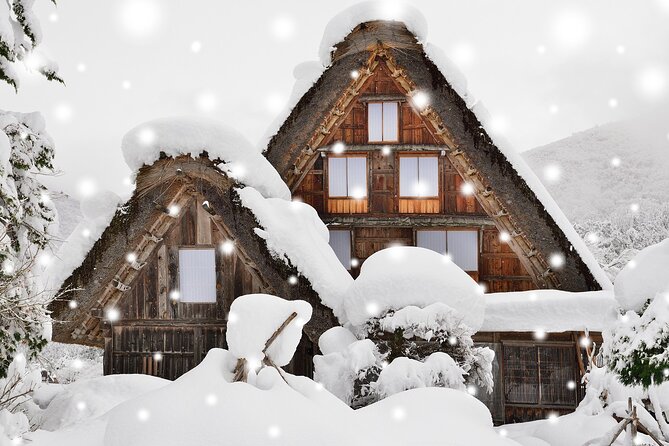
Shirakawago is the visual centerpiece of the first afternoon. Its Gassho Zukuri village is a UNESCO World Heritage Site, known for steep thatched roofs shaped like hands pressed together in prayer.
Snow makes those roofs especially memorable. The heavy pitch of the construction is not just decorative. It is the feature that gives the houses their distinct profile and helps them cope with heavy winter snowfall. From a visitor’s point of view, the result is a village that feels unlike the usual Japanese city sights.
You have about 90 minutes here. That is enough for a focused walk through the village, photographs, and a first look at the traditional houses. It is not enough for a leisurely exploration of every lane or a long museum visit, so use the time well.
Wear shoes with good grip and bring clothing that can handle cold conditions. The tour information confirms a winter setting, but it does not promise specific snow depth or weather on your date. Poor conditions can also lead to a cancellation, with a different date or full refund offered in that case.
A completely different way to spend a day in Osaka:
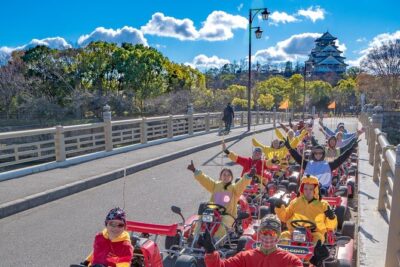
- Osaka Go Karting Tour with Funny Costume
★ 5.0 · 2,658 reviews - Osaka Castle: Museum and Tower Entry Ticket
★ 4.5 · 2,380 reviews - Osaka: Shinsekai Food Tour with 13-15 Dishes at 5 Eateries
★ 4.8 · 2,204 reviews - Osaka Food Tour: 13 Dishes at 5 Local Eateries
★ 5.0 · 2,149 reviews
Hida no Sato after sunset
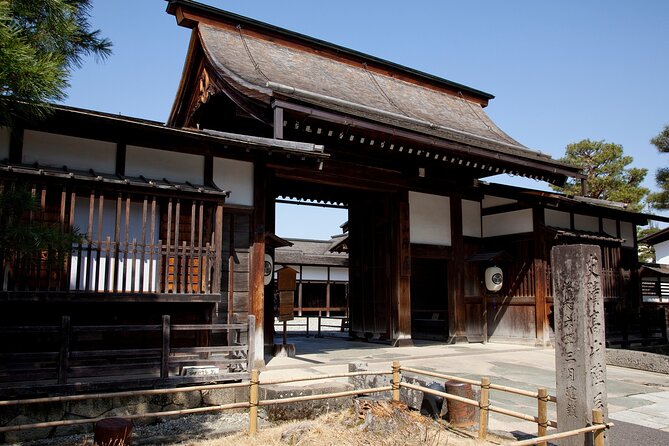
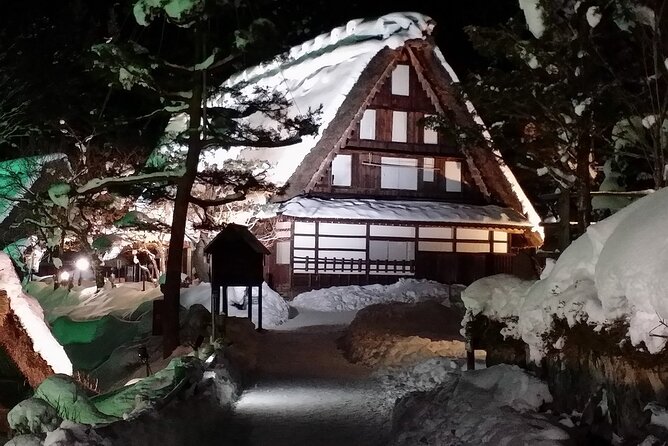
The evening stop at Hida no Sato lasts about 45 minutes. Hida no Sato is an open-air folk village with traditional buildings, and during the light-up event the houses are illuminated against the winter darkness.
This short visit is carefully placed. Rather than seeing another historic village in daylight, you get a different mood after Shirakawago. The lit roofs and dark surroundings make the architecture easier to appreciate as a group of shapes and textures, not just as old houses.
Forty-five minutes goes quickly. You will not have time to linger everywhere, so stay aware of the guide’s meeting instructions and keep your phone or camera ready before entering. The admission fee for the light-up festival is included, which matters because this is the special seasonal feature that helps justify the tour’s schedule.
A hot spring and hotel near Takayama Station
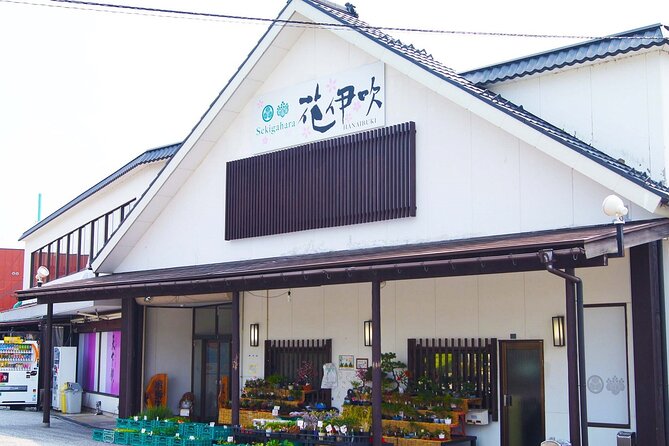
The bus reaches the hotel at about 7:15 pm. The hotel is a five-minute walk from JR Takayama Station, a practical location for anyone who wants easy access to the town on a future independent visit.
The property offers a rooftop open-air hot spring with views toward the Alps. After a full day on the road and outside in the cold, that bath is one of the tour’s strongest comforts. You get the traditional Japanese hot spring experience without needing to find a public bath on your own.
The first evening also includes the chance to have kaiseki cuisine, but the cost of dinner is not included in the tour. That distinction is important. Breakfast and the first day’s lunch are covered, while dinner on day one and day two are listed as extra. Set aside money for the evening meal rather than treating it as part of the advertised price.
Accommodation is included, and the available information describes the hotel as comfortable and relaxing. The exact hotel name is not provided, so you should not book this expecting a particular property or room category.
Morning at Miyagawa Market
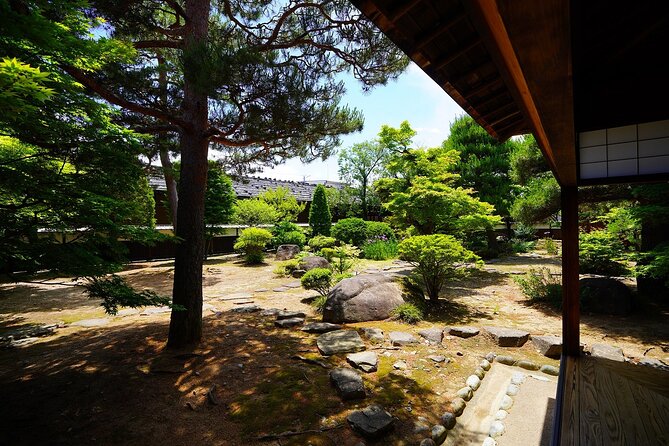
Day two begins at 9:00 am with a walk to the Hida-Takayama Miyagawa Morning Market. You have about 75 minutes to browse stalls, look for souvenirs, and interact with local sellers.
Morning markets are at their best when you give yourself time to look rather than rush from stall to stall. Here, the schedule is long enough for a proper wander, though not for an extended breakfast and shopping session. You may find local food products, small gifts, and regional goods, but the exact selection can change by season.
The market is also a good counterpoint to the previous night’s organized dinner option. Instead of sitting down to a set meal, you can see what local vendors are offering and decide how to spend your morning. Any purchases are your responsibility.
Takayama Jinya and the Edo-period government office
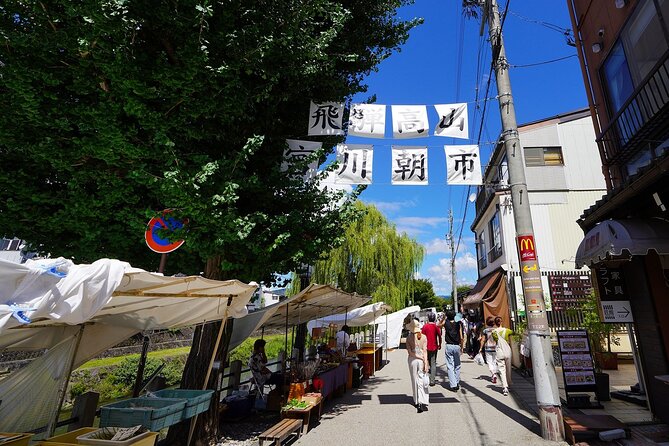
Next comes Takayama Jinya, with about 30 minutes inside. This is the only surviving main building in Japan from a provincial governor and magistrate’s office of its type.
The site gives you a look at how government worked during the Edo period, in a building that still conveys the formal layout and atmosphere of that era. It is a different kind of historic stop from the farmhouses at Shirakawago. There, the focus is rural life and architecture. Here, the focus is administration and authority.
Thirty minutes is brief but workable because the visit has a clear purpose. You are not expected to spend half a day studying every room. Admission is included, so there is no extra entrance fee to handle during the morning.
If historical buildings are important to you, pay attention to the guide’s explanations. A short guided visit can give the building more meaning than a quick walk through it alone.
Sanmachi Suji and lunch on your own
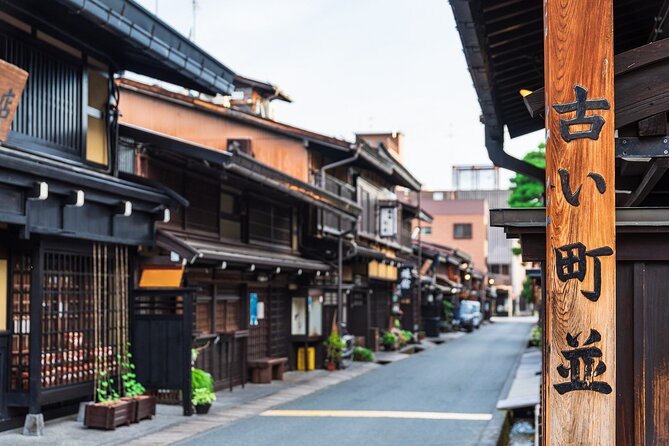
The longest stop on day two is two hours in Sanmachi Suji, the preserved old town of Hida Takayama. Traditional streets, wooden buildings, shops, and food stops give you room to explore at your own speed.
This is where the tour becomes less tightly directed. After the morning market and Takayama Jinya, you can choose how to use your time. You might browse souvenirs, look for local snacks, or simply walk the old streets and take in the details of the town.
Lunch is not included. That is both a cost and an advantage. You pay separately, but you also get more choice than you would with a fixed group meal. Two hours gives you enough time to eat and explore, provided you do not wander too far from the agreed meeting place.
I would keep the guide’s return instructions clear in your mind. A guided bus trip has little flexibility once the group departs, and the afternoon still includes one more stop.
Hida Bussankan for gifts and local products
The final scheduled visit is Hida Bussankan, where you spend about 50 minutes. It offers a broad selection of products connected with Hida Takayama, making it a convenient final shopping stop.
This kind of stop is useful near the end of a short tour. You have already seen the region, and now you can choose a keepsake or gift without carrying it around all day. The visit also helps if you did not find what you wanted at the morning market or in Sanmachi Suji.
The tradeoff is that a planned shopping stop takes time away from independent wandering. If you prefer to spend every available minute in the old town, you may find the 50 minutes here less appealing. If you want an easy place to look for regional goods before returning to Osaka, it is practical.
What the $318.68 price really covers
At $318.68 per person, this is not a cheap overnight outing. The value depends on how much you would otherwise spend arranging transport, accommodation, admissions, and a winter visit to Hida no Sato.
The price includes:
- One night of accommodation
- Breakfast
- The first day’s lunch
- The Omi beef sushi-making experience
- Hida no Sato light-up admission
- Takayama Jinya admission
- An air-conditioned vehicle
- Bottled water each day
- A licensed tour guide
You still pay for dinner on day one and lunch on day two. Dinner on the second day is also listed as not included, although the tour ends back at the Osaka meeting point after the sightseeing schedule.
For me, the strongest value comes from the transport and seasonal access. Getting from Osaka to Shirakawago, Hida no Sato, and Takayama independently can require careful planning and multiple connections. You also avoid finding a hotel after a long winter day.
The weaker value is for anyone who wants a relaxed, flexible trip. You pay for convenience, a fixed route, and a guide. You do not get much control over how long you stay at each sight.
Guides, drivers, and the group experience
The licensed guide is central to this tour because the schedule includes several transfers and a mix of historic, cultural, and food-related stops. Guides named Julien and Tamy have been associated with particularly friendly and attentive service, including clear explanations and practical help when problems arose.
One especially useful detail is the level of hands-on assistance available. A guide helped recover belongings left behind, which is exactly the sort of small service that can rescue an otherwise stressful day. The driver is also important on a winter route, and the service has been described as punctual and well organized.
You should still keep your own valuables secure and note meeting times. Friendly staff cannot change the basic limits of a group itinerary, especially when the bus must cover long distances.
The tour is open to solo visitors, couples, families, and friends. Because most people can participate and the vehicle is air-conditioned, it has broad appeal. The long first day may be tiring for very young children or anyone who finds extended bus journeys difficult.
Practical details that affect your decision
Confirmation is sent within 48 hours of booking, subject to availability. The experience begins and ends at the Mainichi Newspaper Building in Umeda, so plan your Osaka accommodation and evening plans around that same meeting point.
The activity requires good weather and a minimum number of participants. If the operator cancels for poor weather or insufficient numbers, you receive the choice of a different date or experience, or a full refund.
The cancellation terms become stricter close to departure. Cancel at least six full days before the start time for a full refund. Cancellation two to six full days ahead allows a 50 percent refund, while cancellation less than two full days ahead is not refunded. All cutoffs use local time.
A mobile ticket is provided, which keeps the booking simple. Bring winter clothing, footwear suited to potentially snowy paths, and enough cash or payment capacity for the two meals that are not included.
Is this two-day winter tour right for you?
Book it if you want to see several Hida highlights from Osaka without organizing a complicated overnight route. The combination of snowy Shirakawago, Hida no Sato’s evening lights, Takayama’s old town, a hands-on beef sushi stop, and a rooftop hot spring gives you a lot in two days.
I would especially recommend it to first-time visitors who want a guided introduction to rural Gifu, solo visitors who prefer built-in transport and company, and couples or families who value convenience. The friendly guide service associated with Julien and Tamy is another reason this works well for people who want help throughout the trip.
Think twice if you need long stays at each attraction, dislike fixed departure times, or want dinner and lunch fully covered. The tour is busy, the road journey is long, and the extra meal costs add to the headline price.
For a winter snapshot of Hida, though, this is a well-shaped route. The light-up at Hida no Sato is the rare seasonal feature, while Takayama and Shirakawago give the trip enough substance beyond a single evening event.
FAQ
Where does the tour start and finish?
The tour starts and ends in front of the Mainichi Newspaper Building at 3-chome-4-5 Umeda, Kita Ward, Osaka. Departure is at 8:30 am, and you should arrive 15 minutes early.
How long is the tour?
The experience lasts approximately two days. Day one begins in Osaka at 8:30 am, and the first day ends with hotel arrival around 7:15 pm. Day two begins at 9:00 am and ends back at the Osaka meeting point.
Is Hida no Sato light-up admission included?
Yes. Admission to the Hida no Sato Light-Up Festival is included in the tour price.
Are meals included?
Breakfast and lunch on day one are included. Lunch on day two is not included, and dinner on day one and day two is also not included. Dietary requirements such as vegetarian meals can be noted when booking.
How many people can join the tour?
The maximum group size is 40 people. Vehicle size can vary, and some departures may use a smaller vehicle.
What happens if bad weather cancels the tour?
If poor weather causes cancellation, you are offered a different date or a full refund. The same choice applies if the minimum number of participants is not reached.
Just added around Osaka
- Nara Day Trip from Osaka with a Licensed Guide★ 5.0 · 3 reviews
- Osaka Early Morning Osaka Castle Tour Avoid Crowds★ 5.0 · 3 reviews
- Guided Tour of Some Attractions in Osaka by Private Car★ 5.0 · 3 reviews
- Private Transfer Between Kyoto and Kansai Airport KIX★ 5.0 · 3 reviews
- Shared Arrival Transfer: Osaka Itami Airport to Osaka City★ 5.0 · 3 reviews
- Osaka: Sushi Making Class and Dotonbori Food Tour★ 4.7 · 3 reviews
- Osaka Night Photography Workshop★ 5.0 · 3 reviews
- Kyoto Full day Tour Kinkakuji, Kiyomizu-dera and Fushimi Inari★ 4.5 · 3 reviews
Tours, compared.
Shinsekai Food Tour with 13-15 Dishes at 5 Eateries
Read our review →
Osaka Food Tour: 13 Dishes at 5 Local Eateries
Read our review →
Hungry Osaka Street Food Tour:15 Tastings & 3 Drinks with a Local
Read our review →
Deep Backstreet Osaka Tours (Option to add Dinner)
Read our review →
Osaka Local Foodie Walking Tour in Dotonbori and Shinsekai
Read our review →