
Reviewed · OSAKA COOKING CLASSES
【For adult】Traditional Mochi Pounding Experience with Tasting
Fresh mochi begins as steamed glutinous rice, then turns soft and stretchy under a heavy wooden mallet. That hands-on change is the heart of this one-hour Osaka activity. You get a short lesson, take turns pounding the rice, shape portions with your hands, and eat the results while they are still warm.
I like the way the experience connects food with custom instead of treating mochi as just another Japanese snack. I also like the small group size, with no more than 10 people, and the friendly staff members named in the sessions, including Aiko, Grace, Seina, Runa, Mao, and Riki. The main thing to consider is that the room may feel warm during hot weather, and mochi should be eaten in small bites, especially by older adults.
In This Review
- Key points to know before booking
- Turning Steamed Rice Into Mochi in Dotonbori
- The Four Main Steps, From Rice to Snack
- Five Toppings, Tea, and a Fresh Taste
- Why the Small Group Size Matters
- Is $32.37 a Fair Price?
- What to Wear and Bring
- Who Will Enjoy This Most?
- Booking and Cancellation Details
- Should You Book the Mochi Pounding Experience?
- FAQ
- Where does the mochi pounding experience take place?
- How long does the experience last?
- What happens during the experience?
- How many people can join?
- Is the experience available in English?
- What toppings are included?
- Can children participate?
- Can vegans and vegetarians join?
- What is the cancellation policy?
Key points to know before booking
- You pound rice yourself: This is not a demonstration only. Everyone gets a turn with the traditional mortar and pestle.
- The tasting is generous: Fresh mochi comes with five listed seasonings and ingredients, while some sessions offer more than eight flavors.
- The lesson is short but useful: About 10 minutes covers the history and cultural role of mochi pounding before the practical work begins.
- The setting is central: Oh Mochi is at 2-chōme-4-11 Dōtonbori, close to public transportation and easy to pair with an afternoon in central Osaka.
- English support is available: Chinese help is offered through slides or interpretation with ChatGPT.
- The price buys participation: At $32.37 per person, you are paying for instruction, the activity, tea, and a substantial fresh-food tasting rather than only a sample.
Turning Steamed Rice Into Mochi in Dotonbori
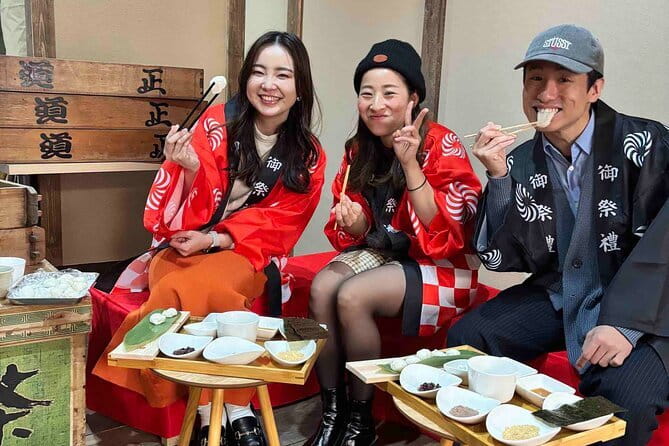
The experience begins at Mochi Pounding Experience Osaka, also called Oh Mochi, in Dotonbori. This location matters. You are not heading far outside Osaka for a rural workshop or a full-day food tour. You can fit this compact activity into a day spent around Dotonbori, shopping streets, restaurants, and other central sights.
The session opens with about 10 minutes on the history and cultural meaning of mochi pounding. That short introduction gives the physical work some context. Mochi is linked with Japanese celebrations and customs, and pounding rice into a unified, elastic dough is a long-standing communal activity.
I appreciate the brief format. You get enough background to understand what you are doing, but the talk does not take over the hour. If you have already spent several days in Osaka visiting temples or trying Japanese food, this offers a different kind of cultural contact. You are not only looking at an object or listening to a guide. You are helping make something you will eat moments later.
The guides use English for the experience. Names associated with the sessions include Aiko, Grace, Seina, Runa, Mao, and Riki. The staff help with the steps, keep the activity moving, and make sure each person has a chance to participate. Chinese support is available through slides or interpretation with ChatGPT, which may be useful if you prefer more help than basic English instruction.
More Japanese home cooking classes:
- Osaka: Ramen and Gyoza Cooking Class in Dotonbori
★ 5.0 · 378 reviews - Osaka: Sumo Stage Show with Bento or Snack + Fight & Photo
★ 4.3 · 364 reviews - Osaka: Traditional Mochi Pounding Experience with Tasting
★ 4.9 · 306 reviews
The Four Main Steps, From Rice to Snack
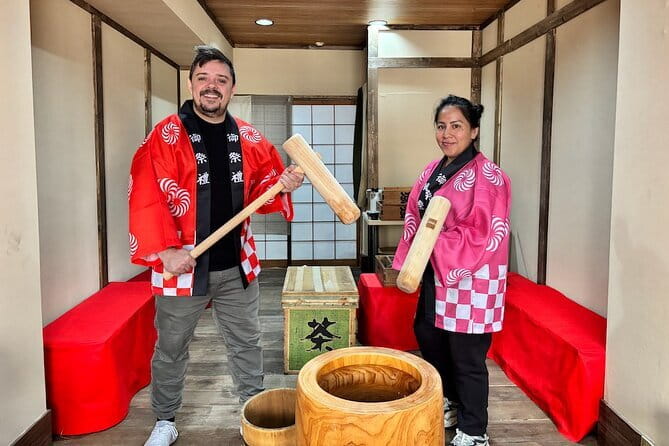
The process follows a clear sequence. First, you join the steaming stage for glutinous rice. The experience information does not promise that you will handle every part of the steaming equipment, so think of this as an introduction to the process rather than a full cooking course.
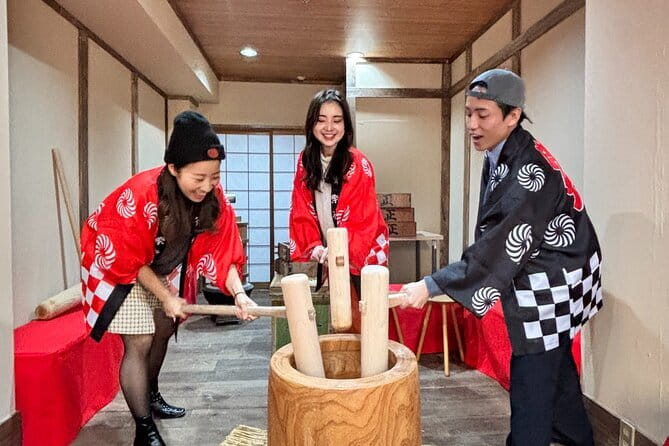
Next comes the part most people are waiting for: pounding the steamed rice with traditional tools. The rice does not become mochi with one dramatic hit. It takes repeated pounding and working of the rice until it forms the smooth, sticky texture you recognize.
You take turns with the mallet while another person works with the rice. Staff guide the timing and technique. The activity is physical, but it is presented as a group task rather than a strength contest. Children can take part too, and smaller mallets are available for young participants. That detail makes this a good family choice, since children are not left watching adults do all the work.
The team also encourages photos and videos. Staff members help capture the action, which is useful because the pounding itself is the most memorable visual part of the session. You may want to keep phones safely out of the working area until someone is ready to take a picture.
Once the rice has become mochi, the staff portion it out. You shape pieces in your palms before tasting them. This adds another small bit of participation. You are not simply handed a finished sweet in a wrapper. You see the change from rice to dough, help with the transformation, and then handle the food yourself.
Five Toppings, Tea, and a Fresh Taste
The tasting is served with tea and five Japanese seasonings or ingredients. Kinako, a roasted soybean flour, and sweet red bean paste are specifically listed. Other flavors may appear as well, with some sessions offering more than eight options.
This tasting helps explain why fresh mochi feels different from packaged versions. Freshly pounded mochi is soft, warm, and strongly shaped by its toppings. Kinako brings a dry, nutty flavor, while sweet red bean paste makes the result more dessert-like. The different condiments let you compare simple variations without needing to order several separate sweets around Osaka.
The portion may be more filling than you expect. Several descriptions of the experience point out that you get plenty of food, so do not schedule this immediately before a large meal if you want to try every topping. It works well as a light meal or substantial snack, especially during an afternoon of sightseeing.
Some people prefer sweet mochi desserts, while others enjoy the plainer taste of freshly made rice with savory or nutty toppings. This experience gives you room to decide for yourself. The tasting is not built around one narrow flavor profile, and vegetarians and vegans can be accommodated.
Mochi requires care. Its sticky texture can be difficult to swallow, particularly for elderly people. Eat small pieces, chew well, and do not rush through the tasting. This is a simple safety point, but it matters more here than it does with many ordinary food tours.
Why the Small Group Size Matters
The maximum group size is 10 people. That is small enough for each participant to get a turn without waiting through a long line of strangers. The staff can also adjust their help for children, first-time visitors, and people who want more guidance with shaping the mochi.
A small group makes the lesson feel more personal. You can watch the rice closely, ask questions, and see the technique from near the mortar. It also makes the activity less awkward for people who are not used to group participation. The staff take an active role in welcoming late arrivals and helping people get started, although you should still aim to arrive on time.
The mood is lively rather than formal. Pounding rice takes some effort, and the group usually works together in short turns. The repeated calls and shared rhythm add to the fun, but the experience is not described as a polished stage performance. You are there to participate, make a little noise, and eat the result.
That informality is part of the value. If you want a quiet, highly structured tea ceremony, this is not the right substitute. If you are tired of passive sightseeing and want a Japanese custom that gets you involved, the format makes good sense.
A completely different way to spend a day in Osaka:
- Osaka Go Karting Tour with Funny Costume
★ 5.0 · 2,658 reviews - Osaka Castle: Museum and Tower Entry Ticket
★ 4.5 · 2,380 reviews - Osaka: Shinsekai Food Tour with 13-15 Dishes at 5 Eateries
★ 4.8 · 2,204 reviews - Osaka Food Tour: 13 Dishes at 5 Local Eateries
★ 5.0 · 2,149 reviews
Is $32.37 a Fair Price?
The listed price is $32.37 per person. For about an hour, that may seem higher than buying mochi from a shop. But a shop purchase gives you a finished snack. Here you also receive an introduction to the tradition, instruction with traditional tools, a turn at pounding the rice, shaping time, tea, and a broad tasting.
I see the price as fair for an activity rather than a snack stop. The value is strongest if you enjoy food preparation, cultural context, and photos you could not get from a counter-service dessert shop. It is less compelling if you only want to taste mochi and have no interest in taking part.
The short duration helps with planning. You do not need to give up half a day, and morning or afternoon sessions let you place it around other Osaka plans. A morning booking can provide a hands-on start to the day, while an afternoon session fits neatly between sightseeing and dinner.
Keep the food element in mind when planning your budget and schedule. You may receive enough mochi to feel full, so the activity can replace a snack or small meal. That improves the practical value, especially in an expensive sightseeing district such as Dotonbori.
What to Wear and Bring
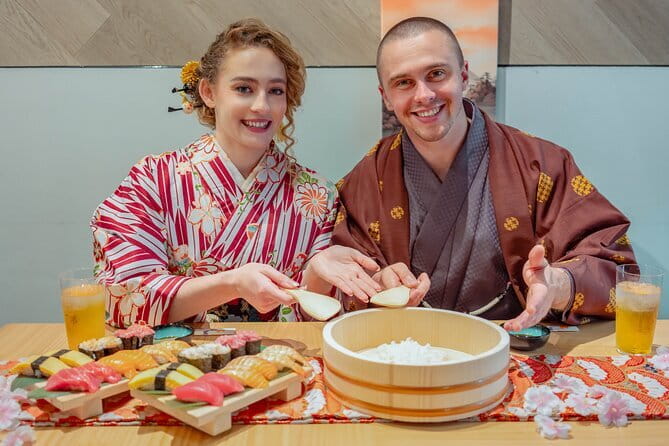
Wear light clothing if Osaka is hot. The room can feel warm during warm weather, and the pounding takes some effort. Comfortable clothing also makes it easier to move your arms and work around the mortar.
You do not need to bring special equipment. Traditional tools and the food are provided as part of the activity. A mobile ticket is accepted, which keeps the entry process simple.
Bring a phone or camera if you want action photos. The staff are willing to help with pictures and videos, but protect your device from food and keep it aside while you are handling the mallet or shaping the mochi.
The experience ends where it begins at Oh Mochi. Since there is no separate final stop, you can walk straight into the rest of Dotonbori after the tasting. Near public transportation, the location is also practical if you have an evening reservation elsewhere in Osaka.
Who Will Enjoy This Most?
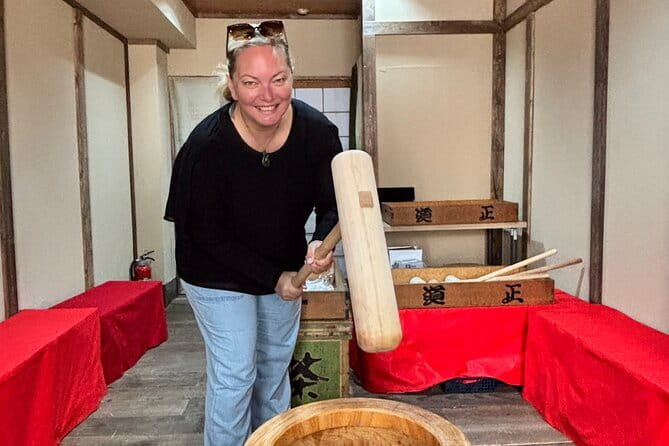
I would recommend this first to people who want a short, active cultural activity. It suits couples, friends, solo visitors, and families with children. You do not need prior cooking skill, and the staff lead you through the process.
It is especially good for families because children can use a smaller mallet and take part in the same task as adults. The activity also gives younger visitors a clear result at the end: they make food and eat it. That usually holds attention better than a long historical talk.
Mochi fans will appreciate the freshness and the chance to compare toppings. Vegetarians and vegans can join, with dietary preferences accommodated. If you are unsure about the ingredients in a particular topping, ask the staff before eating it.
This is also a good choice for anyone who has already done more familiar Japanese activities. Tea ceremonies and sake tastings are easier to find. Mochi pounding offers a more unusual way to meet a Japanese food tradition, with the added benefit of being quick.
The experience may be less suitable if you dislike sticky foods, cannot eat rice-based sweets, or prefer a quiet, seated activity. The pounding is hands-on and mildly physical. The tasting is substantial, and the texture of mochi is not for everyone.
Booking and Cancellation Details
The activity costs $32.37 per person and has been booked several times during the day, so I would reserve ahead if your Osaka schedule is tight. Confirmation arrives when you book, and the mobile ticket makes it easy to keep the entry details on your phone.
Free cancellation is available up to 24 hours before the local start time for a full refund. Changes or cancellations made within 24 hours are not accepted for a refund. The experience requires good weather, and if poor weather causes cancellation, you are offered another date or a full refund.
The provider is Theosaka. The listed rating is 5 from 68 reviews, with 99 percent recommending the activity. More important for your decision is what the format promises: a short lesson, real participation, plenty of tasting, and a central Osaka location.
Should You Book the Mochi Pounding Experience?
Book it if you want an easy-to-fit Osaka activity that gives you something to do with your hands, not just something to look at. The combination of rice steaming, pounding, shaping, toppings, and tea packs a lot into one hour.
The strongest reasons to go are the friendly instruction, the chance for every participant to take a turn, and the fresh mochi tasting. I also like the flexibility of morning or afternoon sessions and the small group limit.
Skip it if you only want a quick packaged dessert or if you have trouble with sticky foods. For everyone else, $32.37 is a reasonable price for a cultural lesson, a shared activity, and a filling tasting in the middle of Dotonbori.
FAQ
Where does the mochi pounding experience take place?
It takes place at Mochi Pounding Experience Osaka, also called Oh Mochi, at 2-chōme-4-11 Dōtonbori, Chuo Ward, Osaka, 542-0071, Japan.
How long does the experience last?
The activity lasts approximately one hour.
What happens during the experience?
You learn about the history and cultural meaning of mochi pounding, join the steaming process, pound the cooked glutinous rice with traditional tools, shape the mochi, and eat it with toppings and tea.
How many people can join?
The maximum group size is 10 travelers.
Is the experience available in English?
Yes. English is offered. Chinese support is provided through slides or interpretation with ChatGPT.
What toppings are included?
Kinako and sweet red bean paste are specifically listed, along with three other Japanese seasonings and ingredients. Some sessions may offer more than eight flavors.
Can children participate?
Yes. Families with children are welcome, and smaller mallets are available for children.
Can vegans and vegetarians join?
Yes. The experience accommodates vegetarian and vegan dietary preferences.
What is the cancellation policy?
You can cancel up to 24 hours before the local start time for a full refund. Cancellations or changes within 24 hours are not accepted for a refund. If poor weather causes the activity to be canceled, you are offered another date or a full refund.
Just added around Osaka
- Nara Day Trip from Osaka with a Licensed Guide★ 5.0 · 3 reviews
- Osaka Early Morning Osaka Castle Tour Avoid Crowds★ 5.0 · 3 reviews
- Guided Tour of Some Attractions in Osaka by Private Car★ 5.0 · 3 reviews
- Private Transfer Between Kyoto and Kansai Airport KIX★ 5.0 · 3 reviews
- Shared Arrival Transfer: Osaka Itami Airport to Osaka City★ 5.0 · 3 reviews
- Osaka: Sushi Making Class and Dotonbori Food Tour★ 4.7 · 3 reviews
- Osaka Night Photography Workshop★ 5.0 · 3 reviews
- Kyoto Full day Tour Kinkakuji, Kiyomizu-dera and Fushimi Inari★ 4.5 · 3 reviews
Osaka Cooking Classes, compared.


Sumo Stage Show with Bento or Snack + Fight & Photo
Read our review →
Traditional Mochi Pounding Experience with Tasting
Read our review →
Osaka Cooking Class: Okonomiyaki &Japanese cuisines experience
Read our review →


Osaka Sake Tasting & Takoyaki Cooking Experience
Read our review →
Cooking Ramen&Gyoza/KatsuCurry/Bento/Okonomiyaki+Store Tour@Osaka
Read our review →Browse the lists this tour appears in