
Reviewed · OSAKA COOKING CLASSES
【Family Friendly】Traditional Mochi Pounding Experience
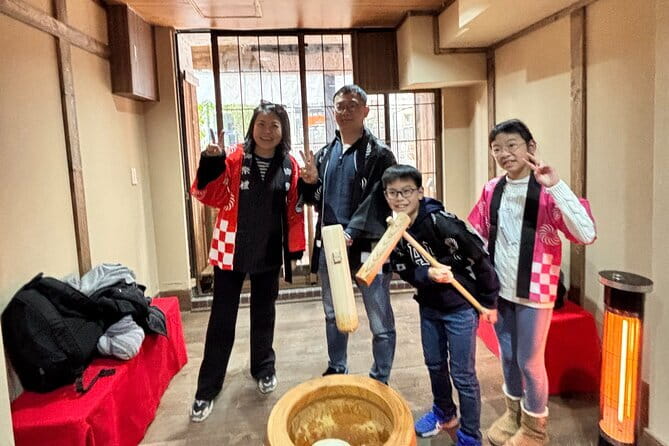
Fresh mochi is not made by stirring a bowl of dough. You help turn steamed glutinous rice into a soft, stretchy treat by working it with a heavy wooden pestle in a traditional mortar. The pounding is hands-on, rhythmic, and much more fun than simply watching someone else do it.
I like the family-friendly format, which lets children under 13 take part instead of sitting on the sidelines. I also like the useful setting in Dotonbori, where this short activity fits neatly before or after a walk through one of Osaka’s best-known food districts.
The main consideration is time. The class lasts about an hour, and some sessions finish in roughly 45 minutes, so this is a compact introduction rather than a full cooking course. You also need to eat mochi carefully, especially older people, since rice cakes can be a choking risk.
In This Review
- Key points at a glance
- Why pounding mochi feels different from a standard food class
- The 10-minute introduction puts the food in context
- Steaming the glutinous rice gives you the first hands-on step
- The main event: working the mortar and pestle
- Fresh mochi with several toppings
- Why Dotonbori makes the location useful
- The best fit for families, first-time visitors, and mochi fans
- The value of $32.29
- Practical points before you book
- Who should book this Osaka mochi class?
- FAQ
- Is this mochi pounding experience suitable for children under 13?
- How long does the experience last?
- Where does the activity start?
- Where does the activity finish?
- What will I do during the class?
- What toppings are available?
- Is the activity available in English or Chinese?
- Can I cancel for a full refund?
Key points at a glance
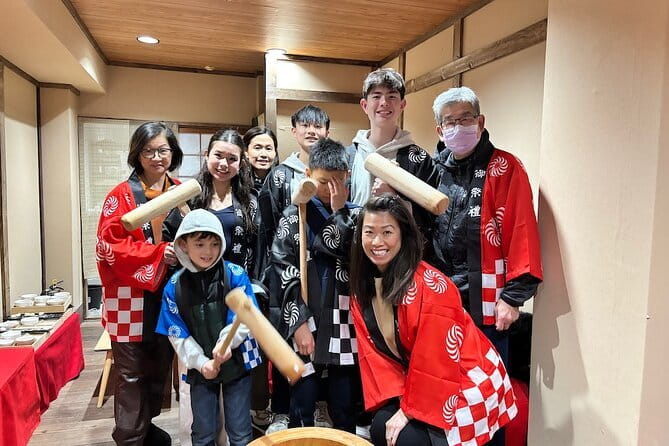
- Pound the rice yourself: Use a traditional mortar and pestle after the glutinous rice is steamed.
- A good family activity: Children under 13 can participate, and adults may join without children.
- Taste several styles: Fresh mochi is served plain and with toppings such as kinako, red bean paste, nori, and sweet soy sauce.
- Learn before you work: A roughly 10-minute talk explains the history and cultural meaning of mochitsuki.
- Small group setting: The maximum group size is 10 people, which helps keep instruction personal.
- Easy Dotonbori location: The activity starts and ends at Oh Mochi, 2-chōme-4-11 Dōtonbori.
Why pounding mochi feels different from a standard food class
Mochi pounding, or mochitsuki, is a shared Japanese tradition. The key action is simple: steamed glutinous rice is placed in a large mortar, then worked with a wooden pestle until the grains lose their separate shape and become a smooth, elastic mass.
That simple process gives you a better feel for mochi than buying a packaged sweet from a shop. You see the rice change in front of you, help with the pounding, and then eat the result while it is fresh.
The activity also has a social rhythm. One person pounds while another works the rice in the mortar, with the instructor guiding the pace and helping everyone stay safe. At some sessions, the group calls out yo shoi as it works. That small detail gives the class a cheerful, communal feel without turning it into a stage show.
You do not need prior cooking skill. The instructors provide patient guidance, making this suitable for first-time visitors, young children, and older family members who want to take part at a slower pace.
More Japanese home cooking classes:
- Osaka: Ramen and Gyoza Cooking Class in Dotonbori
★ 5.0 · 378 reviews - Osaka: Sumo Stage Show with Bento or Snack + Fight & Photo
★ 4.3 · 364 reviews - Osaka: Traditional Mochi Pounding Experience with Tasting
★ 4.9 · 306 reviews
The 10-minute introduction puts the food in context
The class begins with a talk of about 10 minutes on the history and cultural importance of mochi pounding. This is a useful opening because the activity is not only about producing a snack. Mochi has a long place in Japanese food culture and is associated with shared traditions and special occasions.
The short format works well. You get enough background to understand why the pounding matters, but you are not stuck listening to a long lecture before doing anything. Families with restless children should appreciate that balance.
The language support is in English and Chinese. Chinese information may be provided through slides or interpreted with ChatGPT, while English instruction is available from the staff. If someone in your group is not comfortable with English, it is sensible to allow a little extra patience during the explanation and demonstration.
Steaming the glutinous rice gives you the first hands-on step
You are involved in the process of steaming the glutinous rice before pounding begins. This matters because the texture of the final mochi depends on the rice being properly cooked and soft enough to work.
The experience is not designed as a detailed technical cooking lesson, so you should not expect to prepare every ingredient from scratch. Instead, the steaming stage helps you understand the sequence: cook the rice, pound it while hot, shape it, then eat it with chosen accompaniments.
That sequence is one reason this activity works well for children. They can see a familiar grain change form through heat and physical effort. The class has a clear beginning, middle, and finish, which keeps the hour moving.
The main event: working the mortar and pestle
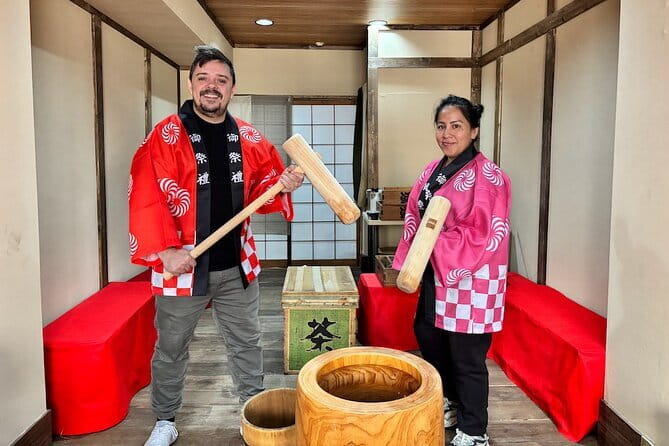
Once the rice is steamed, you use traditional tools to pound it into mochi. The equipment gives the activity its character. This is not a modern kitchen class where everyone stands at a counter with identical bowls and utensils.
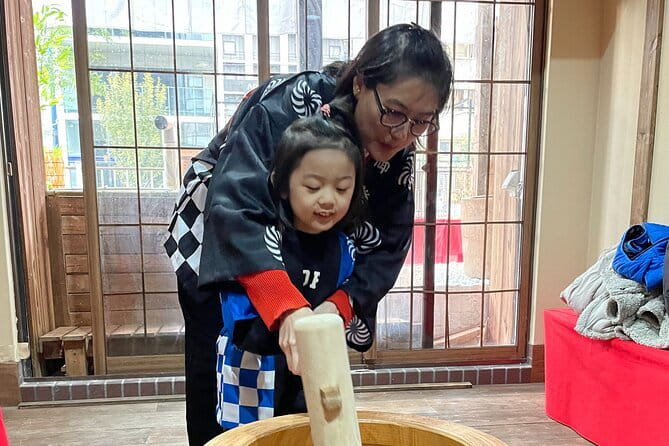
The wooden pestle can be heavy, so the instructors guide participants carefully. Children can join, but they should follow directions closely and may need an adult nearby. The point is not to hit as hard as possible. Rhythm and teamwork matter more than strength.
You may take turns with the pestle or help with the shaping process. The small maximum of 10 people is helpful here. A large crowd would make the hands-on part feel more like a demonstration, while a group of up to 10 gives each person a better chance to participate.
This is also the part that tends to make the activity memorable for families. Teenagers can enjoy the physical action without feeling they have been given a childish craft, while younger children can help with supervised steps and look forward to tasting the finished food.
A completely different way to spend a day in Osaka:
- Osaka Go Karting Tour with Funny Costume
★ 5.0 · 2,658 reviews - Osaka Castle: Museum and Tower Entry Ticket
★ 4.5 · 2,380 reviews - Osaka: Shinsekai Food Tour with 13-15 Dishes at 5 Eateries
★ 4.8 · 2,204 reviews - Osaka Food Tour: 13 Dishes at 5 Local Eateries
★ 5.0 · 2,149 reviews
Fresh mochi with several toppings
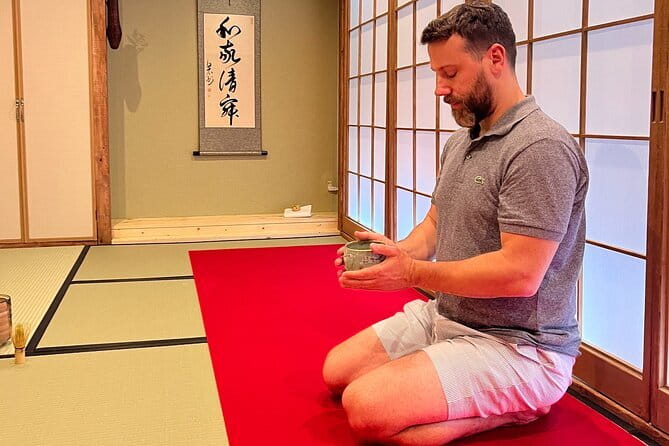
After the rice has been pounded, you get to eat the mochi you helped make. It can be served plain or paired with familiar Japanese flavors.
The listed accompaniments include:
- Kinako, a roasted soybean powder
- Sweet red bean paste
- Nori, or seaweed
- Sweet soy sauce
- Tea served alongside the mochi
The experience also refers to five beloved seasonings and ingredients, while one session included eight options. The exact selection may vary, but you should have more than one way to try the finished mochi.
This tasting is more useful than a single sample because mochi changes character with each topping. Kinako gives it a dry, nutty coating. Red bean paste adds sweetness and softness. Nori brings a savory note, while sweet soy sauce shifts the flavor in another direction.
If you already know mochi from home or from Japanese sweets shops, the fresh texture is the reason to book. Freshly pounded mochi is softer and more elastic than many packaged versions. If you are new to mochi, the range of toppings lets you find a style you actually enjoy instead of judging the food from one bite.
Tea helps balance the sweetness and gives the tasting a relaxed finish. You may also end up with more mochi than you can eat, so do not arrive expecting only a tiny ceremonial sample.
Why Dotonbori makes the location useful

The meeting point is Mochi Pounding Experience Osaka, also called Oh Mochi, at 2-chōme-4-11 Dotonbori in Chuo Ward. The activity begins and ends there, and the location is near public transportation.
That makes this easy to add to an Osaka day. You can schedule it around time in Dotonbori rather than losing half a day on transfers. The activity itself lasts about one hour, with some sessions taking around 45 minutes, so it fits well between meals, shopping, or an evening walk.
The location is also part of the value. You are not traveling far outside the city for a food demonstration. Afterward, you can continue exploring Dotonbori, where Osaka’s famous food culture provides a natural follow-up to the mochi class.
Do leave enough time to find the meeting point. The address is specific, but Dotonbori can be busy and visually crowded. A mobile ticket is provided, and keeping it easy to access on your phone should make check-in simpler.
The best fit for families, first-time visitors, and mochi fans

This is at its best for families who want one activity that works across several age groups. Children as young as five and six have taken part in the process, while older adults and teenagers can enjoy it too.
The activity also suits couples, solo adults, and friend groups. Adults-only participation is allowed, so you do not need children in your party to join. If you are curious about Japanese food traditions but do not want a long formal class, this gives you a direct and manageable introduction.
Mochi fans will get the most from the tasting. You can compare plain mochi with sweet, savory, and powder-coated versions, then decide which flavors suit you.
Vegetarians and vegans are also specifically accommodated. Still, you should explain your needs when booking or at the start of the session so the staff can guide you toward suitable toppings.
The value of $32.29
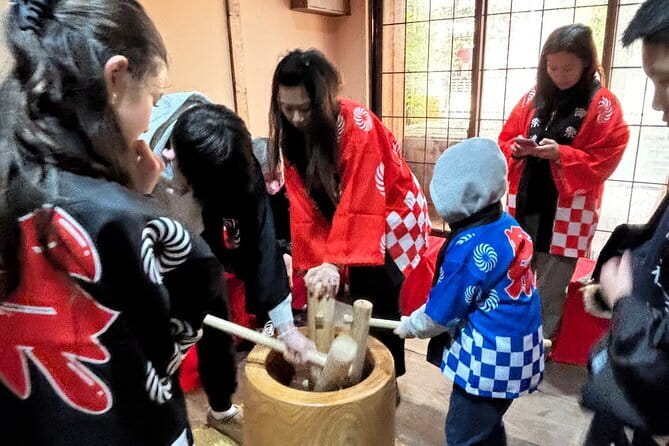
At $32.29 per person, this is not the cheapest snack stop in Osaka. You are paying for instruction, the use of traditional tools, the cultural explanation, the hands-on activity, the mochi tasting, and tea.
For a family, the total cost can add up quickly. The value improves if you treat it as an activity rather than a dessert purchase. You are getting a shared hour with a clear cultural focus, not just a plate of sweets.
The small group limit also helps justify the price. With no more than 10 participants, the class has a better chance of giving everyone time with the tools. The staff’s patient instruction is important here, especially for children and anyone nervous about handling the pestle.
If you are only looking for something sweet to eat in Dotonbori, you can spend less elsewhere. If you want a short activity that gives you a story, a skill, and food to try, the price is reasonable.
Practical points before you book
The experience is confirmed at booking and uses a mobile ticket. It starts and ends at the same Dotonbori location, which keeps the logistics simple.
Plan for about one hour, but allow a little flexibility since some sessions finish in approximately 45 minutes. That makes it easy to combine with other plans, but do not book it so tightly that a few extra minutes cause stress.
Mochi is sticky and chewy. Older people should eat small portions because rice cakes can cause choking. Children should also be supervised while eating, even though the activity is designed for families.
The experience requires good weather. If poor weather causes cancellation, you are offered another date or a full refund. You can cancel for a full refund up to 24 hours before the local start time. Cancellations or changes made within 24 hours are not refunded or accepted.
The activity has a 100 percent recommendation rate and a five-star rating from 26 reviews at the time of the supplied information. That strong response fits the experience’s main strengths: friendly instruction, simple participation, and a satisfying result at the end.
Who should book this Osaka mochi class?
Book it if you want a short, hands-on cultural activity that works for both children and adults. It is especially useful on a Dotonbori day, since you can reach the class by public transportation and return to the same neighborhood afterward.
It is also a good choice if your family has different interests. One person can enjoy the history, another the physical pounding, and everyone can compare the toppings at the end.
Skip it if you want a long, detailed cooking course or a quiet food tasting with no physical activity. The class is compact, and its appeal comes from taking turns, following instructions, and getting involved.
For most visitors, I would book it when the schedule fits. The hour is short, the group size is limited, the price includes a real activity rather than just a sample, and the fresh mochi gives you a tasty finish. Just plan carefully around the 24-hour cancellation rule, and eat the rice cakes slowly.
FAQ
Is this mochi pounding experience suitable for children under 13?
Yes. Children under 13 are specifically welcome, and the activity is designed as family-friendly. Adults may also join without children.
How long does the experience last?
The planned duration is about one hour. Some sessions may take approximately 45 minutes.
Where does the activity start?
It starts at Mochi Pounding Experience Osaka, also called Oh Mochi, at 2-chōme-4-11 Dōtonbori, Chuo Ward, Osaka, 542-0071, Japan.
Where does the activity finish?
The activity ends back at the meeting point in Dotonbori.
What will I do during the class?
You will hear about the history and cultural significance of mochi pounding, take part in steaming glutinous rice, use a traditional mortar and pestle to pound the rice, and taste the finished mochi with tea.
What toppings are available?
The listed choices include kinako, sweet red bean paste, nori, and sweet soy sauce. The experience includes five traditional seasonings and ingredients, and one session offered eight options.
Is the activity available in English or Chinese?
Yes. English and Chinese language support are available. Chinese may be provided through slides or interpreted with ChatGPT.
Can I cancel for a full refund?
Yes, if you cancel at least 24 hours before the experience start time. Cancellations or changes made less than 24 hours in advance are not refunded or accepted. If poor weather causes cancellation, you are offered a different date or a full refund.
Just added around Osaka
- Nara Day Trip from Osaka with a Licensed Guide★ 5.0 · 3 reviews
- Osaka Early Morning Osaka Castle Tour Avoid Crowds★ 5.0 · 3 reviews
- Guided Tour of Some Attractions in Osaka by Private Car★ 5.0 · 3 reviews
- Private Transfer Between Kyoto and Kansai Airport KIX★ 5.0 · 3 reviews
- Shared Arrival Transfer: Osaka Itami Airport to Osaka City★ 5.0 · 3 reviews
- Osaka: Sushi Making Class and Dotonbori Food Tour★ 4.7 · 3 reviews
- Osaka Night Photography Workshop★ 5.0 · 3 reviews
- Kyoto Full day Tour Kinkakuji, Kiyomizu-dera and Fushimi Inari★ 4.5 · 3 reviews
Osaka Cooking Classes, compared.


Sumo Stage Show with Bento or Snack + Fight & Photo
Read our review →
Traditional Mochi Pounding Experience with Tasting
Read our review →
Osaka Cooking Class: Okonomiyaki &Japanese cuisines experience
Read our review →


Osaka Sake Tasting & Takoyaki Cooking Experience
Read our review →
Cooking Ramen&Gyoza/KatsuCurry/Bento/Okonomiyaki+Store Tour@Osaka
Read our review →Browse the lists this tour appears in