
Reviewed · OSAKA NIGHT TOURS
The Dark Side of Osaka Walking Tour
Osaka’s working-class south side tells a very different story from the bright signs and food stalls of Dotonbori. This two-hour evening walk takes you through Shinsekai, Nishinari, Jan Jan Yokocho, and Tobita Shinchi, with guides such as Jay, Matt, and Rico explaining the people, customs, and social history behind the streets.
I like the small group limit of 15 people, which makes it easier to ask direct questions. I also like the route’s honest mix of old shopping arcades, day-labor districts, and Japan’s largest red-light area. The main drawback is that the first half can feel more like a guided walk through ordinary streets than a sightseeing show, so this suits curious adults more than anyone seeking big attractions.
In This Review
- Key points to know before you book
- Why this side of Osaka matters
- Starting in Shinsekai at 5:30 pm
- Walking through Nishinari and Dobutsuen-mae
- Jan Jan Yokocho and the old Osaka atmosphere
- Tobita Shinchi, Osaka’s largest red-light district
- Ending beneath Tsutenkaku Tower
- What the guides add to the walk
- Is $25 a fair price?
- Practical details for a smoother evening
- Who should book this Osaka walk?
- Should you book the Dark Side of Osaka Walking Tour?
- FAQ
- How long does the Dark Side of Osaka Walking Tour last?
- What time does the tour begin?
- Where does the tour meet?
- Where does the tour end?
- What locations are included?
- Are food and snacks included?
- What happens if the weather is poor?
Key points to know before you book
- A different Osaka: The route focuses on Shinsekai, Nishinari, and Tobita Shinchi rather than the city’s usual postcard sights.
- Strong guide element: Jay, Matt, and Rico are praised for clear explanations, local stories, and patient answers.
- Five compact stops: Each stop lasts about 20 to 30 minutes, keeping the walk moving without rushing.
- Small evening group: The maximum is 15 people, and the tour begins at 5:30 pm.
- Good value for $25: All fees and taxes are included, though snacks are not.
- A walk with limits: You need to be comfortable walking for about two hours and visiting serious, sometimes uncomfortable places.
Why this side of Osaka matters
This is not a tour built around famous buildings or grand views. Its subject is the city itself, including the parts that many visitors pass by without understanding.
Southern Osaka has long been tied to working-class life, day labor, low-cost housing, entertainment, and the sex industry. Those subjects can be uncomfortable, but they are part of the city’s story. A good guide helps you see the difference between observing a neighborhood and treating it like a spectacle.
That distinction matters here. The strongest part of the experience is the explanation. Jay is praised for connecting the streets to Japanese social history and for answering questions in detail. Matt is described as friendly and informative, while Rico is praised for being accommodating and offering useful suggestions along the way.
You should arrive ready to listen. The streets may look rougher and less polished than central Osaka, but the point is not to search for danger. It is to understand how different groups have used these districts over time and how Osaka’s past remains visible in its shops, arcades, signs, and street layout.
More tours after dark:
- Osaka Nighttime tour
★ 5.0 · 270 reviews - Osaka After Dark: Small-Group Night Food Tour (Max 6)
★ 4.5 · 245 reviews - Osaka: Bar-Hopping Night Tour in Namba
★ 4.7 · 117 reviews
Starting in Shinsekai at 5:30 pm
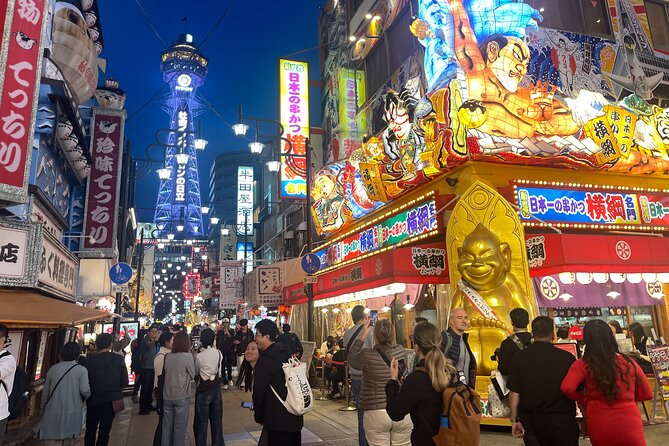
The tour begins outside MEGA Don Quijote Shinsekai at 3-chōme-4-36 Ebisuhigashi. Shinsekai means New World, an old name that now carries a retro feel rather than a futuristic one.
You begin with about 30 minutes in the district. Shinsekai was established in 1912 and was designed as a modern entertainment area. Today, it is known for its old-fashioned character and local street life, with Tsutenkaku Tower nearby.
This opening stop gives you useful context before the route becomes more serious. You can see how Osaka’s ideas of leisure and modernity changed over time, while the surrounding streets retain a strong sense of the past.
I like starting here because it gives the tour a clear contrast. Shinsekai has an approachable, nostalgic face, but the next parts of the route show the economic and social conditions that shaped the wider area.
Do not expect an admission attraction during this stop. There is no entrance fee, and the value comes from the guide’s commentary and the way the district is placed in context.
Walking through Nishinari and Dobutsuen-mae
The second stop, Nishinari Dobutsuen-mae Deep Osaka Street, lasts about 30 minutes. Nishinari is associated with day laborers and working-class communities, and the guide explains the district’s past and present while you walk.
This is likely the section that will test your expectations. One low-scoring assessment found the first half less interesting to look at than expected, describing it mainly as a walk through the area. That is a fair warning. If you need constant attractions, photo stops, or hands-on activities, the route may feel thin.
I would see this portion differently, but only if you choose it for the subject rather than the scenery. A street can be valuable because of what it reveals about housing, labor, poverty, and urban change. You are not simply checking off monuments here.
The pace is reported as comfortable, and the guide has time to answer questions. That makes a real difference in a district where a quick solo walk might leave you with more assumptions than understanding.
Stay attentive to the guide’s tone. The best version of this tour treats Nishinari as a lived-in neighborhood, not an exotic backdrop. You should also follow the guide’s advice about where to pause and how to behave.
Jan Jan Yokocho and the old Osaka atmosphere
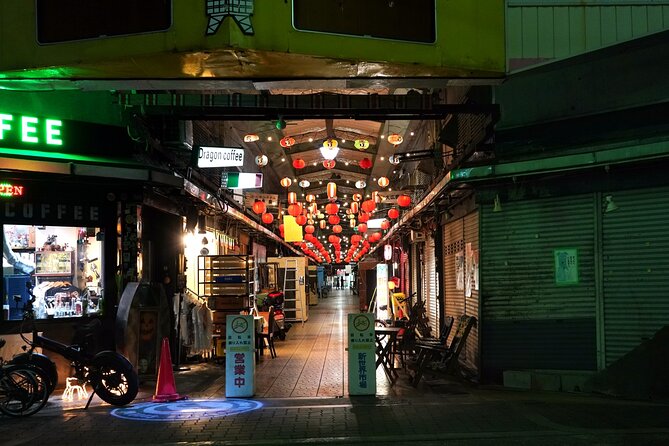
Jan Jan Yokocho, also called the Nanyodori Shopping District, receives about 20 minutes. This narrow shopping and dining street sits near Tsutenkaku Tower and is known for its old-style atmosphere.
This stop gives the walk a more social and familiar rhythm. Instead of focusing only on hardship or controversy, you see a small commercial street where food and everyday business remain central.
The name and setting are part of the charm, but do not expect a long meal break. Snacks are not included, and the listed duration is short. If you want to eat, you may need to do so before or after the tour unless the guide’s timing allows otherwise.
That said, this is one of the places where the tour’s mix works well. You move from social history to food streets, then onward to the area’s adult entertainment district. Osaka is not presented as one neat picture. You see several sides of the same neighborhood within a few blocks.
More guided walks on foot:
- Deep Backstreet Osaka Tours (Option to add Dinner)
★ 5.0 · 1,290 reviews - Osaka Local Foodie Walking Tour in Dotonbori and Shinsekai
★ 5.0 · 985 reviews - Osaka: Deep Backstreets Walking Tour with Dinner Option
★ 4.9 · 902 reviews - Ultimate Osaka Walking Tour: Castle, Dotonbori & Hidden Gems
★ 5.0 · 862 reviews
Tobita Shinchi, Osaka’s largest red-light district
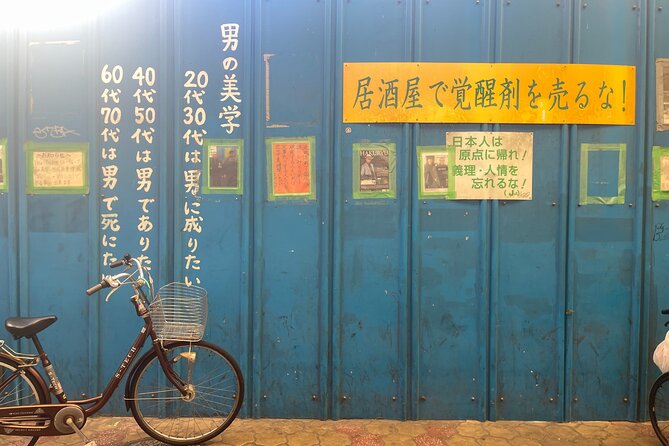
The route then reaches Tobita Shinchi for about 20 minutes. This is Osaka’s largest and most famous red-light district, with a history of more than a century and a tightly regulated setting.
This is the most sensitive stop, and you should understand what you are signing up for. The subject is not hidden behind vague language. The guide discusses the area’s role, history, and distinctive architecture, but the walk is not presented as an invitation to participate in the nightlife.
Your behavior matters here. Keep your voice down, follow the guide, and avoid treating private homes or businesses as photo props. The supplied information does not promise photography opportunities, and you should not assume that every storefront or person can be photographed.
For me, this stop is worthwhile because it shows how Japanese cities can contain formal systems and social boundaries that are easy for outsiders to miss. It also brings the tour’s title into focus. The point is not simply that Osaka has a red-light district. The point is to understand how such an area fits into the city’s history and daily life.
Some people may find this portion uncomfortable. That is not a reason to avoid it, but it is a reason to choose the tour carefully. If you prefer light entertainment, family sightseeing, or a food-focused evening, this is not the right match.
Ending beneath Tsutenkaku Tower
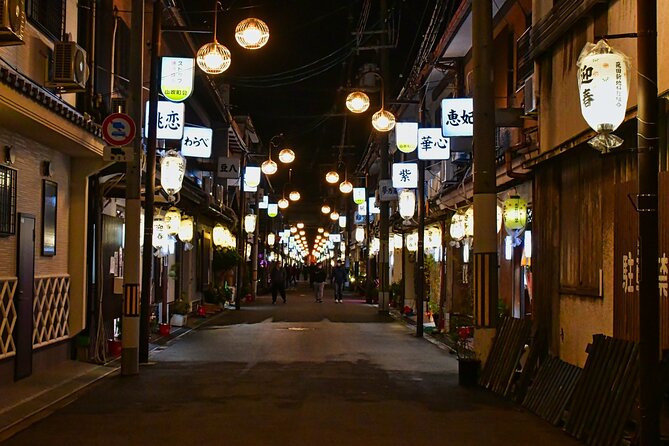
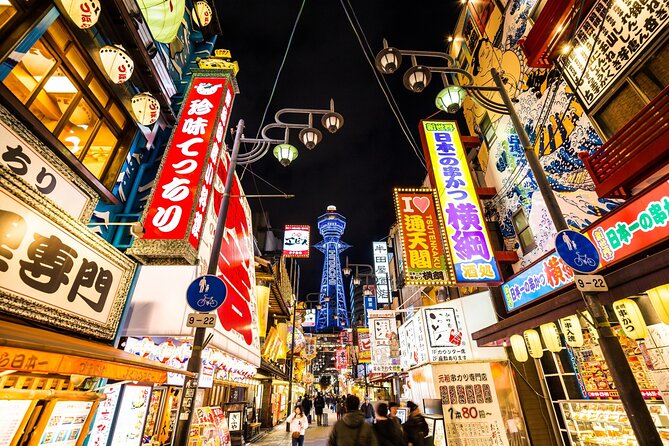
The final stop is Tsutenkaku Hondori Shopping Street, where the tour ends near Tsutenkaku Tower at 1-chōme-18-6 Ebisuhigashi. This 20-minute section returns you to a more familiar Osaka setting, with a retro shopping arcade and a mixture of small shops.
Ending here is practical. After the heavier subject matter of Tobita Shinchi, the arcade provides a less intense finish and places you close to one of Shinsekai’s best-known landmarks.
The walk does not include an admission ticket to Tsutenkaku Tower. The tower is a visual reference and part of the surrounding district, not a scheduled paid attraction on this experience.
The endpoint is close to the starting area, but you should still pay attention to the exact meeting details. You start at MEGA Don Quijote Shinsekai and finish at Tsutenkaku, both in Ebisuhigashi. A mobile ticket is provided, and confirmation arrives when you book.
What the guides add to the walk
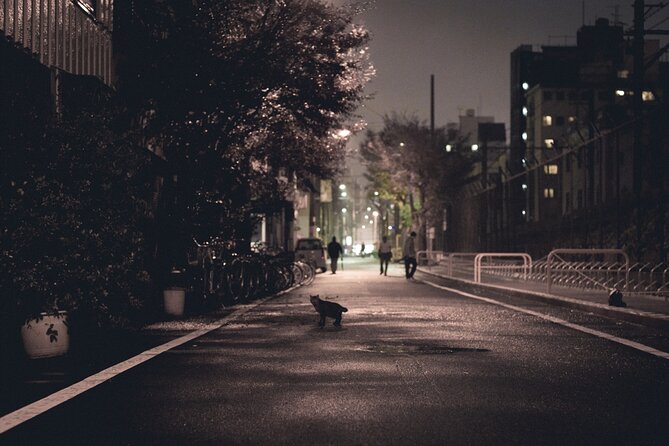
The guide is the main reason to book this experience. The route itself is made up of public streets and free stops, so the interpretation is what turns a walk into a useful two hours.
Jay receives especially strong praise for his clear explanations, local knowledge, social history, and willingness to answer questions. He is also noted for offering tips as the group moves between districts. That makes him a good fit if you want to ask about what you are seeing rather than simply follow a script.
Matt is described as friendly and informative, with an ability to make the subject approachable. Rico is praised for being well informed and accommodating. Since guides can vary by date, you should not assume a particular person will lead your departure, but these names give you a sense of the guide team connected with the experience.
The group limit helps. With no more than 15 people, you have a better chance of hearing explanations on narrow streets and asking a question without holding up a large crowd.
Is $25 a fair price?
At $25 per person, this is a reasonable price for a two-hour guided walk if you value interpretation. There are no entrance tickets to expensive attractions, and the route uses free public areas. You are paying for the guide’s time, planning, local context, and the confidence of moving through places you may not understand on your own.
The value is less convincing if you judge tours by admission fees or entertainment. You will not receive snacks, and the experience does not list tastings, tower access, or other paid activities.
I would compare it with the cost of getting a short private orientation to southern Osaka. A guide who can explain the history of Nishinari, answer questions about Tobita Shinchi, and point out the changing character of Shinsekai can make the fee worthwhile.
The 4.9 rating from 49 ratings and 98 percent recommendation level suggest a strong overall experience, but the single two-star assessment is useful. It warns that the streets themselves may not provide enough visual interest for everyone. That is exactly the decision point: you are paying for insight, not a parade of attractions.
Practical details for a smoother evening
The tour starts at 5:30 pm and lasts about two hours. The evening timing suits the subject, since Shinsekai and its entertainment districts take on a different character after daylight fades.
Wear comfortable shoes. One assessment specifically notes that the walk requires nearly two hours, and there is no indication of a seated format. The pace is described as manageable, but you should still be ready to remain on your feet.
Bring a phone with your mobile ticket available. Confirmation is received at booking, and the meeting point is outside MEGA Don Quijote Shinsekai.
The experience is near public transportation, and most people can participate. Service animals are allowed. The tour requires good weather, so a poor-weather cancellation leads to either another date or a full refund.
You can cancel for a full refund if you do so at least 24 hours before the start time. Changes or cancellations inside that window are not accepted, and the local start time controls the cutoff.
Who should book this Osaka walk?
I would recommend it to you if you want to understand Osaka beyond Dotonbori, Osaka Castle, and the usual food stops. It is particularly suited to people interested in urban history, labor, social customs, nightlife districts, and the parts of a city that rarely appear in standard sightseeing routes.
It also works well if you prefer asking questions to taking photographs. The guide’s explanations are repeatedly identified as the strongest part of the experience, so curious and engaged participants will get the most from it.
You may want to skip it if you are looking for a cheerful food tour, major monuments, or a packed list of activities. The Nishinari section can seem ordinary, and the Tobita Shinchi section requires discretion and maturity.
Families should consider the subject matter carefully. The supplied information says most people can participate, but it does not describe the tour as child-focused. The red-light district and discussion of social hardship may not suit every young person.
Should you book the Dark Side of Osaka Walking Tour?
Book it if you want a guided look at Osaka’s less polished side and understand that the streets themselves are only part of the experience. The strongest reasons are the small group, the thoughtful guides, the comfortable pace, and the chance to connect Shinsekai, Nishinari, Jan Jan Yokocho, and Tobita Shinchi in one evening.
Skip it if you need constant visual drama or paid attractions. At $25, it is good value for social history and local explanation, but not for entertainment alone. Arrive open-minded, behave respectfully, and let the guide supply the context that the streets cannot provide by themselves.
FAQ
How long does the Dark Side of Osaka Walking Tour last?
The tour lasts approximately two hours and includes five stops, each lasting about 20 to 30 minutes.
What time does the tour begin?
The tour starts at 5:30 pm local time.
Where does the tour meet?
The meeting point is MEGA Don Quijote Shinsekai, 3-chōme-4-36 Ebisuhigashi, Naniwa Ward, Osaka, 556-0002, Japan.
Where does the tour end?
The tour ends near Tsutenkaku at 1-chōme-18-6 Ebisuhigashi, Naniwa Ward, Osaka, 556-0002, Japan.
What locations are included?
The route includes Shinsekai, Nishinari Dobutsuen-mae Deep Osaka Street, Jan Jan Yokocho, Tobita Shinchi, and Tsutenkaku Hondori Shopping Street.
Are food and snacks included?
No. Snacks are not included. All fees and taxes for the tour itself are included.
What happens if the weather is poor?
The tour requires good weather. If it is canceled because of poor weather, you will be offered another date or a full refund. You can also cancel at least 24 hours before the start time for a full refund.
Just added around Osaka
- Nara Day Trip from Osaka with a Licensed Guide★ 5.0 · 3 reviews
- Osaka Early Morning Osaka Castle Tour Avoid Crowds★ 5.0 · 3 reviews
- Guided Tour of Some Attractions in Osaka by Private Car★ 5.0 · 3 reviews
- Private Transfer Between Kyoto and Kansai Airport KIX★ 5.0 · 3 reviews
- Shared Arrival Transfer: Osaka Itami Airport to Osaka City★ 5.0 · 3 reviews
- Osaka: Sushi Making Class and Dotonbori Food Tour★ 4.7 · 3 reviews
- Osaka Night Photography Workshop★ 5.0 · 3 reviews
- Kyoto Full day Tour Kinkakuji, Kiyomizu-dera and Fushimi Inari★ 4.5 · 3 reviews
Osaka Night Tours, compared.
Osaka After Dark: Small-Group Night Food Tour (Max 6)
Read our review →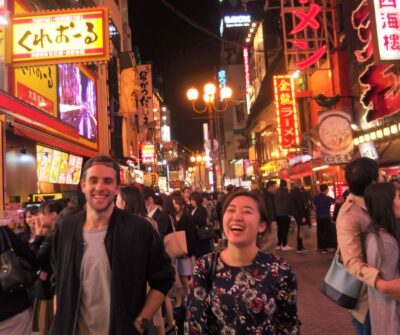
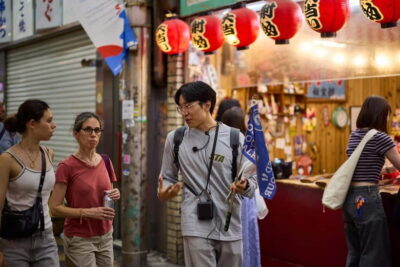
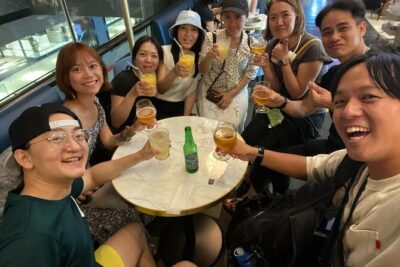

Hidden Gems and Bustling Districts of Osaka Night Tour
Read our review →
3.5h Osaka Night guided Local Bar Hopping, Sake & Karaoke
Read our review →Browse the lists this tour appears in