
Reviewed · OSAKA NIGHT TOURS
Osaka: Dark Side of Osaka Night Walking Tour
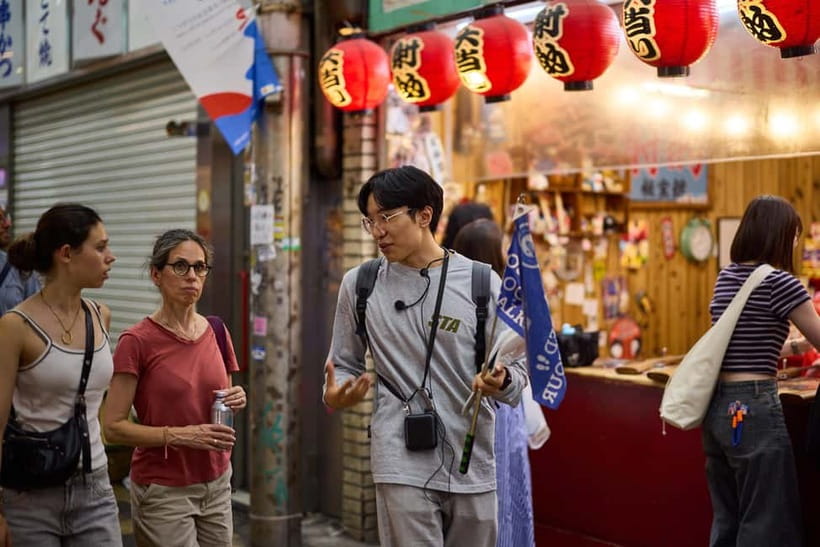
Osaka’s famous neon streets are only part of the story. This two-hour night walk takes you through Shinsekai, Nishinari, and Tobita Shinchi, where entertainment, poverty, day labor, and discreet adult businesses have shaped the city for more than a century. The tour is less about pretty sights than about understanding how Osaka works beneath its polished surface.
I like the route’s clear sense of place, especially the contrast between Tsutenkaku Tower’s cheerful glow and the difficult social history around it. I also like the guides’ reported style: Jay, Rico, and Matt are praised for explaining sensitive subjects with care, answering questions, and adding personal observations. The main consideration is that some scenes and topics may feel confronting, and the tour is not for children under 18.
In This Review
- Key points
- What this Osaka night walk is really about
- Meeting under the Giant Penguin
- Shinsekai and the story behind Tsutenkaku
- Nishinari, day labor, and Osaka’s rougher edge
- Jyanjyan Yokocho and Osaka’s old eating streets
- Tobita Shinchi and the rules of discretion
- Why the guides make or break the experience
- Is $25 a fair price?
- Who should book this walk?
- Should you book the Dark Side of Osaka tour?
- FAQ
- How long does the Osaka Dark Side walking tour last?
- Where is the meeting point?
- What areas does the tour visit?
- Is the tour available in English?
- Are food and drinks included?
- Is the tour suitable for children or wheelchair users?
Key points
- Shinsekai’s unusual design: Learn how this 1912 entertainment district borrowed ideas from Paris and Coney Island.
- Tobita Shinchi after dark: See Osaka’s largest red-light district from public streets while discussing its history and strict traditions.
- Nishinari’s working-class past: Hear how an area linked with day laborers is changing as budget visitors arrive.
- Small details with a big story: Local signs, alleyways, and customs help explain everyday life in Osaka.
- English-speaking guides with different strengths: Jay, Rico, and Matt are noted for warmth, modern history, and thoughtful answers.
- A useful two-hour route: Begin under the Giant Penguin at MEGA Don Quijote Shinsekai and finish at Tsutenkaku.
What this Osaka night walk is really about
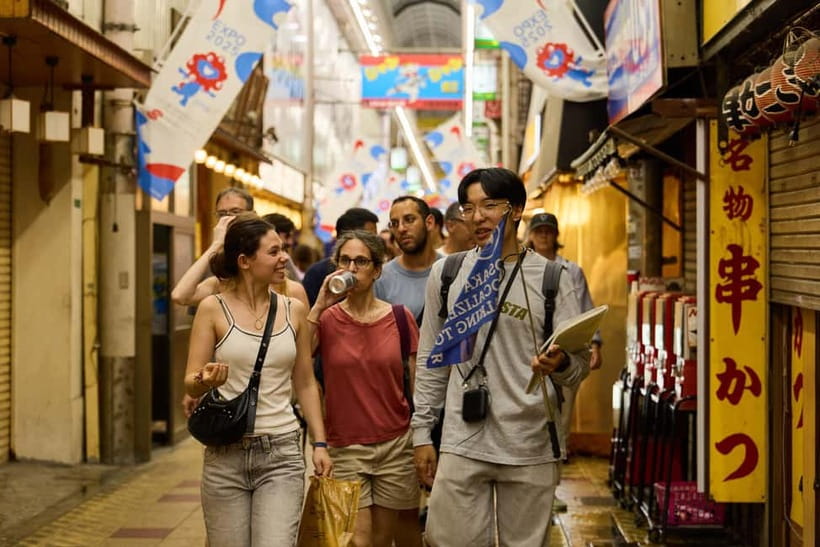
This is not a standard Osaka sightseeing circuit. You will not spend two hours ticking off temples or taking skyline photographs. Instead, you will walk through districts where Japan’s social rules, economic changes, and entertainment culture are easier to see in the streets than in a museum.
The experience uses the old term getto for the historic area, but the important point is the district’s social history, not a label. Nishinari has long been associated with working-class residents and day laborers. It has also attracted budget visitors and urban explorers interested in its gritty past and changing identity.
That tension gives the tour its value. You see Osaka as a living city, not just a backdrop for food and shopping. Your guide explains why certain streets look the way they do, how the area developed, and how present-day practices connect with older customs.
The tone matters here. The most praised guides, including Jay, Rico, and Matt, are described as friendly, careful, and direct without being crude. That is useful on a subject involving poverty, prostitution, and social exclusion. You can ask questions, but you should also expect the guide to set a respectful tone.
More tours after dark:
- Osaka Nighttime tour
★ 5.0 · 270 reviews - Osaka After Dark: Small-Group Night Food Tour (Max 6)
★ 4.5 · 245 reviews - Osaka: Bar-Hopping Night Tour in Namba
★ 4.7 · 117 reviews
Meeting under the Giant Penguin
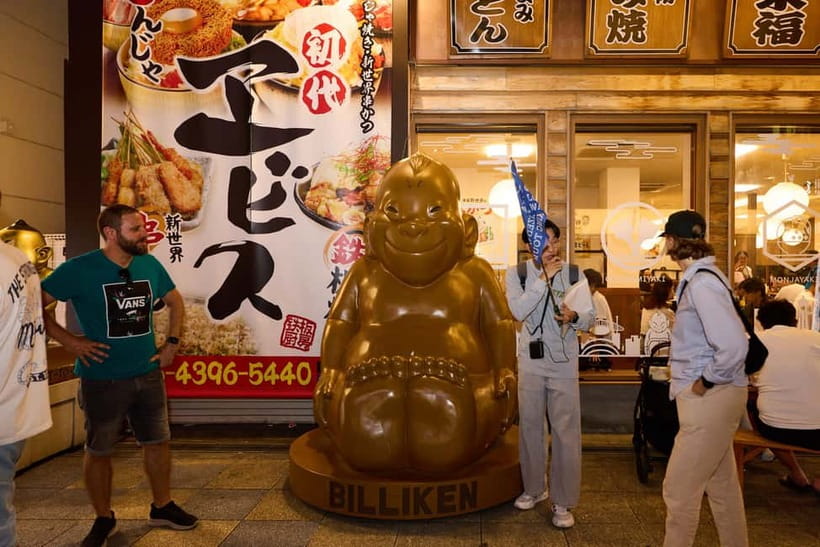
The meeting point is easy to identify if you know what to look for: the guide waits under the Giant Penguin at MEGA Don Quijote Shinsekai, holding a GetYourGuide sign. This is a practical starting point because the store is a prominent landmark in the Shinsekai area.
Arrive ready to walk. The tour stays on foot, hotel pickup is not included, and the route passes through streets and alleys rather than a single indoor attraction. Comfortable shoes are important, and you should prepare for rain, heat, or cooler evening weather depending on the season.
The tour is offered in English. Guide style can vary. Jay is praised for being warm, engaging, and attentive to questions. Rico is noted for historical detail, flexibility in rainy weather, and useful restaurant suggestions. Matt is described as especially strong on Osaka’s modern history and respectful treatment of difficult subjects.
Those names are helpful when comparing bookings, but guide assignment may depend on the date. The key thing is to expect a live conversation, not an audio guide or a fixed lecture.
Shinsekai and the story behind Tsutenkaku
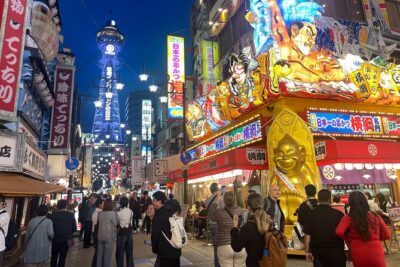
Your first major stop is Shinsekai, which means New World. The name fits the district’s original ambition. Established in 1912, Shinsekai was planned as a modern entertainment center influenced by Europe and the United States.
Its southern section drew inspiration from Paris, while the northern section looked toward New York’s Coney Island. That may sound grand for a district now famous for old-fashioned restaurants, bright signs, and a slightly rough edge, but the contrast is exactly what makes Shinsekai interesting.
The district’s early glamour faded, yet its character remained. You will see a place where nostalgic storefronts, local eateries, tourist signs, and older buildings sit close together. It is not polished in the way Osaka’s major shopping areas are polished. That lack of polish is part of the point.
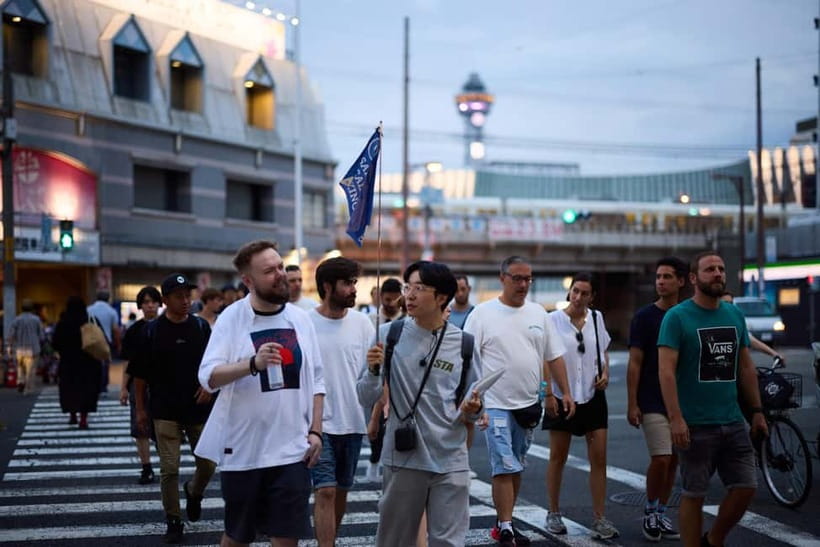
Tsutenkaku Tower provides the visual anchor. The tower is one of Osaka’s best-known local symbols, and the tour finishes there, giving the walk a clear ending. During the route, your guide places the tower and surrounding streets in context rather than treating it as a simple photo stop.
I like this part of the tour because the architecture tells a larger story. Shinsekai was once a statement about modernity. Today, it is valued for its retro mood and local identity. You get to consider how a neighborhood survives after its original purpose has changed.
Nishinari, day labor, and Osaka’s rougher edge
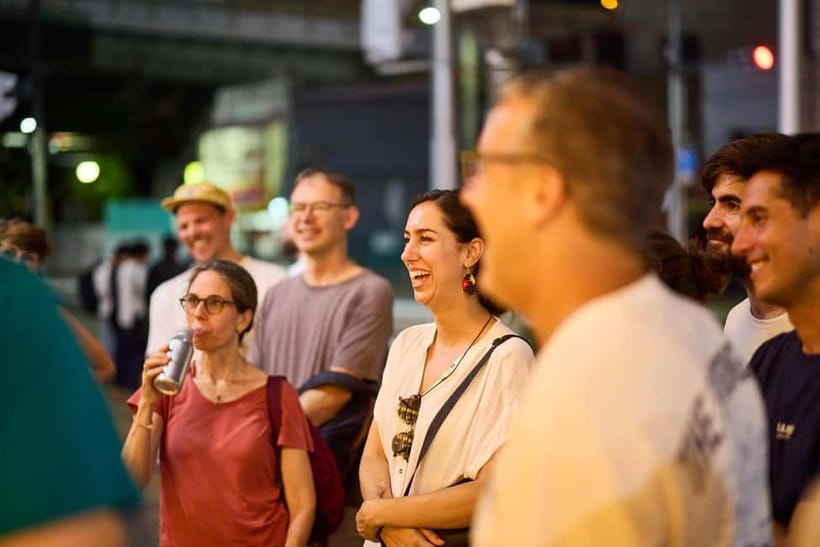
The route continues into Nishinari, a southern Osaka district with a long connection to day laborers and working-class life. This is the point where the tour becomes less about design and more about people, work, and social conditions.
You should not expect a neatly packaged story. Nishinari has a reputation for being gritty, but that word alone explains very little. Your guide helps separate stereotype from daily reality, discussing the area’s past and its newer appeal to budget visitors and urban explorers.
The value here is the local scale. Instead of hearing broad statements about Japanese society, you look at one Osaka district and how it has changed. Small signs, street layouts, and public spaces become clues. A guide can also explain details that you would probably walk past without noticing.
One memorable example from the tour’s subject matter is a torii painted on a wall, which can signal that people should not urinate there. It is a quirky detail, but it also shows how public behavior is managed through visual custom rather than a long written notice.
Some parts of Nishinari may feel uncomfortable. This tour is designed to discuss the less attractive side of urban life, and you may hear about hardship or see conditions that challenge the tidy image many people have of Japan. Go with patience and avoid treating the neighborhood as a spectacle.
More guided walks on foot:
- Deep Backstreet Osaka Tours (Option to add Dinner)
★ 5.0 · 1,290 reviews - Osaka Local Foodie Walking Tour in Dotonbori and Shinsekai
★ 5.0 · 985 reviews - Osaka: Deep Backstreets Walking Tour with Dinner Option
★ 4.9 · 902 reviews - Ultimate Osaka Walking Tour: Castle, Dotonbori & Hidden Gems
★ 5.0 · 862 reviews
Jyanjyan Yokocho and Osaka’s old eating streets
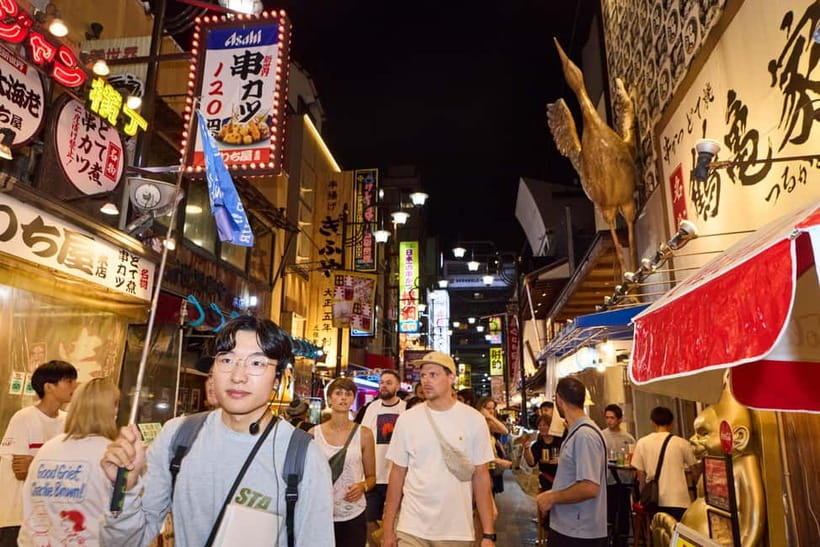
Jyanjyan Yokocho offers a change of pace. This narrow shopping and dining alley near Tsutenkaku has an old-school feel, with small eateries, bars, and shops recalling mid-20th-century Osaka.
It is a useful stop because food and social history meet here. Osaka is often promoted as a city where eating is central to local culture, and Jyanjyan Yokocho shows that food is also tied to neighborhood identity, work, and memory.
The alley is not presented as a grand attraction. Its appeal is in the compact details: signs, counters, narrow passages, and the feeling of a place built for regular customers. You may finish the tour with an appetite, and several guides are praised for sharing restaurant suggestions. One guide also adapted the route well on a rainy day, which matters in a walking experience.
Food and drinks are not included, so you pay for anything you choose to eat separately. That keeps the $25 price low, but it also means this is not a food tour. If you want dinner, ask your guide for suggestions or plan to eat afterward.
Tobita Shinchi and the rules of discretion
The most sensitive section is Tobita Shinchi, Osaka’s largest and best-known red-light district. Its history goes back more than a century, and the area is known for distinctive architecture, discreet customs, and a tightly regulated environment.
The tour does not turn this into a comic sideshow. The useful part is learning how an adult entertainment district can remain woven into the city while operating through tradition, privacy, and strict local expectations.
You will walk through public areas and hear historical and social explanations from your guide. Respect is essential. Do not photograph people, stare into private spaces, or treat the area as a novelty. Follow local rules and your guide’s instructions.
This is also where the age restriction makes sense. The experience is for adults, and some information or sights may be unsettling. One participant specifically warned that the tour is not suitable for young people or anyone with a thin skin. That is fair advice, though the tour can still be thoughtful rather than sensational.
I appreciate that the strongest guide comments focus on diplomacy and personal circumstances. Matt, in particular, is praised for treating the people and lives connected with the area respectfully. That approach turns a potentially shallow red-light district visit into a lesson about urban history and social boundaries.
Why the guides make or break the experience
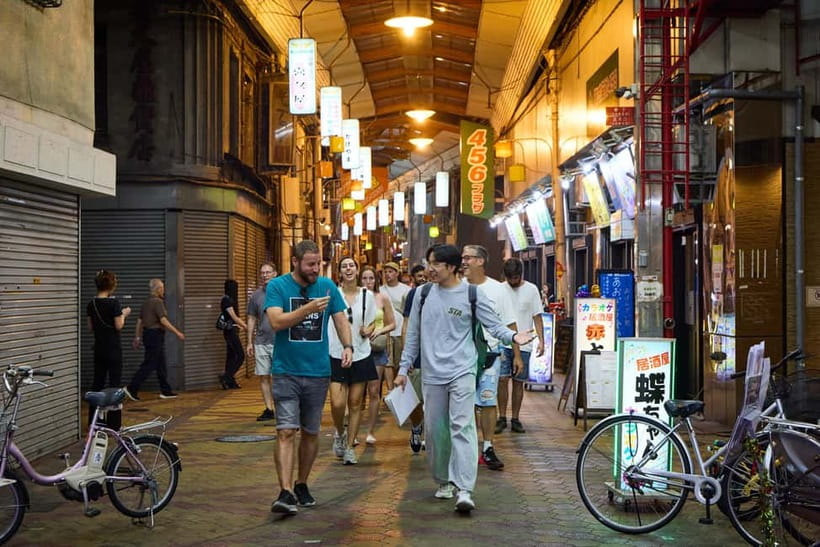
A route like this depends heavily on the guide. Shinsekai and Tobita Shinchi are easy enough to find on a map, but the meaning of the streets is not obvious. A good guide connects modern scenes with history, explains local customs, and knows when a joke would be out of place.
The guide feedback points to three strengths worth looking for:
- Jay is repeatedly described as warm, engaging, and considerate with questions.
- Rico is praised for historical detail, personal observations, restaurant advice, and adapting to rain.
- Matt is valued for his command of Osaka’s modern history and respectful handling of difficult topics.
The pace also appears to be a strength. The route lasts about two hours, with several guided stops rather than one long talk. There is enough time for questions, but not so much that the walk becomes tiring or academic.
English ability is another practical consideration. One participant found Matt’s fast speaking comfortable but noted that it could be harder for someone who is not a strong English speaker. If you understand conversational English well, you should be able to get more from the explanations and ask follow-up questions.
Is $25 a fair price?
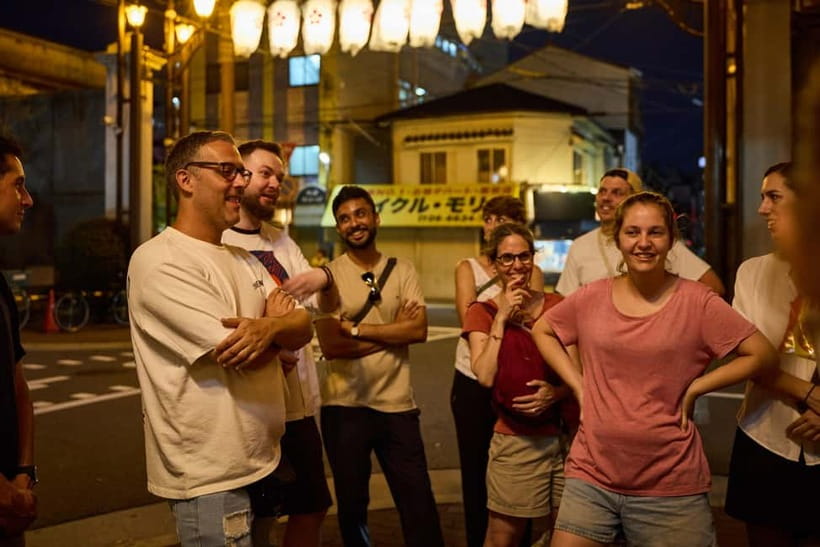
At $25 per person, this is a good-value experience if your aim is context rather than admission tickets or included food. The fee covers a live English-speaking guide and a two-hour walk through several districts that are difficult to understand from a quick visit.
You are paying for interpretation. The streets themselves are free, and you could walk through Shinsekai independently. But without a guide, you would miss much of the history behind the area, the meaning of local details, and the careful explanation of Tobita Shinchi.
The price also works well for a first evening in southern Osaka. You get a basic orientation to Shinsekai and Nishinari, then finish near Tsutenkaku with restaurant ideas for later. Food and transport are extra, but the low tour price leaves room in your budget.
Free cancellation up to 24 hours before the start and the reserve-now, pay-later option make the booking relatively flexible. Check available starting times before you commit, since the tour lasts two hours and operates at night.
Who should book this walk?
I would choose this tour if you have already seen Osaka’s major food streets and want a more serious look at the city. It suits adults interested in modern history, working-class districts, social customs, urban change, and the less polished side of Japan.
It is also a good fit for solo visitors or couples who want a guide’s perspective without joining a large sightseeing bus. The small-group experience described by one participant had six people, though group size is not formally specified here, so do not assume every departure will be that small.
You should skip it if you want a gentle evening of landmarks and snacks. It is also unsuitable for children under 18 and wheelchair users. The walking route may be difficult for anyone who needs step-free access, and the subject matter calls for maturity.
Wear comfortable shoes, dress for the weather, and keep your camera away when privacy is involved. Smoking is not allowed, and alcoholic drinks are not permitted in the vehicle, although this is primarily a walking experience.
Should you book the Dark Side of Osaka tour?

Book it if you want to understand why Shinsekai looks the way it does, how Nishinari became associated with day labor, and why Tobita Shinchi remains both visible and discreet. The strongest reason to go is the chance to ask an informed local guide about subjects that guidebooks often treat briefly.
At $25, the tour offers solid value, especially if you take the restaurant advice and continue exploring afterward. Just arrive with the right expectations: this is a candid social-history walk, not a glamorous night out.
If you can handle confronting topics and will behave respectfully in residential and adult areas, I think this is one of the more useful ways to see southern Osaka. If you prefer only cheerful attractions, choose a food tour instead.
FAQ
How long does the Osaka Dark Side walking tour last?
The tour lasts two hours. It begins at MEGA Don Quijote Shinsekai and finishes at Tsutenkaku.
Where is the meeting point?
Meet under the Giant Penguin at MEGA Don Quijote Shinsekai. Your English-speaking guide will be holding a GetYourGuide sign.
What areas does the tour visit?
The route includes Shinsekai, Nishinari, Jyanjyan Yokocho, and Tobita Shinchi. It also includes views and discussion around Tsutenkaku Tower.
Is the tour available in English?
Yes. A live English-speaking guide leads the walking tour.
Are food and drinks included?
No. Food and drinks are not included in the $25 price. Guides may offer restaurant recommendations during or after the walk.
Is the tour suitable for children or wheelchair users?
No. The experience is not suitable for children under 18 or wheelchair users. You should also wear comfortable walking shoes and prepare for changing weather.
Just added around Osaka
- Nara Day Trip from Osaka with a Licensed Guide★ 5.0 · 3 reviews
- Osaka Early Morning Osaka Castle Tour Avoid Crowds★ 5.0 · 3 reviews
- Guided Tour of Some Attractions in Osaka by Private Car★ 5.0 · 3 reviews
- Private Transfer Between Kyoto and Kansai Airport KIX★ 5.0 · 3 reviews
- Shared Arrival Transfer: Osaka Itami Airport to Osaka City★ 5.0 · 3 reviews
- Osaka: Sushi Making Class and Dotonbori Food Tour★ 4.7 · 3 reviews
- Osaka Night Photography Workshop★ 5.0 · 3 reviews
- Kyoto Full day Tour Kinkakuji, Kiyomizu-dera and Fushimi Inari★ 4.5 · 3 reviews
Osaka Night Tours, compared.
Osaka After Dark: Small-Group Night Food Tour (Max 6)
Read our review →

Hidden Gems and Bustling Districts of Osaka Night Tour
Read our review →
3.5h Osaka Night guided Local Bar Hopping, Sake & Karaoke
Read our review →Browse the lists this tour appears in