
Reviewed · OSAKA CASTLE TOURS
Samurai Armor & Sword experience with phot near Osaka Castle
The sharpest part of this experience is not the costume photo. It is the sequence of samurai training: bowing before the shrine, learning how to wear a sword, practicing battou and nottou, then trying a supervised cut with a real samurai sword. I like the clear link between movement, manners, and responsibility. I also like that armor, helmet, and digital photos are included, so the session gives you both a hands-on lesson and a lasting souvenir.
The main caution is location and scheduling. The activity is promoted for the Osaka Castle area, but the actual dojo is at Samurai Honor, 2-3-19 Shiginonishi in Joto-ku, and Apple Maps reportedly shows the wrong address. One booking was also cancelled twice because of overbooking, so I would confirm the appointment and allow time to find the wooden Samurai Honor sign.
In This Review
- Key points to know before booking
- What this Osaka samurai session is really about
- Finding Samurai Honor in Joto-ku
- Changing into dogi and hakama
- Bowing before the shrine
- Learning why the sword mattered
- Walking with the sword at your waist
- Practicing battou, chiburui, and nottou
- Learning basic kata from the instructor
- Cutting with a real samurai sword
- Wearing armor and posing for photos
- What the $106 price buys you
- Who should book this experience
- Booking advice and the overbooking warning
- Final call: is it worth your Osaka time?
- FAQ
- Where is the Samurai Armor and Sword experience held?
- How do I find the meeting point?
- How long does the activity last?
- Is the experience available in English?
- What is included in the price?
- Can I cancel the booking?
Key points to know before booking
- Real sword cutting is part of the 90-minute session: You practice with an instructor before attempting the cut.
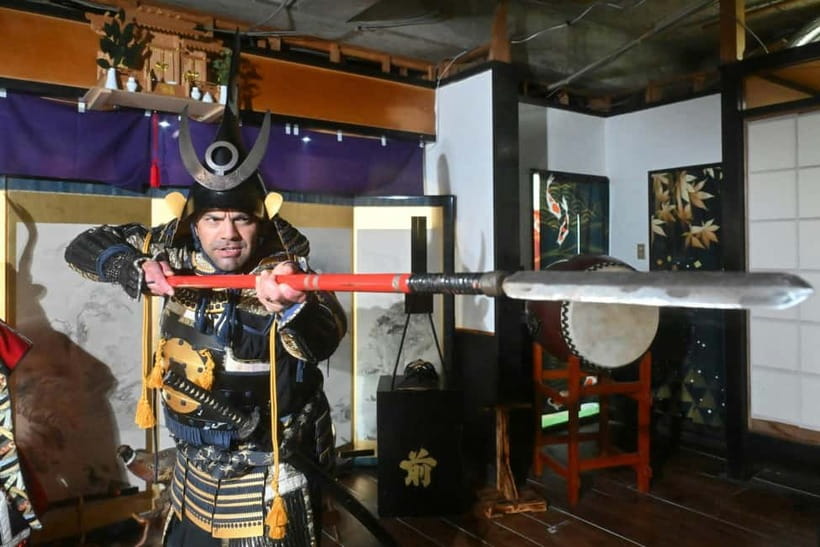
- You wear full samurai armor indoors: Clothing, helmet, and armor are supplied, with photos sent by email.
- The lesson covers Bushido manners: Bowing, sword position, walking etiquette, and the symbolism of drawing and sheathing the blade all matter.
- The experience is private: You receive instruction in a private group with English and Japanese available.
- Arrive 30 minutes early: You need time to change into dogi and hakama and receive instructions.
- The $106 price includes the main extras: Clothing, armor, professional instruction, tax, tips, and photo shooting are included.
What this Osaka samurai session is really about
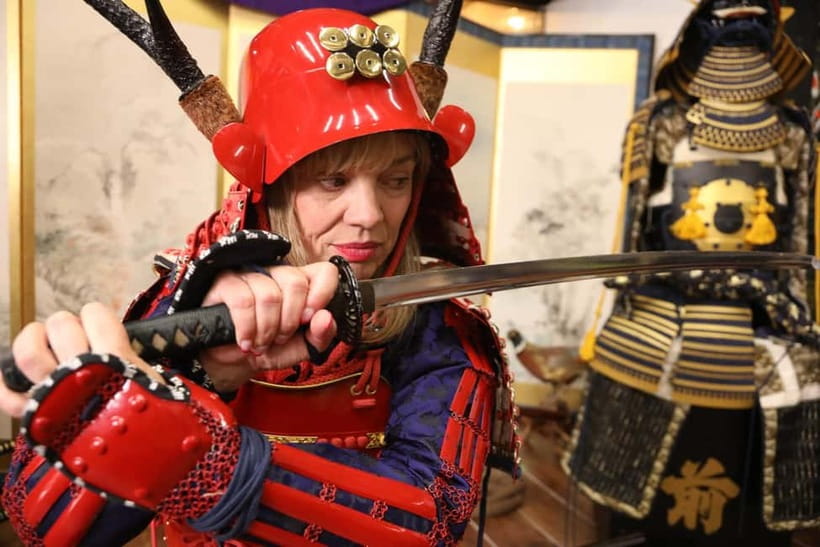
Many costume activities give you a robe, a prop, and a few minutes in front of a camera. This one tries to build a short lesson around the costume. You first become a samurai in dogi and hakama, then learn how the sword fits into posture, movement, daily life, and personal responsibility.
That difference matters. The session is not simply about looking fierce beside Osaka Castle. It presents the sword as an object that demanded restraint and attention. You learn why the blade faces upward in the belt, how a samurai walked without clashing scabbards, and why the sword was kept ready even in peaceful times.
The language can sometimes sound ceremonial rather than conversational, but the structure is easy to follow. An English-speaking instructor leads the session, and Japanese is also available. Other languages, including Italian, Spanish, French, Chinese, Thai, and Indonesian, may be possible if staff scheduling allows, but you need to ask before booking.
More tours of Osaka Castle and its grounds:
- Osaka Castle: Museum and Tower Entry Ticket
★ 4.5 · 2,380 reviews - Osaka Castle Walking Tour and Castle Tower Admission
★ 5.0 · 561 reviews - 5-Hour Osaka Bike Tour to the Neighborhood of Osaka Castle
★ 5.0 · 319 reviews
Finding Samurai Honor in Joto-ku
The meeting point is a small dojo called Bushi no Homare, also presented as Samurai Honor. The address is Excellence Takayama 1F, 2-3-19 Shiginonishi, Joto-ku, Osaka-shi, Osaka 536-0014.
Do not rely on the idea that the activity takes place inside Osaka Castle or necessarily right beside the castle grounds. The description connects the experience with Osaka Castle sightseeing, but the supplied address is the one you need for navigation. Google Maps is specifically recommended because the Apple Maps address is incorrect.
Look for a wooden sign reading Honor of the Samurai. A rack of activity pamphlets sits in front of the store, and kimonos and hakama may be hanging nearby. Those details are more useful than simply searching for a large tourist attraction.
Arrive 30 minutes before your booked start time. That early arrival is not wasted time. You need to change clothes and receive basic instructions before the formal training begins. Wear a T-shirt under the supplied clothing. Food, alcohol, drugs, pets, baby strollers, and party groups are not allowed, though assistance dogs are permitted.
Changing into dogi and hakama
The first step is changing into samurai clothing. You wear a dogi, the training jacket, and hakama, the pleated trousers associated with formal Japanese dress and martial arts.
This preparation sets the tone. Instead of jumping straight to a photo, you get a short transition from sightseeing to practice. The clothing also makes later instructions easier to understand. You can feel how the waist area, belt, and scabbard relate to one another instead of treating the sword as a loose prop.
The experience is indoors, which is useful in Osaka’s heat, rain, or winter chill. Armor can be warm and heavy, so this is not the kind of activity I would schedule when you need to rush straight to another appointment. The 90-minute duration is manageable, but changing clothes, taking photos, and moving through the exercises gives the session a full feel.
Bowing before the shrine
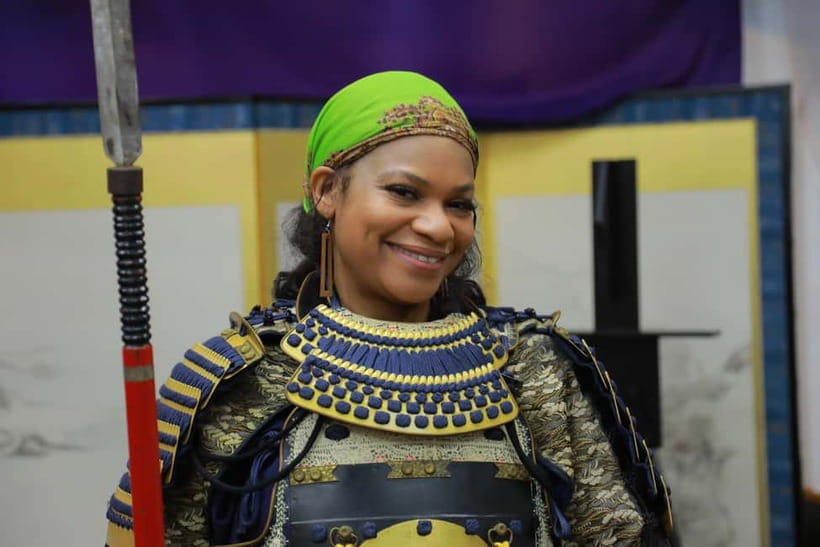
Training begins and ends with a bow before a shrine enshrined in the dojo. The stated idea is to train with the power of an ancient god of war, but the practical point is respect and discipline.
This small ritual gives the activity some shape. You are not just handed a sword and told to swing. The bow marks the dojo as a place for controlled practice, and it reminds you that the sword has a serious role in the tradition being presented.
If you prefer a fast, theatrical activity, this opening may feel formal. I like it because it prevents the session from becoming only dress-up. The bow, the quiet start, and the closing ritual help connect the physical exercises with Bushido values.
More samurai and ninja experiences:
- Samurai Training Experience KENDO in Osaka
★ 5.0 · 515 reviews - OSAKA NIGHT FUSION Japanese Taiko Kabuki Samurai Dance Show
★ 4.8 · 155 reviews - Osaka: Samurai Training Experience KENDO in Osaka
★ 5.0 · 111 reviews - Osaka: A Modern Samurai, Kabuki, Taiko, & Dance Show
★ 4.5 · 66 reviews
Learning why the sword mattered
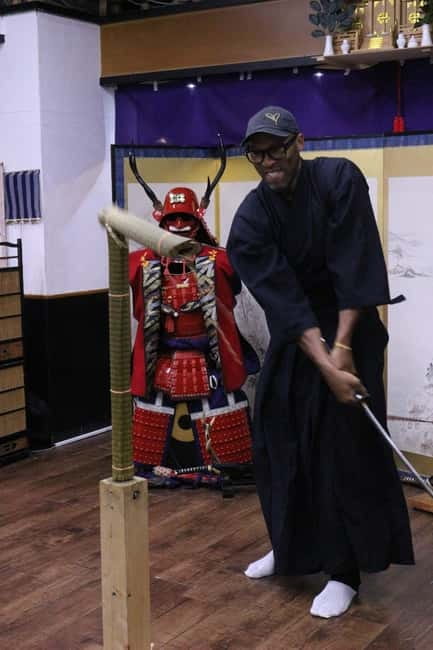
The instructor explains the sword and the manners attached to it. The lesson presents samurai boys as learning with wooden swords from an early age and being permitted to wear a serious sword at about age 15. That permission represented more than status. It meant carrying responsibility for a dangerous weapon in public.
You also hear how the sword stayed close during ordinary life. The explanation includes eating with family and sleeping in a position that allowed the blade to be drawn quickly if needed. Whether you come for martial arts, Japanese culture, or a memorable photograph, these details give the object more weight.
The session is not a full history course, and 90 minutes is too short for that. Still, this context helps you understand why the later gestures are so precise. Holding a sword correctly is not presented as a matter of looking good. It is connected with self-respect, public conduct, and control.
Walking with the sword at your waist
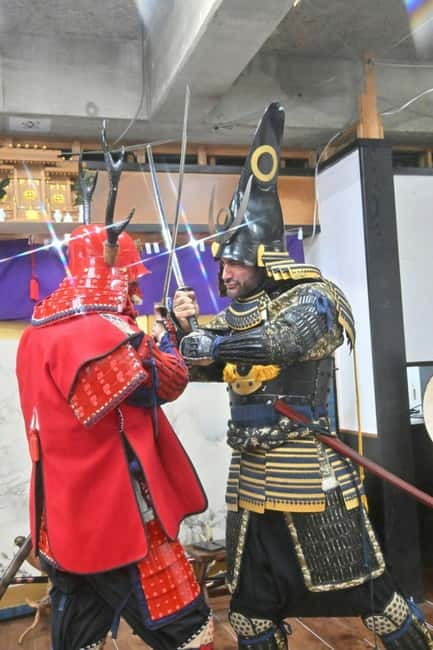
You practice wearing the sword in the belt with the blade facing upward. Then you work on the gestures of walking.
The instruction includes walking on the left side of the road so sword scabbards would not strike one another. The sword’s mouth, called the koiguchi, is kept prepared for a possible draw. These are small details, but they are the sort of details that make a hands-on cultural activity memorable.
For you, the value is physical. You begin to notice how a belt, scabbard, and blade affect the body. A sword changes how you turn, where you place your hands, and how close you stand to another person. The exercise makes samurai etiquette feel less abstract.
Follow the instructor closely here. Do not treat the sword as something to swing casually while walking. The activity is built around controlled movements, and the safety of the group depends on everyone respecting that order.
Practicing battou, chiburui, and nottou
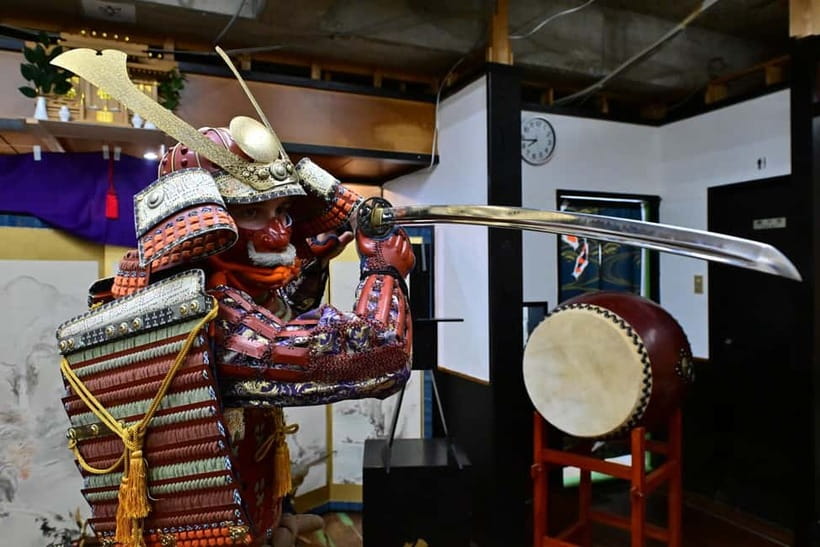
Next comes practice with an iai training sword. You learn the basic movement sequence:
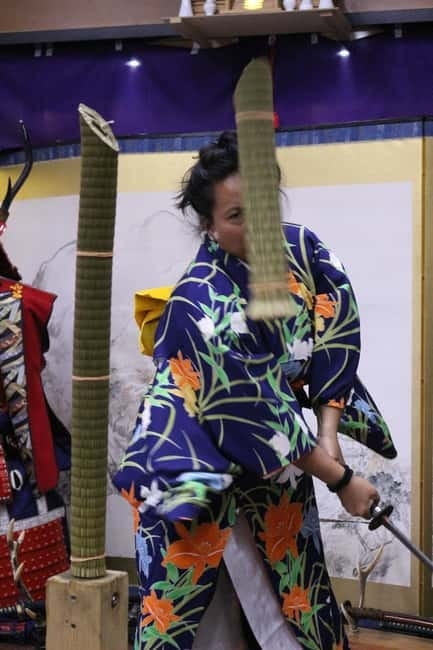
- Battou: drawing the sword from its scabbard to cut
- Chiburui: the symbolic action of removing blood from the blade after a cut
- Nottou: returning the sword to its sheath
These movements are not just dramatic flourishes. Each has a beginning, a controlled action, and a careful finish. The instructor works on stance, timing, and the path of the blade.
You will also practice swinging down from a stable stance. The instruction emphasizes using the weight of the sword rather than relying on arm strength. When performed correctly, the sword should produce a high, clear sound called hi-nari.
That detail gives you a simple test of technique. A hard, muscular swing is not necessarily a good one. The goal is alignment and economy. I like this part because it gives beginners something specific to feel and improve, rather than asking them to copy a pose for a photo.
Learning basic kata from the instructor
The instructor then demonstrates and teaches basic kata, stances, and sword swings. The phrase certified professional instructor is important here because the session includes a real-sword cutting exercise later. You are not expected to work it out alone.
The supplied information does not give the instructor’s name, so you should not book expecting a named master or a famous performer. What you can count on is an English-speaking instructor, Japanese support, and a lesson designed for beginners.
The teaching style appears to be structured and clear. Strong praise centers on the explanations, friendly hosts, safety, and enjoyable instruction. One English-language account specifically described the instruction as excellent, while other comments in Italian, German, Dutch, and English also praised the clear guidance and helpful staff.
Cutting with a real samurai sword
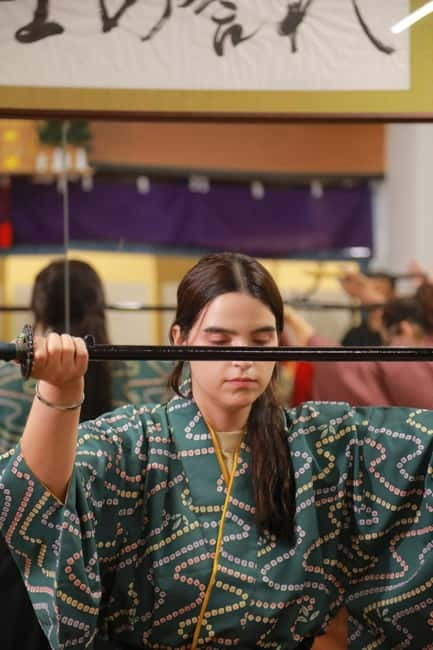
The most unusual part is the chance to try cutting with a real samurai sword. The activity describes this as an experience of the blade’s cutting performance, but you should understand the order: preparation and practice come first, and the cut is supervised.
This is where the cost begins to make more sense. A simple armor photo would be cheaper in spirit, but this session includes instruction with both a training sword and a real blade. You are paying for controlled access to equipment and for a professional to guide the movements.
The sword cutting should not be treated as a stunt. Listen to every instruction, keep your attention on the movement, and do not rush because you want a dramatic result. The point is not to show off strength. It is to apply the stance, grip, draw, and swing you have just practiced.
If you are nervous around real weapons, this may be the part that decides the booking for you. You can still enjoy the clothing, etiquette, and armor, but the activity is built around sword practice, so it is not ideal for someone who wants a completely passive cultural visit.
Wearing armor and posing for photos
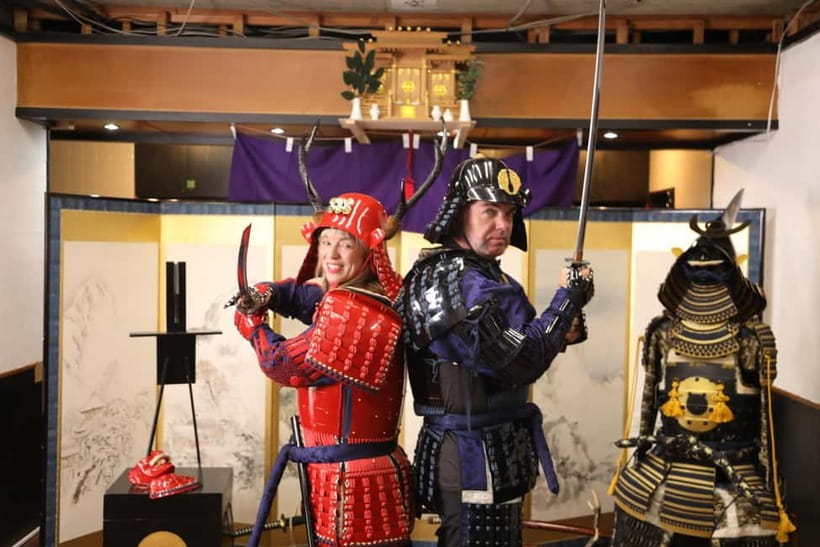
After the sword work, you put on samurai armor and a helmet. The armor is worn indoors, before a battle-inspired portrait session.
This section gives the activity its big visual payoff. Samurai armor was meant to signal dignity and beauty as well as protect the wearer. Once the armor is on, the earlier instruction about posture begins to matter. A stiff costume pose is one thing. A balanced stance with the sword at your waist feels more connected to the lesson.
Photo shooting is included, and the data is sent to a designated email address. That is a useful inclusion, especially if you are traveling with a friend or family member and want more than a quick phone snapshot. Movie shooting is not included and is available only as a paid option.
The armor is worn indoors, which keeps the photo session controlled and avoids the problem of carrying heavy gear around a public sightseeing site. You should expect the armor to add heat and weight, so keep your expectations realistic. This is a short portrait experience, not a day spent marching in battle gear.
What the $106 price buys you
At $106 per person, this is a premium short activity. It costs more than a basic kimono rental or a quick costume photograph, but the package includes several elements that are often charged separately: samurai clothing, armor, helmet, instruction, real-sword cutting, professional guidance, tax, tips, and digital photos.
I see the value if you want a private, tightly organized experience rather than a museum visit. The combination of cultural explanation, body mechanics, controlled sword practice, and armor photography gives you a fuller session than a pose-only attraction.
The value is weaker if your main aim is simply to wear a costume for five minutes. In that case, you may be paying for training you do not care about. It is also worth remembering that transportation, hotel or station pickup, personal expenses, and movie shooting are not included.
The private-group format helps justify the price. You are not being placed into a large public demonstration where you stand at the back. The instructor can lead your group through the movements and adjust the pace within the fixed 90-minute session.
Who should book this experience
I would recommend it most to adults and children aged 10 or older who enjoy hands-on cultural activities, martial arts, photography, or Japanese history. It also suits couples and small private groups looking for a distinctive Osaka memory after a castle visit.
The experience works well for someone who wants structure. You are given a clear progression from clothing to etiquette, practice, cutting, armor, and photos. It is less suitable if you dislike formal instruction, cannot comfortably manage a sword-related activity, or want a casual photo stop with no lesson attached.
Children under 10 are not suitable for the activity. Babies under 1, people over 80, and people with altitude sickness are also listed as unsuitable. The supplied information does not explain the reason for each restriction, so follow the provider’s limits rather than assuming exceptions.
The language setup is strongest in English and Japanese. If you need an interpreter in another listed language, ask about staff availability before reserving. Do not assume that every date can support Italian, Spanish, French, Chinese, Thai, or Indonesian interpretation.
Booking advice and the overbooking warning
Free cancellation is available up to 24 hours before the experience for a full refund, and you can reserve now and pay later. Those terms are helpful when you are arranging a busy Osaka itinerary.
The important warning is scheduling reliability. One booking was cancelled the day after reservation because of overbooking, then cancelled again on the morning of the replacement date. That is a serious inconvenience, especially if you have planned the activity around Osaka Castle or arranged transport.
I would confirm the time close to your visit and keep a little flexibility in your day. If the experience is the main reason for visiting this part of Osaka, do not schedule a nonrefundable meal or ticket immediately afterward. The overall rating is 4.6 from 16 reviews, with repeated praise for clear instruction, friendly staff, safety, photos, and enjoyment, but the overbooking problem deserves attention.
Final call: is it worth your Osaka time?
Book this if you want more than a samurai costume photo. The real-sword cutting, formal bowing, sword etiquette, armor, and emailed photographs create a focused 90-minute activity with genuine hands-on appeal.
Skip it if you are only looking for something directly inside Osaka Castle, need guaranteed last-minute scheduling, or prefer a quiet cultural talk without weapons. Check the Joto-ku address on Google Maps, arrive 30 minutes early, wear a T-shirt, and confirm your reservation.
For the right person, $106 is a fair price for private instruction and several included extras. The experience is at its best when you treat the sword and armor with respect, not as props, and allow the lesson to guide the fun.
FAQ
Where is the Samurai Armor and Sword experience held?
It is held at Bushi no Homare, also called Samurai Honor, at Excellence Takayama 1F, 2-3-19 Shiginonishi, Joto-ku, Osaka-shi, Osaka 536-0014. Use Google Maps because the Apple Maps address is incorrect.
How do I find the meeting point?
Look for a wooden sign reading Honor of the Samurai. A rack with Samurai Honor pamphlets is in front of the store, and kimonos and hakama may also be hanging nearby.
How long does the activity last?
The experience lasts 90 minutes. You should arrive 30 minutes before your reserved start time for changing clothes and instructions.
Is the experience available in English?
Yes. English-speaking staff and Japanese instruction are available. Italian, Spanish, French, Chinese, Thai, and Indonesian interpretation may be possible, but you need to ask about staff scheduling before booking.
What is included in the price?
Samurai clothing, indoor samurai armor, a certified professional instructor, English-speaking staff, tax, tips, sword practice, real-sword cutting, and photo shooting are included. Photos are sent to a designated email address.
Can I cancel the booking?
You can cancel up to 24 hours in advance for a full refund. The reserve-now, pay-later option lets you book without paying immediately.
Just added around Osaka
- Nara Day Trip from Osaka with a Licensed Guide★ 5.0 · 3 reviews
- Osaka Early Morning Osaka Castle Tour Avoid Crowds★ 5.0 · 3 reviews
- Guided Tour of Some Attractions in Osaka by Private Car★ 5.0 · 3 reviews
- Private Transfer Between Kyoto and Kansai Airport KIX★ 5.0 · 3 reviews
- Shared Arrival Transfer: Osaka Itami Airport to Osaka City★ 5.0 · 3 reviews
- Osaka: Sushi Making Class and Dotonbori Food Tour★ 4.7 · 3 reviews
- Osaka Night Photography Workshop★ 5.0 · 3 reviews
- Kyoto Full day Tour Kinkakuji, Kiyomizu-dera and Fushimi Inari★ 4.5 · 3 reviews
Osaka Castle Tours, compared.
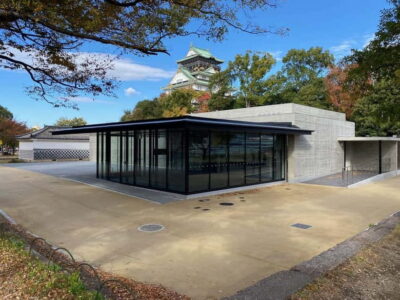
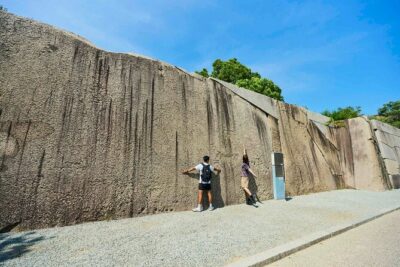
Osaka Castle Walking Tour and Castle Tower Admission
Read our review →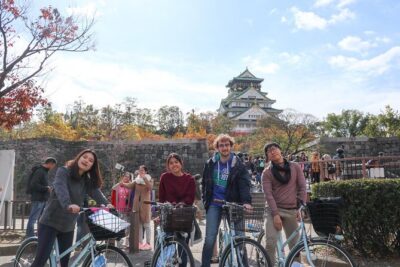
5-Hour Osaka Bike Tour to the Neighborhood of Osaka Castle
Read our review →
Castle History Walking Tour / Castle Tower Admission
Read our review →

PRIVATE 6hr, Food tour from Osaka Castle, Kuromon, Dotonbori.
Read our review →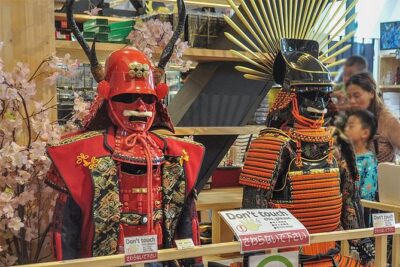
A Tour to Explore the Symbol of Osaka: Osaka Castle
Read our review →Browse the lists this tour appears in