
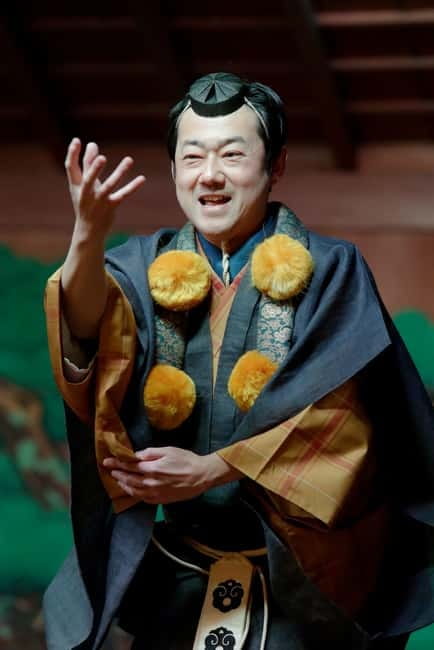
Reviewed · OSAKA SUMO & TRADITIONAL SHOWS
Osaka Traditional Performing Arts Heritage Night
Osaka’s traditional performing arts can feel like a locked room if you do not know the rules. This two-hour program opens the door with short samples of Noh, Kyogen, Bunraku, and Rakugo, then adds several less familiar Osaka forms. You are not asked to sit quietly and guess what is happening.
I like the plain explanations before each piece and the multilingual subtitles and materials, which make the show far more useful to an international audience. I also like the hands-on portion: a couple of audience members put on white socks and step onto the Noh stage to try elements of Osaka’s traditional arts. The main caution is age. The activity is not considered suitable for children under seven, and the quick changes between art forms may feel more like an introduction than a full-length performance.
In This Review
- Key points
- A sampler of Osaka arts at Yamamoto Noh Theater
- What the main performance forms add to the evening
- Why the explanations make a real difference
- The hands-on Noh stage moment
- How the two-hour pace works for different ages
- Is $32 a fair price?
- Who will get the most from this show?
- Practical things to know before you sit down
- Should you book Osaka Traditional Performing Arts Heritage Night?
- FAQ
- How long does Osaka Traditional Performing Arts Heritage Night last?
- How much does the experience cost?
- Where does the performance take place?
- Which traditional arts may be included?
- Is the experience available in English?
- Can audience members participate?
- Is the activity wheelchair accessible?
- Are children allowed to attend?
- Can I take photos or record video inside?
Key points
- Ten traditional forms in one two-hour program: The lineup can include Noh, Kyogen, Bunraku, Rakugo, Rokyoku, Kodan, Kamigata Mai, Gagaku, Onna Doraku, and Chikuzen Biwa.
- A rare chance to step onto the Noh stage: Selected audience members wear white socks and take part in a hands-on demonstration.
- English support is built into the show: Expect multilingual explanations, subtitles, and printed or digital materials for foreign visitors.
- A useful first meeting with Osaka culture: The omnibus format lets you compare several performing arts instead of committing to one long specialist show.
- Two hours at Yamamoto Noh Theater: The pace gives you a broad look at the subject without taking up an entire evening.
- Good value at $32: The price is reasonable if you want context, variety, and participation rather than only a passive performance.
A sampler of Osaka arts at Yamamoto Noh Theater
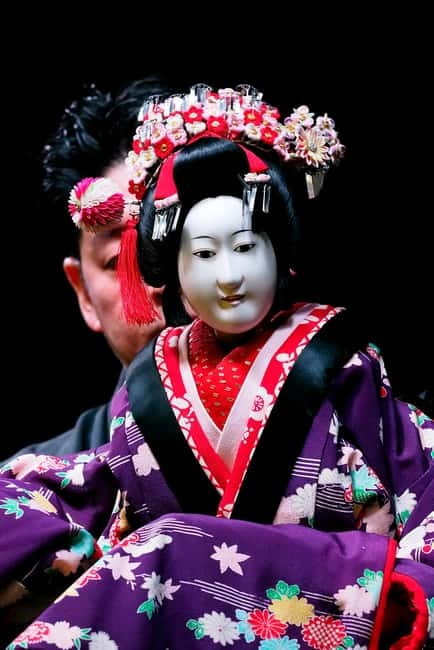
This is an omnibus performance, so think of it as a guided tasting menu rather than one extended play. You move from one traditional form to another, with explanations before the shorter presentations. That structure matters because many of these arts have their own vocabulary, rhythm, costumes, and stage customs.
The program may include Noh, Kyogen, Bunraku, Rakugo, Rokyoku, Kodan, Kamigata Mai, Gagaku, Onna Doraku, and Chikuzen Biwa. You may not see every form presented at equal length, but the point is comparison. In a single evening, you can notice how different kinds of storytelling and music work in Japan.
I find this format especially helpful for first-time visitors. A full Noh performance can be demanding if you arrive without context. Here, a short sample followed by an explanation gives you a way to listen and watch with purpose. The same is true for Bunraku or Rakugo, where the customs may not be obvious at first glance.
The show is presented at Yamamoto Noh Theater, and the Noh stage is not just a background detail. It becomes part of the program when audience members are invited to put on white socks and go up to try some of the traditional performing arts. You might be one of the selected participants, but you should expect to watch rather than assume you will take part.
More sumo, taiko and stage shows:
- Osaka: Sumo Show & Experience w/ Optional Kimono & Hot Pot
★ 4.5 · 609 reviews - Osaka: Sumo Stage Show with Bento or Snack + Fight & Photo
★ 4.3 · 364 reviews - Osaka: English Stand Up Comedy Show at Osaka Comedy Club
★ 4.7 · 203 reviews
What the main performance forms add to the evening
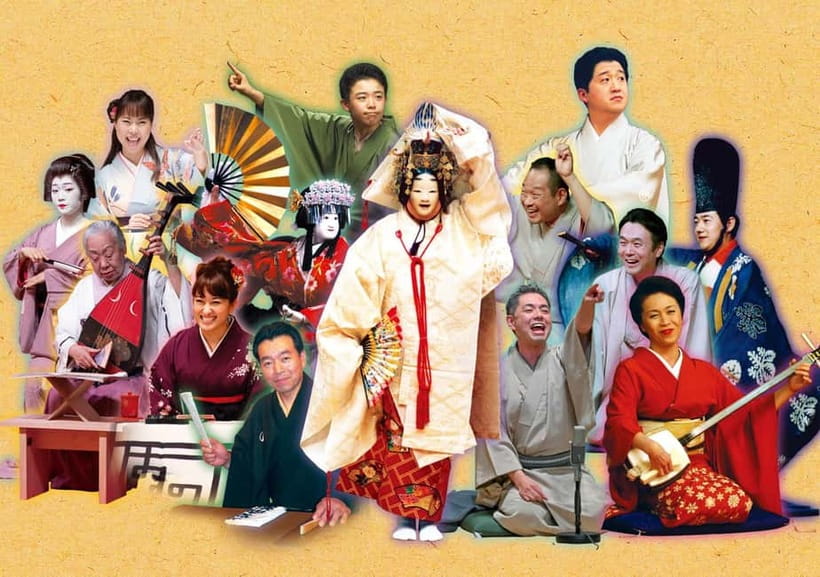
The strongest part of the program is its range. Noh and Kyogen appear together in the advertised lineup, giving you a chance to encounter both serious and comic sides of the classical stage. Their presence helps show that traditional Japanese theater is not one single mood.
Bunraku adds another major Osaka tradition to the evening. It is one of the forms named in the program, and its inclusion is important because Osaka has a strong connection with puppet theater. You do not need prior knowledge to appreciate a short introduction, especially when the host explains what to watch for.
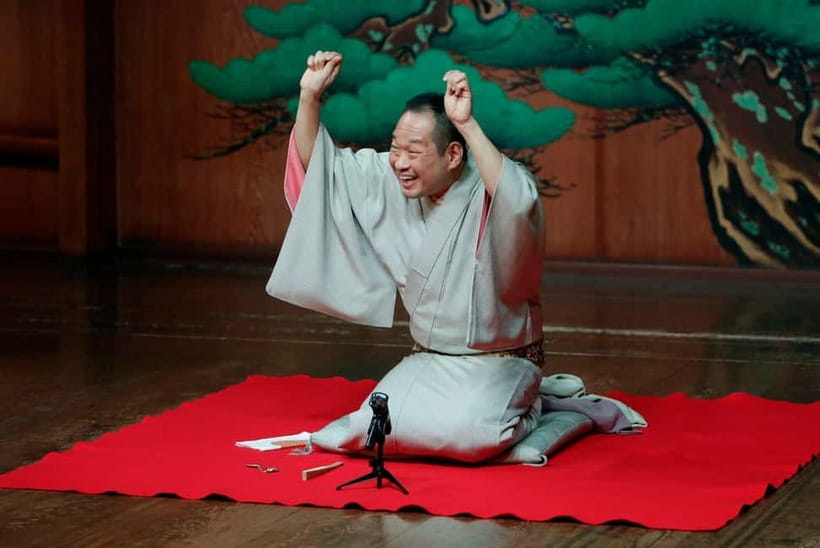
Rakugo offers a different kind of contrast. Instead of a large stage spectacle, the form is built around a seated storyteller, and its appeal depends heavily on language and timing. That is why subtitles and clear explanations are useful here. Even when you cannot catch every Japanese phrase, you can follow the setup and the shape of the story.
Rokyoku and Kodan broaden the picture again. They are listed among the possible traditional forms, alongside Kamigata Mai, Gagaku, Onna Doraku, and Chikuzen Biwa. You may know little about these before arriving, but that is part of the value. The show gives each name a place in a larger map of Osaka culture.
Do not expect a full lesson in every art. Two hours cannot provide that. Instead, you get a series of windows, each one offering enough information to make further exploration possible. If one form catches your attention, you will leave knowing what to search for later.
Why the explanations make a real difference
Traditional performance is easy to admire from a distance and hard to understand without guidance. A mask, instrument, gesture, or pause can carry meaning that is not clear to someone seeing it for the first time. The explanations before each smaller performance help remove that barrier.
English and Japanese are the stated languages, and the program includes multilingual explanations, subtitles, and materials for foreign visitors. English subtitles are available for the version described by one booking, and some performances are presented fully in English. Availability of exact language treatment can depend on the show version, so check the details when selecting your date.
This support is more than a convenience. It changes the evening from a string of attractive but confusing scenes into a lesson in how the arts differ. You can listen for the points explained in advance, then see how the performers put them into practice.
The subtitles also help with comedy and storytelling. Rakugo, Kyogen, Rokyoku, and Kodan depend on words, while other forms may rely more on music, movement, or visual presentation. If you are attending with someone who has never seen Japanese traditional theater, the language support gives that person a fair chance to follow along.
The materials can also help you remember the names afterward. With ten forms in the mix, it is easy to lose track of what you saw. A written guide gives you something to refer to once the lights come up.
The hands-on Noh stage moment
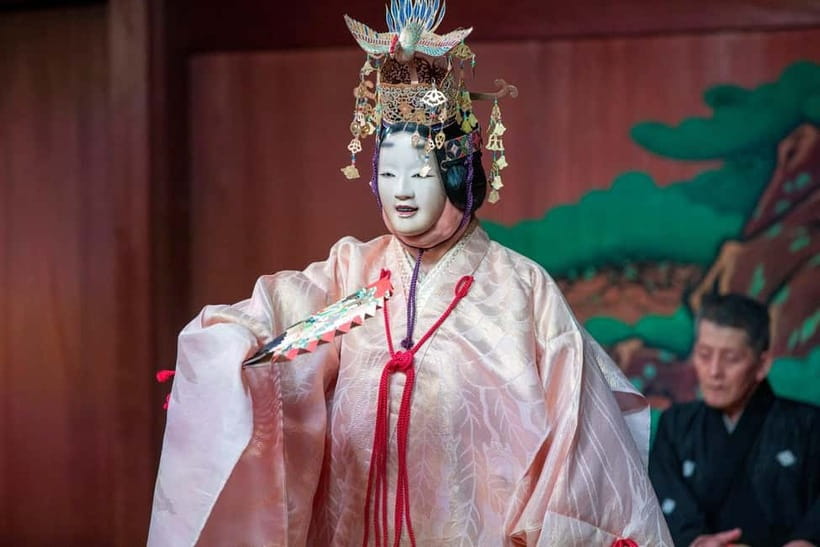
The interactive part is the feature that makes this more than a standard theater ticket. A couple of people from the audience wear white socks and step onto the Noh stage to experience elements of Osaka’s traditional performing arts.
That detail may sound small, but it changes the relationship between audience and stage. You are not only watching a performance from your seat. You see how the stage feels as a physical place, and you get a direct sense of the discipline behind these forms.
Participation is limited, so do not book on the assumption that you will be chosen. If you prefer to watch, the activity still works. The selected participants provide a useful demonstration for everyone else, and the host can explain what they are doing.
If you are shy about public participation, this should not stop you from booking. The program does not state that every audience member must go onstage. The hands-on element is an option for a small number of people, not a forced group exercise.
I would treat this portion as a bonus rather than the main reason to attend. The real value remains the range of performances and the explanations. Still, it is a memorable touch, especially for teenagers and adults who enjoy learning by doing.
A few more Osaka tours and experiences worth a look
- Osaka: Castle History Walking Tour / Castle Tower Admission
★ 4.9 · 230 reviews - Osaka: Osaka Castle & Historical Museum Guided Tour
★ 4.8 · 28 reviews - Osaka Castle & Samurai History Walking Tour
★ 5.0 · 22 reviews - Osaka: Kyoto & Nara & Uji Historical and Scenic One-Day Tour
★ 4.7 · 21 reviews
How the two-hour pace works for different ages
The duration is two hours, which is long enough to give the program substance but short enough to fit into an evening in Osaka. You get a broad introduction without giving up a whole day or committing to a long specialist production.
The quick movement between forms will suit you if you like variety. It keeps the evening moving and lets you compare several styles. On the other hand, you may find the format less satisfying if you already know one of these arts and want a detailed, uninterrupted performance.
Families should pay close attention to the age rule. The activity is listed as not suitable for children under seven. One family brought children aged eight and six and reported that both enjoyed the performances, but the published suitability guidance still says under seven is not appropriate. I would follow the official rule and avoid planning around an exception.
Older children and teenagers may do well here, especially if they enjoy history, theater, music, or learning how things are made. A verified booking from the United States described the program as educational and enjoyable for teenagers. That fits the format: there is enough visual change to hold attention, but the evening still asks you to listen.
Adults can enjoy it for the same reason. You do not need to be a theater specialist. The program is designed to give beginners and foreign visitors a way in.
Is $32 a fair price?
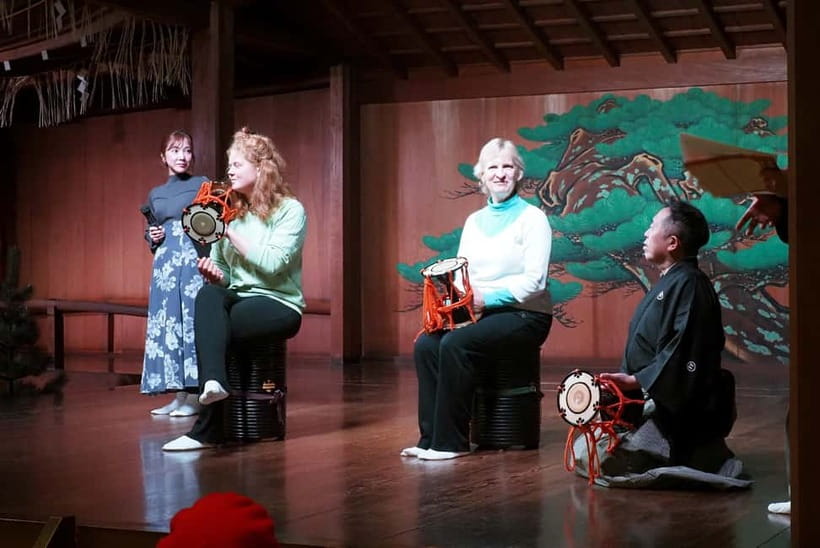
At $32 per person, I consider this a sensible cultural purchase in Osaka. You are paying for two hours, a performance covering several art forms, language support, explanatory material, and a hands-on element. That is a better value than paying a similar amount for a show you may not understand.
The comparison is not simply ticket price against running time. A traditional performance with no explanation can leave you admiring the surface while missing the point. Here, the introductory comments and subtitles give the program teaching value as well as entertainment value.
The tradeoff is depth. If you want to see a complete Noh play, a long Bunraku production, or an entire Rakugo program, this is not the right purchase. You are sampling, not receiving a full course in one art. For most first-time visitors, that is a sensible exchange.
I also like the flexibility offered at booking. You can reserve now and pay later, and cancellation is allowed up to 24 hours in advance for a full refund. Those terms help if your Osaka schedule is still changing. Starting times vary, so you need to check availability for the date you want.
Who will get the most from this show?
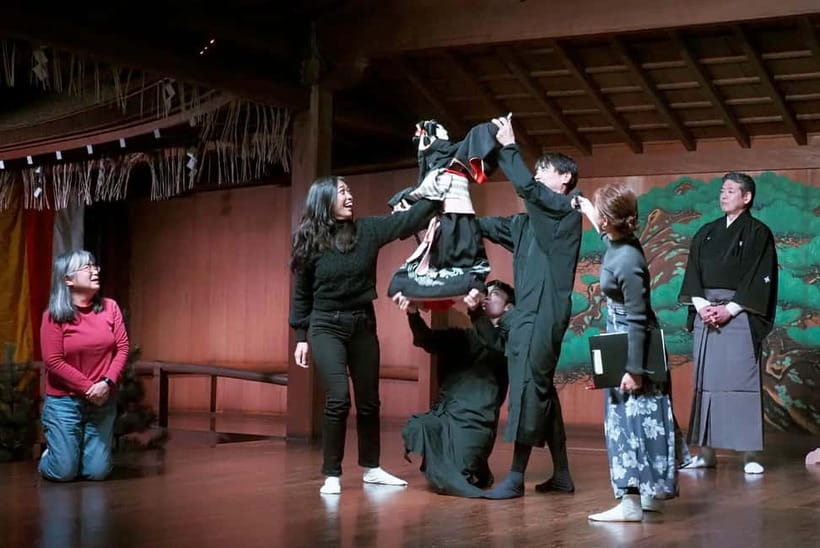
I would choose this for you if you want an organized introduction to Japanese performing arts without spending hours researching each form in advance. It is also a good match if you are curious about Osaka’s own traditions rather than looking only for the city’s food and modern attractions.
The program suits:
- First-time visitors to Japan who want cultural context
- Couples who prefer a seated evening activity
- Families with children aged seven or older, subject to the stated age guidance
- Teenagers who enjoy a mix of humor, history, and performance
- Visitors who need English support
- People deciding which traditional art they may want to see in greater depth later
It may not suit you if you want a single, serious performance with a slow pace. The variety is the selling point, but variety also means no one form receives the attention of a dedicated theater evening.
The program is wheelchair accessible, which removes one common barrier. English and Japanese are the stated support languages, so you should check the available version if someone in your group needs another language.
Practical things to know before you sit down
Photography and video recording are not allowed inside. This is worth knowing before you arrive, especially if you are used to documenting every part of a Japan trip. Plan to watch the show rather than film it.
The host or greeter speaks English and Japanese. That should make arrival and basic instructions easier for international visitors, while the subtitles and materials support the performance itself.
Because the event lasts two hours, plan it as a complete block in your schedule. Do not book a restaurant reservation that begins immediately afterward unless you have plenty of spare time. The exact start time depends on availability.
You may want to read the list of art forms before attending and choose two or three to watch for closely. With Noh, Kyogen, Bunraku, Rakugo, Rokyoku, Kodan, Kamigata Mai, Gagaku, Onna Doraku, and Chikuzen Biwa all in the program, a little preparation will help the names stay distinct.
The best approach is to arrive curious but not demanding. You are not getting ten complete performances. You are getting a guided survey, with enough context to understand why each form belongs in Osaka’s traditional arts story.
Should you book Osaka Traditional Performing Arts Heritage Night?
Book it if you want a clear, friendly starting point. The combination of many short performances, English support, subtitles, explanatory materials, and a small hands-on stage experience gives you more than a simple night at the theater. At $32, it offers solid value for visitors who want culture without a large time or money commitment.
Skip it if your goal is a full-length performance in one tradition. You will find the omnibus format too brief for serious study. For everyone else, especially first-time visitors, families with suitably aged children, and curious teenagers, this is an efficient way to see how many different Osaka traditions can share one evening.
FAQ
How long does Osaka Traditional Performing Arts Heritage Night last?
The activity lasts two hours.
How much does the experience cost?
The listed price is $32 per person.
Where does the performance take place?
The experience is provided by Yamamoto Noh Theater in Osaka on Honshu.
Which traditional arts may be included?
The program may include Noh, Kyogen, Bunraku, Rakugo, Rokyoku, Kodan, Kamigata Mai, Gagaku, Onna Doraku, and Chikuzen Biwa.
Is the experience available in English?
English and Japanese support are available. The program also provides multilingual explanations, subtitles, and materials for foreign visitors.
Can audience members participate?
Yes. A couple of audience members wear white socks and go onto the Noh stage for a hands-on experience of traditional performing arts. Participation is limited.
Is the activity wheelchair accessible?
Yes, the activity is wheelchair accessible.
Are children allowed to attend?
The activity is not suitable for children under seven years old.
Can I take photos or record video inside?
No. Photography and video recording are not allowed inside the theater.
Just added around Osaka
- Guided Tour of Some Attractions in Osaka by Private Car★ 5.0 · 3 reviews
- Nara Day Trip from Osaka with a Licensed Guide★ 5.0 · 3 reviews
- Osaka Early Morning Osaka Castle Tour Avoid Crowds★ 5.0 · 3 reviews
- Private Transfer Between Kyoto and Kansai Airport KIX★ 5.0 · 3 reviews
- Shared Arrival Transfer: Osaka Itami Airport to Osaka City★ 5.0 · 3 reviews
- Osaka: Sushi Making Class and Dotonbori Food Tour★ 4.7 · 3 reviews
- Osaka Night Photography Workshop★ 5.0 · 3 reviews
- Kyoto Full day Tour Kinkakuji, Kiyomizu-dera and Fushimi Inari★ 4.5 · 3 reviews
Osaka Sumo & Traditional Shows, compared.
Sumo Show & Experience w/ Optional Kimono & Hot Pot
Read our review →
Sumo Stage Show with Bento or Snack + Fight & Photo
Read our review →
English Stand Up Comedy Show at Osaka Comedy Club
Read our review →
Osaka Sumo Experience with Live Show and Audience Challenge
Read our review →
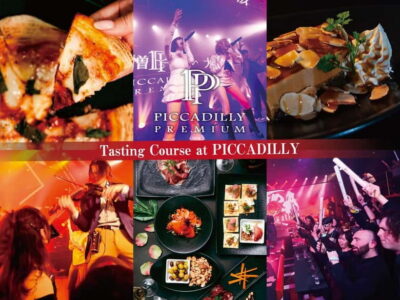
Osaka Umeda: PICCADILLY DINNER SHOW & NIGHTCLUB with Tasting
Read our review →Browse the lists this tour appears in