
Reviewed · OSAKA SUMO & TRADITIONAL SHOWS
Osaka Sumo Experience with Live Show and Audience Challenge
Sumo is far more than two large men pushing each other out of a ring. In this 90-minute Osaka show, you’ll see the rituals, rules, training methods, and dramatic tachiai match that give the sport its force and ceremony. Retired sumo wrestlers lead the demonstrations, then selected audience members can try a bout themselves.
I like the clear English guidance and the chance to learn while watching real athletes demonstrate their craft. I also like the audience participation, which turns a simple performance into a lively cultural lesson. The main caution is practical: ring participants may find the supplied clothes and sandals too small, and only limited audience members can take part.
In This Review
- Key points at a glance
- What the Osaka sumo show really offers
- The rituals and rules before the action
- Retired wrestlers bring the tachiai to life
- Your chance to wrestle a sumo wrestler
- A show built for participation, not passive viewing
- Location, timing, and group size in Osaka
- Is $55.50 a fair price?
- Who will enjoy this most?
- Practical tips before you go
- Cancellation and booking flexibility
- Should you book the Osaka sumo experience?
- FAQ
- Where does the Osaka sumo experience begin?
- Where does the activity end?
- How long does the sumo experience last?
- Is an English-speaking guide included?
- Can I wrestle with a sumo wrestler?
- Are meals included?
- Is private transportation included?
- How many people can join the activity?
- Can I cancel for a full refund?
Key points at a glance
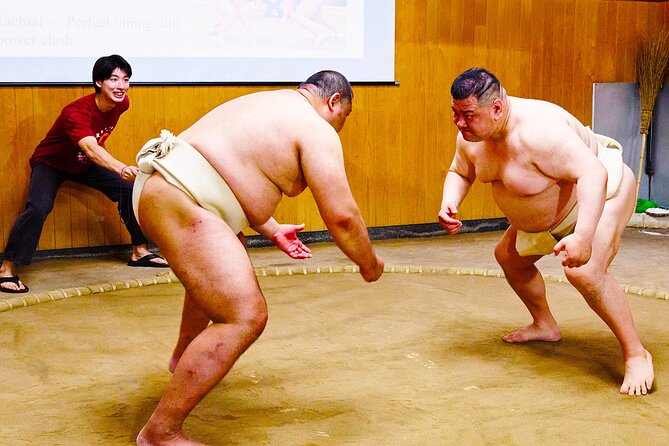
- Retired wrestlers perform the tachiai: See the explosive opening clash and other classic techniques up close.
- The audience can enter the ring: A limited number of volunteers get to face a sumo wrestler in a supervised bout.
- English explanation throughout: Learn the rules, rituals, and development of sumo without needing Japanese.
- Small enough to feel involved: The group limit is 50 people, so the show is not designed as a huge arena spectacle.
- Simple, central logistics: The experience begins and ends at AI Building in Osaka’s Nishinari Ward, near public transportation.
- Good value for a short cultural stop: At $55.50, the price covers the show and English-speaking guide for about an hour and a half.
What the Osaka sumo show really offers
This experience gives you a compact look at sumo as both sport and ceremony. You are not attending a full professional tournament, and you should not expect a long day at a traditional sumo stable. Instead, you get a focused stage presentation built around explanation, demonstrations, and audience involvement.
That format works well if you want to understand what you are seeing. Sumo can seem simple at first glance: two wrestlers meet, and one loses balance or leaves the ring. The presentation helps explain the discipline behind each movement, along with the customs that surround the contest.
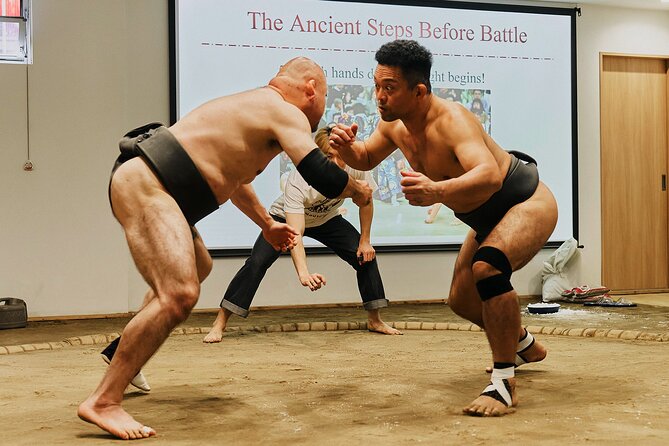
The show includes demonstrations of authentic training and legendary techniques. You will also see the tachiai, the powerful opening charge that sets the tone for a match. With retired wrestlers performing, the emphasis is on skill, control, and explanation rather than a formal professional bout.
I especially like that the event does not treat sumo as a novelty act. The humor and crowd energy are part of the fun, but the instruction gives the sport proper respect. You learn why a bout can finish quickly and still require years of training.
More sumo, taiko and stage shows:
- Osaka: Sumo Show & Experience w/ Optional Kimono & Hot Pot
★ 4.5 · 609 reviews - Osaka: Sumo Stage Show with Bento or Snack + Fight & Photo
★ 4.3 · 364 reviews - Osaka: English Stand Up Comedy Show at Osaka Comedy Club
★ 4.7 · 203 reviews
The rituals and rules before the action
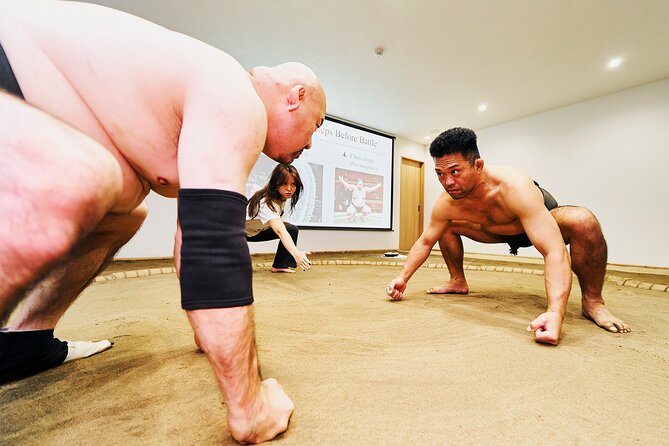
The first part of the experience focuses on sumo’s background, rules, and sacred rituals. This matters because many familiar sumo gestures have meaning beyond simple showmanship. The movements, stance, and preparation help set sumo apart from ordinary wrestling.
You will receive guidance in English, which makes this a practical choice for visitors who want context without trying to follow a Japanese-language presentation. The guide explains how sumo developed and how it became the sport you see today.
The information is pitched for newcomers, but established sumo fans should still find value in seeing the techniques performed at close range. The format also gives you a chance to ask yourself better questions. Why is balance so important? How can a match end almost instantly? What makes a wrestler’s initial charge so decisive?
The show is described as informative as well as entertaining, and that balance is one of its strongest features. You get enough explanation to make the physical demonstrations easier to understand, but the event does not appear to turn into a long lecture.
Retired wrestlers bring the tachiai to life
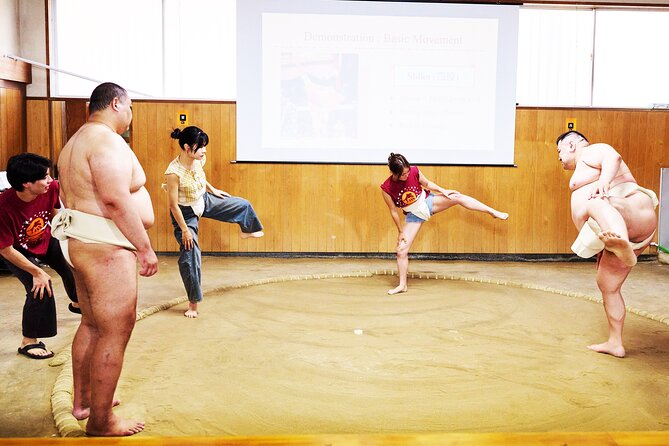
The tachiai is the moment most people are waiting for. Wrestlers crouch, prepare, and launch into the opening clash with startling speed and force. Seeing retired sumo wrestlers demonstrate this technique gives you a useful sense of timing and power without the formality of a tournament setting.
The demonstrations also include training and famous sumo techniques. These sections help break up the show and show that success depends on more than size. Positioning, footwork, leverage, and balance all play a part.
You should keep your expectations realistic. This is a demonstration featuring retired wrestlers, not a live professional tournament with ranked competitors. The benefit is that the athletes can focus on teaching, interacting with the audience, and showing how the sport works.
That makes the experience especially good for families, first-time visitors, and anyone who has watched sumo on television but never understood the details. The physical action catches your attention, while the guide’s explanations help you see the technique behind it.
Your chance to wrestle a sumo wrestler
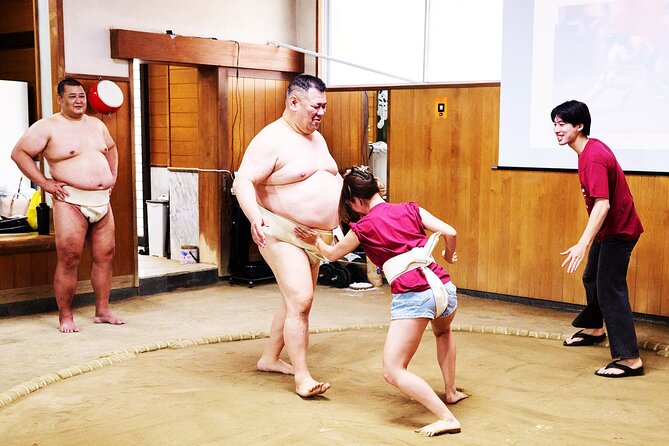
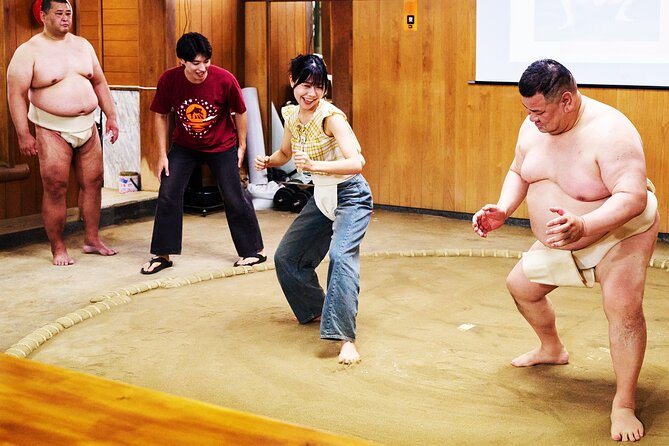
The most memorable part for many people will be the audience challenge. A limited number of volunteers can step into the ring and try a bout with a sumo wrestler. The idea sounds amusingly simple until you realize how difficult it is to move someone who is trained to keep a low, stable base.
This is not presented as a serious contest. It is a supervised, playful part of the show that lets you feel the challenge of sumo for yourself. Audience participation also creates the friendly atmosphere that many people value most about the experience.
You do not have to volunteer to enjoy the event. You can watch others take their turn, learn from the demonstration, and enjoy the reactions around you. If you do want to participate, limited spaces mean you should be ready when the opportunity is offered.
There is one useful warning. Clothing and sandals may not fit every body comfortably, particularly for larger participants. If you are hoping to take part, consider this a possibility rather than a guarantee, and remember that the event’s main value does not depend on entering the ring.
A completely different way to spend a day in Osaka:
- Osaka Go Karting Tour with Funny Costume
★ 5.0 · 2,658 reviews - Osaka Castle: Museum and Tower Entry Ticket
★ 4.5 · 2,380 reviews - Osaka: Shinsekai Food Tour with 13-15 Dishes at 5 Eateries
★ 4.8 · 2,204 reviews - Osaka Food Tour: 13 Dishes at 5 Local Eateries
★ 5.0 · 2,149 reviews
A show built for participation, not passive viewing
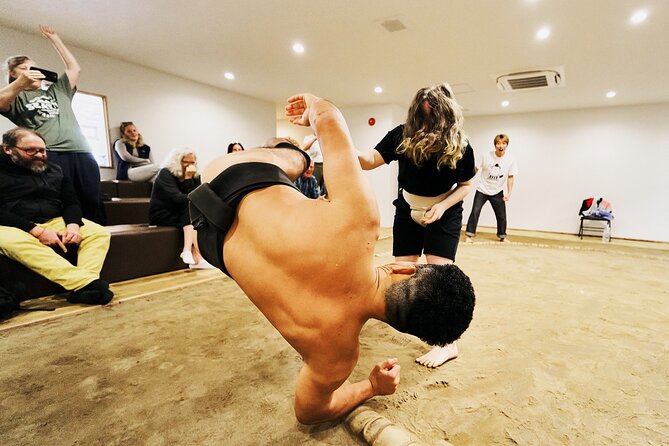
Many cultural performances ask you to sit quietly and watch. This one invites you to respond, laugh, learn, and possibly take part. The audience challenge changes the mood from a formal presentation into a shared activity.
That approach works particularly well if you are visiting Osaka with children, teenagers, or friends who enjoy hands-on experiences. The show gives everyone something to follow, and the interactive section adds a personal memory to the historical explanation.
At the same time, this format may not suit someone seeking a quiet, highly formal study of sumo. The atmosphere includes laughs and crowd participation. That is part of its appeal, but it means the experience is best understood as an educational show with live action rather than a solemn cultural ceremony.
The English-speaking guide is important here. Clear explanations help the audience understand what is happening, while the wrestlers provide the physical example. The combination is more useful than watching a demonstration without context.
Location, timing, and group size in Osaka
The meeting point is at AI Building, Japan, 557-0032, in Nishinari Ward’s Asahi area, at 1-chōme51. The activity begins and ends at this same meeting point, and it is near public transportation.
You will need to arrange your own route to the building. Private transportation is not included, and meals are not included either. Since the activity lasts about an hour and a half, it fits neatly into a day of sightseeing, provided you allow enough time to reach the address.
The maximum group size is 50 people. That is large enough to create energy during the audience challenge but smaller than a major arena production. Your exact view and level of interaction can depend on where you are seated and how many people volunteer.
A mobile ticket is included, which keeps the arrival process simple. Your booking confirmation is received at the time of booking, so keep the ticket accessible on your phone when you arrive.
Is $55.50 a fair price?
At $55.50 per person, this is not the cheapest short activity in Osaka. It is also more than a basic museum visit. The value comes from combining a live performance, English instruction, access to retired wrestlers, and the possibility of entering the ring.
I think the price is reasonable if you want a clear introduction to sumo and prefer an organized experience over trying to decode the sport on your own. You are paying for a tightly planned cultural activity that delivers action as well as explanation.
The value is weaker if you already know sumo well and mainly want to watch top-level competition. This event is not a tournament ticket, and it does not replace seeing professional sumo during an official meet. Its strength is access, clarity, and participation.
The short duration also helps justify the cost for a busy Osaka itinerary. You get a substantial cultural activity without committing half a day. Since meals and transportation are extra, factor those costs into your plan, but the main price is straightforward.
Who will enjoy this most?
I would recommend this show to first-time sumo viewers, families, couples, and small groups of friends. You get enough background to understand the basics, while the demonstrations and audience challenge keep the experience lively.
It is also a good match for anyone who wants a cultural activity with a clear English explanation. The guide covers the rules and history, and the wrestlers make the lesson physical and easy to follow.
Fans of Japanese martial arts may enjoy the details about training and technique. The event also suits people who have seen sumo on television but never understood the rituals or the importance of the opening clash.
I would be more cautious about recommending it to someone seeking a formal tournament atmosphere, a full day of sumo, or a guaranteed chance to wrestle. The audience challenge has limited spaces, and participation is not the whole experience.
Practical tips before you go
Check the meeting address carefully before leaving. The activity begins and ends at the same location, but private transportation is not included, so plan your public transportation route in advance.
Keep your mobile ticket ready and arrive prepared to follow the guide’s instructions. The group can include up to 50 people, and the interactive parts work best when everyone can hear the explanations.
If you hope to participate, wear something that allows comfortable movement. The supplied clothes and sandals may not fit everyone well, so do not count on the costume being perfect. You can still enjoy the demonstrations if you do not enter the ring.
Think of the show as a compact introduction, not a substitute for professional sumo competition. That framing will help you appreciate what it does well: explain the sport, show its rituals, and let you feel some of its physical challenge in a friendly setting.
Cancellation and booking flexibility
You can cancel for a full refund if you do so at least 24 hours before the local start time. Cancellations made less than 24 hours in advance are not refunded, and changes within that period are not accepted.
That policy is fairly flexible for a scheduled activity, but Osaka plans can shift quickly. If you are unsure about your day, avoid booking too close to the deadline. Confirmation arrives when you book, and the mobile ticket makes the reservation easy to carry.
Should you book the Osaka sumo experience?
Book it if you want an energetic, understandable introduction to sumo with real demonstrations and a chance to participate. The strongest reasons are the English-speaking guide, the retired wrestlers, the tachiai display, and the friendly audience challenge.
Skip it if your priority is watching an official professional match or having a guaranteed wrestling bout. For most first-time visitors, though, $55.50 buys more than a staged photo opportunity. It gives you useful cultural context, live technique, and a memorable chance to see why sumo is much harder than it looks.
FAQ
Where does the Osaka sumo experience begin?
It begins at AI Building in Asahi, 1-chōme51, Nishinari Ward, Osaka, Japan, postal code 557-0032.
Where does the activity end?
The experience ends back at the same meeting point where it begins.
How long does the sumo experience last?
It lasts approximately 1 hour and 30 minutes.
Is an English-speaking guide included?
Yes. An English-speaking guide is included and explains the history, rules, rituals, and techniques of sumo.
Can I wrestle with a sumo wrestler?
A limited number of audience members can step into the ring and face a sumo wrestler. Participation is not guaranteed for every person attending.
Are meals included?
No. Meals are not included in the experience.
Is private transportation included?
No. You are responsible for reaching the meeting point, although the location is near public transportation.
How many people can join the activity?
The maximum group size is 50 people.
Can I cancel for a full refund?
Yes, if you cancel at least 24 hours before the experience’s local start time. Cancellations or changes made less than 24 hours before the start are not accepted for a refund.
Just added around Osaka
- Guided Tour of Some Attractions in Osaka by Private Car★ 5.0 · 3 reviews
- Nara Day Trip from Osaka with a Licensed Guide★ 5.0 · 3 reviews
- Osaka Early Morning Osaka Castle Tour Avoid Crowds★ 5.0 · 3 reviews
- Private Transfer Between Kyoto and Kansai Airport KIX★ 5.0 · 3 reviews
- Shared Arrival Transfer: Osaka Itami Airport to Osaka City★ 5.0 · 3 reviews
- Osaka: Sushi Making Class and Dotonbori Food Tour★ 4.7 · 3 reviews
- Osaka Night Photography Workshop★ 5.0 · 3 reviews
- Kyoto Full day Tour Kinkakuji, Kiyomizu-dera and Fushimi Inari★ 4.5 · 3 reviews
Osaka Sumo & Traditional Shows, compared.
Sumo Show & Experience w/ Optional Kimono & Hot Pot
Read our review →
Sumo Stage Show with Bento or Snack + Fight & Photo
Read our review →
English Stand Up Comedy Show at Osaka Comedy Club
Read our review →



Osaka Umeda: PICCADILLY DINNER SHOW & NIGHTCLUB with Tasting
Read our review →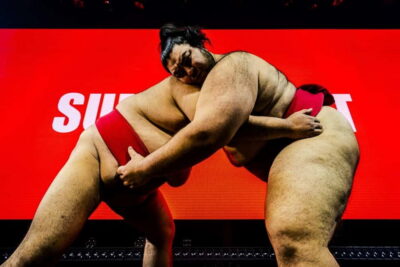
SUMO BEATS SHOWCASE: Taiko Drum and Wagyu burger!
Read our review →Browse the lists this tour appears in