
Reviewed · SHINSEKAI & RETRO OSAKA TOURS
Osaka: Shinsekai Food Tour – 13 Dishes and 4 Eateries
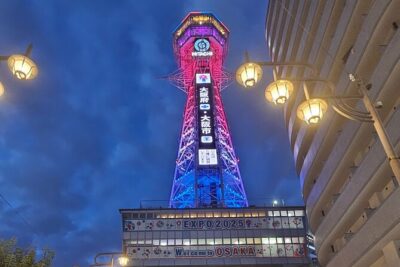
Shinsekai is Osaka at its most delightfully odd: a district of neon signs, old-fashioned alleys, sizzling snacks, and a shrine tucked into the noise. This three-hour walk links 13 food tastings at four eateries with the local corners you could easily miss on your own.
I like the mix of famous bites and less familiar dishes, especially kushikatsu and doteyaki. I also like that the food is tied to place, with time for Janjan Yokocho and Shinsekai Inari Shrine rather than one restaurant stop after another. The main consideration is simple: $77 is a fair price only if you value guidance, several tastings, and local context. If you prefer to graze cheaply on your own, this will cost more.
In This Review
- Key points
- Why Shinsekai works so well for a food walk
- The meeting point at Daily Yamazaki
- Takoyaki, taiyaki, and Osaka’s everyday snacks
- Kushikatsu is the main reason to bring an appetite
- Doteyaki adds a softer, richer flavor
- Four eateries keep the food moving
- Janjan Yokocho shows the older side of Shinsekai
- A quiet pause at Shinsekai Inari Shrine
- What the guides add to the experience
- Is $77 a fair price for three hours?
- Who should book this Shinsekai food tour?
- Practical booking advice for Osaka
- Should you book it?
- FAQ
- Where does the Osaka Shinsekai food tour begin?
- How long does the food tour last?
- How many dishes are included?
- How many eateries does the tour visit?
- What foods can I expect to try?
- Is the tour conducted in English?
- Are Janjan Yokocho and Shinsekai Inari Shrine included?
- How much does the experience cost?
- Can I cancel for a refund?
- Can I reserve now and pay later?
Key points
- Thirteen tastings at four eateries: Try a broad sample of Osaka food rather than filling up at one restaurant.
- Kushikatsu and doteyaki: The tour covers two Shinsekai specialties that are easy to overlook when you stick to takoyaki.
- Janjan Yokocho alley: Walk through one of the district’s most characterful old shopping and food lanes.
- Shinsekai Inari Shrine: Add a quiet cultural stop to a food walk dominated by bright signs and busy streets.
- English-speaking local guides: Bell, Bel, and Tara are named among the guides associated with the experience.
- Three hours in one neighborhood: The pace gives you time to eat, walk, and hear the story behind the area.
Why Shinsekai works so well for a food walk
Osaka is famous for casual eating, and Shinsekai gives that reputation a very particular setting. The district has a nostalgic feel that is different from the polished shopping streets and large department stores elsewhere in the city. Here, the appeal is the combination of old lanes, colorful signs, small eateries, and foods made for eating in relaxed surroundings.
That setting matters. A plate of kushikatsu tastes more meaningful when you understand its place in Shinsekai’s food culture. Takoyaki is not just a round ball of batter with octopus inside. It is part of Osaka’s everyday snack tradition, served hot and made for sharing or eating as you walk.
You meet at the Daily Yamazaki in Ebisu Higashi. From there, the guide leads you through the neighborhood rather than simply bringing you to a single famous restaurant. That format is useful if this is your first time in Shinsekai, since the district can feel like a maze of side streets and signs at first.
The tour is conducted in English. Bell is named as a guide, and Bel and Tara are also associated with the experience. Their role is more than ordering food. You get explanations of the dishes, Japanese food customs, and the local setting as you move between stops.
More of retro Shinsekai and the backstreets:
- Osaka: Shinsekai Food Tour with 13-15 Dishes at 5 Eateries
★ 4.8 · 2,204 reviews - Osaka Local Foodie Walking Tour in Dotonbori and Shinsekai
★ 5.0 · 985 reviews - Osaka: Tsutenkaku Tower Entry Ticket
★ 3.8 · 125 reviews
The meeting point at Daily Yamazaki
The Daily Yamazaki in Ebisu Higashi is the starting point, so allow enough time to find it before the three-hour walk begins. The supplied details do not specify a group size or exact meeting procedure beyond the shop location, so you should check your booking confirmation for the precise start time and any day-specific instructions.
Beginning at a convenience store may sound ordinary, but it gives the tour a clear, practical meeting point in Shinsekai. You are not being asked to find a hard-to-identify doorway or a restaurant table in a crowded lane. Once you meet the guide, the neighborhood becomes the focus.
The tour is best approached with an appetite, but not an empty stomach that makes you rush through the first dishes. Thirteen tastings can add up quickly, especially when fried foods and warm snacks are involved. Pace yourself from the start, since the point is to sample a range of Osaka flavors over three hours.
Takoyaki, taiyaki, and Osaka’s everyday snacks
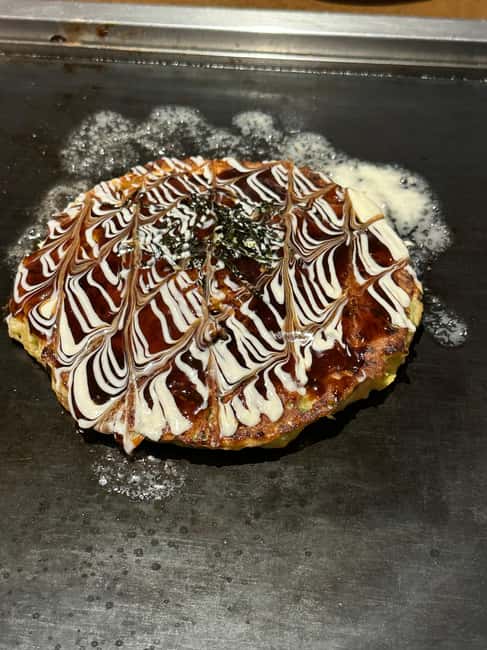
Takoyaki is one of the central foods on this walk. These hot, round snacks are made with batter and octopus, then served with sauces and toppings. The appeal is partly taste and partly texture: the outside and inside offer a contrast, and the dish is usually served very hot.
That heat is worth respecting. Let the first piece cool slightly before eating it, or you may spend more time managing the temperature than noticing the flavor. A guide can also explain how the dish fits into Osaka’s food identity, which adds useful context to a snack you may already have seen elsewhere in Japan.
Taiyaki provides a sweeter change of pace. This traditional pastry is shaped like a fish and served warm, with a flaky outer layer and a sweet filling. The exact filling is not specified, so do not assume a particular flavor before ordering. It is a welcome contrast after savory dishes and gives the food list a better range.
The tour also includes more than one mention of takoyaki and specifically identifies taiyaki for those who enjoy sweets. That makes the route suitable for a mixed group, provided everyone is comfortable sharing the overall emphasis on Osaka street food.
Kushikatsu is the main reason to bring an appetite
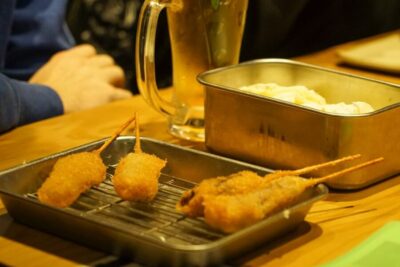
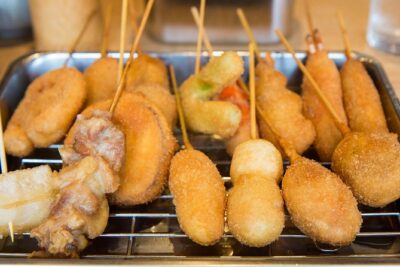
Kushikatsu is the dish that deserves special attention. These are skewers coated and fried until golden, and they are closely linked with Shinsekai. The food is simple in concept, but the pleasure comes from variety, crisp coating, and the chance to try several skewered items in one sitting.
The tour describes the kushikatsu as juicy and golden, and the strongest praise from the supplied comments is directed at this dish. If you have limited room, save some appetite for it. It may be the most memorable savory stop of the afternoon.
Kushikatsu also shows why a neighborhood food tour can be more useful than a general Osaka food list. You are not only tasting fried skewers. You are eating a specialty in the part of Osaka most closely connected with this style of casual dining.
The exact skewer selection is not provided, so you should not expect a guaranteed list of meats or vegetables. If you have dietary restrictions, ask before booking or contact the provider in advance. The available information confirms the food theme, but it does not promise vegetarian, allergy-free, or religious-diet options.
More street food walks and tastings:
- Osaka Food Tour: 13 Dishes at 5 Local Eateries
★ 5.0 · 2,149 reviews - Hungry Osaka Street Food Tour:15 Tastings & 3 Drinks with a Local
★ 5.0 · 1,727 reviews - Hungry Osaka Street Food Tour: 15 Dishes & 3 Drinks
★ 4.9 · 694 reviews - Kuromon Market Food Walking Tour in Osaka (6 stops, 6 tastes)
★ 5.0 · 550 reviews
Doteyaki adds a softer, richer flavor
Doteyaki brings a different texture to the tour. It is described as melt-in-your-mouth and is presented as one of Osaka’s local specialties. Compared with crisp fried food, this is the kind of dish that gives the meal a slower, more savory note.
The name may be unfamiliar even to people who already know takoyaki and kushikatsu. That is one of the tour’s strengths. You get a chance to try food that may not be on your personal Osaka shortlist, while the guide explains what you are eating and why it belongs in this neighborhood.
Because the full 13-dish menu is not published in the available details, you should think of the named foods as confirmed examples rather than a complete menu. The tour promises Osaka street food tastings at four eateries, with takoyaki, taiyaki, kushikatsu, and doteyaki specifically highlighted.
Four eateries keep the food moving
Stopping at four eateries gives the experience a useful rhythm. Instead of sitting in one place for a full meal, you move through the district and compare different kinds of food along the way. That structure also helps you see Shinsekai as a neighborhood rather than a backdrop for lunch.
A three-hour duration is long enough for walking, eating, and explanations without turning the experience into an all-day commitment. You will need to remain comfortable moving between stops, though the listing does not provide a walking distance or a detailed accessibility statement.
The number of eateries is also important when judging the $77 price. You are paying for a guided route, 13 tastings, local interpretation, and visits to two notable sites. It is not the cheapest way to eat in Osaka, but it can be good value if you want a planned introduction and would otherwise spend time guessing which places to enter.
On the other hand, the price may feel high if you already know Shinsekai, speak Japanese, and enjoy choosing small portions on your own. Independent eating gives you more control over cost, menu, and timing. This tour gives you less control but more structure.
Janjan Yokocho shows the older side of Shinsekai
Janjan Yokocho alley is one of the route’s most useful stops for understanding the area. The alley adds atmosphere and local character between food tastings, and it gives you a chance to see how Shinsekai’s narrow lanes differ from Osaka’s larger commercial streets.
Do not expect a museum-style visit. The value is in walking through the alley with someone who can point out details and explain how the area fits into Osaka. The available information does not promise specific shops, historical buildings, or a formal tour of the alley, so the experience is best understood as a guided neighborhood walk.
This is also where the tour’s nostalgic mood comes into focus. Shinsekai is not being presented as a spotless theme park. Its charm comes from the mix of old and lively, familiar and slightly rough around the edges. If you like places with a strong local personality, this part of the route should appeal to you.
A quiet pause at Shinsekai Inari Shrine
The visit to Shinsekai Inari Shrine gives the tour a welcome change of pace. After bright signs, cooking smells, and the constant movement of food stops, a shrine offers a quieter place to pause and look around.
Bell receives particular praise for explaining the shrine’s history and for sharing broader information about Japan. That cultural explanation is valuable because the shrine is not treated as a quick photo stop. You have a chance to understand why a religious site can sit comfortably within a busy entertainment and food district.
The contrast is the point. You do not need a full day at the shrine for it to add something important to the tour. A brief, well-explained visit can help you see Shinsekai as more than a collection of restaurants and signs.
As with Janjan Yokocho, the exact amount of time at the shrine is not provided. Expect it to be one part of a larger route rather than the central attraction. Dress and behave respectfully at the shrine, and follow the guide’s instructions about where to stand and how to observe the site.
What the guides add to the experience
The food is the obvious draw, but the guide determines how much you get from it. Bell is specifically praised for explaining food and Japanese culture, while Bel and Tara are also named for sharing local insight. The repeated praise for the guides suggests that the conversation and interpretation are central parts of the experience.
That is especially helpful when the food is unfamiliar. A guide can explain what you are tasting, how the dish is normally eaten, and what makes it associated with Osaka. You can also ask questions during the walk rather than trying to research each dish later.
The guide can make the route feel more personal, but the available details do not state the group size or guarantee a particular guide. If having Bell specifically matters to you, confirm availability with Travel Tokyo before booking.
The language is English. That makes this a practical choice if you want cultural explanations without relying on a translation app or trying to decode menus alone.
Is $77 a fair price for three hours?
At $77 per person, the tour sits above the cost of simply buying one or two Osaka snacks. The comparison is not quite fair, though, because the price includes 13 tastings at four eateries, an English-speaking guide, a walk through Janjan Yokocho, and a visit to Shinsekai Inari Shrine.
The best value comes from breadth. You can sample several foods without ordering full portions at multiple places, and you get a route that has already been organized. You also avoid the uncertainty of choosing restaurants when you do not know the menu or local etiquette.
The weaker value is for confident independent eaters. If your priority is the lowest possible food bill, $77 buys a lot of snacks when spent directly. You may also prefer to linger at one kushikatsu restaurant instead of moving between four eateries.
I would consider the price reasonable for a first Osaka visit if you enjoy food, want English explanations, and have only a short amount of time in Shinsekai. It is less compelling as a repeat experience for someone who has already explored the area and knows which dishes and restaurants they prefer.
Who should book this Shinsekai food tour?
This experience suits you if you want a ready-made introduction to Osaka food culture without spending hours researching restaurants. It is particularly useful for first-time visitors who want to try local specialties but would rather not order unfamiliar dishes alone.
Food-focused couples, small groups, and curious solo visitors should find the format easy to appreciate. The three-hour length also fits neatly into a day of sightseeing, although you should plan around the fact that 13 tastings may count as a substantial meal.
You should think twice if you dislike fried food, are a very selective eater, or need a menu tailored to allergies. Kushikatsu, takoyaki, taiyaki, and other casual specialties form the core of the experience, and the available details do not confirm substitutions.
This is also not the right choice if you want a formal historical tour of Osaka. Culture is included through the neighborhood walk and shrine visit, but food remains the main event.
Practical booking advice for Osaka
The tour lasts three hours, and starting times vary. Check availability for your preferred date rather than assuming a morning or evening departure. The meeting point is the Daily Yamazaki in Ebisu Higashi, so make sure you have the address ready before setting out.
Travel Tokyo allows free cancellation up to 24 hours in advance for a full refund. You can also reserve now and pay later, which is useful if your Osaka schedule is still changing.
The activity is listed as an English-language tour. A local guide is included, along with the street food tastings, Janjan Yokocho, and Shinsekai Inari Shrine. The information does not provide a precise dish-by-dish menu, group size, transportation details, or accessibility information, so ask Travel Tokyo if any of those points affect your decision.
A little restraint helps. Since the route includes 13 dishes, do not arrive after a large meal. At the same time, pace yourself and treat the early takoyaki as a sample rather than a signal to eat as quickly as possible. You want enough room for the kushikatsu, doteyaki, and taiyaki later on.
Should you book it?
Book this tour if you want Osaka food served with a sense of place. The combination of four eateries, 13 tastings, Janjan Yokocho, and Shinsekai Inari Shrine gives you more than a list of snacks. You get a guided introduction to one of Osaka’s most distinctive districts, with kushikatsu as a likely highlight and Bell, Bel, or Tara providing the English commentary.
Skip it if you are focused on the lowest food cost, need a guaranteed custom menu, or already know Shinsekai well. For most first-time visitors who want to taste widely and understand what they are eating, $77 is a reasonable price for three organized hours.
FAQ
Where does the Osaka Shinsekai food tour begin?
The tour begins at the Daily Yamazaki in Ebisu Higashi.
How long does the food tour last?
The experience lasts three hours.
How many dishes are included?
The tour includes 13 food tastings.
How many eateries does the tour visit?
The route includes four eateries.
What foods can I expect to try?
Named specialties include takoyaki, taiyaki, kushikatsu, and doteyaki. The full list of 13 dishes is not provided.
Is the tour conducted in English?
Yes. The activity includes a live English-speaking guide.
Are Janjan Yokocho and Shinsekai Inari Shrine included?
Yes. The tour includes visits to Janjan Yokocho alley and Shinsekai Inari Shrine.
How much does the experience cost?
The listed price is $77 per person.
Can I cancel for a refund?
Yes. You can cancel up to 24 hours in advance for a full refund.
Can I reserve now and pay later?
Yes. The booking option allows you to reserve your place and pay later.
Just added around Osaka
- Nara Day Trip from Osaka with a Licensed Guide★ 5.0 · 3 reviews
- Osaka Early Morning Osaka Castle Tour Avoid Crowds★ 5.0 · 3 reviews
- Guided Tour of Some Attractions in Osaka by Private Car★ 5.0 · 3 reviews
- Private Transfer Between Kyoto and Kansai Airport KIX★ 5.0 · 3 reviews
- Shared Arrival Transfer: Osaka Itami Airport to Osaka City★ 5.0 · 3 reviews
- Osaka: Sushi Making Class and Dotonbori Food Tour★ 4.7 · 3 reviews
- Osaka Night Photography Workshop★ 5.0 · 3 reviews
- Kyoto Full day Tour Kinkakuji, Kiyomizu-dera and Fushimi Inari★ 4.5 · 3 reviews
Shinsekai & Retro Osaka Tours, compared.

Shinsekai Food Tour with 13-15 Dishes at 5 Eateries
Read our review →
Osaka Local Foodie Walking Tour in Dotonbori and Shinsekai
Read our review →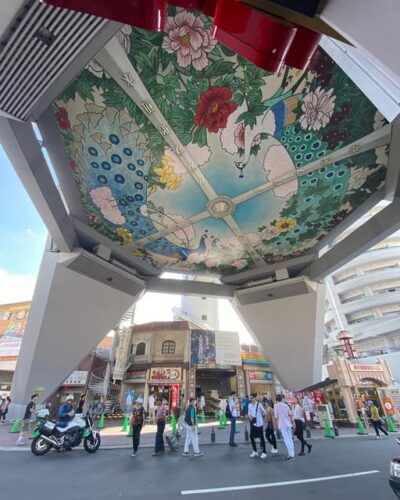
Shinsekai Food Tour – 13 Dishes at 5 Local Eateries
Read our review →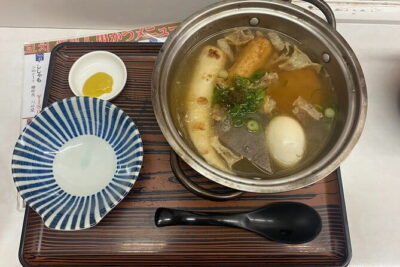
Night Soul Food Tour in Shinsekai with a local guide
Read our review →
Osaka Morning Tour: Shitennoji Temple, Shinsekai &Doutonbori
Read our review →Browse the lists this tour appears in