
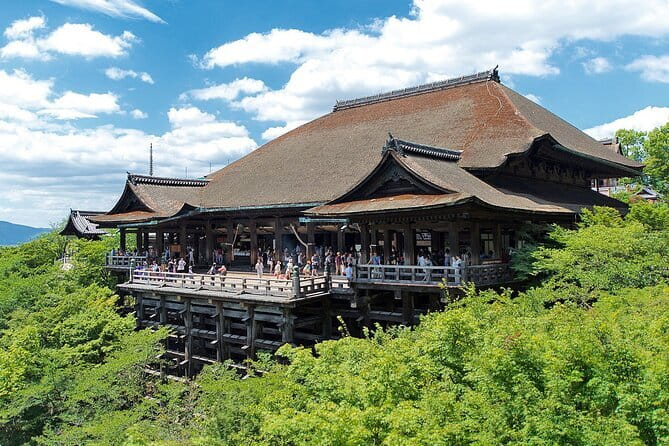
Reviewed · KYOTO DAY TRIPS FROM OSAKA
Osaka & Kyoto & Nara Top Hightlights English Speaking Tour
Kyoto’s wooden lanes, Fushimi Inari’s endless red gates, and Nara’s curious deer make this a strong first look at Japan’s old capitals. You cover a lot in one day, using a vehicle instead of sorting out several train routes and local buses.
I like the broad mix of sights, from temples and shrine paths to food, shopping, and deer. I also like the daily departure guarantee, even when only one person books. The main catch is time: the schedule is tight, and the tour ends in Osaka rather than returning to Kyoto.
In This Review
- Key points at a glance
- What this one-day route really delivers
- Starting in Nipponbashi and reaching Kyoto
- Kiyomizu-dera and Kyoto’s old streets
- Fushimi Inari’s torii gates in 70 minutes
- Nara Park and the deer
- Todai-ji and the Great Buddha
- Ending in Shinsaibashi, not Kyoto
- How much guiding should you expect?
- Walking, weather, and the pace
- What the $54 price buys you
- Who should book this experience?
- Final decision: a useful sampler with real limits
- FAQ
- Does the tour depart every day?
- Where does the tour start and finish?
- Does the tour return to Kyoto?
- Are temple entrance fees included?
- Is food included?
- Can I bring luggage or a stroller?
Key points at a glance
- Three major cultural stops: Visit Kiyomizu-dera, Fushimi Inari Shrine, and Nara Park in one day.
- A practical Osaka base: Start and finish at 1-chōme-3-6 Nipponbashi, with the final stop near Shinsaibashi in Namba.
- Free time rather than constant narration: You explore each site largely on your own, with guidance and meeting instructions from the tour team.
- Walking matters: Temple lanes, shrine paths, and possible walks from bus parking can make this a tiring day.
- Admission costs vary: Fushimi Inari and Nara Park are free, while Kiyomizu-dera and Todai-ji admission is not included.
- Small or large group format: The tour may run with one person, but the maximum group size is 45.
What this one-day route really delivers
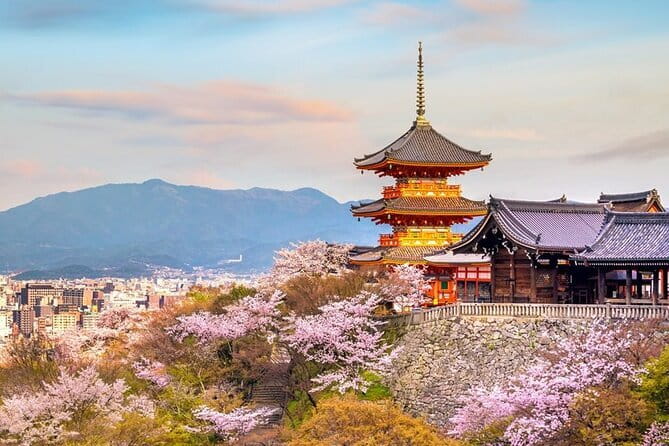
This is a sightseeing sweep, not a slow cultural tour. In roughly nine hours and 20 minutes, you move between Osaka, Kyoto, and Nara, with the remaining time used for driving and lunch.
That tradeoff can work very well if you have limited time. You get the classic images: Kyoto’s hillside temple, narrow historic streets, orange torii gates, the Great Buddha area, and deer in Nara Park. You also avoid the planning work that comes with linking these places independently.
The day is less suitable if you want long temple visits, quiet photography, or detailed explanations at every stop. Several parts of the route are self-guided, and the amount of commentary can depend on the guide assigned to your vehicle. Guides named Anna, Amy Ono, Lou, Yang, Liu, Kosa, Jason, and Eigai have received especially warm praise for friendliness, organization, and clear information, but the experience is not identical every day.
More day trips over to Nara:
- Ancient Capital Tour: Kyoto and Nara Highlights from Kyoto/Osaka
★ 4.5 · 332 reviews - Kyoto and Nara Day Trip from Osaka
★ 4.0 · 175 reviews - Discover Himeji, Kobe and Nara from Osaka
★ 5.0 · 101 reviews
Starting in Nipponbashi and reaching Kyoto
The listed departure point is 1-chōme-3-6 Nipponbashi in Osaka’s Chuo Ward. The operator sends a reminder the night before with the meeting time, vehicle registration number, and guide contact details.
Read that message carefully. The instructions say guides do not normally initiate contact, so you are expected to wait at the specified place at the stated time. A confusing map pin or an unclear pickup point can turn the start of the day into an unnecessary dash.
The vehicle service includes fuel and highway tolls, which is part of the value here. You are paying for transport across three cities, not only for admission or guiding. The bus may be clean and comfortable, as several participants found, though one summer report described weak air conditioning. Comfort can also depend on traffic and how full the vehicle is.
The maximum group size is 45. That is large enough to feel like a bus excursion rather than a personal tour. On the other hand, the booking guarantee is unusually useful: the tour is scheduled to depart daily with a minimum of one person.
Kiyomizu-dera and Kyoto’s old streets
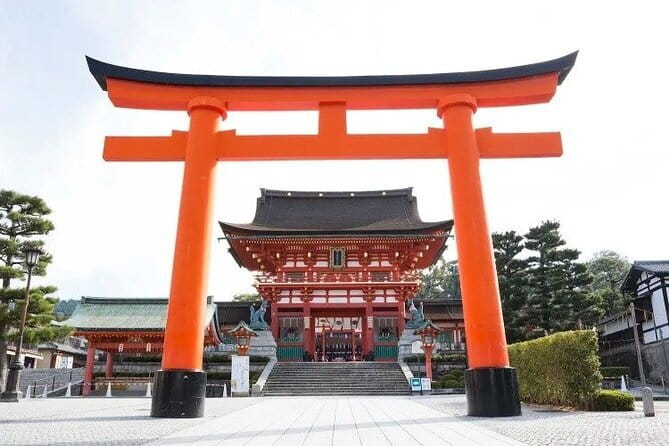
The first main sightseeing block lasts about two and a half hours, including lunchtime. It centers on Kiyomizu-dera, one of Kyoto’s most recognizable temple settings, and then follows a walk through the nearby historic district.
The route includes:
- Kiyomizu-dera
- Ninenzaka and Sannenzaka
- Ishibei-koji Alley
- Hanamikoji Street
- Yasaka Shrine
This is the part of the day where the walking is most atmospheric. The sloping lanes around Ninenzaka and Sannenzaka give you old-style Kyoto streets, shops, food, and views toward the temple area. Ishibei-koji is a narrower lane with a quieter feel, while Hanamikoji brings you into Gion, the district associated with traditional entertainment and geisha culture.
The schedule says you may encounter geisha in Gion, but you should treat that as a possibility rather than a promise. Do not chase or photograph anyone who is working. A respectful glance and a little patience are better ways to experience the district.
Kiyomizu-dera admission is not included. Bring money for the entrance fee, food, drinks, and any personal purchases. The stop gives you enough time to see the principal areas, but not enough time for an unhurried visit to every lane and shop.
Lunch is not supplied. That gives you freedom to choose, but it also means you need to watch the clock. A long restaurant meal could cut into your temple and neighborhood time. I would keep lunch simple and portable if the guide permits it.
Fushimi Inari’s torii gates in 70 minutes
Fushimi Inari Taisha is the route’s most famous photo stop. It is known for Senbon Torii, the thousands of vermilion gates that climb through the wooded shrine grounds.
You have about 70 minutes here. That is enough to walk through a section of the gates and take in the shrine atmosphere. It is not enough to hike the full mountain route at a leisurely pace.
This short stay is one of the tour’s clearest compromises. The torii gates are close to the main shrine area, so you can get the essential experience without committing to the full climb. Still, you need to keep track of time and remember the return point. A few minutes spent wandering farther up the path can become a stressful race back to the vehicle.
Fushimi Inari admission is included, and the shrine itself does not require an entrance ticket. The practical benefit of visiting by tour is simple: you do not need to plan the connection from central Kyoto. The practical drawback is that you cannot set your own pace.
More day trips over to Kyoto:
- Osaka/Kyoto: Hiroshima Miyajima Bus Tour & Shinkansen Ticket
★ 4.7 · 919 reviews - Osaka/Kyoto: Amanohashidate & Miyama Tour with Boat & Lunch
★ 4.6 · 207 reviews - Sagano Romantic Train & Arashiyama, Kiyomizudera, Fushimi Inari Taisha Day Tour
★ 4.5 · 171 reviews - Volleyball in Osaka, Kobe & Kyoto with locals!
★ 4.8 · 131 reviews
Nara Park and the deer

The Nara portion allows about an hour and a half of free time. Nara Park sits at the foot of Mt. Wakakusa and is home to famous sights including Todai-ji and Kasuga Taisha Shrine.
The deer are the star for many people. They wander through the park and often approach visitors. You may be able to buy food for them, but the supplied information does not promise that deer crackers are provided or that the guide will lead you to a particular seller. Carrying a little patience is wise, especially if the park is crowded.
Nara Park itself is free. That keeps this part of the day good value, since you can enjoy the outdoor setting without another ticket. The time also lets you choose your priority: deer, temple grounds, food, or a quick look at nearby sights.
There is an important warning about the bus location. The vehicle may park around 20 minutes from Todai-ji, leaving you with a brisk walk before the temple visit. One account described having far less than the expected time at Todai-ji after making that walk.
This is where the day can feel rushed. Nara Park and Todai-ji are not simply a bus-door photo stop. You need to leave enough time to reach the meeting point, even if the guide gives directions or sends a map link. If you tend to walk slowly, use a mobility aid, or want a long temple visit, this schedule may frustrate you.
Todai-ji and the Great Buddha
Todai-ji admission is not included, and the planned visit is listed at only 20 minutes. That is a very short window for a major temple complex.
Todai-ji is famous for its enormous bronze Great Buddha and its role as one of Japan’s best-known Buddhist temples. The brief stop lets you see the main attraction if access and walking conditions cooperate, but it is not designed for a careful architectural visit.
You should decide in advance if Todai-ji is a must-see. If it is, move directly toward the temple during your free time in Nara Park and confirm the meeting instructions before you leave the group. If deer and the park matter more to you, use the time there and accept that Todai-ji may be only a quick look.
The description includes an unusual reference to Suzumushi Temple, but the route itself identifies Todai-ji as the Nara temple stop. For planning purposes, focus on Todai-ji and the Great Buddha rather than expecting a separate visit to several temples.
Ending in Shinsaibashi, not Kyoto
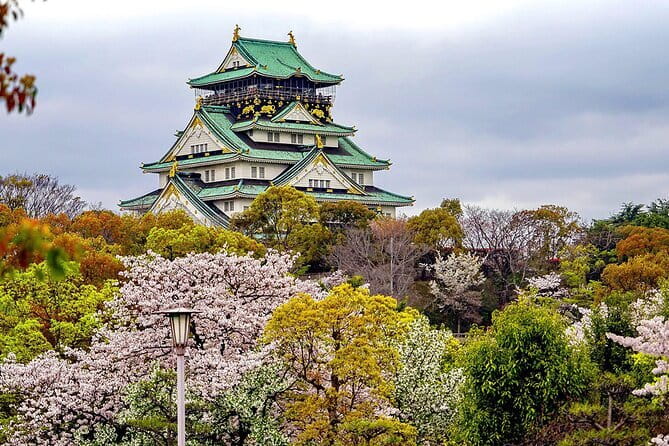
The final scheduled stop is Shinsaibashi, with about one hour to explore the Osaka shopping area. This is a useful finish if you are staying in Osaka. You can end the day among shops and restaurants in the Namba area rather than spending time on another transfer.
The return arrangement needs careful attention. The tour group ends in Osaka and does not return to Kyoto. People boarding from Osaka and Kyoto meeting points are dropped at the Osaka Nihonbashi Exit 2 area, described as the Shinsaibashi area in Namba.
That means a Kyoto-based visitor must arrange the return independently. The train ride back may be straightforward, but it is not included as part of the tour. Several low-scoring experiences came from people who expected a return to Kyoto or assumed the final drop-off would match the pickup point.
For an Osaka hotel, this ending is convenient. For a Kyoto hotel, it adds a final train journey after a long day. You should factor that into the price and energy calculation before booking.
How much guiding should you expect?

The tour is described as English-speaking, with a local professional driver, guide service, and cultural information about Japanese customs. The strongest experiences depend heavily on the individual guide.
Some guides have been praised for being funny, attentive, punctual, and good at explaining history. Anna and Amy Ono, in particular, were singled out for energetic and useful commentary. Kosa was praised for keeping people prepared through a full day, while Yang was noted for clear instructions and helpful support. Jason was recognized for friendly service and strong English.
At the same time, you should not assume that every stop will come with a full walking lecture. Some accounts describe the guide mainly dropping the group at the site and offering limited explanation. The format can feel closer to escorted transport with orientation than to a traditional guided tour.
That is not automatically a flaw. If you enjoy choosing your own route, taking photos, and eating what you like, free time is a plus. If you want the meaning of every gate, statue, and building explained, read about the sites before you go and use the guide for practical questions.
Walking, weather, and the pace
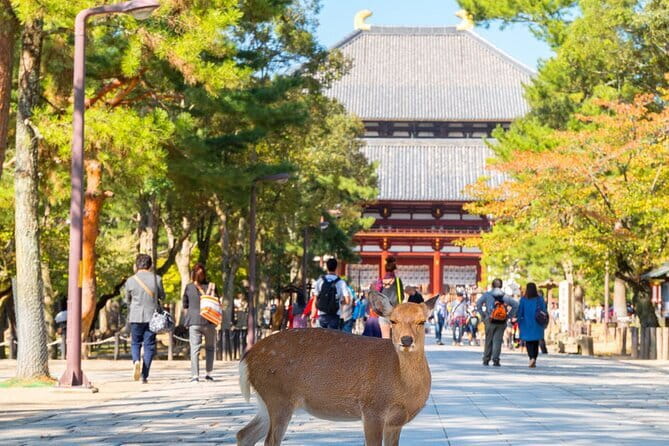
This is a walking-heavy day. You handle temple slopes, shrine paths, old streets, park paths, and possible walks between bus parking and attractions.
Wear shoes that are comfortable on uneven or sloping surfaces. Dress for the season, since you will spend much of the sightseeing time outside. A chilly day may be manageable, while summer heat can make a crowded bus and a fast schedule feel much harder.
Traffic is another real factor. Weekends and Japanese public holidays can bring delays, and the itinerary may change because of weather, road conditions, or other circumstances. The stated duration is approximate, so do not plan a tight evening reservation immediately after the advertised end time.
The tour allows one piece of luggage per person only if you note it during booking. An extra charge of 100 yuan per additional or undeclared piece may apply. This is not a good day for large suitcases, and any foldable stroller must be declared in advance.
What the $54 price buys you
At $54 per person, the price is attractive for a nine-hour-plus route linking Osaka, Kyoto, and Nara. Fuel, highway tolls, vehicle service, driver and guide fees, and the listed transport are included.
The value is strongest if you compare it with the time and planning needed to arrange three major areas on your own. You are also getting a guaranteed departure with just one booking, which matters during a short Japan visit.
The price does not cover food, drinks, personal purchases, accommodation, or admission to Kiyomizu-dera and Todai-ji. Those extra costs are not surprising, but you should include them in your daily budget.
The bigger question is not the ticket price. It is how much you value convenience over control. Pay for this tour if getting between cities is your main headache. Skip it if your ideal day means spending half a morning at one temple, walking the complete Fushimi Inari route, or returning to Kyoto without arranging your own train.
Who should book this experience?
I would suggest it to a first-time visitor with one spare day and a base in Osaka. It gives you a useful introduction to Kyoto and Nara without requiring you to learn several transport connections at once.
It also suits families and friends who prefer a planned day, provided everyone can handle a brisk pace. The deer at Nara Park are a natural hit with children, and the combination of temples, shrine gates, food, and shopping keeps the day varied.
Independent visitors should think harder. You may enjoy the convenience, but you will have limited control over how long you stay. The guide’s level of explanation may vary, and you must follow the meeting instructions closely.
I would not choose this as a first option for anyone staying in Kyoto who expects a Kyoto return. I would also hesitate for New Year’s Day, when temple areas can be extremely crowded and access may be slower than planned. On that date, a flexible self-guided plan may give you a better chance to adjust.
Final decision: a useful sampler with real limits
Book this tour if your priority is seeing the headline sights in one long, organized day. The route covers an impressive amount for $54, and the vehicle, tolls, and guide service make it practical for an Osaka base. The best moments are likely to be the old Kyoto streets, the first sweep of Fushimi Inari’s gates, and the close-up encounter with Nara’s deer.
Do not book it expecting a relaxed temple study or a guaranteed return to Kyoto. Confirm the pickup point, final Osaka drop-off, admission costs, luggage rules, and meeting instructions before you pay. Bring your own background reading, keep lunch short, and protect enough time to walk back to the bus.
For the right person, this is a convenient first taste of Kyoto and Nara. For a slower, more detailed Japan day, use the $54 as a benchmark and build your own route by train.
FAQ
Does the tour depart every day?
Yes. The tour has daily departures and is guaranteed to operate with a minimum of one traveler.
Where does the tour start and finish?
The listed meeting point is 1-chōme-3-6 Nipponbashi, Chuo Ward, Osaka. The tour ends in Osaka near Osaka Nihonbashi Exit 2, in the Shinsaibashi and Namba area.
Does the tour return to Kyoto?
No. The tour ends in Osaka and does not return to Kyoto. Visitors who board from Kyoto must arrange their own return from Osaka.
Are temple entrance fees included?
Fushimi Inari Shrine and Nara Park are included as listed. Admission to Kiyomizu-dera and Todai-ji is excluded.
Is food included?
No. Food and drinks are not included. Lunch and other personal purchases are self-paid.
Can I bring luggage or a stroller?
One piece of luggage per person is allowed if you note it when booking. An extra 100 yuan per additional or undeclared piece may apply. A foldable stroller can be carried only if you inform customer service in advance.
Just added around Osaka
- Nara Day Trip from Osaka with a Licensed Guide★ 5.0 · 3 reviews
- Osaka Early Morning Osaka Castle Tour Avoid Crowds★ 5.0 · 3 reviews
- Guided Tour of Some Attractions in Osaka by Private Car★ 5.0 · 3 reviews
- Private Transfer Between Kyoto and Kansai Airport KIX★ 5.0 · 3 reviews
- Shared Arrival Transfer: Osaka Itami Airport to Osaka City★ 5.0 · 3 reviews
- Osaka: Sushi Making Class and Dotonbori Food Tour★ 4.7 · 3 reviews
- Osaka Night Photography Workshop★ 5.0 · 3 reviews
- Kyoto Full day Tour Kinkakuji, Kiyomizu-dera and Fushimi Inari★ 4.5 · 3 reviews
Kyoto Day Trips from Osaka, compared.

Osaka/Kyoto: Hiroshima Miyajima Bus Tour & Shinkansen Ticket
Read our review →
Ancient Capital Tour: Kyoto and Nara Highlights from Kyoto/Osaka
Read our review →
Osaka/Kyoto: Amanohashidate & Miyama Tour with Boat & Lunch
Read our review →

Sagano Romantic Train & Arashiyama, Kiyomizudera, Fushimi Inari Taisha Day Tour
Read our review →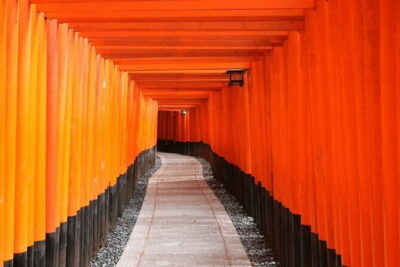
Full Day Tour of Kyoto with Private Transportation
Read our review →
Kyoto & Nara Private customized tour with English speaking Guide
Read our review →Full Day Kyoto Tour : Bamboo Forest, Golden Temple, Fushimi Inari
Read our review →Browse the lists this tour appears in