
Reviewed · KYOTO DAY TRIPS FROM OSAKA
Osaka/Kyoto: Arashiyama, Fushimi Inari & Nara Park Day Trip
Fushimi Inari’s thousands of red torii gates are the dramatic opening to a packed day that also brings you face-to-face with Nara’s bowing deer and into Arashiyama’s bamboo-lined paths. I like the way this tour joins three major sights without making you work out several train connections, and I like the generous mix of guided orientation and time to wander on your own.
The tradeoff is simple: nine hours is a tight frame for three major sightseeing areas. You get a useful first look rather than a slow, detailed visit, and Tenryu-ji’s 500-yen admission, lunch, and personal purchases are extra. Comfortable shoes are not optional if you want to see more than the main paths.
In This Review
- Key points to know before you book
- Why this Osaka and Kyoto day trip works
- Fushimi Inari and the first red gates
- Nara Park and the deer
- Arashiyama’s bamboo path
- Nonomiya Shrine and its unusual black torii
- Tenryu-ji, Kyoto’s Zen landmark
- Arashiyama Park and the riverside pause
- The Kimono Forest before heading back
- Guides, vehicles, and the group rhythm
- Food, walking, and what to carry
- Who should book this $57 day trip?
- FAQ
- How long does the Osaka and Kyoto day trip last?
- What places are included?
- Is transportation included?
- Is a guide included?
- Is lunch included?
- Is admission to Tenryu-ji included?
- How large can the group be?
- Can I cancel for a full refund?
Key points to know before you book
- Three famous areas in one day: Fushimi Inari, Nara Park, and Arashiyama are covered by air-conditioned vehicle.
- About nine hours total: The schedule gives you a quick but meaningful introduction, with free time at several stops.
- Fushimi Inari is free: You can walk among the torii gates without an admission charge, though the route includes steps and slopes.
- Tenryu-ji costs extra: Admission is 500 yen, and the temple visit is scheduled for about 20 minutes.
- Guides matter here: Amy, Laura, Scarlet, Steven, Frederick, Sofia, and Lucy are among the guides praised for clear directions, humor, food advice, and helpful updates.
- A large group is possible: The vehicle may carry up to 45 people, so meeting points and return times matter.
Why this Osaka and Kyoto day trip works
Japan gives you no shortage of famous sights, but Osaka-based visitors face a practical problem: Kyoto and Nara point in different directions, and each deserves more than a quick stop. This tour solves that problem by putting the transport and route in someone else’s hands.
For $57 per person, you are paying mainly for the vehicle, guide, and time saved. That is a reasonable price if you want to see several headline sights in one day without arranging regional trains, local buses, and station transfers yourself. It is less appealing if you prefer to sit quietly at one temple, walk an entire shrine route, or stop for a long lunch.
I especially like the range of the day. Fushimi Inari gives you religious architecture and a forest walk. Nara Park adds open space, temples, and free-roaming deer. Arashiyama brings bamboo, Zen culture, riverside scenery, and Kyoto-style design. The experience is not just three versions of the same shrine visit.
The main concern is pace. The published stop times add up to a little more than five hours, leaving the rest of the nine-hour day for driving, group organization, and transitions. That is normal for a route covering Osaka, Kyoto, and Nara, but you should expect a sampler, not an expert-led study of every site.
More day trips over to Nara:
- Ancient Capital Tour: Kyoto and Nara Highlights from Kyoto/Osaka
★ 4.5 · 332 reviews - Kyoto and Nara Day Trip from Osaka
★ 4.0 · 175 reviews - Discover Himeji, Kobe and Nara from Osaka
★ 5.0 · 101 reviews
Fushimi Inari and the first red gates
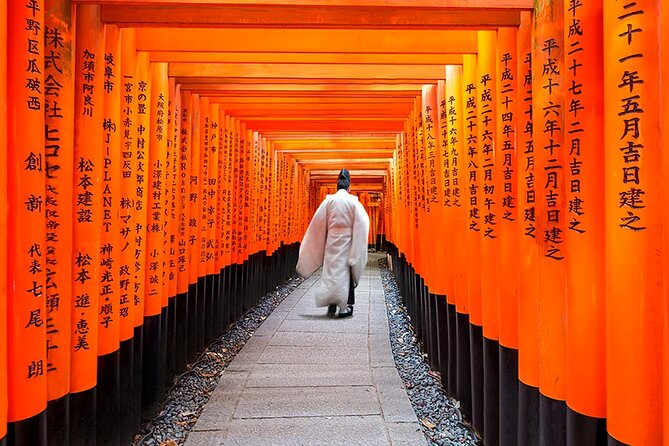
Fushimi Inari Taisha is the head shrine of the roughly 30,000 Inari shrines found across Japan. Inari is associated with rice, and the shrine’s most famous feature is the Senbon Torii, or Thousand Torii Gates.
The tour allows about 1 hour and 10 minutes here. That is enough to enter the shrine grounds, walk through a memorable stretch of torii, and take photographs, but it is not enough for a complete climb through the mountain paths. The farther you walk, the quieter the gates generally become, yet the time limit means you should keep an eye on the clock.
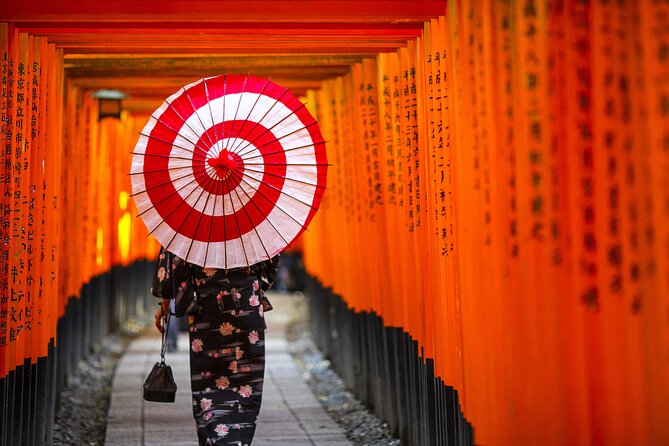
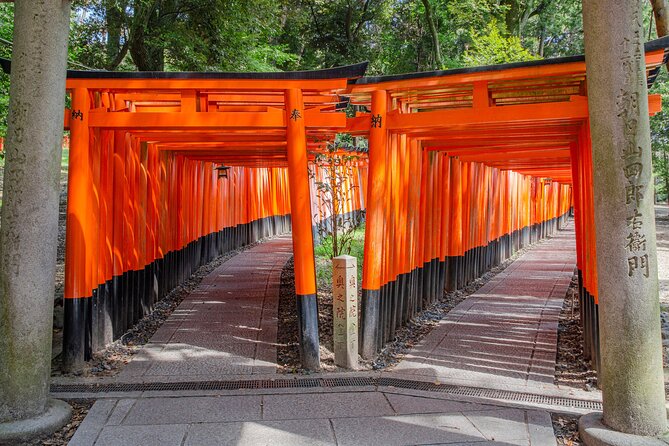
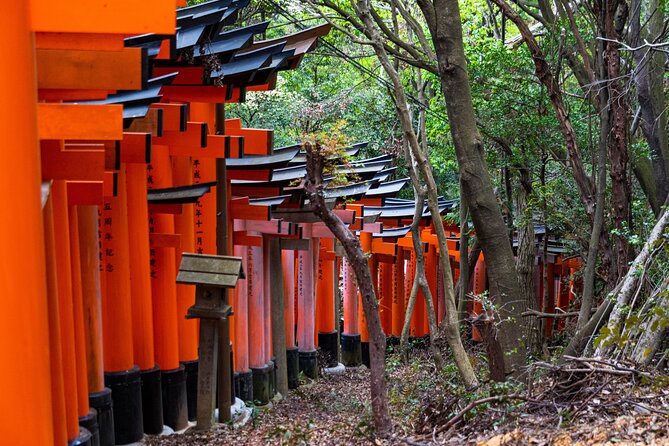
The vermilion gates form a long corridor through wooded slopes. Their repetition is the point: one gate after another creates a strong visual rhythm, while small shrines and fox images add detail along the way. Foxes are linked with Inari, so notice their presence around the shrine grounds.
There is no admission ticket for this stop. That helps the tour’s value, but free entry does not mean an easy stroll. You will encounter stairs, uneven ground, and slopes if you go beyond the first section. Wear shoes with a firm sole, and do not spend the entire stop waiting for the perfect photograph at the entrance.
A guide can help you understand what you are seeing, but the best part of Fushimi Inari often comes when you walk a little beyond the busiest gateway. On a group schedule, your freedom is limited by the departure time. Treat the visit as a strong introduction and mark it for a longer return if it catches your interest.
Nara Park and the deer
Nara Park covers about 660 hectares and is known for its temples and free-roaming deer. The tour gives you about one hour, enough to encounter the deer and walk through a small part of the park, but not enough to visit every major religious site in the area.
The deer are the park’s great attraction. They move through public spaces rather than staying behind fences, creating an unusual meeting between wildlife and a historic city. You may see them near paths and temple grounds, often approaching people in search of food. Their famous bowing behavior is charming, but remember that these are animals, not stuffed mascots. Give them space and follow the guide’s advice.
The hour passes quickly. If you spend too long feeding or photographing the first deer you see, you may have little time left for the wider park. Keep moving, look around, and use the time to notice the large scale of the setting.
Nara’s importance goes beyond the deer. It was one of Japan’s earliest permanent capitals and is home to major temples and religious monuments. This tour does not promise a full temple program, so your Nara experience is best understood as a short encounter with the park and its atmosphere.
I like this stop because it changes the mood of the day. After the enclosed rhythm of Fushimi Inari’s gates, Nara opens out into grass, trees, broad paths, and animals. The contrast gives the itinerary balance. The drawback is that one hour leaves little room for a serious visit to the temples, so you may want to return to Nara on another day.
Arashiyama’s bamboo path
Arashiyama is a well-known district on Kyoto’s western side, valued for its natural setting, shrines, temples, river views, and seasonal beauty. The tour first allows a short orientation in the wider Arashiyama area, followed by about 50 minutes at the Bamboo Forest.
The bamboo path is one of Kyoto’s most photographed places. Tall stalks rise on both sides of the promenade, forming a narrow green corridor overhead. The setting can feel calm, but the route is also a major sightseeing stop, so do not expect complete solitude.
The short visit works best if you treat it as a walk, not a photo mission. Move through the grove, look upward, and notice how the light changes between the stalks. The path itself is not difficult in the same way as Fushimi Inari’s mountain route, but you are still accumulating walking time across the day.
A useful strength of this tour is that Arashiyama is not reduced to bamboo alone. The itinerary adds several nearby stops, giving you a better sense of the district’s cultural character. You will not have time to explore every lane, shop, or temple, but you get a broader picture than a simple bus ride to the grove.
More day trips over to Kyoto:
- Osaka/Kyoto: Hiroshima Miyajima Bus Tour & Shinkansen Ticket
★ 4.7 · 919 reviews - Osaka/Kyoto: Amanohashidate & Miyama Tour with Boat & Lunch
★ 4.6 · 207 reviews - Sagano Romantic Train & Arashiyama, Kiyomizudera, Fushimi Inari Taisha Day Tour
★ 4.5 · 171 reviews - Volleyball in Osaka, Kobe & Kyoto with locals!
★ 4.8 · 131 reviews
Nonomiya Shrine and its unusual black torii
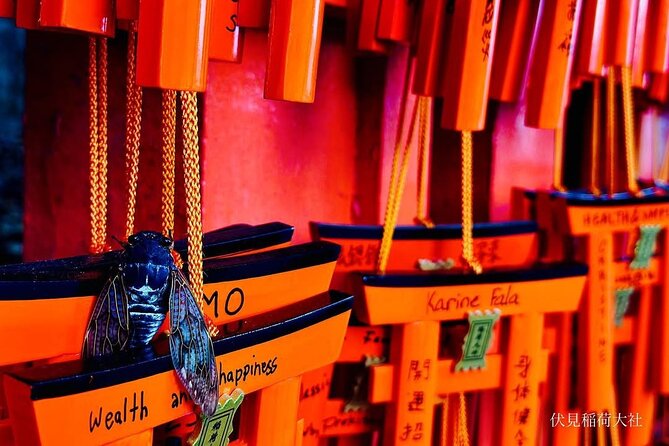
Nonomiya Shrine is a small Shinto shrine in Arashiyama. You receive about 20 minutes here, and the most distinctive detail is its black torii gate, which differs from the vermilion gates associated with many Japanese shrines.
This is a compact stop, so its value comes from the guide’s explanation and your ability to notice small details. The shrine offers a quieter contrast to the large-scale spectacle of Fushimi Inari and the crowded appeal of the bamboo path.
Twenty minutes is enough for a brief look and a few photographs. It is not a long spiritual visit, and you should not expect extensive time for reflection. Still, short stops like this help prevent the day from becoming a parade of only the most famous photo spots.
Tenryu-ji, Kyoto’s Zen landmark
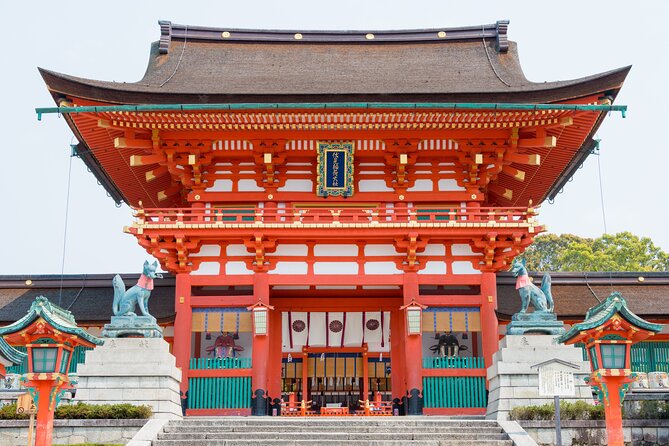
Tenryu-ji is a UNESCO World Heritage Site and is ranked as the top of Kyoto’s five great Zen temples. It is one of the strongest cultural stops in Arashiyama, but admission is not included.
The extra cost is 500 yen. That is modest, yet the short scheduled visit of about 20 minutes means you should decide how you want to use it. If you are eager to see the temple grounds, the ticket is easy to justify. If you would rather spend more time in the bamboo grove or park, you may prefer to remain outside.
Tenryu-ji is important because it brings architecture, Zen practice, and garden design into the day. It also gives you a more structured cultural experience after the open paths of Nara and the natural feel of Arashiyama.
The limitation is time, not price. A temple of this importance rewards an unhurried visit, and 20 minutes can feel brief once you have entered, found the main areas, and listened to an explanation. One person who enjoyed the wider tour still wanted to return later for more temple time. I think that is the right way to view this stop: a useful introduction and a good reason to come back.
Arashiyama Park and the riverside pause

The Arashiyama Park Nakanoshima Area receives about 30 minutes. It is known for seasonal cherry blossoms in spring and autumn color later in the year, along with its connection to Arashiyama’s natural and cultural setting.
This is one of the day’s better breathing spaces. You can step away from the tight bamboo path, enjoy a more open area, and reset before the final stops. The park is free, so there is no extra ticket to weigh against the limited time.
Seasonal conditions matter here. The tour information points to spring blossoms and autumn color, but no particular date is guaranteed. In any season, the park helps you see Arashiyama as more than one famous walkway.
Thirty minutes is enough for a pleasant pause, though it is not a long riverside outing. Stay aware of the group meeting time, particularly if you stop to take pictures or buy something nearby.
The Kimono Forest before heading back
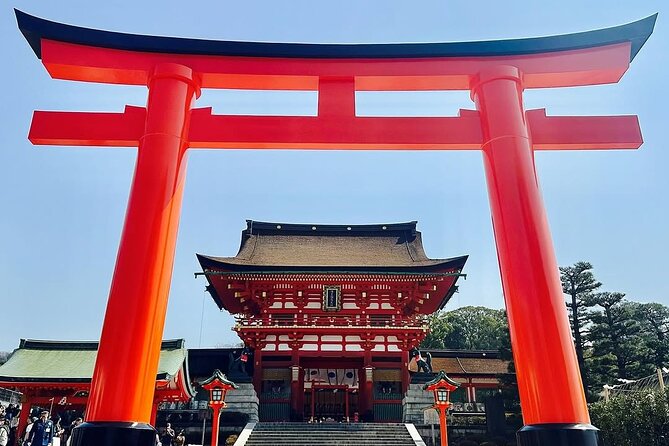
The Arashiyama Kimono Forest is a modern installation made from 600 clear acrylic cylinders, each about two meters tall. The cylinders contain kimono fabrics in different patterns, creating a colorful display near the station area.
This stop adds a welcome modern note to a day otherwise centered on shrines, deer, bamboo, and temples. It shows how traditional textile design can be presented in a public art setting rather than only inside a museum or shop.
The tour allows about 20 minutes. That is enough to walk among the pillars and take pictures, but not enough to study every fabric design. I like the stop because it is easy to fit into a busy route and gives you a final visual change of pace.
The Kimono Forest is also a reminder that Kyoto is not only an old-city postcard. The day moves from sacred gates to contemporary design without losing its Japanese character.
Guides, vehicles, and the group rhythm
The tour includes an air-conditioned vehicle and a guide. The maximum group size is 45 people, so this is not a private or intimate outing. A group of that size can make boarding and meeting points slower, but it also keeps the cost low.
The guides are a major part of the experience. Amy has been warm and helpful, while Laura has provided updates about the vehicle and food suggestions. Scarlet has offered restaurant and shopping ideas. Steven has been praised for humor and clear explanations, and Frederick for useful anecdotes, safety awareness, and easy-to-follow instructions. Sofia and Lucy have also brought energy and personality to the day.
You should not assume that any one named guide will lead your departure. The practical lesson is to value the guide’s role in organization as much as commentary. Clear instructions matter when you are moving between three destinations on a fixed schedule.
You also need to tell the operator at booking if you have a stroller or large luggage. If you book separately from relatives or friends, notify the company at least one day ahead so you have a better chance of being assigned to the same vehicle. These details matter more on a large group tour than they would on a private outing.
Food, walking, and what to carry
Lunch is not included. You will need to pay for your own meal, and the guides can provide food suggestions. Since the stop times are fixed, do not plan on a long restaurant break unless the day’s schedule specifically allows it.
Bring water, a phone, and shoes suited to substantial walking. The route includes shrine paths, park paths, temple grounds, and busy sightseeing areas. Comfortable footwear is the single most useful preparation.
A mobile ticket makes access simple, but it does not remove the need to follow meeting instructions. Keep the guide’s contact or tour information available on your phone, and check the departure point carefully before the day begins.
Free cancellation is available if you cancel at least 24 hours before the experience start time. Cancellations or changes made inside that window are not refunded or accepted. That policy is fairly flexible, but it is worth noting before you commit the date.
Who should book this $57 day trip?
I would choose this tour if I had one free day and wanted a broad introduction to Kyoto and Nara from Osaka or Kyoto. The value comes from combining transport, a guide, and three major sightseeing zones for $57, while keeping admission costs low at most stops.
It is especially suited to first-time visitors, people with limited time, and anyone who would rather not plan a complicated route across two destinations. Families and mixed-age groups may also appreciate the air-conditioned vehicle, though the walking and fixed schedule still require reasonable mobility.
I would hesitate if you want long temple visits, serious photography time, or a quiet day. The 45-person maximum can feel organized rather than personal, and the schedule leaves little room for lingering. Independent visitors who are comfortable with Japanese trains may prefer to split the sights across two or three days.
My call: book it for range and convenience, not depth. You will see Fushimi Inari’s torii, Nara’s deer, Arashiyama’s bamboo, Tenryu-ji, Nonomiya Shrine, the park, and Kimono Forest in one well-packed day. Just budget for lunch and the 500-yen temple ticket, wear good shoes, and accept that the places you love most may deserve a return visit.
FAQ
How long does the Osaka and Kyoto day trip last?
The tour lasts approximately nine hours.
What places are included?
The route includes Senbon Torii at Fushimi Inari Taisha, Nara Park, Arashiyama, the Arashiyama Bamboo Forest, Nonomiya Shrine, Tenryu-ji Temple, Arashiyama Park Nakanoshima Area, and Arashiyama Kimono Forest.
Is transportation included?
Yes. The experience includes an air-conditioned vehicle.
Is a guide included?
Yes. A guide is included with the tour.
Is lunch included?
No. Lunch is not included in the price.
Is admission to Tenryu-ji included?
No. The Tenryu-ji admission ticket costs 500 yen and is paid separately.
How large can the group be?
The activity can have a maximum of 45 travelers.
Can I cancel for a full refund?
Yes, if you cancel at least 24 hours before the experience start time. Cancellations made less than 24 hours before the start time are not refunded, and changes inside that period are not accepted.
More 1-Day Tours in Osaka
- Hiroshima & Miyajima 1 Day Bus Tour with Bullet Train Tickets
★ 4.5 · 105 reviews - From Osaka: Hiroshima and Miyajima Day Trip by Bullet Train
★ 4.6 · 83 reviews - Amanohashidate & Ine Funaya Sightseeing Full Day Trip from Kyoto
★ 4.5 · 62 reviews - Kyoto 1 Day Tour from Osaka
★ 4.0 · 54 reviews
Just added around Osaka
- Nara Day Trip from Osaka with a Licensed Guide★ 5.0 · 3 reviews
- Osaka Early Morning Osaka Castle Tour Avoid Crowds★ 5.0 · 3 reviews
- Guided Tour of Some Attractions in Osaka by Private Car★ 5.0 · 3 reviews
- Private Transfer Between Kyoto and Kansai Airport KIX★ 5.0 · 3 reviews
- Shared Arrival Transfer: Osaka Itami Airport to Osaka City★ 5.0 · 3 reviews
- Osaka: Sushi Making Class and Dotonbori Food Tour★ 4.7 · 3 reviews
- Osaka Night Photography Workshop★ 5.0 · 3 reviews
- Kyoto Full day Tour Kinkakuji, Kiyomizu-dera and Fushimi Inari★ 4.5 · 3 reviews
Kyoto Day Trips from Osaka, compared.

Osaka/Kyoto: Hiroshima Miyajima Bus Tour & Shinkansen Ticket
Read our review →
Ancient Capital Tour: Kyoto and Nara Highlights from Kyoto/Osaka
Read our review →
Osaka/Kyoto: Amanohashidate & Miyama Tour with Boat & Lunch
Read our review →

Sagano Romantic Train & Arashiyama, Kiyomizudera, Fushimi Inari Taisha Day Tour
Read our review →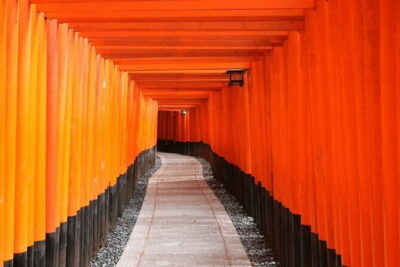
Full Day Tour of Kyoto with Private Transportation
Read our review →
Kyoto & Nara Private customized tour with English speaking Guide
Read our review →Full Day Kyoto Tour : Bamboo Forest, Golden Temple, Fushimi Inari
Read our review →Browse the lists this tour appears in