
Reviewed · HISTORICAL TOURS
Osaka: Full-Day Private Guided Tour of the Historical City
Osaka’s story comes alive in four very different stops: an ancient Shinto shrine, one of Japan’s oldest Buddhist temples, a castle tied to the samurai era, and the retro streets of Shinsekai. This eight-hour private tour gives you a clear historical thread while keeping you on foot and public transport rather than behind a tour bus.
I like the contrast between Sumiyoshi Taisha and Shinsekai, and I like having a guide to explain the links between religion, politics, war, and daily life. Guide Mouloud is also noted for taking time with questions and offering practical help with tickets and train travel.
The main catch is the pace. You spend about two hours at each stop, but this is still a full day of walking, stairs, stations, and standing. Bring good shoes, and budget extra for transport, lunch, and the Shitennoji admission fee.
In This Review
- Key points at a glance
- Four stops that explain Osaka better than one landmark
- Sumiyoshi Taisha and 1,800 years of Shinto tradition
- Shitennoji and the arrival of Buddhism
- Osaka Castle and the age of samurai power
- Shinsekai and Osaka’s nostalgic side
- Walking, trains, and the real pace of the day
- What the private format changes
- Accessibility and planning notes
- Who will get the most from this day
- Should you book the Osaka historical city tour?
- FAQ
- How long does the tour last?
- Where does the tour begin?
- Where does the tour end?
- Which places are visited?
- Is transportation included?
- Is lunch included?
- How much does entry to Shitennoji cost?
- What languages are available, and is the tour private?
Key points at a glance
- Four sides of Osaka in one day: Move from a 1,800-year-old shrine to a Buddhist temple, medieval castle, and retro entertainment district.
- A private group with a live guide: French, English, and Japanese tours are available, with the guide’s attention focused on your group.
- History with a useful timeline: The route helps connect Shinto tradition, the arrival of Buddhism, samurai power, and Osaka’s modern character.
- Mostly on foot and by public transport: You get a closer look at the city, but you should expect a lot of walking.
- Extra costs are modest but real: Plan for about 2,000 JPY per person for transport, 200 JPY for Shitennoji, and about 2,000 JPY for lunch.
- A practical guide can add value: Mouloud is specifically noted for answering questions and helping with tickets, trains, and ideas for other activities.
Four stops that explain Osaka better than one landmark
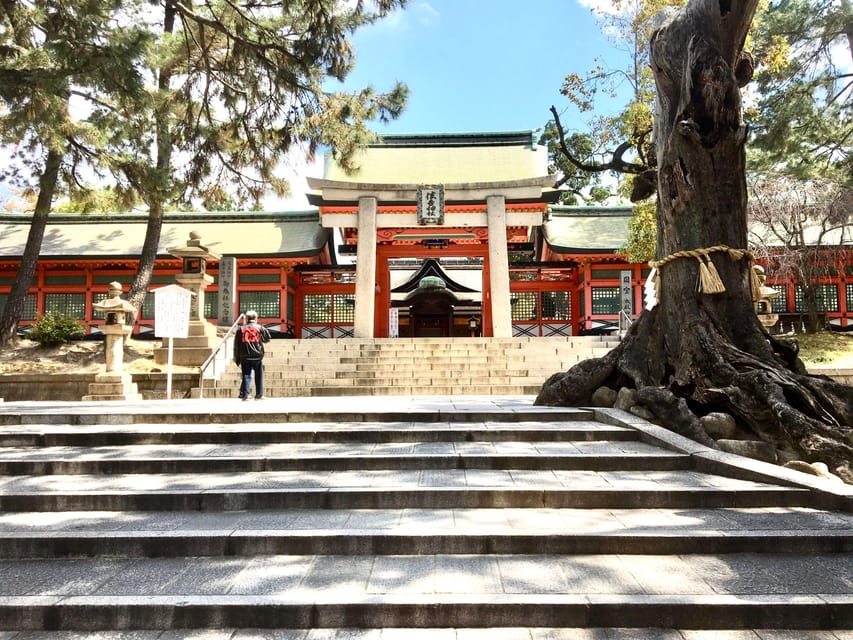
Osaka can be easy to reduce to food, shopping, neon, and a famous castle. This tour gives you a broader view. You begin with religious traditions, move into the story of Buddhism and government, examine samurai power at Osaka Castle, then finish in Shinsekai, where a nostalgic side of the city takes over.
That sequence is the tour’s strongest idea. You are not simply checking off four sights. You are moving through different periods and moods, with the guide there to explain why each place matters.
Because the tour is private, you can ask questions as they occur. That matters in Japan, where a shrine and a temple may look similar at first glance but come from different religious traditions. It also gives you a chance to ask about practical matters, such as train travel and ticket purchases, which Mouloud has helped guests understand.
A few more Osaka tours and experiences worth a look
- Osaka: Castle History Walking Tour / Castle Tower Admission
★ 4.9 · 230 reviews - Osaka: Osaka Castle & Historical Museum Guided Tour
★ 4.8 · 28 reviews - Osaka Castle & Samurai History Walking Tour
★ 5.0 · 22 reviews
Sumiyoshi Taisha and 1,800 years of Shinto tradition
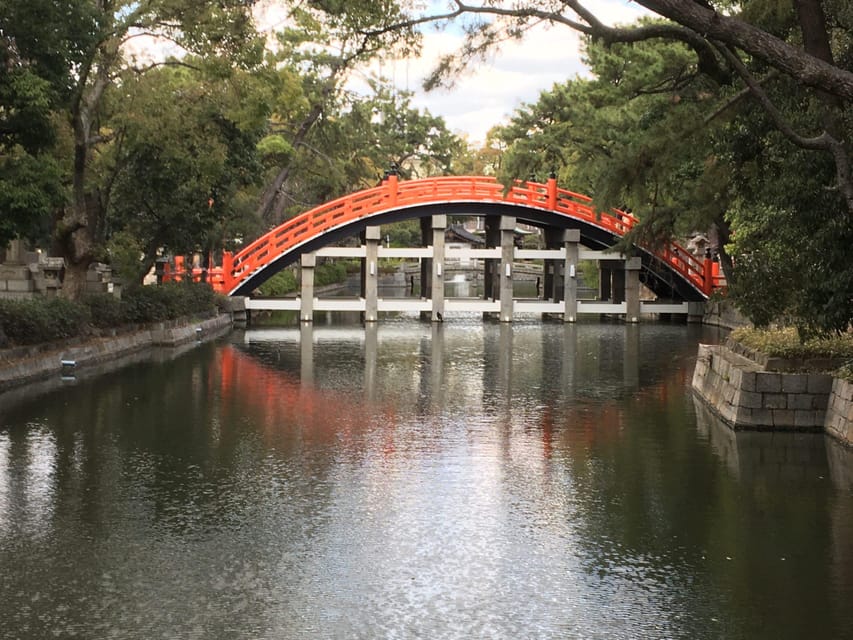
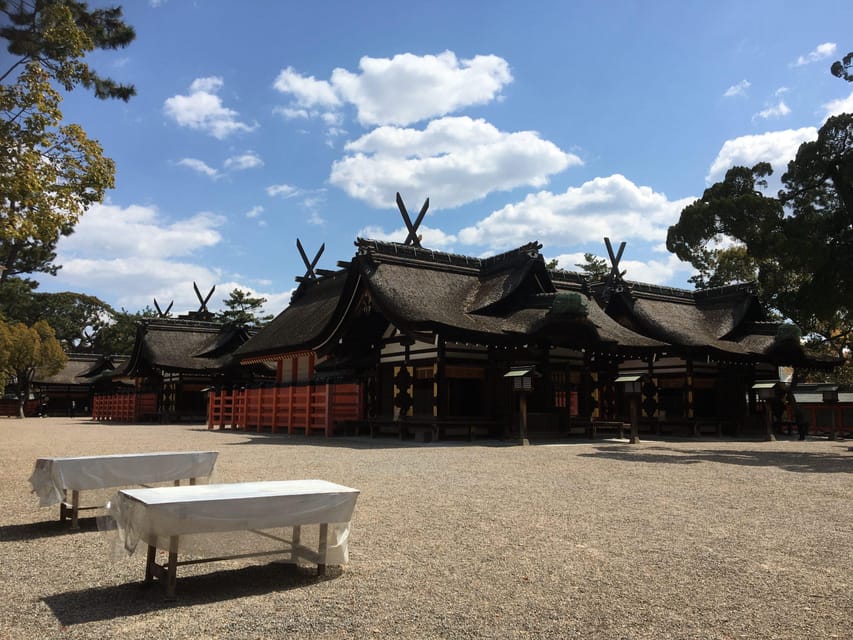
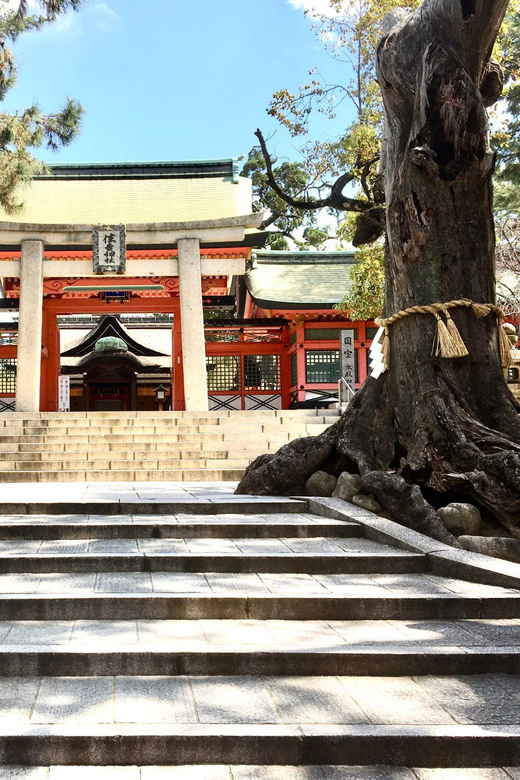
The day begins at Sumiyoshi Taisha, a Shinto shrine with about 1,800 years of history. This is an excellent first stop because it introduces you to a religious tradition that predates Buddhism in Japan.
Your guide leads you through the grounds and points out the traditional Japanese architecture. The value here is not just visual. Shinto shrines are places connected with local beliefs, ritual, nature, and community, and a guide can help you notice details that are easy to pass without context.
Plan on roughly two hours for the visit, guided walk, and time at the shrine. The tour does not provide a detailed list of every building or ritual activity, so you should think of this as a guided introduction rather than a specialist architectural tour.
I like starting here before the castle. The shrine gives you a calmer, more reflective opening and sets up the question of how Japanese religious life developed over time. You then have a useful point of comparison when Buddhism appears at the next stop.
Shitennoji and the arrival of Buddhism
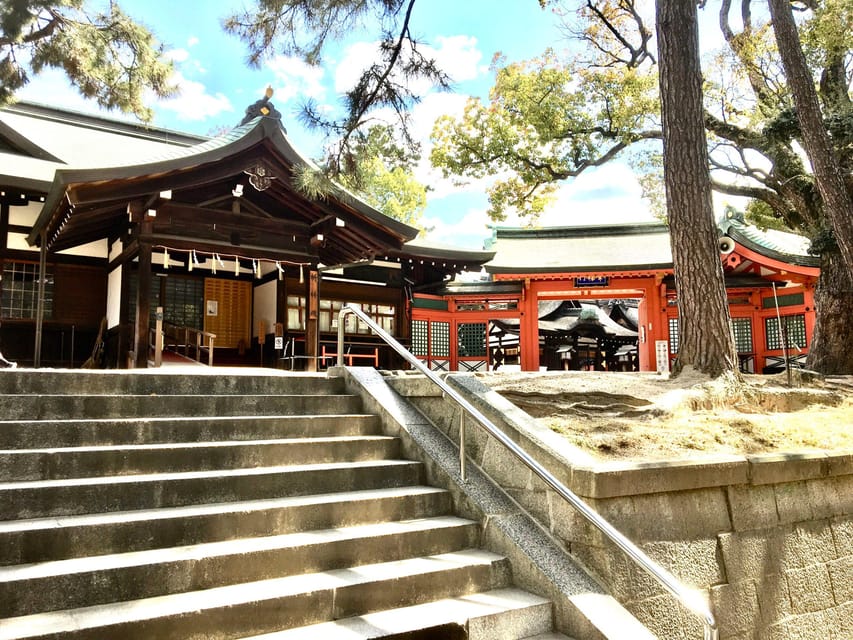
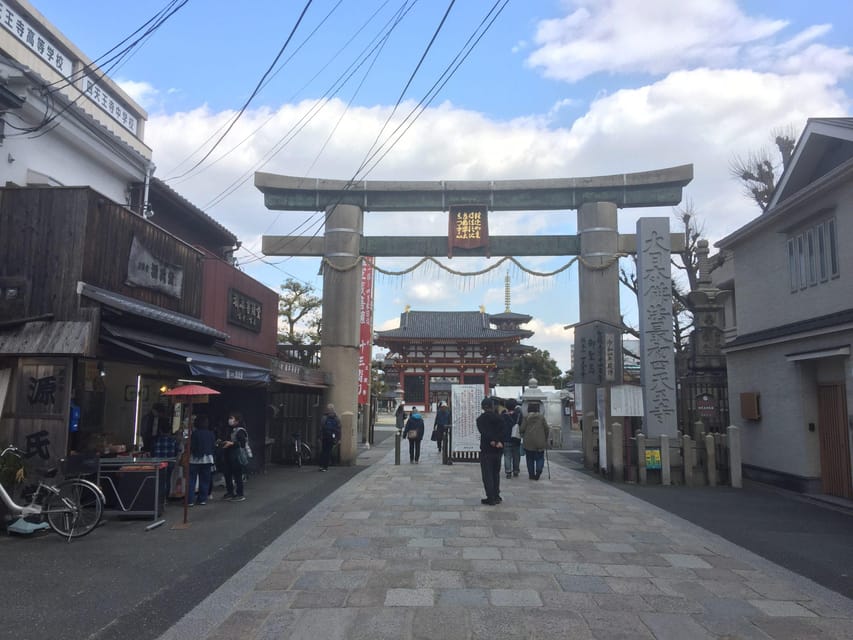
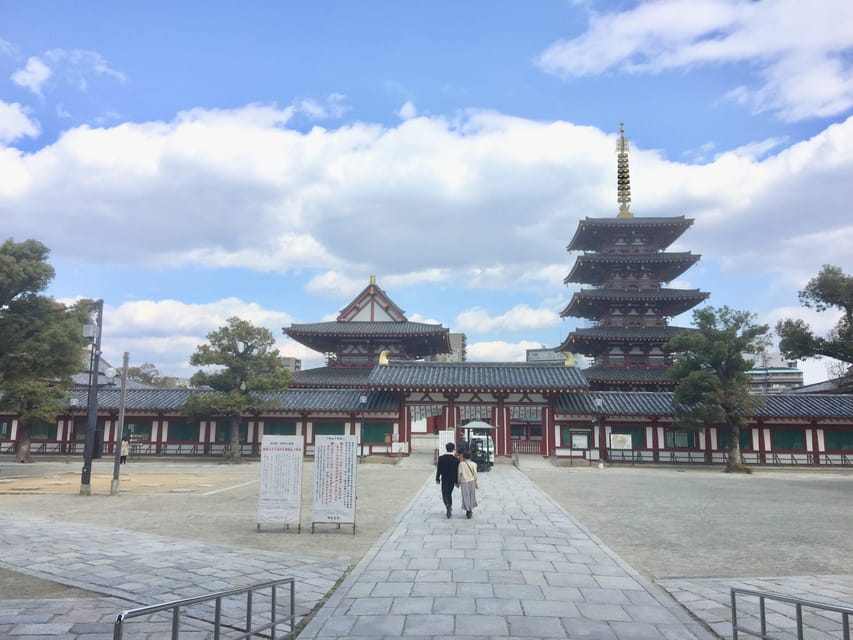
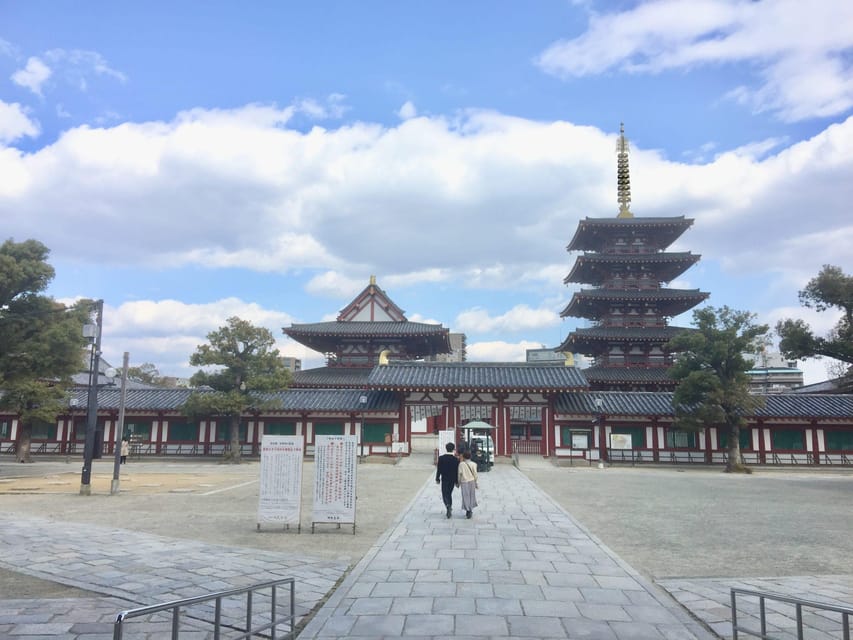
The second stop is Shitennoji Temple, dating from 593. It is presented as one of the symbols of Buddhism’s arrival in Japan, making it an important stop for anyone interested in the country’s religious and political development.
You spend around two hours visiting and walking with the guide. This is where the tour’s history theme becomes especially useful. Rather than treating Buddhism as an isolated subject, the stop helps you understand it as a major change in Japanese society and government.
Shitennoji also gives you another chance to compare religious spaces. Sumiyoshi Taisha represents Shinto tradition, while Shitennoji introduces Buddhist architecture and practice. Having both places in the same day makes the difference easier to grasp.
The temple admission is not included and costs around 200 JPY per person. That is a small fee, but it is worth knowing about before you arrive. As with the shrine, comfortable shoes will help, since the visit includes walking rather than a short photo stop.
Osaka Castle and the age of samurai power
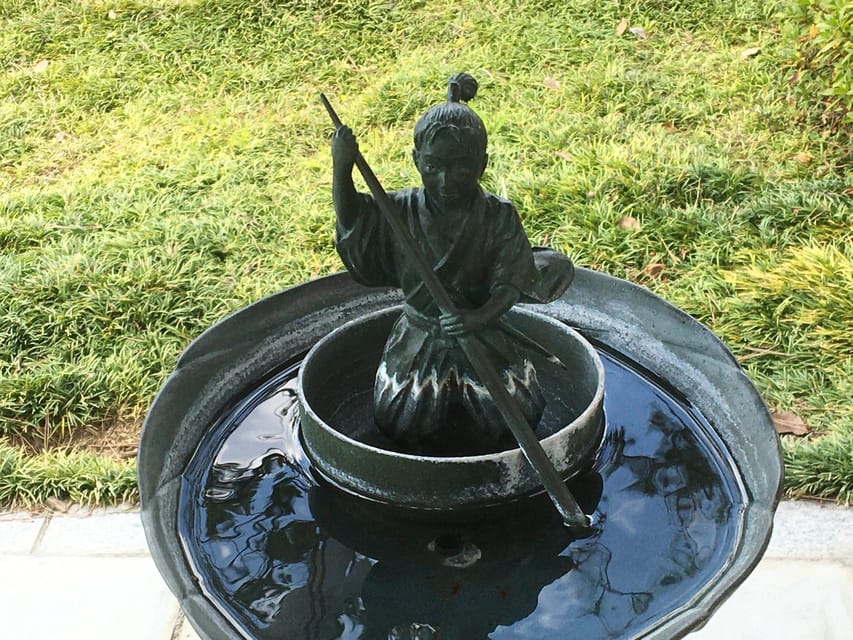
After the religious sites, the tour turns to Osaka Castle. The castle dates from the late 16th century and provides the day’s clearest connection to samurai history and political power.
You have about two hours here for a guided visit and walk. The guide’s role is particularly helpful at this point, since the castle is not just a pretty structure. It is tied to the period when powerful military leaders shaped Japan’s future, and the tour description places emphasis on understanding that samurai era.
The stop also adds a strong visual change. After shrine and temple architecture, you get a major castle monument and the surrounding nature and city scenery. The route is designed to show how Osaka combines historic structures with a modern urban setting.
One point to keep in mind: the supplied details do not specify exactly which castle areas are included or whether the castle interior admission is part of the day. The listed extra fee mentions Shitennoji, transport, and lunch, but not a separate Osaka Castle ticket. Ask your guide or the booking provider what access is covered if entering the castle is important to you.
I would not choose this tour only for an in-depth castle study. I would choose it if you want the castle placed into a wider story about samurai, government, and Osaka’s role in Japanese history.
A completely different way to spend a day in Osaka:
- Osaka Go Karting Tour with Funny Costume
★ 5.0 · 2,658 reviews - Osaka Castle: Museum and Tower Entry Ticket
★ 4.5 · 2,380 reviews - Osaka: Shinsekai Food Tour with 13-15 Dishes at 5 Eateries
★ 4.8 · 2,204 reviews - Osaka Food Tour: 13 Dishes at 5 Local Eateries
★ 5.0 · 2,149 reviews
Shinsekai and Osaka’s nostalgic side
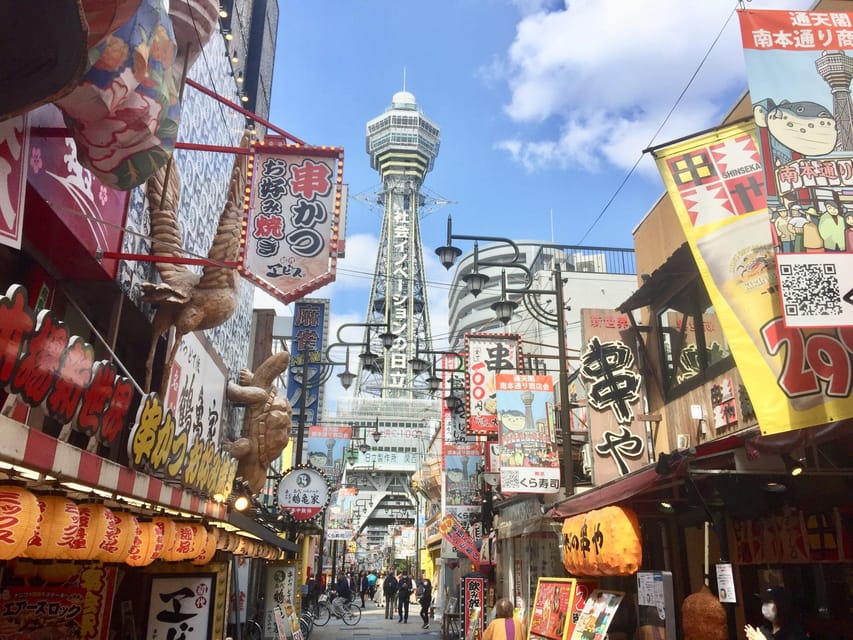
The final stop is Shinsekai, ending at Ebisucho Station. This district shifts the mood again. Its retro atmosphere, famous Tsutenkaku Tower, and nostalgic feel associated with the 1970s offer a look at Osaka that is very different from the formal beauty of the shrine, temple, and castle.
You spend roughly two hours here with the guide. The district is a good finish because it brings the history lesson back to ordinary urban life, food, streets, signs, and local character. The tour description emphasizes Osaka’s flavors as well as its architecture, though it does not promise a food tasting or include lunch.
You should see Shinsekai as an atmospheric neighborhood walk rather than a major monument visit. That makes it a useful closing chapter, but if you prefer a day packed with grand buildings, this portion may feel less structured.
The tour ends at Ebisucho Station, not back at your original pickup point. That is practical if you want to continue exploring the area or use the station for your next journey. It is less convenient if you need to return to your starting point immediately, so plan your evening around the finish.
Walking, trains, and the real pace of the day
This is an on-foot and public-transport tour. That choice has clear benefits. You see more of the city at street level, and you learn how the major sights connect instead of spending the day looking through a vehicle window.
The tradeoff is physical. Each of the four sections is allocated about two hours, and one verified French review specifically advises bringing good shoes and expecting plenty of walking. That is sensible advice. You should also expect time spent using public transport, moving between areas, and standing during explanations.
Transport is not included. The estimated cost is around 2,000 JPY per person. Lunch is also separate, with an estimated cost of about 2,000 JPY per person. Add around 200 JPY for Shitennoji admission, and you should plan for approximately 4,200 JPY per person beyond the tour price, before considering any other admissions or purchases.
At $225 per person, the tour is not a budget sightseeing option. Its value comes from the private format, eight hours of guiding, and the broad range of places covered. If you are a couple or a small group that wants a flexible day with one guide, the price can make sense. If you are happy to read signs, use public transport, and visit the sights independently, the cost will be harder to justify.
What the private format changes
A private group gives you more control than a large scheduled tour. You can ask questions without waiting for a whole busload of people, and the guide can spend more time on subjects that interest you, such as religion, castle history, train travel, or other activities in Osaka.
The available languages are French, English, and Japanese. That makes the tour useful for a mixed set of language needs, though you should confirm your preferred language when booking.
Mouloud is the guide named in the available feedback. Two verified five-star accounts praise the tour’s informative quality and his helpful approach. One specifically notes that he answered questions carefully, while another highlights his assistance with other activities, ticket purchases, and train traffic.
That practical help may be one of the tour’s best benefits. Osaka’s transport system can be confusing when you are seeing several districts in one day. A guide who can explain the route and then help you think through later journeys adds value beyond the four scheduled stops.
Accessibility and planning notes
The experience is marked as wheelchair accessible, which is important information for anyone checking mobility needs. Still, the day involves walking and public transport, so you should discuss your specific requirements with the provider before booking.
The pickup location is listed as Osaka, while the final stop is Ebisucho Station. The exact pickup point and starting time are not given in the supplied details, so confirm those before your day begins.
The tour lasts eight hours. That is a serious commitment, especially if you are also planning an evening food tour, shopping, or nightlife. I would reserve this for a day when you want history to be the main event.
Cancellation is free up to 24 hours before the start time, and you can reserve now while paying later. Those terms give you some flexibility, but they should not be the main reason to book. The real question is whether you want a guided historical framework for Osaka.
Who will get the most from this day
I would recommend this tour to first-time Osaka visitors who want more than the city’s modern side. It is also a good fit for anyone curious about the relationship between Shinto, Buddhism, samurai rule, and present-day urban culture.
History lovers will appreciate the order of the stops. Couples and families may like the private format, particularly if they want to ask questions at their own pace. The French, English, and Japanese language options widen its appeal.
You may want another kind of outing if you dislike walking, prefer a slow morning, or mainly want Osaka’s food markets and shopping streets. Shinsekai includes the idea of local flavors, but this is not presented as a dedicated food tour.
Should you book the Osaka historical city tour?
Book it if you want one well-organized day that connects Osaka’s religious sites, samurai past, castle, and retro city life. The strongest reasons are the private guide, the wide range of stops, and the practical support available from a guide such as Mouloud.
Skip it if $225 per person feels high for sightseeing, or if you would rather explore each place independently. Also think twice if eight hours of walking and public transport sounds tiring.
For the right visitor, this is a useful first look at Osaka. Wear good shoes, bring extra money for transport and lunch, and treat the day as a history walk with several very different chapters rather than a quick list of attractions.
FAQ
How long does the tour last?
The tour lasts eight hours.
Where does the tour begin?
The pickup location is listed as Osaka.
Where does the tour end?
The tour finishes at Ebisucho Station.
Which places are visited?
The tour visits Sumiyoshi Taisha, Shitennoji Temple, Osaka Castle, and Shinsekai.
Is transportation included?
No. Public transport is used during the tour, and transport costs are estimated at around 2,000 JPY per person.
Is lunch included?
No. Lunch is separate, with an estimated cost of around 2,000 JPY per person.
How much does entry to Shitennoji cost?
Shitennoji admission costs around 200 JPY per person and is not included.
What languages are available, and is the tour private?
The live tour guide is available in French, English, and Japanese. The experience is for a private group and is marked wheelchair accessible.
Just added around Osaka
- Nara Day Trip from Osaka with a Licensed Guide★ 5.0 · 3 reviews
- Osaka Early Morning Osaka Castle Tour Avoid Crowds★ 5.0 · 3 reviews
- Guided Tour of Some Attractions in Osaka by Private Car★ 5.0 · 3 reviews
- Private Transfer Between Kyoto and Kansai Airport KIX★ 5.0 · 3 reviews
- Shared Arrival Transfer: Osaka Itami Airport to Osaka City★ 5.0 · 3 reviews
- Osaka: Sushi Making Class and Dotonbori Food Tour★ 4.7 · 3 reviews
- Osaka Night Photography Workshop★ 5.0 · 3 reviews
- Kyoto Full day Tour Kinkakuji, Kiyomizu-dera and Fushimi Inari★ 4.5 · 3 reviews
Historical Tours, compared.
Castle History Walking Tour / Castle Tower Admission
Read our review →
Kyoto & Nara & Uji Historical and Scenic One-Day Tour
Read our review →
(Ticket Included) Explore Osaka Castle & Museum of History
Read our review →
Kyoto & Uji Historical Sites and Scenic Delights Tour
Read our review →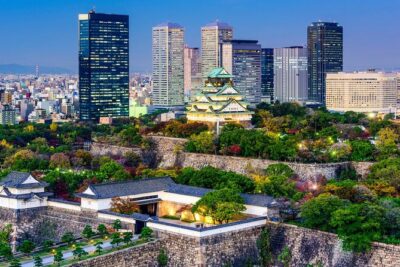
Osaka Private Pop Culture Tour: Historic Tenma to Dotonbori
Read our review →Browse the lists this tour appears in