
Reviewed · OSAKA OBSERVATION DECKS & TICKETS
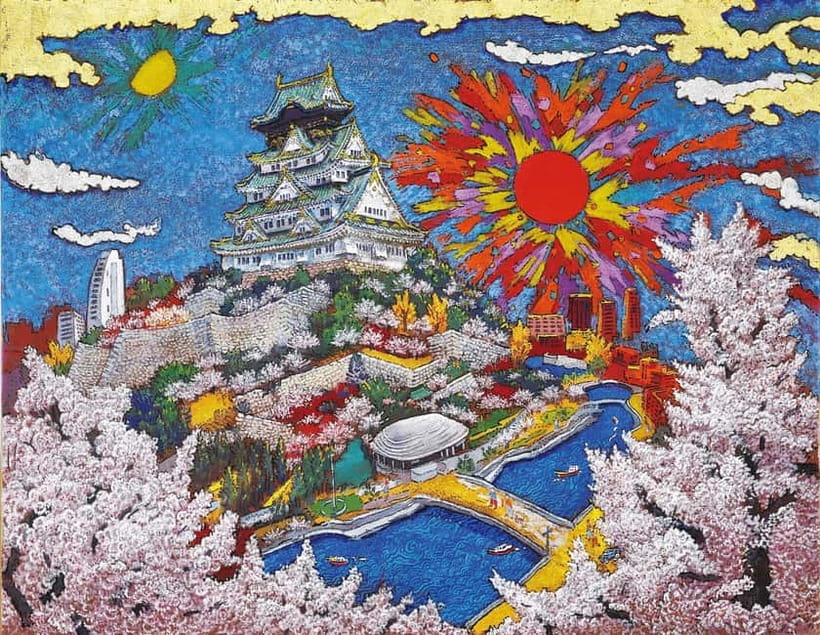
Osaka: Koji Kinutani Tenku Art Museum Entry Ticket
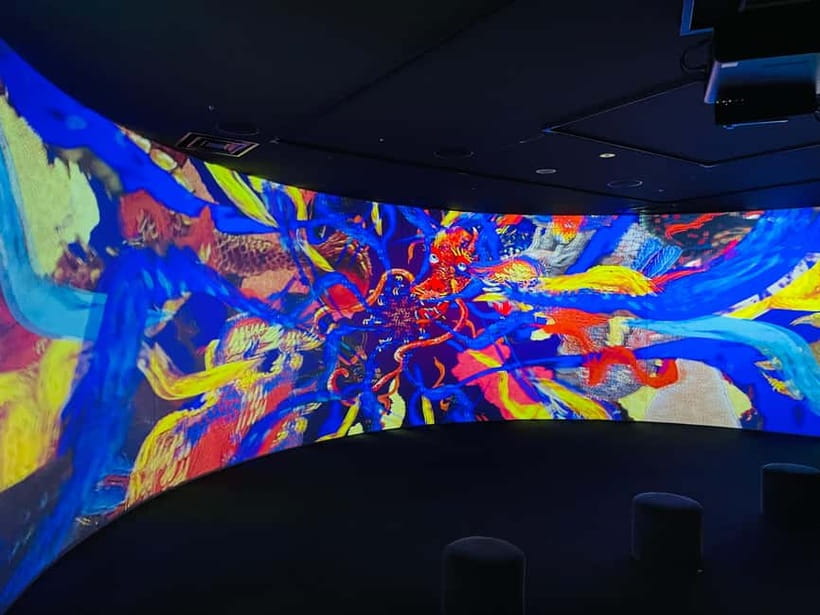
The most unusual part of this Osaka museum is its 3D art theater, where paintings and music fill a curved 3-by-14-meter screen. The effect is closer to a small visual theme park than a quiet gallery, which makes this a good pick when you want art with motion, sound, and a little spectacle.
I like the clear link to Koji Kinutani’s time in Italy, shown in the blue gallery, and the way the red gallery draws on traditional Japanese color and design. I also like the optional Floating Garden Observatory, since one ticket can pair art with a 170-meter view over Osaka. The main drawback is scale: at $8 for basic admission, it is affordable, but the museum may feel brief if you prefer large collections or conventional galleries.
In This Review
- Key points to know before you go
- Art with motion on Osaka’s 27th floor
- The blue gallery recalls Italy
- The red gallery connects art with Japan
- Frescoes reveal the artist’s older technique
- VR puts you closer to Koji Kinutani
- The Tenku Gallery is made for photos
- Adding the Floating Garden Observatory
- Café time with an artistic setting
- The museum shop keeps the visit affordable
- Workshops add hands-on time
- Getting there from Osaka Station
- Timing, closures, and practical limits
- Who should book the museum?
- Should you book the Koji Kinutani Tenku Art Museum?
- FAQ
- Where is the Koji Kinutani Tenku Art Museum?
- How far is the museum from Osaka’s main stations?
- What are the museum’s opening hours?
- Is the museum open on Tuesdays?
- What does the Floating Garden Observatory combo ticket include?
- Are children and students eligible for reduced admission?
Key points to know before you go
- The 3D screen is the museum’s main event: A large curved screen combines paintings, music, and moving images.
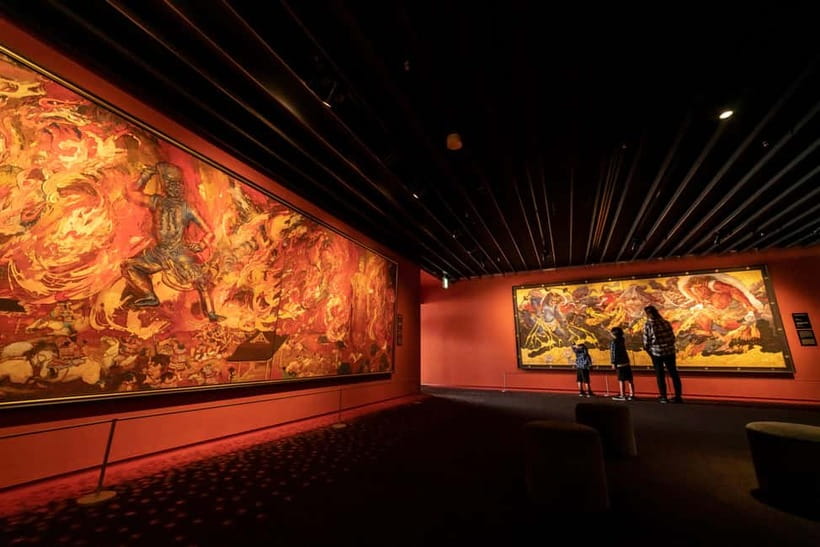
- Two galleries create two moods: Blue recalls the skies of Italy, while red refers to the spirit of traditional Japan.
- Frescoes show the roots of Kinutani’s work: The colorful mural paintings add a more traditional art element.
- The VR program brings you into the artist’s world: You can see a museum tour led by Koji Kinutani and visit his normally closed Tokyo studio through the program.
- The combo ticket adds a 360-degree Osaka view: The Floating Garden Observatory sits 170 meters above the city.
- Plan around the weekly closure: The museum is closed Tuesdays, except when Tuesday is a national holiday.
Art with motion on Osaka’s 27th floor
The Koji Kinutani Tenku Art Museum occupies the 27th floor of the West Tower in the Umeda Sky Building. You are not entering a huge national museum with room after room of old masters. Instead, you are visiting a focused space built around one artist’s imagination, with painting, music, projection, VR, fresco work, and city views all tied together.
That focus is useful. You can understand the visit without needing an art-history background, and the moving presentation gives children and casual museumgoers something immediate to watch. At the same time, anyone who wants to study paintings quietly may find the theatrical presentation more important than the individual works.
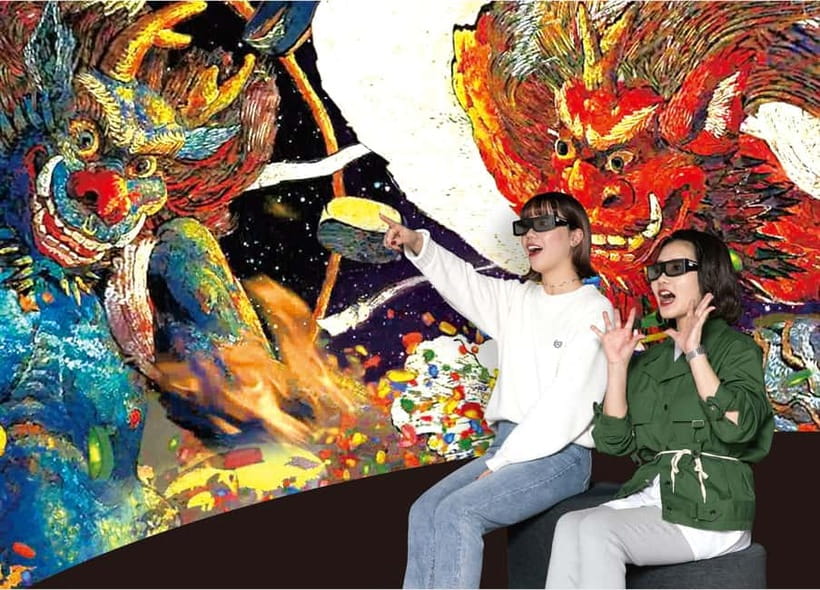
The headline attraction is a 3-meter-high by 14-meter-wide round screen. Paintings appear in a large curved format, accompanied by music and 3D images. The size matters because it changes how you look at the work. You are not simply standing close to a framed canvas. You are surrounded by a broad visual scene, with images designed to appear as if they are coming toward you.
The supplied information describes the setting as having a theme-park atmosphere. That is a useful warning, not a criticism. Expect something theatrical, colorful, and accessible rather than a hushed gallery visit. If you enjoy projected art and sensory presentations, this is likely to be the part you remember most. If you want a traditional museum with extensive labels and many artists, keep your expectations in check.
More attraction tickets and viewing decks:
- Osaka Castle: Museum and Tower Entry Ticket
★ 4.5 · 2,380 reviews - Osaka: Umeda Sky Building Official E-Ticket
★ 4.6 · 1,131 reviews - Osaka Castle Walking Tour and Castle Tower Admission
★ 5.0 · 561 reviews
The blue gallery recalls Italy
The exhibition hall is divided into a blue zone and a red zone. The blue area refers to the skies of Italy, where Kinutani studied abroad. That connection gives the room more purpose than a simple color change. The gallery links the artist’s development to a specific place and period in his life.
Blue can make a gallery feel open and airy, which suits the Italian theme. You can use this section to look for the way Kinutani handles light, sky, and space. The available details do not provide a full list of works or a fixed route, so the exact display may change with the current exhibition.
That changing element is worth noting. Special exhibitions are held twice a year, and works are arranged around the theme then in place. A return visit may not be identical to the first. It also means you should check the current exhibition dates if a particular subject matters to you.
The museum’s art is not presented as a single frozen collection. The walls can shift with each exhibition change, while Kinutani’s larger visual language remains the connecting thread. That makes the museum more interesting for repeat visits, but it also means you should not expect every work described in a general promotion to be on view every day.
The red gallery connects art with Japan
The red exhibition zone brings in the spirit of traditional Japan through red walls and lattices. The design gives you a strong contrast with the blue area and makes the museum feel like two related rooms rather than one long display space.
Red is an effective choice here. It points toward Japanese architectural details and traditional visual culture without requiring the museum to recreate an old building. The lattices provide structure, while the color creates a more intense mood.
I would give yourself time to notice the room itself, not just the paintings. The gallery design is part of the experience, and the contrast between blue and red helps explain how the museum frames Kinutani’s art: Italy and Japan, modern presentation and older mural traditions, still images and moving images.
This area may appeal most to you if you enjoy the connection between art and place. It is also a useful stop for families, since the bold colors and strong room design are easier to take in than long blocks of text.
Frescoes reveal the artist’s older technique
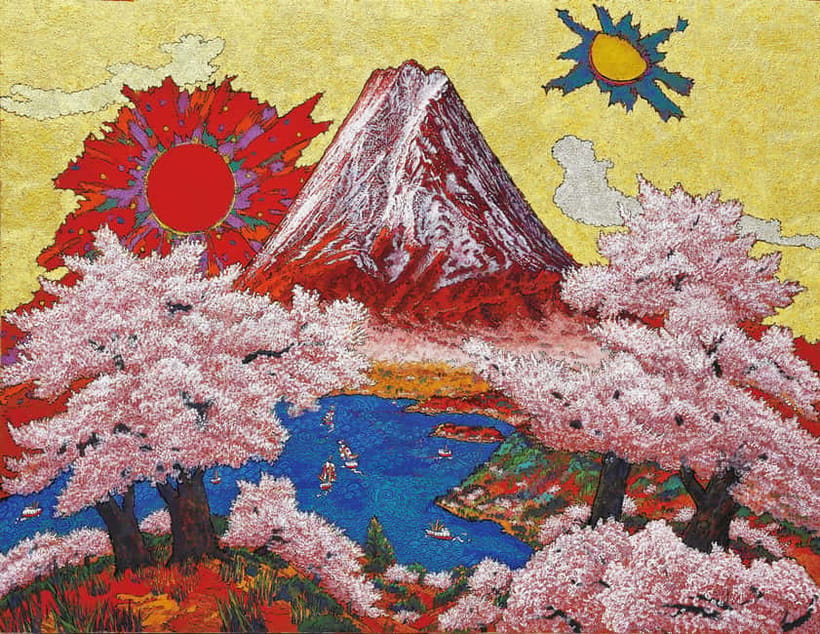
Among the museum’s works are colorful frescoes, or classic mural paintings. These are important because they can be considered the roots of Kinutani’s art. A fresco is made as a mural rather than a portable canvas, so it belongs directly to the wall and to the space around it.
That detail adds weight to a museum otherwise known for large-screen images and VR. You can see how the artist’s work connects to an older form while also being presented through modern technology. The visit is not only about animated projections. It also includes a physical painting tradition that has shaped the artist’s practice.
The exact amount of time you spend here depends on your interest. I would look closely at the color and scale before moving on to the screen presentation. The contrast helps you understand what technology adds, and what it cannot replace.
You should also know that exhibition displays can change during special exhibition periods. Frescoes are listed as part of the museum experience, but the precise arrangement of works can vary.
A few more Osaka tours and experiences worth a look
- Osaka: Osaka Castle & Historical Museum Guided Tour
★ 4.8 · 28 reviews - (Ticket Included) Explore Osaka Castle & Museum of History
★ 4.8 · 21 reviews - Cup Noodles Museum Guided Tour in Osaka
★ 4.5 · 4 reviews
VR puts you closer to Koji Kinutani
The VR experience offers a different route into the artist’s work. You can take a virtual tour of the museum with Koji Kinutani himself and hear a rare talk in his Tokyo studio, which is normally closed to visitors.
That makes the VR more than a visual gimmick. It gives you access to the artist’s voice and working environment without requiring a separate studio visit. For someone who wants context but does not enjoy reading long wall panels, this may be the most useful feature in the museum.
The information does not specify the length of the VR program, the equipment used, or whether it runs continuously. Check the current arrangement at reception when you arrive. Availability may also matter if you are visiting at a busy time or trying to fit the museum into a tight Osaka schedule.
I would treat the VR as an optional layer rather than the sole reason to buy the ticket. The screen presentation, galleries, and frescoes are the foundation of the visit. The VR adds a more personal connection to the artist.
The Tenku Gallery is made for photos
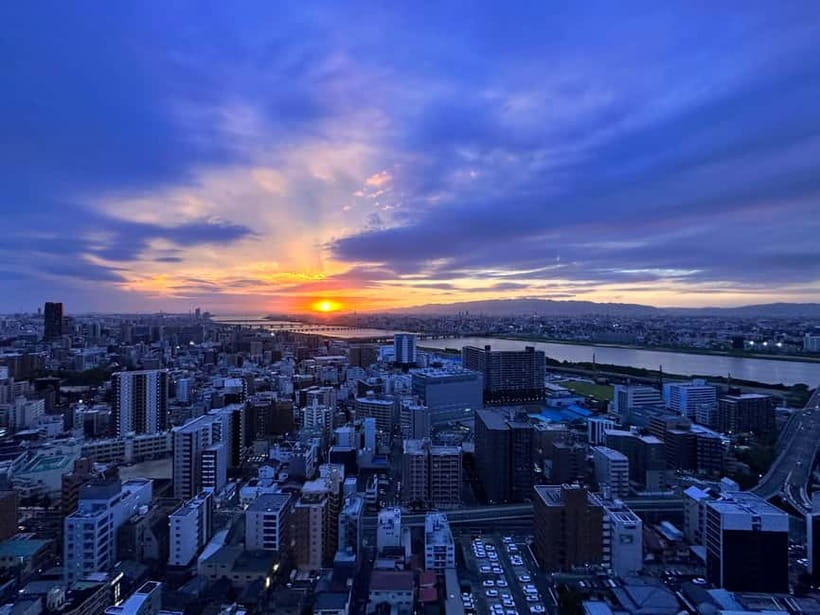
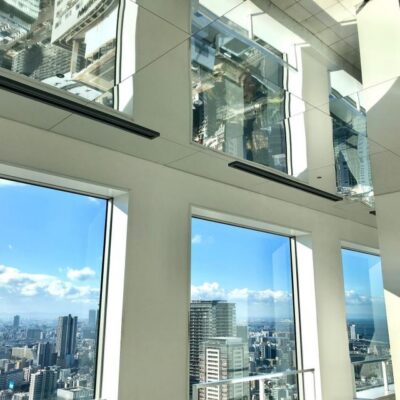
The Tenku Gallery is a photo-friendly part of the museum and an appealing place to pause between displays. Its position high in the Umeda Sky Building gives you a view down toward the Yodogawa River and across Osaka’s cityscape.
This is a practical benefit for people who want more than indoor art. You can take a commemorative photo, look out over the city, and let the visual intensity of the exhibition settle before moving on.
The view is not the same as the open-air Floating Garden Observatory. The museum’s Tenku Gallery provides a picturesque indoor viewpoint, while the optional observatory offers a dynamic 360-degree view from 170 meters above the ground. If the skyline is your main goal, select the combo ticket rather than assuming basic museum admission includes the observatory.
The city view also gives the museum a sense of place. You are not visiting an isolated art center. You are looking out over Osaka, with the Yodogawa River helping you understand the city’s broad urban setting.
Adding the Floating Garden Observatory
The combo ticket includes admission to both the Koji Kinutani Tenku Art Museum and the Floating Garden Observatory. The observatory is in the Umeda Sky Building, so adding it is convenient if you already plan to visit the building.
The open-air skywalk sits 170 meters above the ground and offers a 360-degree view. Daytime gives you a clear look at Osaka’s city spread, while evening can provide a different mood as lights appear across the city. The supplied details do not guarantee a particular level of visibility, so weather and haze will affect the view.
I see the combo as the better value if you want a full Umeda Sky Building visit. The museum alone is inexpensive at $8 per person, but its focus is narrow. Pairing it with the observatory gives you art, architecture, and a major Osaka viewpoint in one outing.
Check the price shown for the combo when booking, since the supplied information gives the basic admission price but not a separate combo amount. Also remember that both tickets are not valid on special business days, including Yodogawa Fireworks Festival days.
Café time with an artistic setting
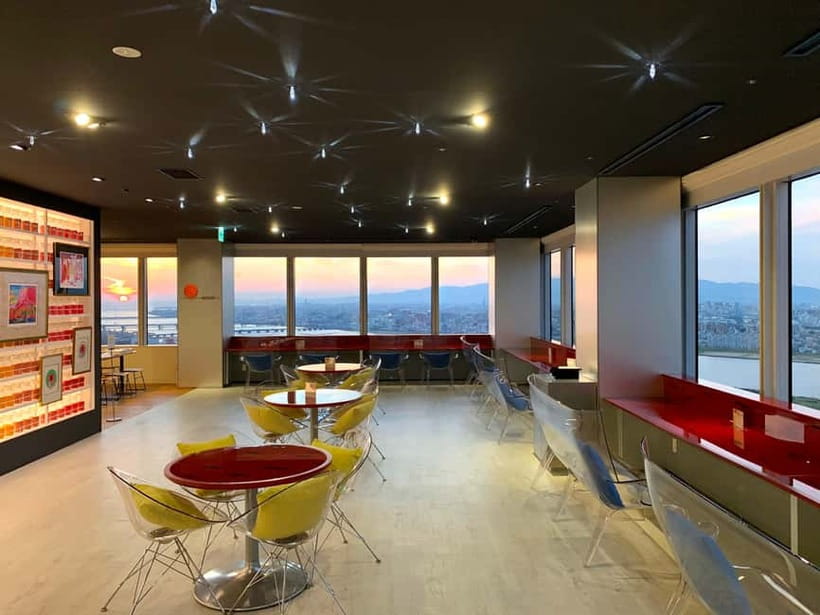
The Tenku Café gives you a place to rest after the galleries. Its design includes rows of colorful pigment bottles associated with fresco painting, turning a normal café stop into another small part of the museum’s visual theme.
Food and drinks cost extra, so include that in your budget. The café is best understood as a place to enjoy the view and reflect on the exhibition, not as part of the admission price.
I like this kind of pause because the museum uses several types of attention: watching the screen, studying the galleries, trying VR, and looking out over Osaka. Sitting down helps keep the visit from feeling like one continuous stream of color and sound.
You can also use the café as a practical break before or after the observatory. Since both attractions are in the same building, it may be easier than searching for another place during a short Umeda visit.
The museum shop keeps the visit affordable
The museum shop sells goods based on motifs from Kinutani’s works, along with original postcards and other items. Postcards are a sensible choice if you want a small souvenir that fits easily into your luggage.
The shop also gives you a final look at how the museum adapts the art for everyday use. You may find something for yourself or a gift for someone who could not join you, though exact stock is not provided and can change.
At $8, the basic ticket is easy to justify for a short cultural stop, especially if you are already heading to the Umeda Sky Building. The value is strongest for people who like contemporary presentation, large images, and a clear artist-centered visit. It is weaker if you measure value by the number of paintings or hours spent inside.
Workshops add hands-on time
The museum offers programs for different ages, including fresco painting and painting classes with lectures by Koji Kinutani. Workshop reservations are required, and materials are not included in the standard admission.
This is worth considering for families and anyone who wants to make something rather than only look. A hands-on fresco program can also make the mural technique easier to understand, since you engage with the process instead of seeing only the finished wall.
Do not count on joining a workshop spontaneously. Reserve ahead if this is central to your plan, and confirm the current schedule and added material cost. The standard museum ticket does not cover those supplies.
The lectures with Kinutani himself sound particularly valuable when offered, but the information does not give dates or frequency. Treat them as scheduled programs, not as a guaranteed part of every visit.
Getting there from Osaka Station
The museum is at Umeda Sky Building Tower West, 27F, at 1-1-30 Oyodonaka in Kita-ku. It is about a 9-minute walk from JR Osaka Station, Osaka Metro Umeda Station, and Hankyu Osaka Umeda Station. From Hanshin Osaka Umeda Station, allow about 13 minutes.
Those walking times are short, but Umeda is a large transport area with several stations and connected buildings. Give yourself extra time to find the correct route, especially if you are traveling with children or carrying luggage.
By car, the Umeda Sky Building parking lot has 160 spaces and charges by the hour. It is just off the Umeda ramp of Hanshin Expressway No. 11. For most sightseeing plans, the train is likely simpler, but the parking information helps if you are already driving.
At the museum, exchange your ticket at the reception desk. The ticket is valid for one day, and the museum is wheelchair accessible.
Timing, closures, and practical limits
The museum opens from 10:00 to 18:00 on Mondays, Wednesdays, Thursdays, and Sundays. On Fridays, Saturdays, and the day before national holidays, it stays open until 20:00. Admission ends 30 minutes before closing.
Tuesday is the regular closing day. If Tuesday is a national holiday, the museum opens Tuesday and closes the next weekday instead. It also closes from December 30 through January 3 and during exhibition change periods.
You are not allowed to bring food or drinks into the museum, and pets are not permitted except assistance dogs. Elementary school students and younger children enter free. Junior high, high school, and university students can use a student ticket, but they must show student identification at entry.
Discounts for disabled visitors are available at both the museum and observatory. The supplied instructions say to bring your passport and buy those tickets directly at each facility, rather than relying on the regular advance voucher.
One verified five-star booking from Réunion came from an arts enthusiast who described the museum as a very good experience. That praise fits the museum’s strongest point: it gives art fans a colorful, unusual visit without a high basic admission price. The overall rating is 3.1 from three reviews, so there is not enough feedback to treat that score as a firm guide. Use the nature of the visit, rather than the rating alone, to decide.
Who should book the museum?
I would recommend this to you if you enjoy contemporary art, projection shows, VR, or unusual museum interiors. It also suits families because the 3D screen, strong colors, and hands-on workshops offer more variety than a silent gallery.
The museum works well as a compact stop between other Umeda activities. Add the observatory if you want the building’s major city view, and consider the café for a slower finish.
You may want to skip it if your priority is a large collection, famous historic paintings, or a long guided explanation of Japanese art. The museum is centered on one artist and uses a theatrical format. That is its appeal, but it is also its limit.
Should you book the Koji Kinutani Tenku Art Museum?
Book the basic ticket if you want an affordable, focused art stop with a large 3D screen, frescoes, VR, and a high-floor Osaka view. At $8, it offers a good change of pace from temples, shopping streets, and food-focused sightseeing.
Choose the combo if you already plan to visit the Floating Garden Observatory. The added 360-degree view from 170 meters gives the outing more weight and makes the ticket easier to justify.
Before booking, check the exhibition-change dates, Tuesday closure, special business days, and whether a workshop or VR session fits your timing. For art lovers, families, and visitors curious about a modern Japanese artist, this is a sensible Umeda add-on. For a major museum collection, choose a larger institution instead.
FAQ
Where is the Koji Kinutani Tenku Art Museum?
It is on the 27th floor of the West Tower of the Umeda Sky Building, at 1-1-30 Oyodonaka, Kita-ku, Osaka.
How far is the museum from Osaka’s main stations?
It is about a 9-minute walk from JR Osaka Station, Osaka Metro Umeda Station, and Hankyu Osaka Umeda Station. From Hanshin Osaka Umeda Station, the walk takes about 13 minutes.
What are the museum’s opening hours?
It is open from 10:00 to 18:00 on Mondays, Wednesdays, Thursdays, and Sundays. It is open from 10:00 to 20:00 on Fridays, Saturdays, and the day before national holidays. Admission ends 30 minutes before closing.
Is the museum open on Tuesdays?
The museum is closed Tuesdays. If Tuesday is a national holiday, it opens that day and closes on the following weekday instead.
What does the Floating Garden Observatory combo ticket include?
The combo includes admission to the Koji Kinutani Tenku Art Museum and the Floating Garden Observatory in the Umeda Sky Building.
Are children and students eligible for reduced admission?
Elementary school students and younger children enter free. Junior high, high school, and university students can use student tickets if they show a valid student ID at entry.
Just added around Osaka
- Nara Day Trip from Osaka with a Licensed Guide★ 5.0 · 3 reviews
- Osaka Early Morning Osaka Castle Tour Avoid Crowds★ 5.0 · 3 reviews
- Guided Tour of Some Attractions in Osaka by Private Car★ 5.0 · 3 reviews
- Private Transfer Between Kyoto and Kansai Airport KIX★ 5.0 · 3 reviews
- Shared Arrival Transfer: Osaka Itami Airport to Osaka City★ 5.0 · 3 reviews
- Osaka: Sushi Making Class and Dotonbori Food Tour★ 4.7 · 3 reviews
- Osaka Night Photography Workshop★ 5.0 · 3 reviews
- Kyoto Full day Tour Kinkakuji, Kiyomizu-dera and Fushimi Inari★ 4.5 · 3 reviews
Osaka Observation Decks & Tickets, compared.
Osaka Castle Walking Tour and Castle Tower Admission
Read our review →
Castle History Walking Tour / Castle Tower Admission
Read our review →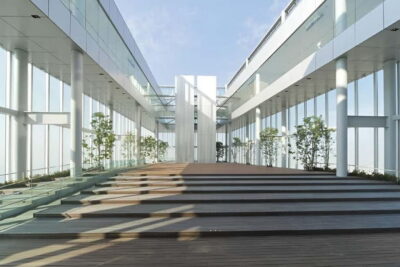
Browse the lists this tour appears in