
Reviewed · KYOTO DAY TRIPS FROM OSAKA
Kyoto One Day Sightseeing Tour from Osaka or Kyoto
Kyoto’s biggest sights are spread across the city, and this nine-hour coach tour tackles a remarkable number of them in one day. You’ll see the black gate of Nonomiya Shrine, walk beneath the red torii at Fushimi Inari, cross Togetsukyo Bridge, and finish at the glittering Golden Pavilion.
I like the wide range of sights, from feudal palace rooms at Nijo Castle to the bamboo paths of Arashiyama. I also like the practical air-conditioned vehicle, especially when you are based in Osaka and want to avoid piecing together several train journeys.
The tradeoff is pace. With eight listed stops and a group of up to 45 people, this is a highlights tour, not a slow Kyoto walk. Some guides, including Theodore Chan and Jay, have been praised for clear explanations and smooth organization, but the guiding can be lighter than some people expect.
In This Review
- Key points to know before booking
- Four corners of Kyoto in one day
- Nijo Castle and the Tokugawa shoguns
- Fushimi Inari’s red torii paths
- Arashiyama, where the schedule tightens
- The Arashiyama Bamboo Forest
- Nonomiya Shrine’s unusual black torii
- Kimono Forest and Togetsukyo Bridge
- Kinkaku-ji, Kyoto’s Golden Pavilion
- What the $65 price really covers
- The guide can make or break the day
- Who should book this Kyoto day trip?
- Should you book the F Trip Kyoto tour?
- FAQ
- How long does the Kyoto sightseeing tour last?
- Can I depart from Osaka or Kyoto?
- What attractions are included in the route?
- Are admission tickets included?
- Is lunch included?
- How large can the tour group be?
- Is transportation provided?
- What is the cancellation policy?
Key points to know before booking
- Eight major Kyoto stops: Nijo Castle, Fushimi Inari, Arashiyama, the Bamboo Forest, Nonomiya Shrine, Kimono Forest, Togetsukyo Bridge, and Kinkaku-ji.
- Built for Osaka day trips: You can depart from Osaka or Kyoto and return after roughly nine hours.
- Two extra admission fees: Nijo Castle and Kinkaku-ji are not included in the tour price.
- Fast sightseeing pace: Individual stops range from 20 minutes to just over an hour.
- Air-conditioned group vehicle: The maximum group size is 45 people, so expect a shared coach experience.
- Guide quality can shape the day: Theodore Chan and Jay received especially strong praise for organization, humor, and clear information.
Four corners of Kyoto in one day
This tour is designed for you if Kyoto is one part of a larger Japan trip and your schedule is tight. For $65 per person, you get transportation in an air-conditioned vehicle and a guide, then cover sights that sit in several different parts of the city.
That matters because Kyoto is not one compact old-town attraction. Nijo Castle is near the city center, Fushimi Inari is south of central Kyoto, and Arashiyama is far to the west. Kinkaku-ji sits in the northwest. Reaching all four areas independently in a single day takes planning, transfers, and careful attention to the clock.
The tour’s strength is convenience. You can let someone else handle the road connections while you focus on getting off the vehicle, seeing the main feature, and rejoining the group. Its weakness is equally clear: you will not have much spare time for side streets, small shops, extended temple visits, or a long lunch.
More day trips over to Kyoto:
- Osaka/Kyoto: Hiroshima Miyajima Bus Tour & Shinkansen Ticket
★ 4.7 · 919 reviews - Ancient Capital Tour: Kyoto and Nara Highlights from Kyoto/Osaka
★ 4.5 · 332 reviews - Osaka/Kyoto: Amanohashidate & Miyama Tour with Boat & Lunch
★ 4.6 · 207 reviews
Nijo Castle and the Tokugawa shoguns
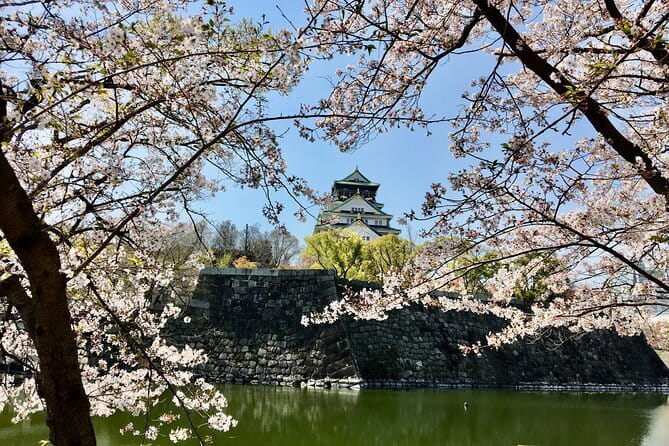
The day begins with Nijo Castle, built in 1603 as the Kyoto residence of Tokugawa Ieyasu, the first shogun of the Edo Period. The castle is important not only for its walls and gardens, but also for the role it played in Japan’s political story over the following four centuries.
You have about one hour here. That is enough for a useful first look, but it is not a leisurely castle visit. The Ninomaru Goten Palace is the major interior attraction, with palace buildings often described as some of the finest surviving examples of castle-palace architecture from Japan’s feudal era.
Admission is not included. The listed price for Nijo Castle and the Ninomaru Goten Palace is 1,300 yen, so add that to your budget before booking. If you care about architecture, court life, or the rise and fall of the Tokugawa government, this is one of the tour’s most substantial stops.
The castle became a UNESCO World Heritage site in 1994. That designation is useful context, but the practical point is simple: you are seeing a place where political power was displayed through buildings, formal rooms, gardens, and controlled movement. Listen carefully to the guide on the drive and at the entrance, since the short visit will feel more rewarding if you know what to look for.
Fushimi Inari’s red torii paths
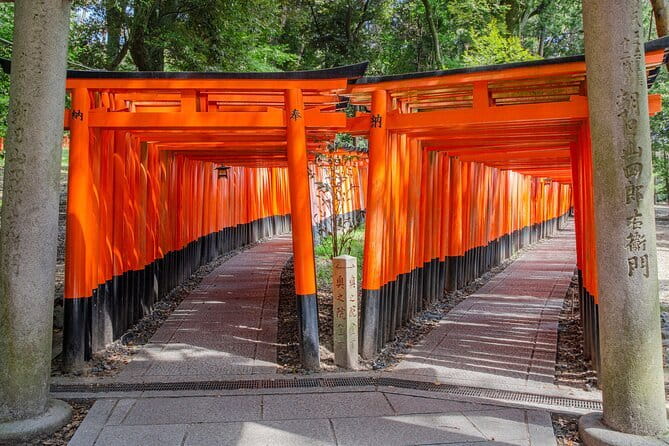
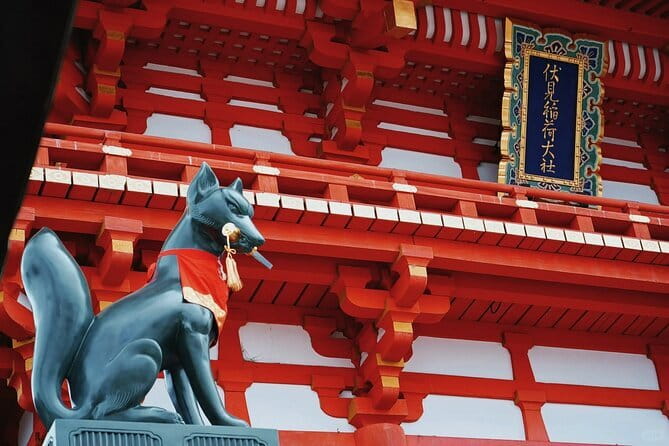
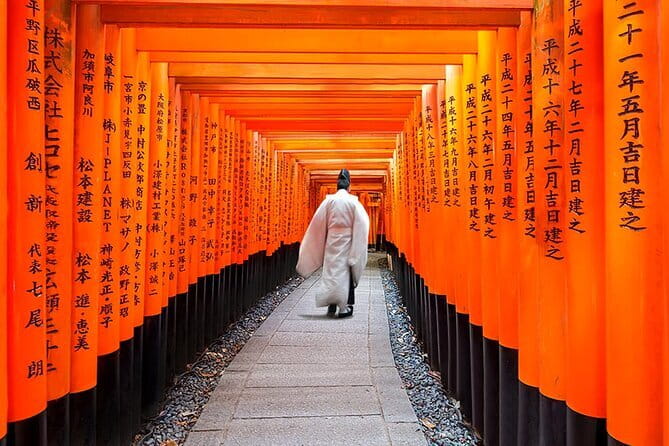
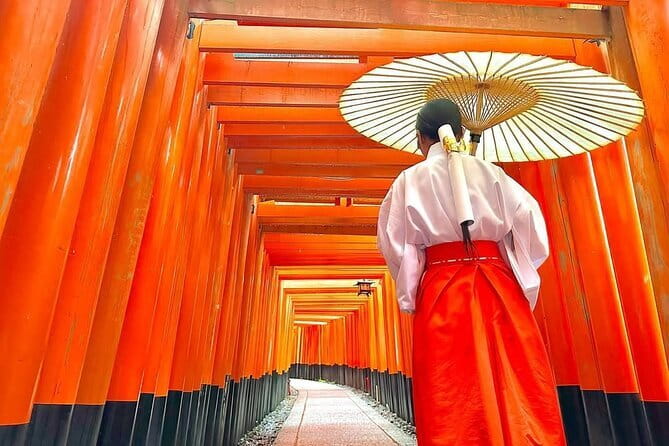
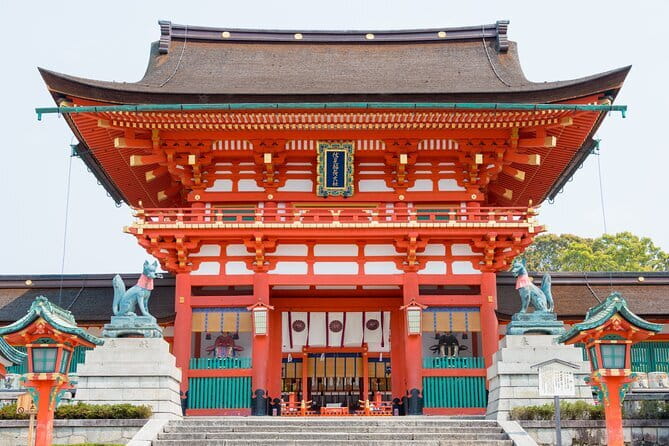
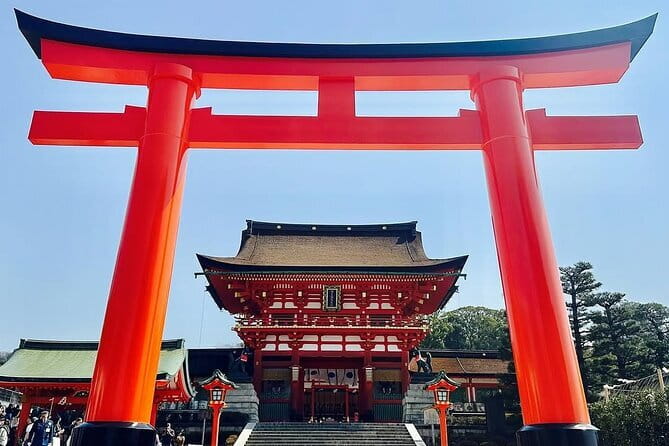
The second stop is Senbon Torii at Fushimi Inari Taisha, with about 1 hour and 10 minutes allotted. Admission is free, which helps balance the extra fees at Nijo Castle and Kinkaku-ji.
Fushimi Inari is the head shrine among roughly 30,000 Inari shrines in Japan. Inari is associated with rice, and the shrine is famous for its thousands of vermilion torii gates. These gates form covered paths that climb into the wooded hills behind the main shrine area.
The important practical detail is to set a personal turnaround point. The full mountain route is much longer than the time allowed on this tour, so you should not expect to walk every torii gate. The tour gives you enough time to experience the famous lower section, take photographs, and get a feel for the place without committing to a long hike.
This stop has a different mood from Nijo Castle. The castle explains power and government. Fushimi Inari feels more devotional and visual, with repeated gates, shrine buildings, and a route that invites you upward. If you want a quiet, extended shrine walk, the schedule will disappoint. If you want the defining image of Fushimi Inari and a chance to walk beneath the gates, it works well.
Arashiyama, where the schedule tightens
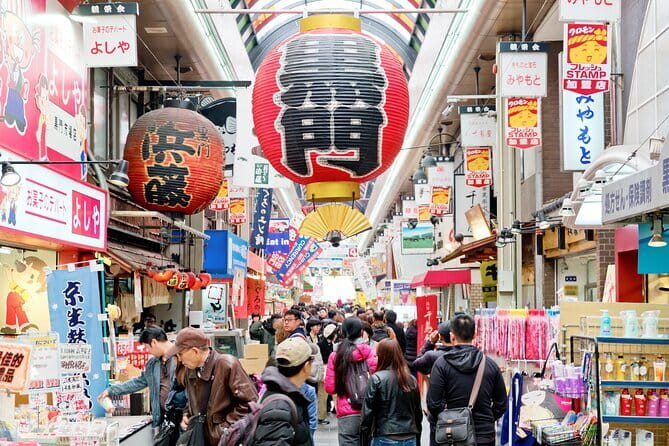
The tour then moves west to Arashiyama, a district known for natural beauty, historic sites, and views along the Katsura River. The overall Arashiyama portion is divided into several short visits, which gives you a useful sampler but requires attention to time.
You have 20 minutes for the general Arashiyama stop, followed by 40 minutes at the Bamboo Forest. Another 20 minutes is listed for Nonomiya Shrine, 20 minutes for the Kimono Forest, and 20 minutes for Togetsukyo Bridge. These times may be presented as separate points on the route, but you should think of the entire section as a tightly managed circuit.
The good news is variety. You will not spend the whole afternoon looking at one temple gate. You move from bamboo to shrine, from textile art to a river bridge. The drawback is that each place receives only a brief look, and walking between them takes part of the available time.
Wear comfortable shoes and keep your belongings easy to manage. The information provided does not specify a private vehicle or a small group, and the maximum group size is 45, so rejoining the group promptly matters.
A few more Osaka tours and experiences worth a look
- Kyoto and Nara Day Trip from Osaka
★ 4.0 · 175 reviews - Hiroshima & Miyajima 1 Day Bus Tour with Bullet Train Tickets
★ 4.5 · 105 reviews - From Osaka: Hiroshima and Miyajima Day Trip by Bullet Train
★ 4.6 · 83 reviews - Amanohashidate & Ine Funaya Sightseeing Full Day Trip from Kyoto
★ 4.5 · 62 reviews
The Arashiyama Bamboo Forest
The Bamboo Forest is the district’s best-known sight and one of Kyoto’s most recognizable symbols. Tall bamboo stalks line the path, creating a cool, enclosed setting that feels very different from the open spaces around the river.
The planned visit lasts 40 minutes. That is enough to walk through the main section and take photographs, though it is not enough for an unhurried exploration of every nearby path. The forest is also one of those places where the experience depends on timing and crowd levels, neither of which is specified here.
I would treat this as a focused photo and atmosphere stop rather than a full nature outing. Walk at a steady pace, pause for a few minutes, and leave enough time to return to the meeting point. The forest is free to enter, so there is no added admission cost.
A guide may offer background while you are on the vehicle or before you enter, but do not assume that every minute inside the forest will be accompanied by a detailed walking explanation. One low-rated experience specifically objected to the tour being mostly unguided at the sites, while other feedback praised guides for explaining highlights during the day. That difference is worth keeping in mind.
Nonomiya Shrine’s unusual black torii
Nonomiya Shrine receives about 20 minutes. It is a Shinto shrine in Arashiyama, and its most distinctive feature is its black torii gate. That is a useful detail because many people associate Kyoto shrines with vermilion gates, especially after visiting Fushimi Inari.
The short stop works as a contrast to the much larger shrine complex at Fushimi Inari. Nonomiya is less about a long route and more about noticing a small, distinctive place within Arashiyama. You can see the black gate, take in the shrine grounds, and continue with the group.
Do not expect a long spiritual or historical visit here. Twenty minutes is a brief introduction. Still, this is the kind of detail that makes the Arashiyama portion more than a single bamboo photograph.
Kimono Forest and Togetsukyo Bridge
The Kimono Forest is a textile art installation made of 600 clear acrylic cylinders, each about two meters tall. The cylinders display kimono fabrics in many patterns, creating a colorful corridor near Arashiyama’s railway area.
You have around 20 minutes. This is a quick, easy stop and a change of pace after the natural setting of the Bamboo Forest. It also gives you a modern visual counterpoint to Kyoto’s temples and shrines. The installation is free to visit.
Togetsukyo Bridge receives another 20 minutes. The bridge crosses the Katsura River and is Arashiyama’s best-known landmark. Its first construction dates to the Heian Period, from 794 to 1185, though the current bridge was most recently reconstructed in the 1930s.
The bridge is best understood as a scenic viewpoint rather than a formal attraction with an admission gate. You can cross part of it, photograph the river, and take in the surrounding hills. The schedule does not leave much time for a long riverside stroll, so keep your expectations modest.
Together, these two stops show why Arashiyama appeals to so many kinds of visitors. The Kimono Forest is contemporary and designed. Togetsukyo Bridge is tied to an older setting shaped by the river and surrounding scenery. You get both in less than an hour.
Kinkaku-ji, Kyoto’s Golden Pavilion
The final listed stop is Kinkaku-ji, also called the Golden Pavilion. You have about 40 minutes, and admission is not included. The listed ticket price is 500 yen.
Kinkaku-ji is a Zen Buddhist temple and a UNESCO World Heritage site. Its gold-covered exterior reflects in the pond, with gardens and carefully framed views around it. This is one of Kyoto’s most visually striking stops, but the visit is structured around a set route rather than open wandering.
Forty minutes is enough to reach the main viewing areas and take photographs. It is not enough for a slow garden visit or a detailed study of every feature. If the Golden Pavilion is your main reason for visiting Kyoto, consider coming back independently on another day. On this tour, it serves as a strong final image after a day of castles, shrines, bamboo, bridges, and textile art.
Because Kinkaku-ji comes late, tiredness can affect the experience. The tour has already covered several districts, and the final stop may feel short. On the other hand, ending with one of Kyoto’s most famous sights gives the day a clear finish.
What the $65 price really covers
At $65 per person, the value comes mainly from transport and time savings. You are paying for a full day in an air-conditioned vehicle with a guide, rather than for entrance to every attraction. That distinction is important.
You should budget an additional 1,800 yen for the two listed admissions: 1,300 yen for Nijo Castle and the Ninomaru Goten Palace, plus 500 yen for Kinkaku-ji. Lunch is also not included. The Fushimi Inari and Arashiyama stops listed here do not have an admission charge.
For someone staying in Osaka, the price can make sense because the tour gathers several distant Kyoto sights into one organized day. You avoid the work of linking southern, western, central, and northwestern Kyoto by yourself. For someone staying in Kyoto with several free days, an independent plan may offer more time at each place.
The vehicle is shared, with a maximum group size of 45. That is a fairly large group, so the experience will feel more like a conventional coach outing than a private cultural tour. A larger vehicle can be comfortable and efficient, but it also makes meeting times and group discipline important.
The guide can make or break the day
The strongest feedback centers on guides who kept the group moving while adding useful information. Theodore Chan was praised for being professional, organized, patient, informative, and funny. Jay was also singled out for being friendly, informative, and good at keeping the day on schedule.
Those qualities matter here because the itinerary is demanding. You need clear instructions about where to meet, how long you have, and what to prioritize. One especially organized version of the tour even sent bus seat numbers in advance, which can reduce confusion in a large group.
Still, you should not book this expecting a private guide beside you for every minute. The guiding approach can vary, and one disappointing experience found the sites mostly unguided, with only brief explanations on the vehicle. Other feedback described the day as well organized and detailed.
My advice is to view the guide as a practical leader and interpreter, not as a personal scholar assigned to your group. Pay attention during the drive, ask questions when there is an opportunity, and use the free time at each site according to your own priorities.
Who should book this Kyoto day trip?
This tour suits you best if you:
- Are staying in Osaka and want a simple Kyoto day trip
- Have only one day for Kyoto’s major sights
- Prefer organized transportation to several separate train and bus connections
- Want a broad first look at temples, shrines, gardens, bamboo, and historic buildings
- Are comfortable with a large group and fixed meeting times
- Do not mind paying attraction fees separately
It is less suitable if you want long, quiet visits or detailed instruction at every site. It is also not ideal if you hope to hike far into Fushimi Inari or spend a whole afternoon in Arashiyama.
The tour can work for families and most people, since most travelers can participate and the vehicle is air-conditioned. If you plan to bring a stroller or large luggage, state that when booking. If you book separately from relatives or friends, notify the operator at least one day ahead so you have a better chance of being assigned to the same vehicle.
The mobile ticket is convenient, and confirmation is provided at booking. Free cancellation is available if you cancel at least 24 hours before the local start time. Changes or cancellations inside that window are not accepted for a refund.
Should you book the F Trip Kyoto tour?
Book it if your priority is coverage and convenience. In one long day, you can see Nijo Castle, Fushimi Inari, Arashiyama’s main sights, and Kinkaku-ji without organizing the route yourself. The $65 base price is reasonable for that transport savings, provided you add the two entrance fees and lunch.
Skip it if your ideal Kyoto day involves sitting in a temple garden, walking deep into the Fushimi Inari gates, or exploring Arashiyama without watching the clock. This is a brisk introduction, not a slow cultural study.
For a first Kyoto visit from Osaka, I see the appeal. Choose it with realistic expectations, follow the meeting times closely, and hope for a guide such as Theodore Chan or Jay who brings the organization and warmth this packed route needs.
FAQ
How long does the Kyoto sightseeing tour last?
The tour lasts approximately nine hours.
Can I depart from Osaka or Kyoto?
Yes. The tour offers departure options from Osaka or Kyoto.
What attractions are included in the route?
The route includes Nijo Castle, Senbon Torii at Fushimi Inari, Arashiyama, the Arashiyama Bamboo Forest, Nonomiya Shrine, Arashiyama Kimono Forest, Togetsukyo Bridge, and Kinkaku-ji.
Are admission tickets included?
No. Nijo Castle and the Ninomaru Goten Palace ticket costs 1,300 yen, and the Kinkaku-ji ticket costs 500 yen. These fees are paid separately.
Is lunch included?
No. Lunch is not included in the tour price.
How large can the tour group be?
The activity can have a maximum of 45 travelers.
Is transportation provided?
Yes. The tour includes transportation in an air-conditioned vehicle.
What is the cancellation policy?
You can receive a full refund by canceling at least 24 hours before the experience start time. Cancellations or changes made less than 24 hours before the local start time are not accepted.
Just added around Osaka
- Osaka Early Morning Osaka Castle Tour Avoid Crowds★ 5.0 · 3 reviews
- Guided Tour of Some Attractions in Osaka by Private Car★ 5.0 · 3 reviews
- Nara Day Trip from Osaka with a Licensed Guide★ 5.0 · 3 reviews
- Private Transfer Between Kyoto and Kansai Airport KIX★ 5.0 · 3 reviews
- Shared Arrival Transfer: Osaka Itami Airport to Osaka City★ 5.0 · 3 reviews
- Osaka: Sushi Making Class and Dotonbori Food Tour★ 4.7 · 3 reviews
- Osaka Night Photography Workshop★ 5.0 · 3 reviews
- Kyoto Full day Tour Kinkakuji, Kiyomizu-dera and Fushimi Inari★ 4.5 · 3 reviews
Kyoto Day Trips from Osaka, compared.

Osaka/Kyoto: Hiroshima Miyajima Bus Tour & Shinkansen Ticket
Read our review →
Ancient Capital Tour: Kyoto and Nara Highlights from Kyoto/Osaka
Read our review →
Osaka/Kyoto: Amanohashidate & Miyama Tour with Boat & Lunch
Read our review →

Sagano Romantic Train & Arashiyama, Kiyomizudera, Fushimi Inari Taisha Day Tour
Read our review →
Full Day Tour of Kyoto with Private Transportation
Read our review →
Kyoto & Nara Private customized tour with English speaking Guide
Read our review →Full Day Kyoto Tour : Bamboo Forest, Golden Temple, Fushimi Inari
Read our review →Browse the lists this tour appears in