
Reviewed · KYOTO DAY TRIPS FROM OSAKA
Kyoto and Nara Day Tour From Osaka with Deer Sightings
Nara’s free-roaming deer are the star of this full-day outing. Around 1,300 shika deer wander through Nara Park, and many will bow for a deer cracker before taking a bite. From there, you head to Kyoto for the red torii tunnels at Fushimi Inari and the hillside setting of Kiyomizudera.
I like two things right away: the air-conditioned vehicle saves you from piecing together several train journeys, and the route joins three famous sights in one long day. The driver keeps the day moving, while you are free to explore on your own. The trade-off is simple: basic English guidance means this is transport and sightseeing support, not a detailed cultural tour.
- Bow-hunting deer in Nara Park: Buy deer crackers locally and watch the shika deer react to a polite nod, though they are still wild animals.
- Fushimi Inari’s red torii gates: Walk beneath the shrine’s famous rows of vermilion gates during an approximately 80-minute stop.
- Three hours at Kiyomizudera: The longest stop gives you time for the temple, nearby streets, views, and optional paid entry.
- A 10-hour Osaka day: The schedule covers Nara and Kyoto without asking you to change trains or manage several local routes.
- Optional temple admissions: Kiyomizudera costs ¥400 and Todai-ji costs ¥600 if you enter rather than view them from outside.
- A large group format: Up to 45 people may join, so expect practical transportation rather than a quiet private excursion.
In This Review
- One Long Day From Osaka to Ancient Nara
- Nara Park and Its Bowing Shika Deer
- Fushimi Inari and Its Vermilion Gateways
- Three Hours Around Kiyomizudera
- Where Does Shinsaibashi Fit?
- What the ¥69 Price Really Covers
- The Pace, Comfort, and Physical Work
- Who Will Get the Most From This Tour?
- My Practical Verdict
- FAQ
- Where does the tour start and finish?
- How long does the tour last?
- What sights are included?
- Are temple admission fees included?
- Is lunch included?
- Is the tour guided in English?
- What happens if I need to cancel?
One Long Day From Osaka to Ancient Nara

This tour starts at 8:30 a.m. at Kintetsu-Nippombashi Station, at 1-chōme-18-14 Nipponbashi in Osaka’s Chuo Ward. It returns to the same meeting point after roughly 10 hours.
That timing matters. Nara and Kyoto are close enough to visit in one day, but not close enough to feel relaxed if you rely on several separate train rides and local connections. An air-conditioned vehicle gives you a fixed base for the day, and the driver handles the road between stops.
You should think of the experience as a guided transfer with organized sightseeing time. The driver provides basic English help, but the tour does not promise long explanations about Shinto, Buddhism, or local customs. I would choose it for convenience and coverage, then use the free time at each site to look around at my own pace.
The day is a long one, and traffic can affect how much time you feel you have at each stop. Still, the structure is useful if you have only one open day from Osaka and want to see both Nara and Kyoto without booking separate outings.
Nara Park and Its Bowing Shika Deer
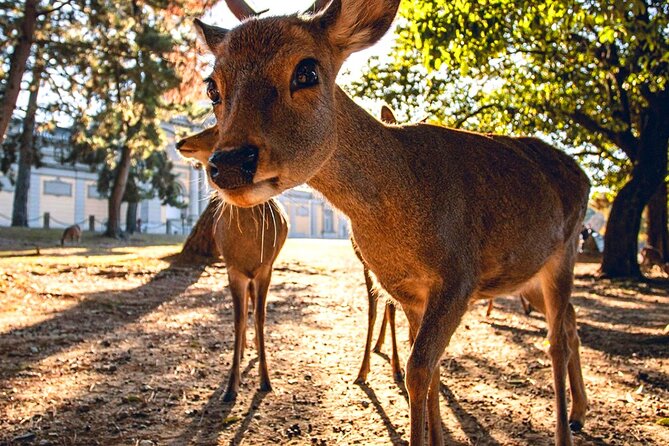
Nara Park comes first, with about 90 minutes set aside. The park is known for its herd of roughly 1,300 deer, which roam freely among the lawns and trees. They are regarded in local tradition as messengers of the gods, so this is more than a standard animal encounter in a fenced enclosure.
The deer are the reason many people remember this day. You may see them moving through the park, resting near paths, or approaching people who have food. The famous bowing behavior is real in the sense that deer often lower their heads after learning that a person is holding a cracker. It is charming, but it is also a trained response to food, not a formal greeting.
If you feed one, keep your fingers clear and follow the simple rhythm: offer a cracker, then show empty hands. Deer can become impatient when the food is gone. The fact that they are free-roaming makes the experience special, but it also means you should treat them as animals, not toys. Children should stay close to their families, especially when several deer gather at once.
The 90-minute visit is enough for a good look at the park and a chance to feed the deer. It is less generous if you also want to spend substantial time inside Todai-ji. The supplied admission information lists Todai-ji at ¥600 per person, paid separately if you enter. Viewing the temple from outside does not require an admission ticket.
That optional fee is worth considering before you arrive. If your main goal is deer, you can keep the stop focused on the park. If you want one of Nara’s major Buddhist sites as well, entering Todai-ji will use part of your limited time and add to the day’s cost.
More day trips over to Nara:
- Ancient Capital Tour: Kyoto and Nara Highlights from Kyoto/Osaka
★ 4.5 · 332 reviews - Kyoto and Nara Day Trip from Osaka
★ 4.0 · 175 reviews - Discover Himeji, Kobe and Nara from Osaka
★ 5.0 · 101 reviews
Fushimi Inari and Its Vermilion Gateways

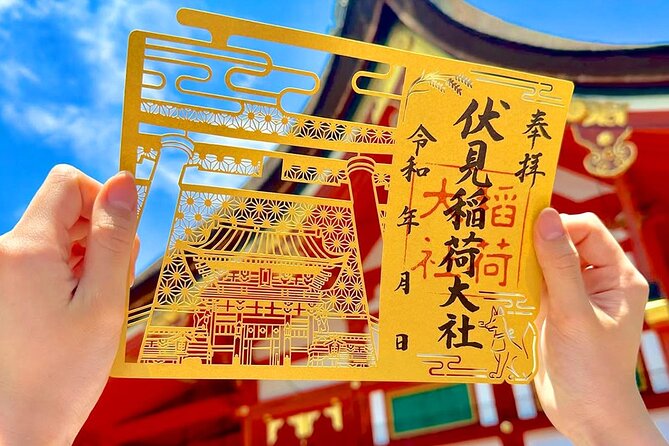
The next major stop is Fushimi Inari Taisha, with about 80 minutes to explore. This Kyoto shrine is the head shrine for roughly 30,000 Inari shrines across Japan. Its most recognizable feature is the long sequence of red-orange torii gates, donated over time by individuals and businesses.
The first gates near the shrine are usually the easiest to reach, and they create the classic tunnel effect that brings many visitors here. With only 80 minutes, you should not assume you can walk the entire route. The shrine complex extends up the mountain, and the available time is better suited to seeing the main approach and walking as far as feels comfortable.
Fushimi Inari is a Shinto site, so the mood differs from Kiyomizudera’s Buddhist setting. You can notice the fox imagery linked with Inari worship, along with the bright gates and ritual spaces. Since the driver gives only basic English guidance, you will not receive a full explanation of every symbol or custom. That is fine if you prefer to move at your own pace, but it may disappoint you if cultural interpretation is your top reason for booking.
Wear shoes that can handle steps and uneven walking. The tour information does not promise an accessibility route or a flat visit, and the shrine’s mountain setting naturally means that exploring farther takes effort. You can still enjoy the lower section without attempting a long climb.
Three Hours Around Kiyomizudera
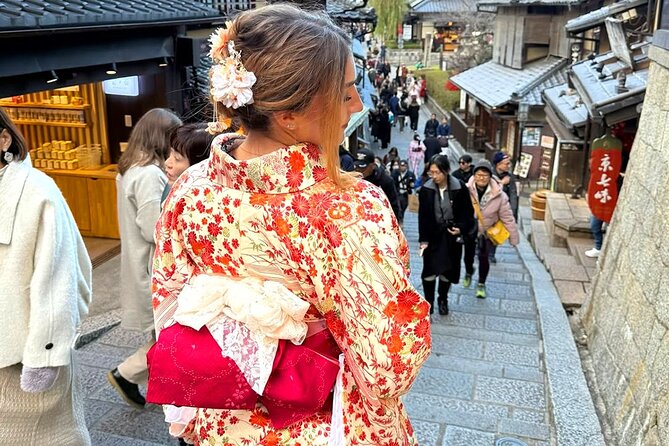
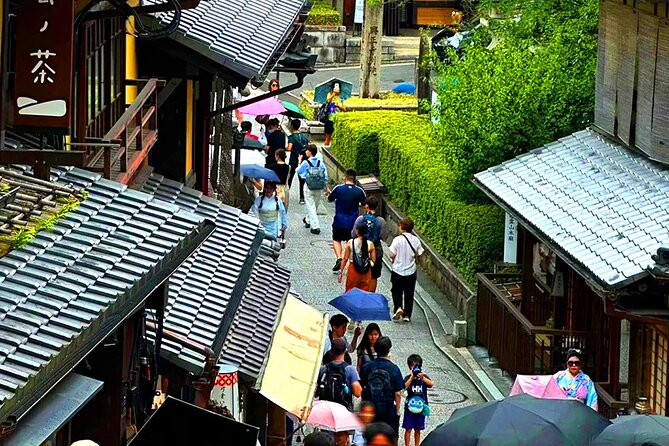
Kiyomizudera receives the biggest block of time, three hours. That is a sensible choice because the temple sits on the slopes of Otowa Mountain and is surrounded by a busy approach area with shops and food stops.
The temple is famous for its wooden main hall and the broad views from its stage. You can enter the paid area for ¥400 per person, or view the outside without paying an admission fee. The price is not included in the tour, so carry enough Japanese yen or be prepared to pay on site.
Three hours gives you room to do more than rush in, take a photo, and leave. You can explore the temple grounds, walk through the approach streets, and allow time for a meal. Lunch is not included, so this is the natural point to buy food, although you should keep an eye on the meeting time and any instructions from the driver.
The setting also makes this stop more physically demanding than a quick city stroll. Kiyomizudera is reached through an uphill approach, and the day already includes Nara Park and Fushimi Inari. If you are traveling with an older family member, pace yourself. People over 70 should be accompanied by a family member according to the tour information.
The long stop is one of the strongest parts of the schedule. It lets you decide how much temple time, shopping, food, and walking suits you. The downside is that independent exploration requires you to manage your own watch. There is no promise of a detailed guided walk or a personal escort through the grounds.
Where Does Shinsaibashi Fit?
The overall experience description also names Shinsaibashi-suji Shopping Street in central Osaka. This is a lively downtown shopping arcade, but no separate visit length or detailed timing is supplied for it in the listed three-stop schedule.
That creates one practical point to clarify before booking. The stated itinerary gives timed visits to Nara Park, Fushimi Inari, and Kiyomizudera, then returns to Kintetsu-Nippombashi Station. If Shinsaibashi-suji is a must-see for you, ask QHTravel how it fits into the day rather than assuming you will receive a separate stop.
The station meeting point is close to Osaka’s downtown shopping areas, so you may be able to visit Shinsaibashi on your own before or after the tour if your schedule allows. Do not count that as included tour time unless the provider confirms it.
More day trips over to Kyoto:
- Osaka/Kyoto: Hiroshima Miyajima Bus Tour & Shinkansen Ticket
★ 4.7 · 919 reviews - Osaka/Kyoto: Amanohashidate & Miyama Tour with Boat & Lunch
★ 4.6 · 207 reviews - Sagano Romantic Train & Arashiyama, Kiyomizudera, Fushimi Inari Taisha Day Tour
★ 4.5 · 171 reviews - Volleyball in Osaka, Kobe & Kyoto with locals!
★ 4.8 · 131 reviews
What the ¥69 Price Really Covers
At $69 per person, this outing is priced as a practical shared day trip rather than a private guide service. The included air-conditioned vehicle and driver service fee are the main value. For a route linking Osaka, Nara, and Kyoto, that can be worthwhile if you would otherwise spend the day arranging separate trains, transfers, and local directions.
The optional admissions add up to ¥1,000 per person if you enter both Kiyomizudera and Todai-ji: ¥400 for Kiyomizudera and ¥600 for Todai-ji. You can skip either fee and view the sites from outside, but lunch and personal spending are also extra.
The group may reach 45 people. That is important. A large vehicle can make the road portions easy, but getting everyone moving at each stop can take time. You should not expect the flexibility of a private car or the close attention of a small walking tour.
The price makes the most sense for three kinds of visitors:
- You have limited time in Osaka and want one organized day covering major sights.
- You prefer a vehicle and fixed route to several train changes.
- You are comfortable learning at the sites on your own after basic instructions.
I would look elsewhere if you want a scholar-led explanation, a slow pace, or a private itinerary. The driver’s role is practical. You get transportation and simple guidance, not a full lecture at every shrine and temple.
The Pace, Comfort, and Physical Work

Ten hours is a serious commitment, but the route covers a lot. Nara Park offers open walking paths, Fushimi Inari can include steps and uphill walking, and Kiyomizudera sits on a hillside with an uphill approach. You may spend much of the day on your feet even though the vehicle provides useful breaks between locations.
The air conditioning is a real comfort in warm or humid weather. It also gives you a place to sit between sites, which matters after walking through Nara and Kyoto.
The tour requires good weather. If poor weather cancels the outing, you can receive a different date or a full refund. The same choice applies if the minimum number of participants is not reached. For a normal cancellation, cancel at least 24 hours before the 8:30 a.m. start time to receive a full refund. Changes or cancellations inside that window are not accepted.
Confirmation arrives when you book, and the ticket is mobile. The activity is near public transportation, though the supplied meeting point is specifically Kintetsu-Nippombashi Station. Check the exact station exit and arrival instructions carefully on the day.
Who Will Get the Most From This Tour?
Families may especially like Nara Park. The deer create an immediate focus for children, and the bowing response can turn a short feeding stop into a memorable moment. Keep in mind that deer are wild and food-motivated, so close supervision is sensible.
First-time visitors with only a few days in Osaka can also get strong value from the route. You see three major cultural sights in two historic cities without planning every connection yourself.
The tour also suits people who enjoy looking rather than listening. Since the driver offers basic English guidance and you explore independently, you can set your own pace within each stop. Bring a translation app or read a little about the sites beforehand if you want more context.
It is less suited to anyone who needs a slow, highly accessible day. The stop times are fixed, the group can be large, and both Fushimi Inari and Kiyomizudera involve walking. Older participants should have a family member with them, as required by the tour information.
My Practical Verdict
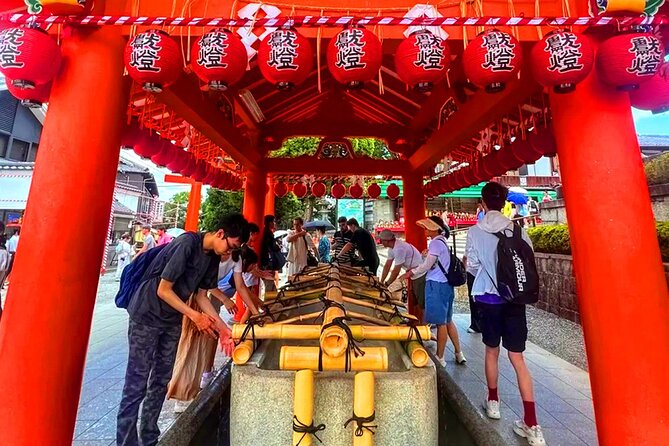
I like this tour for its clear purpose: it takes you from Osaka to Nara and Kyoto in one day, with the deer of Nara Park as the emotional high point. The combination of free-roaming shika deer, Fushimi Inari’s red gates, and three hours at Kiyomizudera gives you a strong first look at the region.
The main limitation is the basic guidance. You will not get detailed explanations of shrine etiquette, Buddhist art, or local history. A group of up to 45 can also feel less personal, and the day’s schedule leaves little room for wandering beyond the planned stops.
Book it if convenience matters more than depth, especially if this is your only day for Nara and Kyoto. Skip it in favor of smaller specialist tours if you want a private guide, long cultural explanations, or a slow pace. Before paying, confirm how Shinsaibashi-suji fits into the schedule, decide which optional temple admissions you want, and arrive ready for a long but rewarding day on foot.
FAQ
Where does the tour start and finish?
The tour starts at 8:30 a.m. at Kintetsu-Nippombashi Station, 1-chōme-18-14 Nipponbashi, Chuo Ward, Osaka. It ends back at the same meeting point.
How long does the tour last?
The experience lasts approximately 10 hours.
What sights are included?
The timed stops are Nara Park, Fushimi Inari Taisha Shrine, and Kiyomizudera Temple. The overall activity information also names Shinsaibashi-suji Shopping Street, but no separate visit duration is provided for it.
Are temple admission fees included?
No. Kiyomizudera admission costs ¥400 per person, and Todai-ji admission costs ¥600 per person if you choose to enter. Viewing the temples from outside does not require admission.
Is lunch included?
No. Lunch and personal purchases are not included.
Is the tour guided in English?
The driver provides basic English guidance. The tour does not include in-depth explanations of the attractions and culture, and you are free to explore independently.
What happens if I need to cancel?
You can receive a full refund if you cancel at least 24 hours before the experience start time. Cancellations or changes made less than 24 hours before the start are not accepted. If poor weather or insufficient participation cancels the tour, you will be offered another date or a full refund.
Just added around Osaka
- Osaka Early Morning Osaka Castle Tour Avoid Crowds★ 5.0 · 3 reviews
- Guided Tour of Some Attractions in Osaka by Private Car★ 5.0 · 3 reviews
- Nara Day Trip from Osaka with a Licensed Guide★ 5.0 · 3 reviews
- Private Transfer Between Kyoto and Kansai Airport KIX★ 5.0 · 3 reviews
- Shared Arrival Transfer: Osaka Itami Airport to Osaka City★ 5.0 · 3 reviews
- Osaka: Sushi Making Class and Dotonbori Food Tour★ 4.7 · 3 reviews
- Osaka Night Photography Workshop★ 5.0 · 3 reviews
- Kyoto Full day Tour Kinkakuji, Kiyomizu-dera and Fushimi Inari★ 4.5 · 3 reviews
Kyoto Day Trips from Osaka, compared.

Osaka/Kyoto: Hiroshima Miyajima Bus Tour & Shinkansen Ticket
Read our review →
Ancient Capital Tour: Kyoto and Nara Highlights from Kyoto/Osaka
Read our review →
Osaka/Kyoto: Amanohashidate & Miyama Tour with Boat & Lunch
Read our review →

Sagano Romantic Train & Arashiyama, Kiyomizudera, Fushimi Inari Taisha Day Tour
Read our review →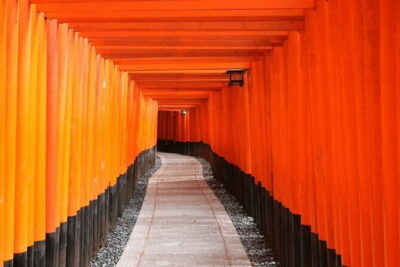
Full Day Tour of Kyoto with Private Transportation
Read our review →
Kyoto & Nara Private customized tour with English speaking Guide
Read our review →Full Day Kyoto Tour : Bamboo Forest, Golden Temple, Fushimi Inari
Read our review →Browse the lists this tour appears in