
Reviewed · KYOTO DAY TRIPS FROM OSAKA
Hiroshima Private Guided Tour from Osaka or Kyoto
Hiroshima and Miyajima make a powerful one-day pairing: one place asks you to face the human cost of war, the other offers sea views, shrine architecture, deer, and a slower pace. This private tour gives you both, with guide Mouloud helping connect Japan’s recent past with its older religious traditions.
I like the private format, since your group can move at its own pace and ask direct questions. I also like the smart contrast between the Peace Memorial Museum and Miyajima’s torii gate, shrine, and nature. The main drawback is the tight schedule, plus the confusing meeting information: the tour is promoted from Osaka or Kyoto, but the stated start and finish are both Hiroshima Station at 8:00 am.
In This Review
- Key points at a glance
- Hiroshima’s past and Miyajima’s calm in one long day
- The Atomic Bomb Dome sets the tone
- Walking through Peace Memorial Park
- Two hours inside the Peace Memorial Museum
- Crossing the Seto Inland Sea to Miyajima
- Lunch and local browsing on Omotesando Street
- Itsukushima Shrine and the famous sea torii
- Meeting the Shika deer in Omoto Park
- How the private format affects the day
- Timing, fitness, and what to bring
- Who should book this Hiroshima day tour?
- Should you book it?
- FAQ
- Where does the tour start and finish?
- How long does the experience last?
- Is the tour private?
- Is the Peace Memorial Museum admission included?
- Is Itsukushima Shrine admission included?
- Are public transportation costs included?
- Can I cancel for a full refund?
Key points at a glance
- Two major Hiroshima sights in one day: You visit the Atomic Bomb Dome, Peace Memorial Park, and Peace Memorial Museum before heading to Miyajima.
- A private guide for your group: Mouloud is named in the tour’s responses, and the guide fee is included.
- A mix of trains, ferry, and walking: The day uses Shinkansen travel, public transport, the Miyajima ferry, and plenty of time on foot.
- The museum needs your full attention: Two hours are scheduled there, but the subject matter is serious and emotionally demanding.
- Miyajima changes with the tide: You may walk toward the torii at low tide, while high tide gives you the classic sea setting.
- A high price that needs clarification: The listed cost is $373.96 per person, while separate transport charges are also shown.
Hiroshima’s past and Miyajima’s calm in one long day
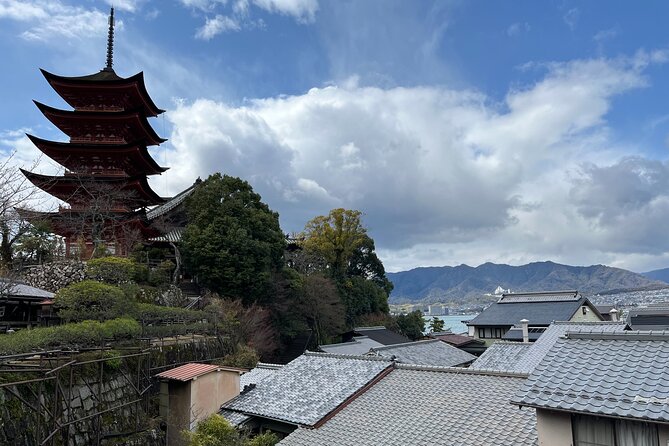
This is not a light sightseeing circuit. The first half takes you through places tied to the atomic bombing of August 6, 1945. The second half moves to Itsukushima Island, where a famous Shinto shrine, a sea gate, free-ranging Shika deer, and wooded paths offer a very different mood.
That contrast is the tour’s strongest idea. I find Hiroshima more meaningful when the Peace Memorial sites are not treated as isolated stops, but as part of a wider look at Japan’s past and its long effort toward peace. Then Miyajima gives you room to breathe and think.
The schedule lasts about nine hours. That is enough to see the headline sights, but not enough for a slow, unhurried day. You should expect steady movement, train and ferry transfers, and a fair amount of walking. A moderate level of fitness is requested, so comfortable shoes are a sensible choice.
One practical point needs attention before you pay. The tour description says it begins from Osaka or Kyoto by Shinkansen, yet the meeting point provided is Hiroshima Station, at 1-2-37 Matsubaracho, Minami Ward, with an 8:00 am start and the same station listed at the end. Ask the provider to confirm exactly where your group joins the guide and which transport costs apply to you.
More Hiroshima and Miyajima day trips:
- Osaka/Kyoto: Hiroshima Miyajima Bus Tour & Shinkansen Ticket
★ 4.7 · 919 reviews - Full Day Hiroshima and Miyajima Tour by Bullet Train from Osaka
★ 4.5 · 117 reviews - Hiroshima & Miyajima 1 Day Bus Tour with Bullet Train Tickets
★ 4.5 · 105 reviews
The Atomic Bomb Dome sets the tone
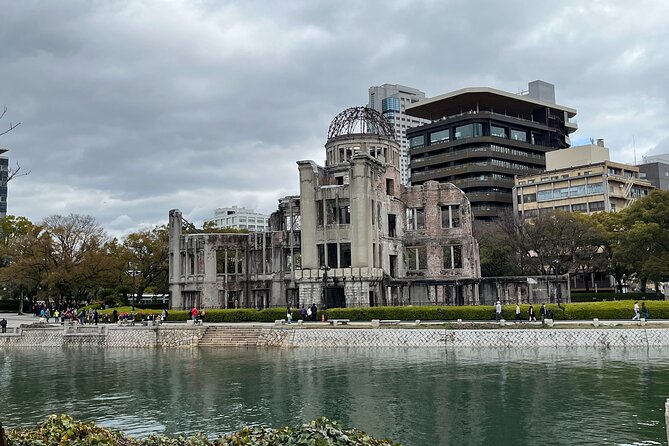
The first major stop is the Atomic Bomb Dome, also called the Genbaku Dome. The partially standing building is a stark reminder of the blast that struck Hiroshima on August 6, 1945. You pass by it and have time to reflect before continuing through the Peace Memorial Park.
The Dome is not presented as a long museum visit. Its power comes from seeing the remains in person, beside the modern city. I would not rush this short stop. Take a few minutes to look carefully, listen to your guide, and absorb the setting.
The private format helps here. If a question occurs to you, you can ask it right away instead of waiting for a group to regroup. The guide is described as an expert in Japanese history, so this part of the day should provide useful context rather than only a photo opportunity.
Walking through Peace Memorial Park
The tour then crosses Peace Memorial Park between the Dome and the Peace Memorial Museum. This walk links the two central Hiroshima sites and gives the day a clear physical shape. You are not simply driven from one attraction to the next. You walk through the area where the city’s memorial work is concentrated.
The scheduled time is about one hour. That allows for a measured walk, discussion, and pauses, but the exact pace will depend on your group. I like this arrangement because the park acts as a transition. You have just seen the Dome, and now you approach the museum with a better sense of place.
This is also where the emotional weight begins to build. The tour does not soften the subject, and you should allow some mental space for it. Hiroshima is not a stop to squeeze between shopping and lunch without thought. The day asks you to pay attention.
Two hours inside the Peace Memorial Museum
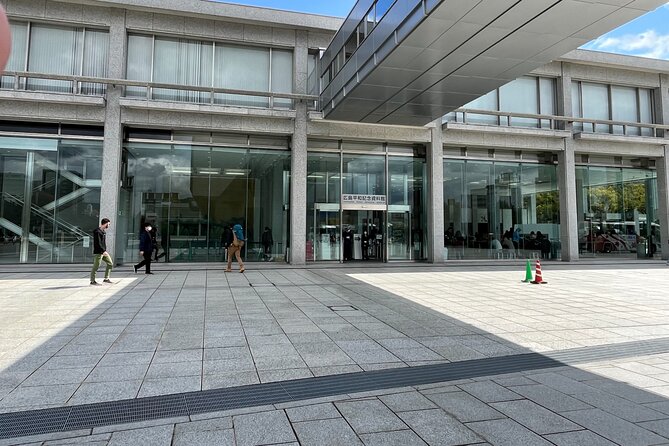
The Peace Memorial Museum receives the longest single visit, with about two hours scheduled. Admission is not included in the listed tour price and costs ¥300 per person. That is a small extra fee, but you should know about it before setting out.
The museum is described as a moving record of the Second World War and the atomic bombing. Its exhibits can be difficult to see, and the experience may leave you quiet rather than cheerful. That is part of the value, but it is also the reason you should not treat this as a casual attraction.
One useful point comes directly from the timing: two hours may still feel short. The museum asks for close attention, and you may want more time with the exhibits than the schedule permits. If this is your main reason for visiting Hiroshima, tell the guide at the start of the day and ask how flexible the Miyajima portion can be.
I appreciate that the tour gives the museum a serious block of time rather than racing through it. Still, the full itinerary includes several later stops, so you should expect an overview rather than an exhaustive museum visit.
More day trips over to Kyoto:
- Ancient Capital Tour: Kyoto and Nara Highlights from Kyoto/Osaka
★ 4.5 · 332 reviews - Osaka/Kyoto: Amanohashidate & Miyama Tour with Boat & Lunch
★ 4.6 · 207 reviews - Kyoto and Nara Day Trip from Osaka
★ 4.0 · 175 reviews - Sagano Romantic Train & Arashiyama, Kiyomizudera, Fushimi Inari Taisha Day Tour
★ 4.5 · 171 reviews
Crossing the Seto Inland Sea to Miyajima
After the Hiroshima memorial sites, you take a ferry toward Itsukushima Island. The Miyajima Matsudai Kisen Tourist Ship portion lasts about one hour, including time to admire the surrounding Seto Inland Sea.
The ferry is more than a transfer. It changes the tone of the day. After the enclosed museum and the city’s memorial sites, you are outside, looking across the water toward the island. Weather and tide affect the views, but the crossing gives you a welcome break from the morning’s intensity.
Transport is one area where the pricing needs careful checking. The supplied costs list ¥3,500 per person for transport in Hiroshima Prefecture and ¥24,000 per person for public transportation. Those amounts appear in the not-included section, while the included section says the guide’s transport, entrance, and lunch fees are covered. I would ask Nara Guide for a written breakdown of your own rail, local transport, and ferry costs. The figures may refer to different transport arrangements, but the information provided does not explain them.
Lunch and local browsing on Omotesando Street
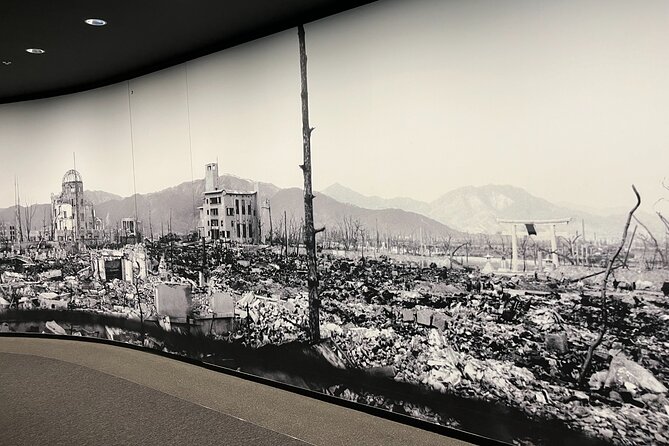
Miyajima Omotesando Shopping Street is scheduled for about one hour and serves as the lunch stop. You can expect a more commercial stretch here, with shops and places to eat rather than a quiet religious site. The advantage is convenience: your group can pause, have lunch, and look around without adding another transfer.
One hour is not much. If you want a relaxed meal and serious shopping, you may feel pressed. If you mainly need a break between the ferry and shrine, the timing should work better.
Lunch is included for the guide, not clearly for you. The wording says guide fees, including their transport, entrance, and lunch fees, are included. It also separately lists the museum, shrine, and transport charges for each person. Plan to pay for your own meal unless the provider confirms otherwise.
Itsukushima Shrine and the famous sea torii
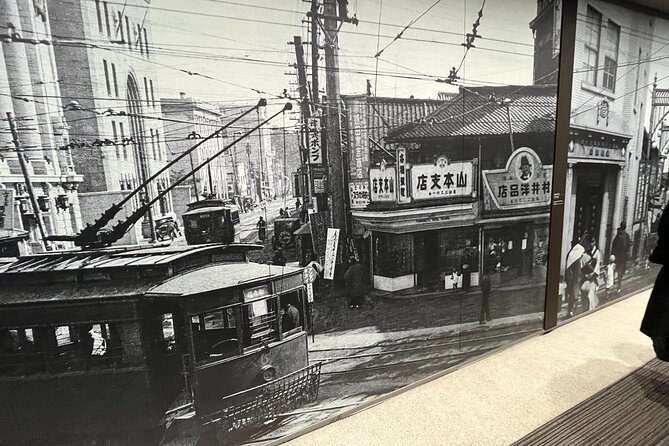
The next hour focuses on Itsukushima Shrine, the island’s best-known religious site. Your guide explains more about the shrine, Shinto practice, and Japan’s religious traditions. Admission costs ¥300 per person and is not included.
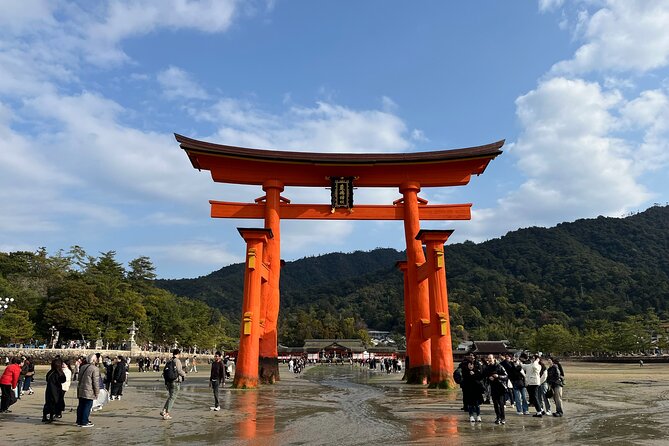
The shrine’s appeal comes from its setting as much as its architecture. The sea changes the view throughout the day, and the large torii gate can appear to float offshore at high tide. At low tide, you may walk toward it from the shore instead.
That tide-dependent plan is important. You should not expect one fixed view of the gate. High tide offers the classic water setting, while low tide lets you approach on foot. Both are worthwhile, but they feel completely different. The schedule gives one hour to the shrine and another hour to the torii area, so the guide can show you the relevant viewpoints based on conditions.
I like that the tour does not reduce Miyajima to a single photograph. You see the shrine, learn about its religious meaning, and then consider how the gate relates to the water around it.
Meeting the Shika deer in Omoto Park
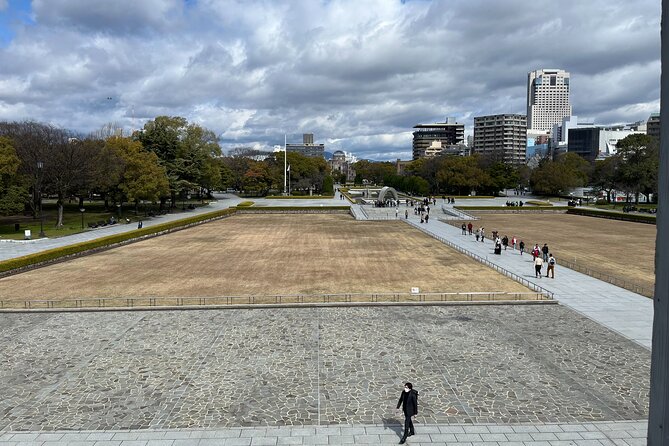
The final listed stop is Omoto Park, where you walk in search of free-ranging Shika deer. The tour describes this as an opportunity to meet and interact with them, with about one hour in the park.
This is a gentler finish after the morning’s memorial sites. You get trees, open space, and the chance to see Miyajima’s deer in a less formal setting. It also gives the island portion some variety. You are not spending every minute around shops and shrine buildings.
Keep your expectations sensible. Deer are animals, not scheduled performers, so the experience can vary. The important point is that the tour sets aside time for nature rather than sending you straight back to the station after the shrine.
Because the day is already full, this may be a walk rather than a long park visit. Still, it is a good final chapter: Hiroshima’s memorial sites, Miyajima’s sacred architecture, and then a quiet outdoor setting.
How the private format affects the day
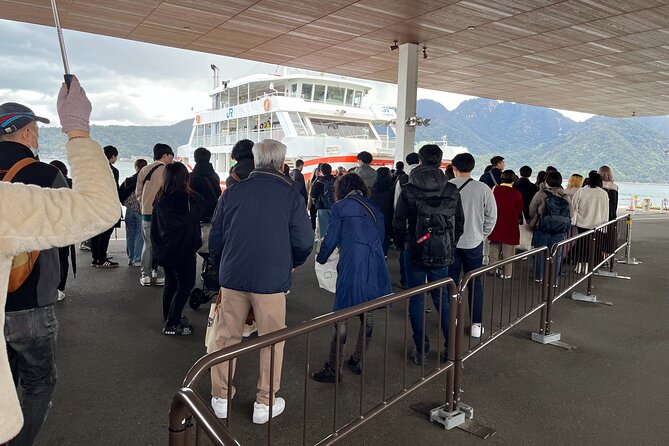
Only your group participates, which changes the feel of the tour. You do not have to follow a large group through the museum or wait for strangers at every corner. A private guide can also adjust explanations to your interests, at least within the limits of the fixed nine-hour day.
The named guide associated with the experience is Mouloud. The tour’s responses specifically praise his company, so if you want him by name, ask if he will lead your departure. Guide assignment can matter on a private booking, especially when the main appeal is personal explanation.
The private structure is especially useful for Hiroshima. You may want more context at the Dome, a quieter pace in the museum, or extra help understanding the shrine. You can ask for that. The tradeoff is price. At $373.96 per person, this is not a budget day trip, particularly if the listed transport and entrance costs are charged separately.
The price can make sense for a small group that values a dedicated guide and wants both Hiroshima and Miyajima in one day. For one person or two people, the cost deserves closer comparison with arranging train travel and local visits independently. The tour saves planning time and brings structure, but you pay for that convenience.
Timing, fitness, and what to bring
The stated start is 8:00 am, and the day ends back at Hiroshima Station. Since the experience uses Shinkansen travel, public transport, a ferry, and walking, timing matters. A late start, a delayed train, or a crowded ferry could reduce time at one of the later stops.
You should be ready for a full day on your feet. The provider asks for moderate physical fitness, and the itinerary includes walking through the park, around the shrine, along the shore, and through Omoto Park. Wear shoes you trust and keep your belongings easy to carry during transfers.
The tour is near public transportation, and service animals are allowed. Confirmation is received at booking. Free cancellation is available if you cancel at least 24 hours before the local start time. Changes or cancellations inside that window are not accepted for a refund.
The biggest preparation step is not packing. It is confirming the meeting point and cost. If you are coming from Osaka or Kyoto, ask how the Shinkansen portion works, where you meet the guide, and whether the ¥24,000 public transportation figure is an error, a group amount, or a separate charge.
Who should book this Hiroshima day tour?
I would choose this experience if you have only one day for Hiroshima and want a guide to handle the structure. It is especially suited to a private family group, friends traveling together, or anyone who wants historical explanation without building a complicated rail and ferry plan.
It also suits you if Miyajima matters as much as the Peace Memorial sites. Many day trips focus on one or the other. This one deliberately includes both, along with lunch time, the torii gate, and a walk among deer.
I would hesitate if you want a slow museum visit, a long lunch, or time for extra island walks. The itinerary is packed, and the museum may leave you wishing for more than two hours. I would also hesitate until the transport pricing is clarified.
Should you book it?
Book this tour if you value a private guide, want Hiroshima and Miyajima on the same day, and are comfortable with a serious morning followed by a busy island afternoon. The strongest parts are the direct historical context, the moving museum visit, the ferry crossing, and the chance to see the torii at a tide-dependent moment.
Before booking, confirm the exact meeting arrangement from Osaka or Kyoto, the identity of your guide, and every transport charge. If those details are clear and you want a structured day, the tour offers a memorable and meaningful introduction to two of western Japan’s essential sights. If your priority is low cost or a relaxed pace, arrange more time in Hiroshima and Miyajima on your own.
FAQ
Where does the tour start and finish?
The stated start and end point is Hiroshima Station, at 1-2-37 Matsubaracho, Minami Ward. The start time is 8:00 am. Since the experience is described as starting from Osaka or Kyoto by Shinkansen, confirm the exact joining point before booking.
How long does the experience last?
The tour lasts approximately nine hours.
Is the tour private?
Yes. Only your group participates in the private activity.
Is the Peace Memorial Museum admission included?
No. Admission is listed separately at ¥300 per person.
Is Itsukushima Shrine admission included?
No. Admission is listed separately at ¥300 per person.
Are public transportation costs included?
The supplied details list ¥3,500 per person for transport in Hiroshima Prefecture and ¥24,000 per person for public transportation as not included. The wording is unclear, so ask Nara Guide to explain the exact transport charges before booking.
Can I cancel for a full refund?
Yes, if you cancel at least 24 hours before the experience start time. Cancellations or changes made less than 24 hours before the start are not accepted for a refund.
Just added around Osaka
- Nara Day Trip from Osaka with a Licensed Guide★ 5.0 · 3 reviews
- Osaka Early Morning Osaka Castle Tour Avoid Crowds★ 5.0 · 3 reviews
- Guided Tour of Some Attractions in Osaka by Private Car★ 5.0 · 3 reviews
- Private Transfer Between Kyoto and Kansai Airport KIX★ 5.0 · 3 reviews
- Shared Arrival Transfer: Osaka Itami Airport to Osaka City★ 5.0 · 3 reviews
- Osaka: Sushi Making Class and Dotonbori Food Tour★ 4.7 · 3 reviews
- Osaka Night Photography Workshop★ 5.0 · 3 reviews
- Kyoto Full day Tour Kinkakuji, Kiyomizu-dera and Fushimi Inari★ 4.5 · 3 reviews
Kyoto Day Trips from Osaka, compared.

Osaka/Kyoto: Hiroshima Miyajima Bus Tour & Shinkansen Ticket
Read our review →
Ancient Capital Tour: Kyoto and Nara Highlights from Kyoto/Osaka
Read our review →
Osaka/Kyoto: Amanohashidate & Miyama Tour with Boat & Lunch
Read our review →

Sagano Romantic Train & Arashiyama, Kiyomizudera, Fushimi Inari Taisha Day Tour
Read our review →
Full Day Tour of Kyoto with Private Transportation
Read our review →
Kyoto & Nara Private customized tour with English speaking Guide
Read our review →Full Day Kyoto Tour : Bamboo Forest, Golden Temple, Fushimi Inari
Read our review →Browse the lists this tour appears in