
Reviewed · KYOTO DAY TRIPS FROM OSAKA
From Osaka: Nara Deer & Kyoto Kiyomizudera Sightseeing Tour
Kiyomizudera’s wooden stage, Fushimi Inari’s endless red gates, and Nara’s free-roaming deer make this a big day with three major Japanese sights in one sweep. The tour works best when you want to cover ground without puzzling over trains, transfers, and parking.
I like the strong mix of Kyoto and Nara, and I like that tolls, parking, and air-conditioned transport are included in the $69 price. Driver-guide Leo has also been praised for punctual driving and calm care on the long return to Osaka. The tradeoff is clear: this is transport with basic introductions, not a licensed guide-led history lesson.
In This Review
- Key points to know before booking
- Why this Osaka day trip works
- Starting in Osaka: be ready at Nipponbashi
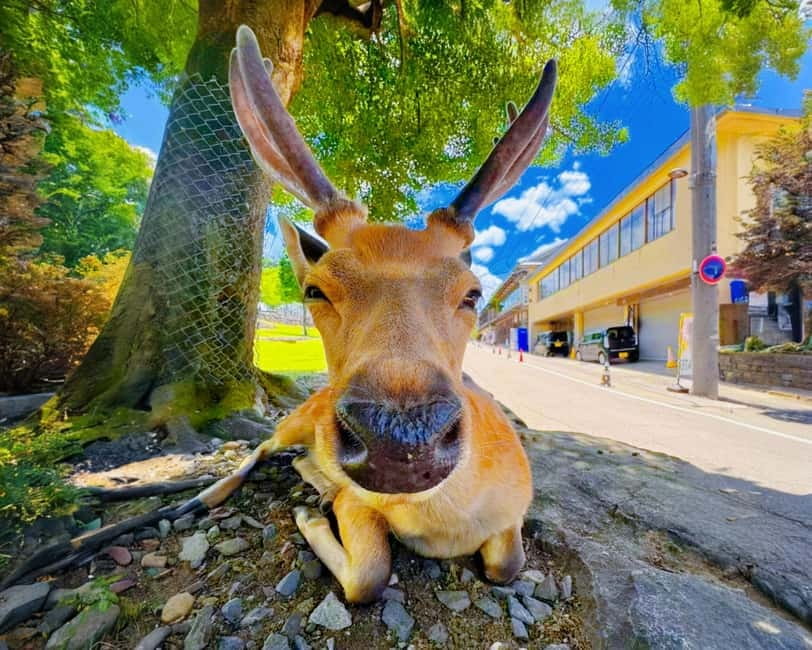
- Nara Park: deer, crackers, and open space
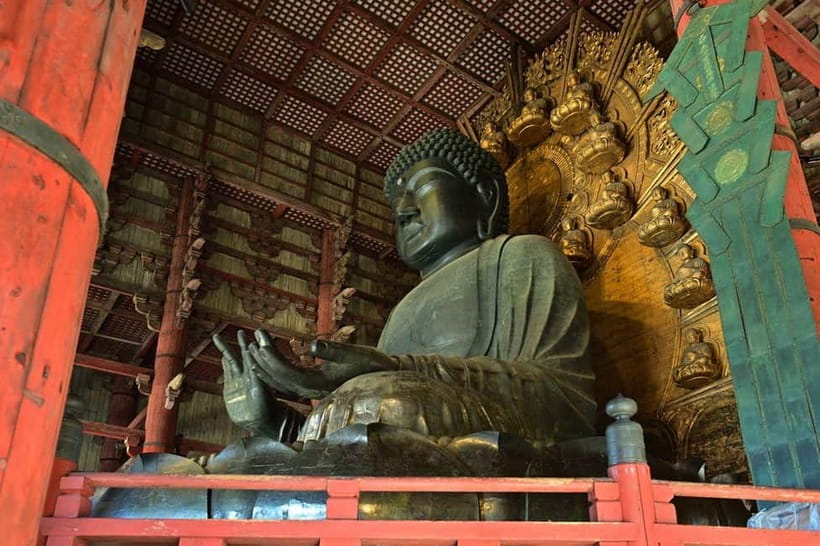
- Todaiji: Japan’s great wooden temple stop
- Fushimi Inari: the red-gate walk
- Kiyomizudera: the day’s main Kyoto visit
- Sannenzaka and Ninenzaka: Kyoto’s old lanes
- Hanamikoji, Gion, and Yasaka Shrine
- The return to Osaka and the real cost
- Who should book this tour
- Should you book it?
- FAQ
- How long is the tour?
- What attractions are included?
- Is the tour led by a licensed guide?
- What languages are available?
- Are temple entrance fees included?
- Is lunch included?
- Where is the Osaka meeting point?
- Is hotel pickup available?
- How will I find the vehicle and driver?
- What happens if I arrive late?
Key points to know before booking
- Three major stops in one day: Nara Park and Todaiji pair with Fushimi Inari and Kiyomizudera.
- The deer are free-roaming: Bring comfortable shoes and buy approved deer crackers only if you want to feed them.
- Kiyomizudera gets the longest block: The 3.5-hour Kyoto stop includes time for nearby old streets and shrines.
- This is a driver-guided shared tour: English, Chinese, Japanese, and Traditional Chinese support is available, but commentary may be limited.
- The $69 fare covers the road work: Transport, tolls, parking, and air conditioning are included, while lunch and two temple tickets cost extra.
- WhatsApp and punctuality matter: Keep your phone charged, follow the meeting instructions, and do not count on a late departure.
Why this Osaka day trip works
This tour is built for a common Japan problem: Osaka is a convenient base, but Kyoto and Nara each deserve their own day. If your schedule is tight, this outing lets you sample both without changing hotels or working out several rail connections.
You spend about 10 hours on the road and at the sights. That is a long day, but the route has a good sense of place. Nara gives you open space, deer, and one of Japan’s great Buddhist temples. Kyoto follows with shrine gates, hillside temple views, traditional lanes, and Gion.
I would not choose this outing if your main goal is detailed history. The driver handles transport, timing, and basic attraction introductions. A small group may have a driver with limited English and no commentary while driving. For the fuller story, you can hire a licensed guide at the sights, though that adds cost and planning.
The shared format also means the day depends on everyone finding the pickup point on time. That matters in Osaka, where a few delayed pickups can eat into your first stop.
More day trips over to Nara:
- Ancient Capital Tour: Kyoto and Nara Highlights from Kyoto/Osaka
★ 4.5 · 332 reviews - Kyoto and Nara Day Trip from Osaka
★ 4.0 · 175 reviews - Discover Himeji, Kobe and Nara from Osaka
★ 5.0 · 101 reviews
Starting in Osaka: be ready at Nipponbashi
The stated meeting point is Nipponbashi Exit 2, at 1-chome-3-6 Nipponbashi, Chuo Ward, Osaka. The operator sends vehicle details and the driver’s contact information one day before departure, then adds you to a WhatsApp group.
Take this seriously. You need a charged phone, working data, and WhatsApp access to locate the vehicle or receive a changed meeting location. One participant was dropped on a Kyoto road and had to use a WhatsApp pin to find the later pickup spot. That is manageable with a phone, but stressful without one.
Hotel pickup may be available with selected options and within the approved area. Confirm your hotel name and address before booking if you want pickup. If your hotel is outside the area, the operator may direct you to the Nipponbashi meeting point instead.
The bus leaves on time, with no exception. A late arrival or wrong location can mean no refund, so give yourself extra time. Large bags are also a poor fit because luggage space is limited.
Nara Park: deer, crackers, and open space
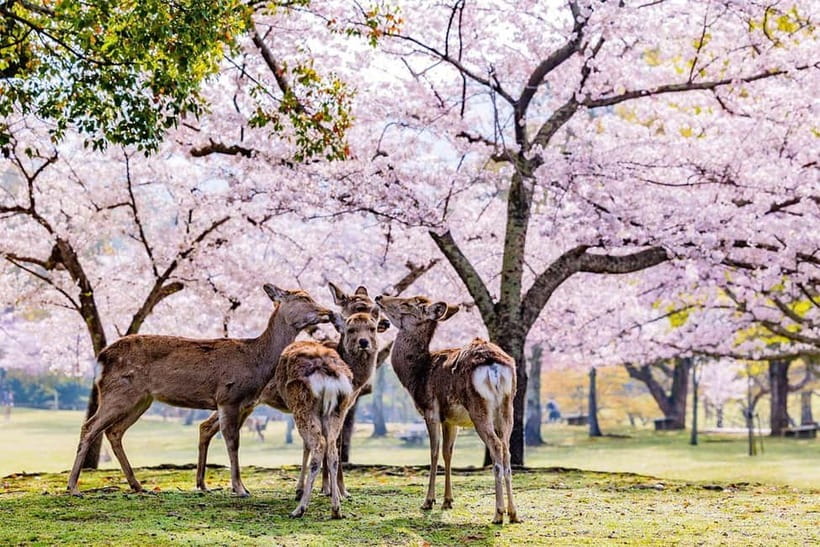
Nara Park receives about 80 minutes, enough for a close look at the deer and a short walk toward the main sights. Hundreds of shika deer roam freely here, which makes the experience feel less like a wildlife exhibit and more like a town sharing its streets with animals.
You can feed the deer, take photos, and watch how quickly they gather when food appears. Use only the approved deer crackers if you buy some, and keep your hands clear once the crackers are gone. The deer are accustomed to people, but they are still animals, not tame pets.
The park is one of the day’s best places to slow down. After the drive from Osaka, you get room to walk and take photos without the tight lanes found later in Kyoto. Eighty minutes is useful but not generous, especially if you want both deer time and a relaxed walk.
Stay aware of the group’s meeting instructions. The tour needs to keep moving, and Nara Park spreads across a large area.
Todaiji: Japan’s great wooden temple stop
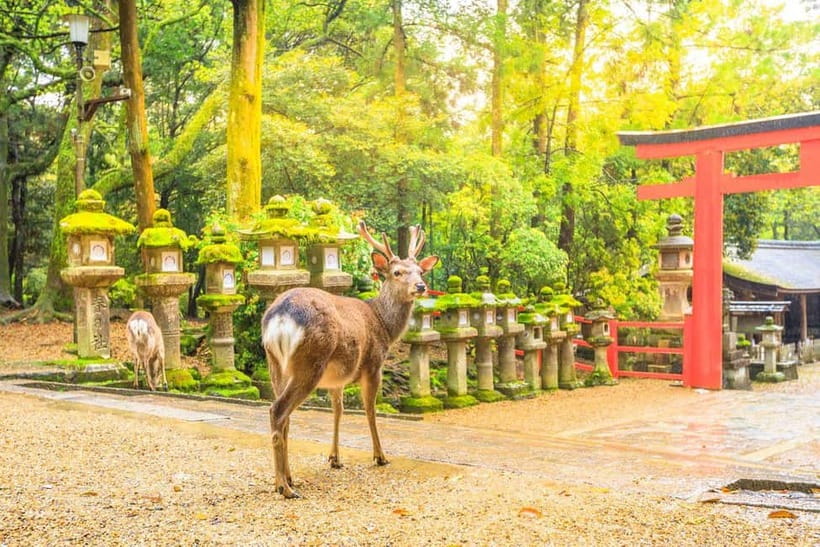
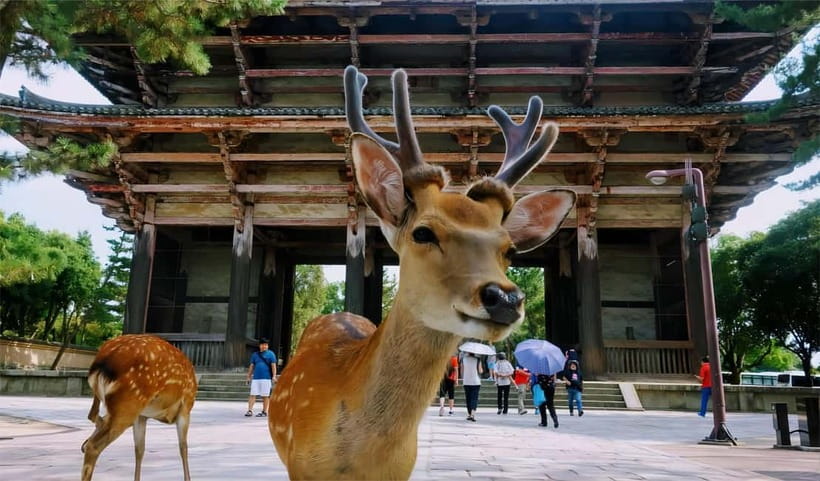
Todaiji receives about an hour, including sightseeing, free time, and photos. The temple ticket is not included. Adults pay JP¥600 and children pay JP¥300, according to the supplied pricing.
The important thing here is scale. Todaiji is known for its enormous wooden temple hall and giant Buddha image, and it gives the Nara portion a strong cultural center beyond the deer. You can take in the main building, enjoy the grounds, and return to the vehicle within the allotted time.
I like the pairing of Nara Park and Todaiji because the two stops feel different. The deer provide an informal encounter with local life, while Todaiji asks for a quieter look at Buddhist architecture and worship.
An hour is enough for the main visit, but not for a slow study of every corner. If Todaiji is your personal priority, keep the deer stop efficient and head directly toward the temple with your driver’s instructions in mind.
More day trips over to Kyoto:
- Osaka/Kyoto: Hiroshima Miyajima Bus Tour & Shinkansen Ticket
★ 4.7 · 919 reviews - Osaka/Kyoto: Amanohashidate & Miyama Tour with Boat & Lunch
★ 4.6 · 207 reviews - Sagano Romantic Train & Arashiyama, Kiyomizudera, Fushimi Inari Taisha Day Tour
★ 4.5 · 171 reviews - Volleyball in Osaka, Kobe & Kyoto with locals!
★ 4.8 · 131 reviews
Fushimi Inari: the red-gate walk
Fushimi Inari Taisha receives about an hour. Its famous Senbon Torii, or thousands of red torii gates, climb through the wooded hillside behind the shrine. The gates create one of Kyoto’s most recognizable scenes, with each section offering a different rhythm of light, shadow, and color.
You do not need to walk the entire mountain to enjoy the visit. With only an hour, focus on the main shrine area and the opening stretch of gates. The deeper you go, the more time you need, and the tour must keep to its schedule.
The shrine complex is extensive, so listen carefully when the driver explains the meeting location. Basic introductions are included, but you should expect to explore much of the site on your own. If you want detailed explanations of Shinto customs, symbols, and shrine design, arrange a licensed guide separately.
Comfortable footwear matters here. The route includes walking and slopes, and the red gates are most enjoyable when you are not watching every step in uncomfortable shoes.
Kiyomizudera: the day’s main Kyoto visit
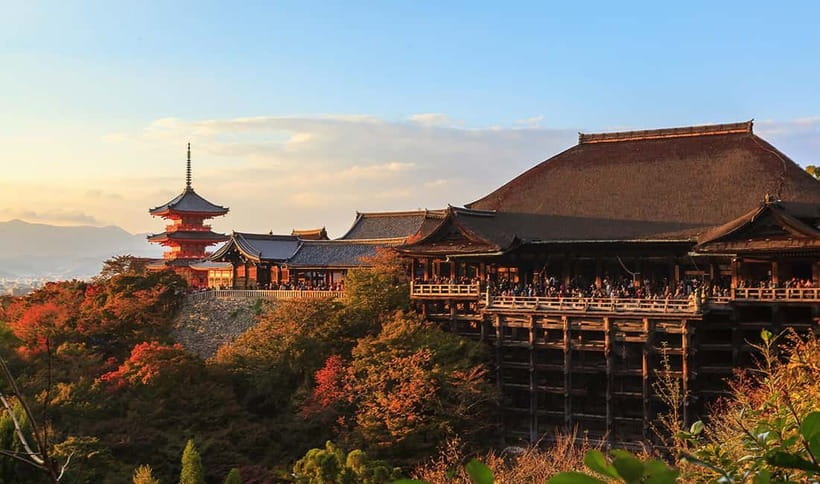
Kiyomizudera receives the longest scheduled block, about 3.5 hours. That generous window gives you time for the temple, photos, and the old Kyoto streets leading toward it.
The temple is famous for its large wooden stage projecting from the hillside. Its name means Pure Water Temple, and its position above the surrounding streets gives the visit a strong sense of height and ceremony. The temple ticket is extra, JP¥400 for adults and JP¥200 for children.
Kiyomizudera is one of the day’s busiest and most rewarding stops. You can move at your own pace, take in the buildings and views, and leave time for the streets below. The long allocation is especially useful because the approach is not a quick roadside photo stop.
Keep your meeting instructions handy. The vehicle may not collect you at the place where you were dropped off. The stop can involve a one-way walk through the historic district, so do not assume you can wander without checking the final pickup point.
Sannenzaka and Ninenzaka: Kyoto’s old lanes
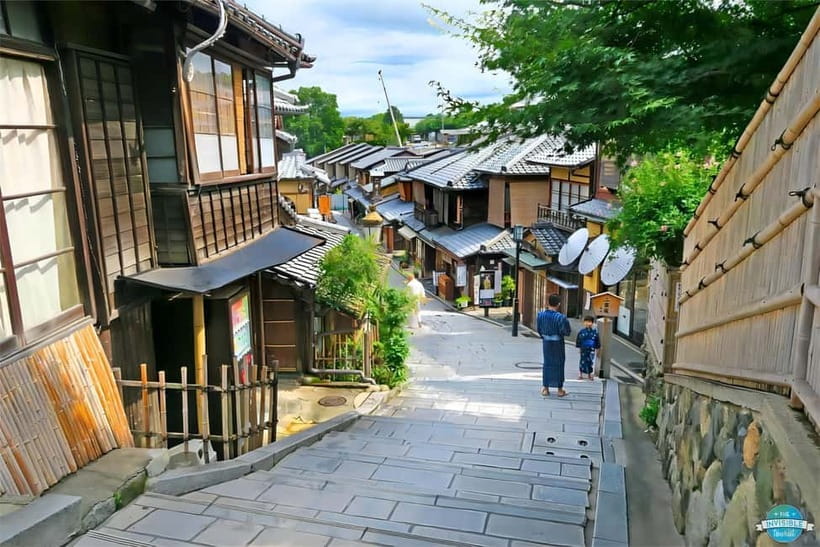
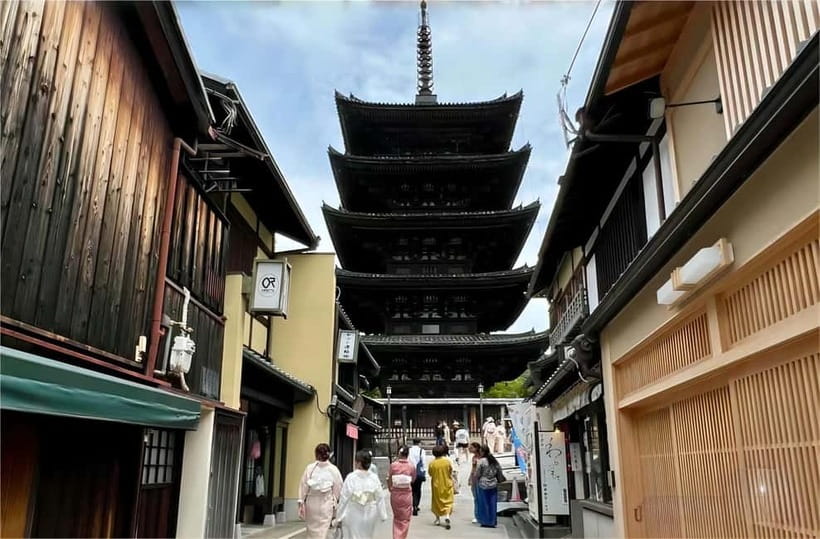
Sannenzaka and Ninenzaka are scheduled for roughly 30 minutes each. These sloping lanes are lined with traditional-style buildings, small shops, and places to browse for snacks or souvenirs.
Thirty minutes is enough for a quick walk and a few photos, but not a leisurely shopping session. I would treat these lanes as part of the Kiyomizudera experience rather than separate destinations. Keep an eye on the clock, since browsing can easily carry you beyond the group’s departure time.
The streets may be crowded, and the stone paving can be uneven. Wear shoes with good support and keep bags light. This is also one of the places where the tour’s limited luggage space becomes a practical concern.
Hanamikoji, Gion, and Yasaka Shrine
The later Kyoto stops provide a short look at the Gion area. Hanamikoji Street gets about 30 minutes for a break, photos, and a walk. Gion receives another 30 minutes for photos, shopping, and free time.
These stops offer a change from temple grounds. You can see Kyoto’s traditional streets and get a feel for the area’s polished old-town character. The short time works for a first look, but you will not have room for a long meal, a careful shopping trip, and extended sightseeing all at once.
Yasaka Shrine follows with another 30-minute visit. This is a useful final Kyoto stop because you can make a brief visit without committing to another long temple circuit. Use the time for the main grounds, photos, and a calm pause before the return drive.
The full Kyoto section can feel compressed if you want to linger everywhere. I suggest deciding in advance which matters most: Kiyomizudera itself, the old lanes, or Gion. That simple choice helps you use the free time well.
The return to Osaka and the real cost
The return drive is scheduled for about 75 minutes, though traffic can change the timing. Peak periods and Japanese holiday dates may bring heavy congestion around Osaka and other major areas. Do not schedule a tight evening reservation after the tour.
At $69 per person, the value is strongest for solo visitors, couples, or families who would otherwise pay separately for a private car, parking, tolls, and intercity transport. You also avoid the mental work of linking Nara and Kyoto in one day.
The extra costs are modest but should be included in your budget:
- Todaiji: JP¥600 per adult, JP¥300 per child
- Kiyomizudera: JP¥400 per adult, JP¥200 per child
- Lunch is not included
- Deer crackers and shopping are extra
That makes the base fare attractive, but not all-inclusive. The tour is best seen as a transport and sightseeing framework. You pay for convenience and coverage, then manage meals and temple entries yourself.
Who should book this tour
I would recommend it to a first-time visitor with limited time in Osaka who wants a broad taste of Nara and Kyoto. It also suits families who prefer a vehicle between major sights, and people who do not want to manage several train rides in one day.
The tour can work well with children. Children under age 3 join free without occupying a seat, and children age 2 or younger should be reported in advance. The long day still calls for realistic expectations: there is plenty of walking, the schedule is fixed, and the vehicle cannot wait for extended breaks.
I would be more cautious if you want detailed cultural explanations in English. The driver may provide only basic information, and small groups can have limited English commentary. The tour description offers Chinese, English, Japanese, and Traditional Chinese support, but language ability can vary by driver.
The strongest praise has gone to the friendly, steady driving and well-organized route. Leo, one named driver, was noted for punctual pickup and safe driving through peak traffic. That is important on a full-day route, though you should still expect the occasional traffic delay or pickup confusion.
Should you book it?
Book this tour if you value coverage and convenience over depth. For $69, you get a lot of ground: Nara’s deer and Todaiji, Kyoto’s major shrine and temple, historic lanes, Gion, and a ride back to Osaka.
Skip it if you want to spend a full day at one temple district, take long meals, or hear a detailed account of Japanese history and religion from a dedicated guide. The best way to enjoy this outing is to arrive early, keep your phone charged, wear good shoes, bring a small bag, and choose your top two sights before the vehicle leaves.
FAQ
How long is the tour?
The tour lasts about 10 hours, including transportation between Osaka, Nara, Kyoto, and the return to Osaka.
What attractions are included?
The route includes Nara Park, Todaiji Temple, Fushimi Inari Taisha, Kiyomizudera, Sannenzaka, Ninenzaka, Hanamikoji Street, Gion, and Yasaka Shrine.
Is the tour led by a licensed guide?
No. It is a driver-guided shared tour. The driver provides transportation, basic introductions, and time management. Licensed guides can be hired on-site for more detailed historical information.
What languages are available?
The listed languages are Chinese, English, Japanese, and Traditional Chinese. Small groups may have a driver with limited English and no commentary while driving.
Are temple entrance fees included?
No. Todaiji costs JP¥600 for adults and JP¥300 for children. Kiyomizudera costs JP¥400 for adults and JP¥200 for children.
Is lunch included?
No. You need to pay for lunch yourself during the day.
Where is the Osaka meeting point?
The meeting point is Nipponbashi Exit 2 at 1-chome-3-6 Nipponbashi, Chuo Ward, Osaka, 542-0073.
Is hotel pickup available?
Pickup is optional with selected options and depends on your hotel’s location. The operator will contact you to confirm the hotel name and address.
How will I find the vehicle and driver?
The driver’s contact information and vehicle details are sent one day before departure. You are also added to a WhatsApp group, so keep the app installed and your phone charged.
What happens if I arrive late?
The vehicle departs on time. Late arrivals, no-shows, or arriving at the wrong location may result in no refund or alternate date.
Just added around Osaka
- Nara Day Trip from Osaka with a Licensed Guide★ 5.0 · 3 reviews
- Osaka Early Morning Osaka Castle Tour Avoid Crowds★ 5.0 · 3 reviews
- Guided Tour of Some Attractions in Osaka by Private Car★ 5.0 · 3 reviews
- Private Transfer Between Kyoto and Kansai Airport KIX★ 5.0 · 3 reviews
- Shared Arrival Transfer: Osaka Itami Airport to Osaka City★ 5.0 · 3 reviews
- Osaka: Sushi Making Class and Dotonbori Food Tour★ 4.7 · 3 reviews
- Osaka Night Photography Workshop★ 5.0 · 3 reviews
- Kyoto Full day Tour Kinkakuji, Kiyomizu-dera and Fushimi Inari★ 4.5 · 3 reviews
Kyoto Day Trips from Osaka, compared.

Osaka/Kyoto: Hiroshima Miyajima Bus Tour & Shinkansen Ticket
Read our review →
Ancient Capital Tour: Kyoto and Nara Highlights from Kyoto/Osaka
Read our review →
Osaka/Kyoto: Amanohashidate & Miyama Tour with Boat & Lunch
Read our review →

Sagano Romantic Train & Arashiyama, Kiyomizudera, Fushimi Inari Taisha Day Tour
Read our review →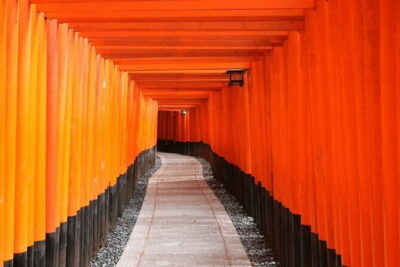
Full Day Tour of Kyoto with Private Transportation
Read our review →
Kyoto & Nara Private customized tour with English speaking Guide
Read our review →Full Day Kyoto Tour : Bamboo Forest, Golden Temple, Fushimi Inari
Read our review →Browse the lists this tour appears in