
Reviewed · OSAKA SUMO & TRADITIONAL SHOWS
Traditional Japanese Music show & Experience Tour in Osaka
The best part of this Osaka experience is simple: you do not just sit and watch. You hear professional musicians perform shamisen, koto, and wadaiko, then get time to handle and play the instruments yourself. That turns a short concert into a friendly introduction to Japanese music.
I like the close-up setting and the chance to ask as many questions as you wish. I also like the compact one-hour format, which fits neatly into an Osaka day. The main consideration is timing: you must choose between a Wednesday at 11:00 and a Friday at 18:30, and the activity needs at least two participants to run.
In This Review
- Key points before you book
- A close look at traditional Japanese music in Osaka
- The 25-minute concert: hearing the instruments up close
- Questions are part of the experience
- The 25-minute playing session: your turn with a Japanese instrument
- The final 10 minutes: photos with instruments and performers
- What the $46.12 price gets you
- Who will get the most from this one-hour session?
- Location, group size, and practical planning
- Cancellation and booking flexibility
- How this compares with a standard concert
- Should you book this Osaka music experience?
- FAQ
- How long does the traditional Japanese music experience last?
- What instruments might I hear or play?
- Can I ask the musicians questions?
- When is the activity offered?
- Where does the experience begin and end?
- How many people can join the activity?
- Is transportation included?
- Can I cancel for a full refund?
Key points before you book
- Hear several instruments live: The program can include shamisen, koto, wadaiko, and other traditional Japanese instruments.
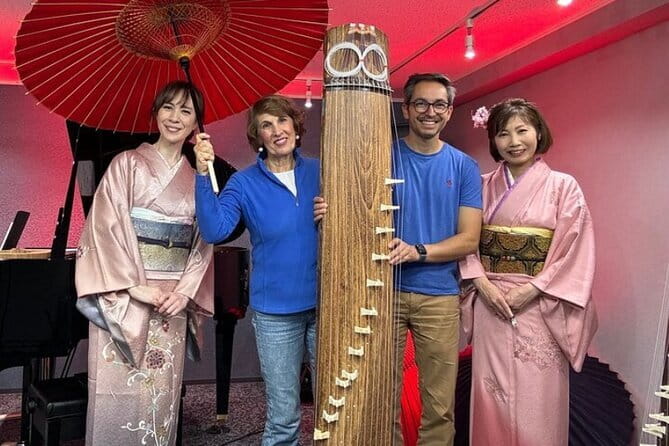
- Play the instruments yourself: About 25 minutes are set aside for hands-on practice with a Japanese instrument.
- Small maximum group: The experience accepts no more than seven people, helping keep the demonstration personal.
- Two useful time choices: Pick Wednesday at 11:00 or Friday at 18:30, depending on your Osaka plans.
- A full hour with no travel between stops: The concert, playing session, and photos all take place at the meeting point.
- A strong choice for culture-minded visitors: The activity has a five out of five rating from 25 reviews, with 100 percent recommending it.
A close look at traditional Japanese music in Osaka
This is a compact cultural experience built around listening, participation, and questions. You meet at Alpha Shinsaibashi, at 3-chome-5-27 Minamisenba in Osaka’s Chuo Ward, and stay there for the full program. There is no private transportation, no bus ride, and no second venue to find.
That straightforward setup matters. You can fit the activity around shopping, sightseeing, or a meal in Osaka without giving away half a day. At the same time, the fixed meeting point means you should plan your route carefully and arrive knowing the address.
The experience is offered on Wednesday at 11:00 and Friday at 18:30. The morning session works well if you want to start a day of sightseeing with something calm and distinctive. The Friday evening time may suit you better after exploring Osaka, though you should leave enough time to reach Minamisenba.
The group has a maximum of seven people. That is small enough for the musicians to give attention to questions and playing attempts, rather than sending you through a large, crowded demonstration. The activity also needs at least two participants, so keep the minimum requirement in mind when making plans.
More sumo, taiko and stage shows:
- Osaka: Sumo Show & Experience w/ Optional Kimono & Hot Pot
★ 4.5 · 609 reviews - Osaka: Sumo Stage Show with Bento or Snack + Fight & Photo
★ 4.3 · 364 reviews - Osaka: English Stand Up Comedy Show at Osaka Comedy Club
★ 4.7 · 203 reviews
The 25-minute concert: hearing the instruments up close
The first part lasts about 25 minutes and gives you an authentic Japanese music concert. The exact content changes by day, so you may not hear precisely the same program every time. That variation is useful if you are visiting with friends on separate dates, but it also means the full instrument lineup is not guaranteed for every session.
The named instruments include the shamisen, koto, and wadaiko. Each gives you a different sound and a different view of Japanese musical tradition.
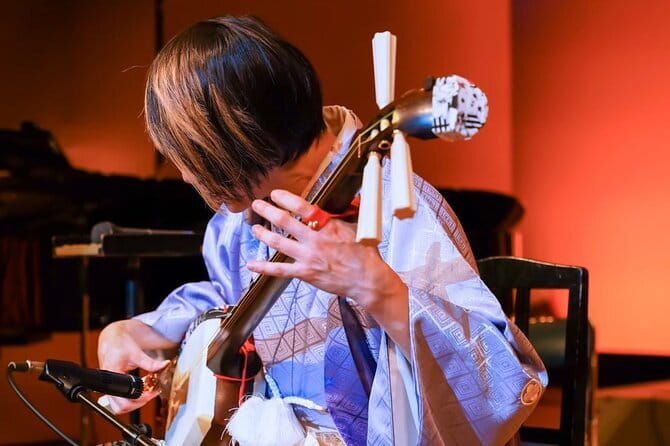
The shamisen is a three-stringed Japanese lute. Its narrow body and long neck create a sound that can be bright, crisp, and striking. Hearing it played live lets you notice the attack of each note and the physical movement behind the music in a way a recording cannot fully convey.
The koto is often described as a Japanese harp. It is a long zither with strings stretched across a wooden body, and its sound can feel more spacious and delicate than the shamisen. The koto also gives you a useful reminder that traditional Japanese music is not one single style or mood.
The wadaiko is a Japanese drum. Its physical presence adds force to the concert, and the contrast between the drum, strings, and other instruments helps you hear how varied the program can be. The supplied information also says there may be more instruments, so the performance is not limited to these three.
I like this opening because it gives you a proper listening period before asking you to participate. You first hear the instruments in skilled hands. That makes the later playing session more meaningful, since you have already seen what the musicians can do.
The 25-minute length is also well judged. You get enough music to form a clear impression, but the program should not feel like a long formal concert for someone new to hogaku, the broad term for traditional Japanese music. If you have come mainly for an active cultural experience, you will not have to wait long before picking up an instrument.
Questions are part of the experience
This is not designed as a silent recital. You can ask the professional musicians as many questions as you like. That is one of the strongest reasons to choose this program over simply attending a performance.
You might ask about the construction of an instrument, how it is held, how the sound is produced, or how the instruments fit together in the concert. The exact questions are up to you, and the small group gives you a better chance to speak directly with the performers.
I would prepare two or three questions before arriving. You do not need specialist music knowledge. Simple questions about the strings, drum techniques, or the difference between instruments can help you get more from the session.
The information provided does not name the individual musicians, so you should not book this expecting a particular performer. What is clear is that the concert is led by professional musicians, and the program is meant to be interactive rather than a performance with no audience contact.
The 25-minute playing session: your turn with a Japanese instrument
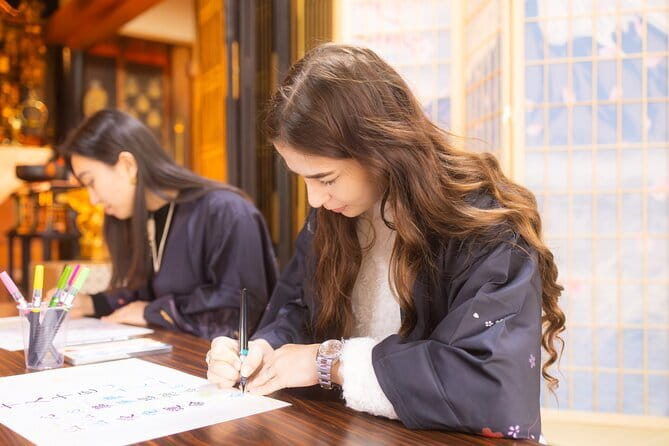
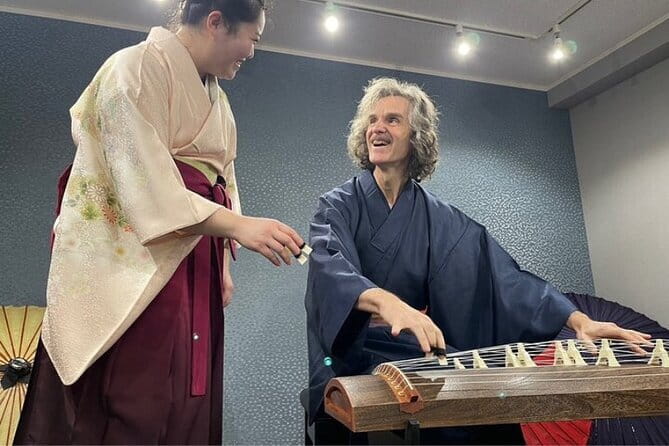
After the concert, about 25 minutes are devoted to trying traditional Japanese instruments. This is the point that makes the activity different from a standard music show.
You will be given a Japanese musical instrument to experience. The named instruments are shamisen, koto, and wadaiko, though the precise instrument offered can depend on the day’s program. You should expect guidance from the musicians, but the available information does not promise that every participant will play every instrument.
The hands-on section is valuable because traditional instruments can look easier to play than they are. The shamisen, koto, and wadaiko each require different movements, posture, and control. Even a short attempt gives you a better sense of the skill involved and makes the concert easier to understand.
You should treat this as an introduction, not a full music lesson. Twenty-five minutes is enough to try, listen, and ask questions. It is not enough to develop technique, and that is perfectly fine. The point is to feel the instrument, produce a sound, and connect the object in your hands with the performance you just heard.
The activity has been described as enjoyable for someone attending alone, and that is worth noting. You do not need a group of friends to make the experience work. At the same time, the small group and hands-on format can be especially fun for families, couples, or friends who want a shared activity.
If you are concerned about making a mistake, remember that the program is built around trying the instruments. You are not expected to perform a finished piece. The musicians are there to help you understand the basics and answer questions.
A completely different way to spend a day in Osaka:
- Osaka Go Karting Tour with Funny Costume
★ 5.0 · 2,658 reviews - Osaka Castle: Museum and Tower Entry Ticket
★ 4.5 · 2,380 reviews - Osaka: Shinsekai Food Tour with 13-15 Dishes at 5 Eateries
★ 4.8 · 2,204 reviews - Osaka Food Tour: 13 Dishes at 5 Local Eateries
★ 5.0 · 2,149 reviews
The final 10 minutes: photos with instruments and performers
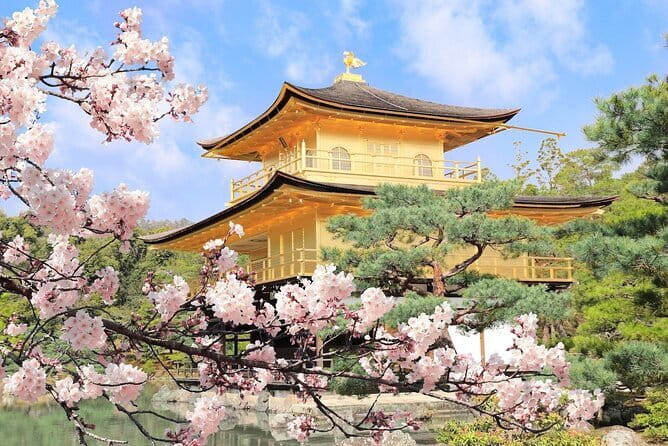
The last 10 minutes are set aside for photos. You can take pictures holding the traditional instruments and with the performers. This gives you a tangible souvenir of the experience, not just a memory of sitting in a room listening to music.
The photo portion is brief, so have your phone ready. The activity includes a mobile ticket, and your phone can also be useful for taking pictures once the performance and playing session are complete. The supplied details do not state specific photography restrictions, so follow the musicians’ instructions during the concert and save posed photos for the final section.
This part may sound minor, but it adds value for anyone who wants a visual reminder of a cultural activity. Holding a shamisen, koto, or wadaiko also helps show friends and family what you actually did in Osaka, rather than simply telling them you attended a concert.
What the $46.12 price gets you
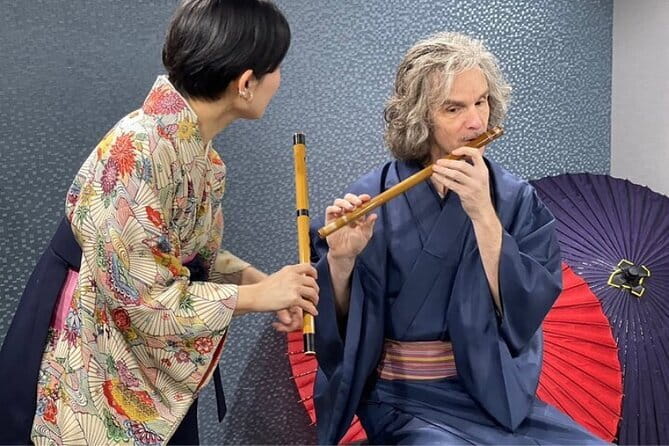
At $46.12 per person, this is not the cheapest way to spend an hour in Osaka. You can hear public music in some settings for less, and many visitors can explore the city without booking a formal activity.
The value here comes from the combination of three things: a live concert, direct access to professional musicians, and hands-on time with traditional instruments. If you only wanted background entertainment, the price might feel high for 60 minutes. If you want a guided cultural encounter with a chance to participate, the cost is easier to justify.
The group limit also matters. With no more than seven people, you are paying for a personal format rather than a large auditorium experience. You can ask questions, try an instrument, and take photos without the activity feeling like a mass attraction.
The program is also efficient. You receive 25 minutes of music, 25 minutes of playing, and 10 minutes for photos, all at one location. There is no private transport included, but there is also no time lost moving between venues.
I would see this as good value for a first introduction to Japanese music, especially if you have limited time in Osaka. It offers more contact than a performance alone and more structure than trying to find traditional music on your own.
Who will get the most from this one-hour session?
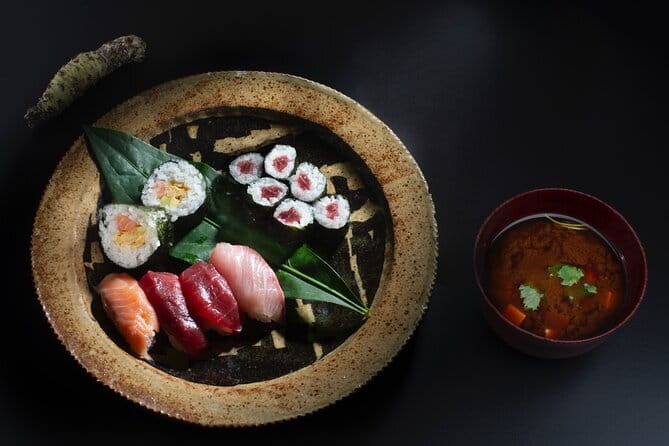
This experience suits you if you want a short cultural activity that lets you do more than take pictures from the audience. It is a good fit for music lovers, curious first-time visitors to Japan, and anyone who wants an activity with a clear start and finish.
Families may appreciate the playing session because it gives children something active to do. The information says most people can participate, and service animals are allowed. Still, the group should follow the musicians’ instructions when handling the instruments.
It also works well for solo visitors. One published experience describes someone enjoying it alone and wanting to return with friends. That matches the format: the musicians provide the focus, so you do not need to bring a large group.
You might choose a different activity if you want a long concert, a detailed history lecture, or a private lesson focused on mastering one instrument. This is a sampler. Its strength is variety and direct contact, not depth in a single musical discipline.
The Friday 18:30 time is useful for people who prefer evening plans. The Wednesday 11:00 session may be better if you want to keep the rest of the evening free. Since the concert content changes by day, you can also contact the provider, Harmony in Japan Tour, if you have questions or special requests.
Location, group size, and practical planning
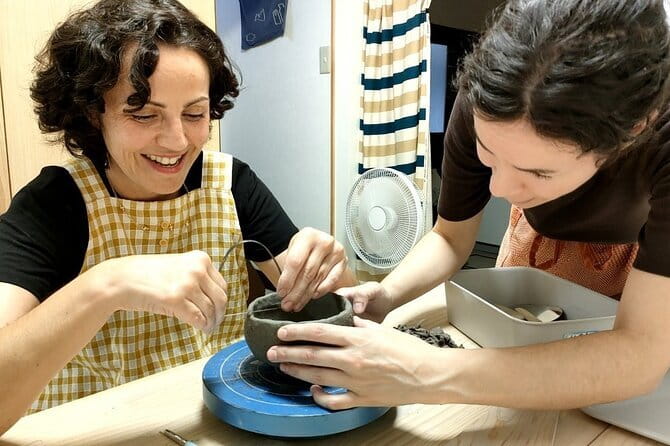
The meeting point is Alpha Shinsaibashi, 3-chome-5-27 Minamisenba, Chuo Ward, Osaka, 542-0081, Japan. The activity ends at the same place. Since private transportation is not included, you are responsible for reaching the start point and returning to your own plans afterward.
The meeting point is near public transportation, which makes the activity easier to fit into an Osaka itinerary. Even so, I would check the route before leaving. A one-hour activity can be easy to miss if you arrive at the wrong building or underestimate the time needed to find the entrance.
Your booking confirmation arrives at the time of booking, and the mobile ticket makes carrying paper documents unnecessary. Keep the ticket easy to open on your phone.
The group maximum is seven people, while at least two participants are needed for the activity to operate. If the minimum is not reached and the session is canceled, you will be offered another date or experience, or receive a full refund.
Most people can take part, and service animals are allowed. No specific age range, wheelchair information, or instrument restrictions are provided, so contact Harmony in Japan Tour before booking if you have a special access or participation need.
Cancellation and booking flexibility
You can cancel up to 24 hours before the local start time for a full refund. Changes made less than 24 hours before the start are not accepted, and cancellations inside that window are not refunded.
That policy is fairly workable for a planned Osaka itinerary, but it is not flexible on the day before or the day of the activity. I would avoid booking this for a time that may conflict with a flight, long-distance train, or another fixed reservation.
The minimum participant rule adds one small uncertainty. If the experience does not run because too few people book, you are offered a different date or activity, or a full refund. Keep some room in your schedule if this concert is one of the main events of your Osaka visit.
How this compares with a standard concert
A standard concert gives you music, but usually ends there. This program adds explanation, questions, playing time, and photographs. Those extras make the experience more useful for someone who does not already know the difference between a shamisen, koto, and wadaiko.
The tradeoff is that only half of the hour is devoted to listening. If your priority is a polished, extended concert, the 25-minute performance may feel short. If your priority is understanding the instruments and trying them, the split is sensible.
I especially like the way the schedule moves from hearing, to doing, to remembering. You listen first, so you have a frame of reference. You play next, so the music becomes physical. You finish with photos, so you leave with a clear souvenir.
The changing concert content is another reason to stay open-minded. You may not receive exactly the same program as someone attending on another day. That is a drawback if you have your heart set on one specific instrument, but it can also make each session feel less fixed.
Should you book this Osaka music experience?
Book it if you want a small-group cultural activity that fits into one hour and lets you play traditional Japanese instruments rather than only watch a show. The five out of five rating from 25 reviews and 100 percent recommendation rate support the idea that the hands-on format is the main draw.
I would book it especially for a first visit to Osaka, a solo cultural outing, or a family schedule that cannot spare half a day. The $46.12 price is reasonable when you value access to professional musicians and a group of no more than seven people.
Think twice if you need a guaranteed instrument lineup, a named performer, a long concert, or a private lesson. The daily content varies, and the supplied information does not identify the musicians or guarantee that every instrument will be available at every session.
For most people seeking a concise and authentic introduction to Japanese music, this is a worthwhile choice. Pick the Wednesday morning or Friday evening time that fits your plans, arrive at Alpha Shinsaibashi prepared to ask questions, and treat the playing portion as a chance to experiment rather than perform.
FAQ
How long does the traditional Japanese music experience last?
The activity lasts approximately one hour. It includes a 25-minute concert, 25 minutes of playing traditional instruments, and 10 minutes for photos.
What instruments might I hear or play?
The program can include shamisen, koto, wadaiko, and other traditional Japanese instruments. The concert content varies depending on the day.
Can I ask the musicians questions?
Yes. You can ask the professional musicians as many questions as you like during the experience.
When is the activity offered?
It is offered on Wednesday at 11:00 and Friday at 18:30.
Where does the experience begin and end?
It begins at Alpha Shinsaibashi, 3-chome-5-27 Minamisenba, Chuo Ward, Osaka, 542-0081, Japan. It ends back at the meeting point.
How many people can join the activity?
The maximum group size is seven people. At least two participants are required for the activity to operate.
Is transportation included?
No. Private transportation is not included. The meeting point is near public transportation.
Can I cancel for a full refund?
Yes. You can cancel at least 24 hours before the local start time for a full refund. Cancellations or changes made less than 24 hours before the start are not refunded or accepted.
Just added around Osaka
- Nara Day Trip from Osaka with a Licensed Guide★ 5.0 · 3 reviews
- Osaka Early Morning Osaka Castle Tour Avoid Crowds★ 5.0 · 3 reviews
- Guided Tour of Some Attractions in Osaka by Private Car★ 5.0 · 3 reviews
- Private Transfer Between Kyoto and Kansai Airport KIX★ 5.0 · 3 reviews
- Shared Arrival Transfer: Osaka Itami Airport to Osaka City★ 5.0 · 3 reviews
- Osaka: Sushi Making Class and Dotonbori Food Tour★ 4.7 · 3 reviews
- Osaka Night Photography Workshop★ 5.0 · 3 reviews
- Kyoto Full day Tour Kinkakuji, Kiyomizu-dera and Fushimi Inari★ 4.5 · 3 reviews
Osaka Sumo & Traditional Shows, compared.
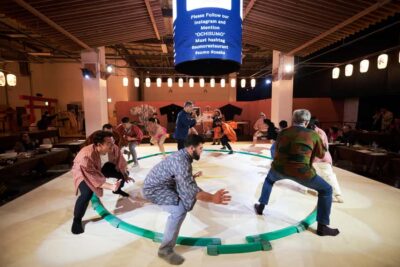
Sumo Show & Experience w/ Optional Kimono & Hot Pot
Read our review →
Sumo Stage Show with Bento or Snack + Fight & Photo
Read our review →
English Stand Up Comedy Show at Osaka Comedy Club
Read our review →
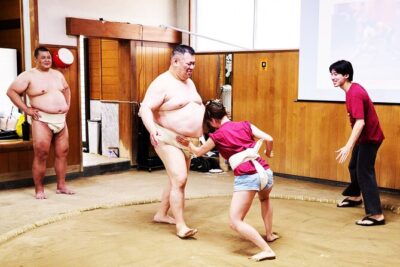
Osaka Sumo Experience with Live Show and Audience Challenge
Read our review →


Osaka Umeda: PICCADILLY DINNER SHOW & NIGHTCLUB with Tasting
Read our review →Browse the lists this tour appears in