
Reviewed · OSAKA SUMO & TRADITIONAL SHOWS
Sumo Wrestling Tournament Chair Seats & Expert Guide | Osaka Mar
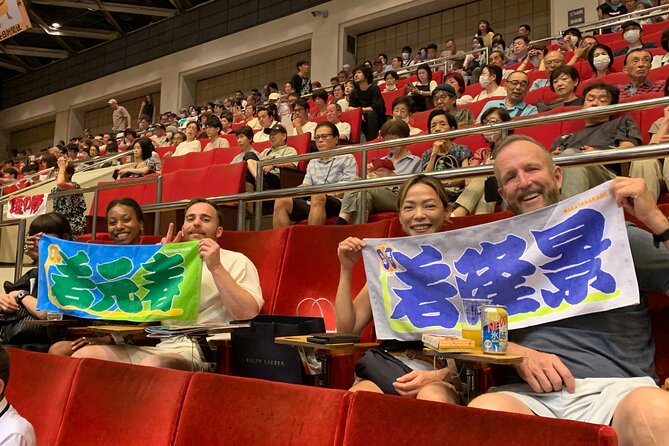
The best part of this Osaka experience is the timing. You arrive before the serious bouts, then watch the ceremony and top matches build toward the final two hours. A guide sits with you, explaining what is happening instead of leaving you to guess why a wrestler stamps, stares, or takes so long to enter the ring. Yuki and Mai have both led this experience.
I like the small group size, limited to five people, and I like that eating and drinking at your seat is allowed. The chair seating is easier on your legs than kneeling, and you can ask questions as the matches unfold. The main consideration is seat clarity: the tour describes A-class front-row seating, while the detailed venue information describes S-seat chairs on the second floor, with exact seating not selectable. Confirm that point before paying.
In This Review
- Key points to know before booking
- Why the 2 to 6 pm schedule works so well
- Entering Edion Arena Osaka at 2 pm
- What the guide adds to the matches
- Chair seating and the important seat-location question
- The ceremony before the top bouts
- From 4 pm to 6 pm, sumo at full strength
- What the $182 price really covers
- Who will get the most from this experience
- Practical details that can affect your day
- Should you book the Osaka sumo tour?
- FAQ
- Where does the sumo experience begin and end?
- What time does the activity start?
- How long does the experience last?
- What is included in the price?
- Are snacks and drinks included?
- Can I leave and return to the venue?
- Can I choose my exact seat?
- What is the cancellation policy?
Key points to know before booking
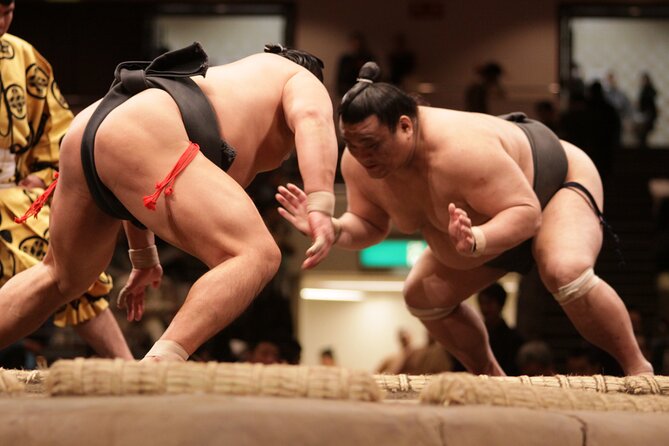
- The serious action runs from about 3:40 to 6:00 pm, when the strongest wrestlers appear and Japanese television coverage begins.
- Your guide sits with you, so you can ask about rules, rituals, rankings, and Japanese sumo culture during the matches.
- The group is capped at five people, giving the outing a more personal feel than a large sightseeing group.
- Chair seating means no kneeling, and food and drinks are permitted at your seat.
- Admission, a sumo guidebook, professional guiding, and tour photos are included, but snacks and drinks are not.
- The precise seat location cannot be chosen, and the supplied details use two different seat descriptions, so ask for clarification.
Why the 2 to 6 pm schedule works so well
Sumo tournaments are not simply a two-hour show. The day builds slowly, with lower-ranked wrestlers competing earlier and the best-known names appearing later. This tour begins at 2 pm, giving you time to enter and settle in before the featured bouts.
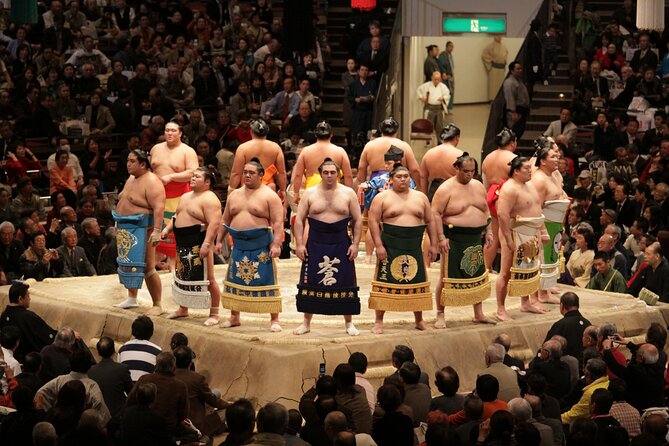
At roughly 3:40 pm, the nakabi portion begins. This is a ceremony before matches involving particularly strong wrestlers. It marks the shift from the earlier part of the tournament to the section most visitors have come to see.
From 4 pm until about 6 pm, the pace and attention rise. These are the matches that Japanese television broadcasts, and they provide the clearest look at high-level sumo. If you have only seen short clips online, this is where the sport makes more sense. The quiet preparation, sudden bursts of force, and formal rituals all carry more weight when you understand what to watch for.
The tour ends after the final match, around 6 pm. The session time cannot be adjusted, so do not book it if you need to leave early for a dinner reservation, train, or evening show.
More sumo, taiko and stage shows:
- Osaka: Sumo Show & Experience w/ Optional Kimono & Hot Pot
★ 4.5 · 609 reviews - Osaka: Sumo Stage Show with Bento or Snack + Fight & Photo
★ 4.3 · 364 reviews - Osaka: English Stand Up Comedy Show at Osaka Comedy Club
★ 4.7 · 203 reviews
Entering Edion Arena Osaka at 2 pm
You meet the guide at the front of Edion Arena Osaka at 2 pm. The exact meeting details are sent two to three days before the event, so keep an eye on your booking messages and make sure you know where to stand before leaving for the arena.
The venue is in Naniwa Ward, near public transportation. The experience begins and ends at the arena, and private transportation is not included. That keeps the arrangement simple, but you are responsible for getting there on time.
Once inside, you go to the seating area and can move around freely after reaching your seat. One useful feature is re-entry once during the day. If you need to leave the arena, tell the guide first. This is a practical benefit if you want to step out, but it is not a reason to wander far. The tour still runs on its fixed schedule.
The guide may also help you find the museum and gift store. That point matters because a first visit can feel confusing. You are not just handed a ticket and left to navigate a large Japanese sporting venue on your own.
What the guide adds to the matches
Sumo looks simple at first: two wrestlers face each other, and one leaves the ring. The details are where the sport becomes interesting. A guide can explain the purpose of the pre-match movements, the cultural meaning behind the ceremony, and the rules that are easy to miss when you do not speak Japanese.
The guide sits with your group, rather than giving one explanation at the entrance and disappearing. That gives you a chance to ask questions at the right moment. You can point to a ritual, a wrestler, or an unusual call and get an explanation while it is still happening.
Yuki is described as a friendly guide who helped make the event understandable and selected excellent seats. Mai is described as a hospitable Japanese native who enjoys explaining important parts of sumo. Since the provider assigns the guide, you should not assume you will receive one particular person, but these names give you a useful sense of the guiding style.
The cultural side is just as valuable as the sporting side. Sumo is tied to Japanese history and tradition, and the guide helps connect the formal gestures and strict rules to that wider setting. You still get to enjoy the physical contest, but you are less likely to spend the afternoon wondering what the ceremony means.
Chair seating and the important seat-location question
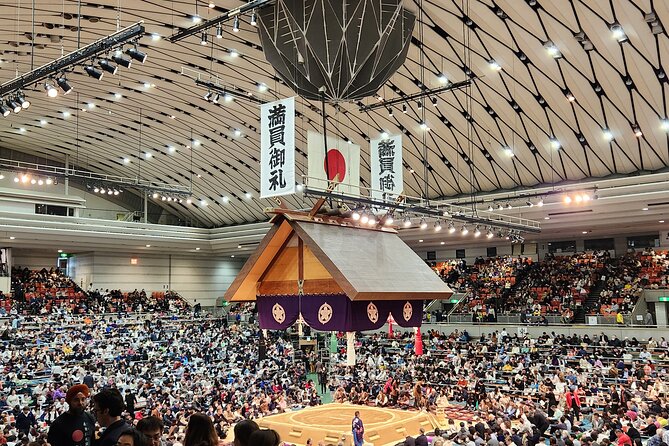
The supplied details need careful reading here. The tour summary advertises premium A-class seats in the front one or two rows. The venue description later refers to S-seat chairs on the second floor with a panoramic view. It also says that the seating area cannot be specified.
Those descriptions do not fully match. You should ask the provider to confirm the actual ticket category and likely location before booking, especially because the price is $182. Do not assume that front-row seating is guaranteed simply because it appears in the headline description.
The positive point is that the listed seating uses chairs, not floor cushions or kneeling positions. You can watch without sitting in seiza, the formal kneeling posture that many people find hard on their knees and ankles. The second-floor description also promises a broad view of the entire arena, which can help you follow the action across the ring and surrounding ceremony.
A closer seat and a wider seat offer different advantages. Front seating gives you a stronger sense of the wrestlers’ size and impact. A higher seat may make the full ritual easier to follow. Since you cannot select the seating area, getting the exact category in writing is sensible.
A few more Osaka tours and experiences worth a look
- Osaka: Main Sights and Hidden Spots Guided Walking Tour
★ 4.9 · 702 reviews - Osaka: Guided Food Tour with 12 Dishes at 4 Local Eateries
★ 5.0 · 533 reviews - Osaka: Namba Pub Bar Crawl with a Local Guide
★ 4.9 · 424 reviews - Osaka: Izakaya Bars Guided Walking Tour
★ 4.9 · 385 reviews
The ceremony before the top bouts
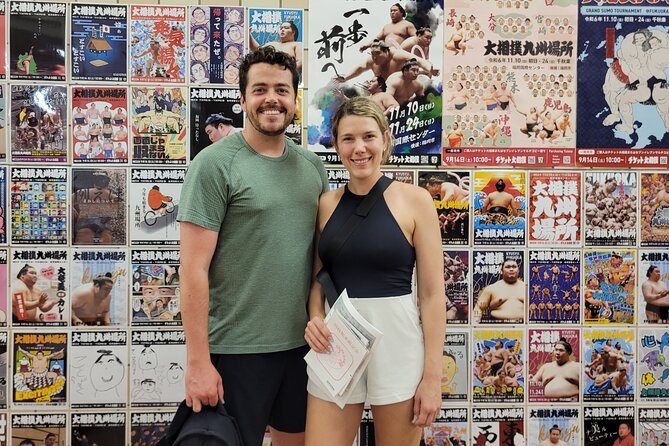
Around 3:40 pm, the nakabi ceremony begins. This is more than a pause between matches. It signals that the tournament has reached the portion featuring especially strong wrestlers.
Your guide can point out what deserves your attention during this transition. Without help, you might focus only on the fight itself and miss the way the event changes as the higher-ranked competitors enter. The ceremony gives you a chance to watch the formal side of sumo before the most intense matches begin.
This is also a good reason not to arrive late. The featured bouts may be the headline attraction, but the ceremony helps set the stage. You get a clearer sense of the tournament’s structure when you see the shift from earlier matches to the main portion of the day.
From 4 pm to 6 pm, sumo at full strength
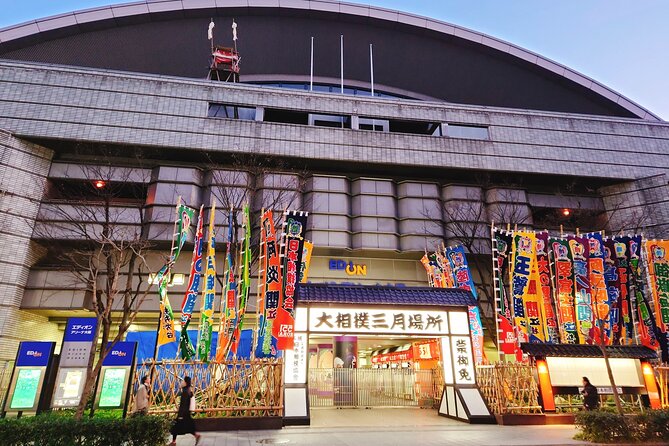
The final two hours are the main event for most people. Around 4 pm, the strongest wrestlers begin competing, and Japanese television coverage starts. The arena atmosphere should feel more focused as the top division takes over, though the tour details do not promise any specific wrestler or match.
Sumo bouts can be brief, but the event around them is not. Wrestlers take time to prepare, perform ritual movements, and face one another before the charge. That rhythm may surprise you if you expect nonstop action. A guide is especially useful here, since the pauses are part of the sport rather than empty time.
You can eat and drink at your seat. Snacks and drinks are not included in the $182 price, so plan to buy or bring them according to venue rules. The ability to eat in place means you do not have to choose between following the tournament and finding a meal.
The guidebook is another useful inclusion. You can use it to follow the explanations during the event and keep it as a reference afterward. Tour photos are included as well, giving you a record of the outing without requiring you to manage every picture yourself.
What the $182 price really covers
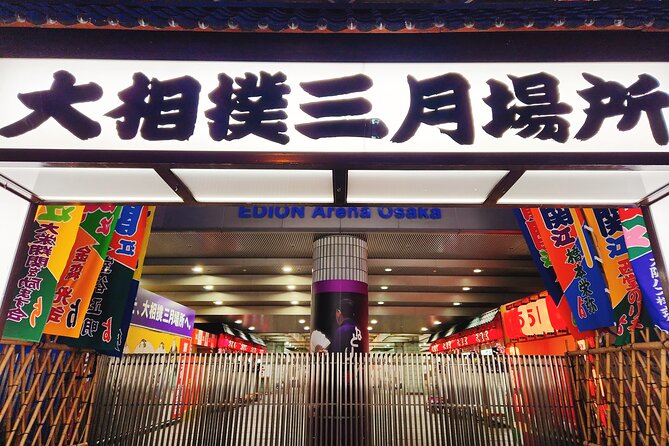
At $182, this is not a budget ticket to a sporting event. You are paying for more than entry: the package includes admission, a professional guide, an original sumo guidebook, and tour photos. The small group, capped at five, is a major part of the value because you have a better chance to ask questions than you would in a large coach-style tour.
The price makes the most sense if you are new to sumo or want a smoother first visit. A regular ticket may cost less, but it will not necessarily explain the customs, help you locate the museum and gift store, or sit with you through the featured section.
The value is weaker if you already understand sumo well, speak Japanese comfortably, or mainly want the cheapest possible seat. It is also weaker if the seat category turns out not to match your expectations. Ask for clarification about A-class front-row seating versus S-seat second-floor chairs before treating the price as a good deal.
Remember to budget for snacks and drinks. They are allowed at your seat but are not included. Transportation to and from Edion Arena Osaka is also your responsibility.
Who will get the most from this experience
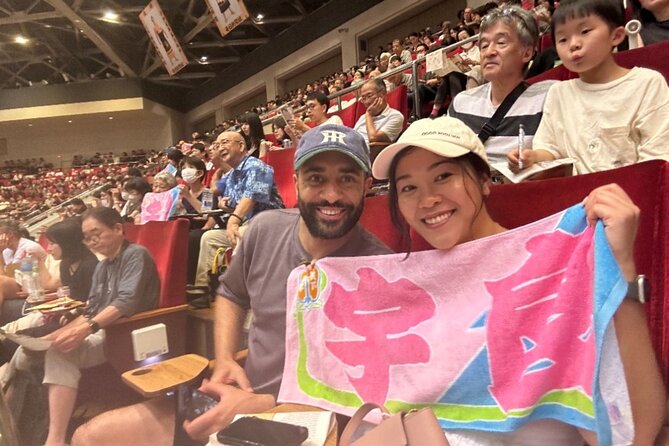
I would recommend this outing to a first-time sumo spectator who wants context without spending a full day figuring out the venue. The guide’s presence turns an unfamiliar event into something you can follow from the first ceremony to the final match.
It also suits couples, families, and small groups who prefer a personal experience. With no more than five people, the setting should feel more like watching with a helpful local specialist than joining a large tour.
It is a good fit for visitors who value comfort. The chair seats reduce the strain of kneeling, and the ability to eat and drink without leaving your place makes the long session easier.
You may want to skip it if your schedule is tight after 6 pm, if you cannot arrive at 2 pm, or if you need a guaranteed seat location. The fixed timing and non-selectable seating are the two practical limits to weigh.
Practical details that can affect your day
Confirmation arrives when you book, but the precise meeting-point details come two to three days before the event. Save those instructions, since the arena address alone may not tell you exactly where to meet the guide.
Most people can participate, and the venue is near public transportation. The activity is described as private, with only your group taking part, while the group size is limited to five. The wording suggests a small, personal arrangement, but the session itself follows a fixed group schedule.
You can cancel for a full refund if you do so at least 24 hours before the 2 pm start time. A cancellation within 24 hours is not refundable, and late changes are not accepted. The cut-off uses Osaka local time.
The event ends back at the meeting point after the final match. Since the guide remains with you during the session, tell the guide if you plan to use the once-daily re-entry option.
Should you book the Osaka sumo tour?
Book this if you want top-division sumo with clear explanations, comfortable chair seating, and a very small group. The guide is the main reason to choose it. Yuki and Mai are presented as warm, helpful hosts who make the rules and cultural details easier to follow, while the guidebook and photos add useful extras.
Before booking, confirm the ticket category and location. The mention of A-class front one-to-two-row seats conflicts with the description of S-seat chairs on the second floor, and exact seating cannot be chosen. If the provider confirms the view and category meet your expectations, $182 can be fair for a guided first sumo experience. If your priority is simply the lowest ticket price, attend independently instead.
FAQ
Where does the sumo experience begin and end?
It begins at Edion Arena Osaka in Naniwa Ward, Osaka, and ends back at the meeting point after the final match.
What time does the activity start?
The meeting time is 2 pm. The session runs until about 6 pm.
How long does the experience last?
The listed duration is approximately four hours.
What is included in the price?
Admission, a Class A ticket as described in the tour summary, an original sumo guidebook, a professional guide, and tour photos are included.
Are snacks and drinks included?
No. Snacks and drinks are not included, although eating and drinking at your seat is allowed.
Can I leave and return to the venue?
Yes. Re-entry is possible once during the day. Tell the guide if you need to leave.
Can I choose my exact seat?
No. The seating area cannot be specified. The supplied details describe both A-class front one-to-two-row seats and S-seat chairs on the second floor, so confirm the actual arrangement with the provider.
What is the cancellation policy?
You receive a full refund if you cancel at least 24 hours before the local start time. Cancellations or changes made within 24 hours are not accepted for a refund.
Just added around Osaka
- Nara Day Trip from Osaka with a Licensed Guide★ 5.0 · 3 reviews
- Osaka Early Morning Osaka Castle Tour Avoid Crowds★ 5.0 · 3 reviews
- Guided Tour of Some Attractions in Osaka by Private Car★ 5.0 · 3 reviews
- Private Transfer Between Kyoto and Kansai Airport KIX★ 5.0 · 3 reviews
- Shared Arrival Transfer: Osaka Itami Airport to Osaka City★ 5.0 · 3 reviews
- Osaka: Sushi Making Class and Dotonbori Food Tour★ 4.7 · 3 reviews
- Osaka Night Photography Workshop★ 5.0 · 3 reviews
- Kyoto Full day Tour Kinkakuji, Kiyomizu-dera and Fushimi Inari★ 4.5 · 3 reviews
Osaka Sumo & Traditional Shows, compared.
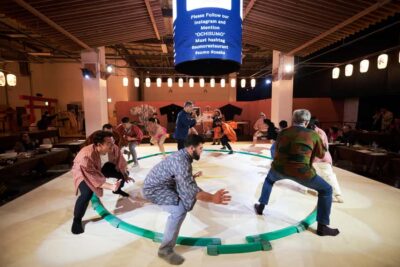
Sumo Show & Experience w/ Optional Kimono & Hot Pot
Read our review →
Sumo Stage Show with Bento or Snack + Fight & Photo
Read our review →
English Stand Up Comedy Show at Osaka Comedy Club
Read our review →
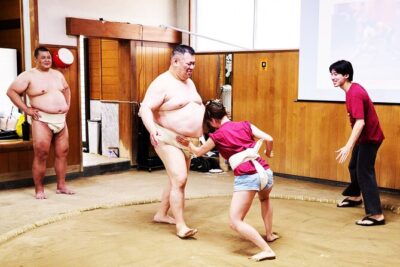
Osaka Sumo Experience with Live Show and Audience Challenge
Read our review →

Osaka Umeda: PICCADILLY DINNER SHOW & NIGHTCLUB with Tasting
Read our review →Browse the lists this tour appears in