
Reviewed · OSAKA SUMO & TRADITIONAL SHOWS
Sumo Tournament Experience in Osaka
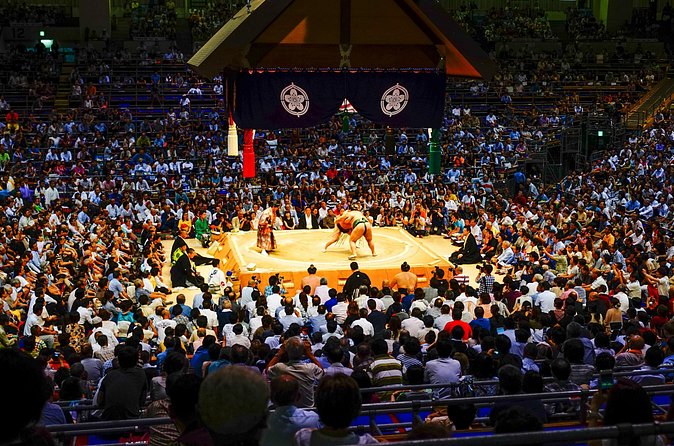
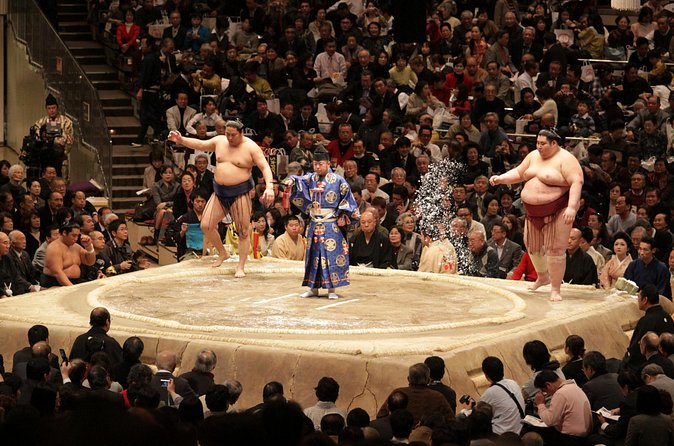
Osaka’s annual sumo tournament is a rare chance to see Japan’s national sport at full strength, with wrestlers entering the arena, salt flying before a bout, and local fans reacting to every shove and slap. The English-speaking guide turns an unfamiliar sport into a story you can follow. The March basho is held only once a year in Osaka, so timing matters.
I like the reserved seating and the guide’s audio headset, which lets you follow the explanation without losing the action. I also like the optional chanko hot pot dinner, since it connects the spectacle in the arena with the food traditionally eaten in sumo stables. The main drawback is the fixed schedule and non-refundable booking, along with a possible wait before you enter your seats.
In This Review
- Key points before you book
- Why Osaka’s March tournament is special
- Meeting near EDION Arena Osaka
- From salt purification to the first bout
- Picking the right seat
- The wait before seating
- Adding chanko hot pot after the matches
- Is $142.40 a fair price?
- Who will enjoy this experience most?
- Booking and cancellation details to take seriously
- Should you book the Osaka sumo experience?
- FAQ
- When does the Osaka sumo tournament take place?
- How long does the experience last?
- Where does the experience take place?
- What time does the tour start?
- What seats are available?
- Is dinner included?
- Can I bring food or drinks into the arena?
- What happens if the tour does not operate?
Key points before you book
- Osaka’s only annual basho: The official tournament runs for 15 days each March, making this a seasonal experience.
- A guide who explains the rituals: Learn about salt purification, rankings, famous wrestlers, and life inside a sumo stable.
- Several seat levels: Choose distant D seats, central B or C seats, or closer A or S seats.
- Optional chanko dinner: Add the hot pot associated with sumo wrestlers, or request sukiyaki or a vegetarian meal at least one week ahead.
- A small-group format: The group can include up to 24 people, with at least 15 required for the tour to operate.
- Plan for a wait: The group may need to wait before entering the seats, and the Sumo Museum can be crowded.
Why Osaka’s March tournament is special
Official sumo tournaments, called basho, take place six times each year in Japan. Each lasts 15 days, beginning and ending on Sundays. Osaka hosts the March tournament, while Tokyo holds the January, May, and September events. Nagoya hosts in July, and Fukuoka hosts in November.
That schedule makes this more than a regular sporting event. If your Japan trip falls outside March, you cannot simply shift this tour to another week in Osaka. You need to match your plans to the tournament dates.
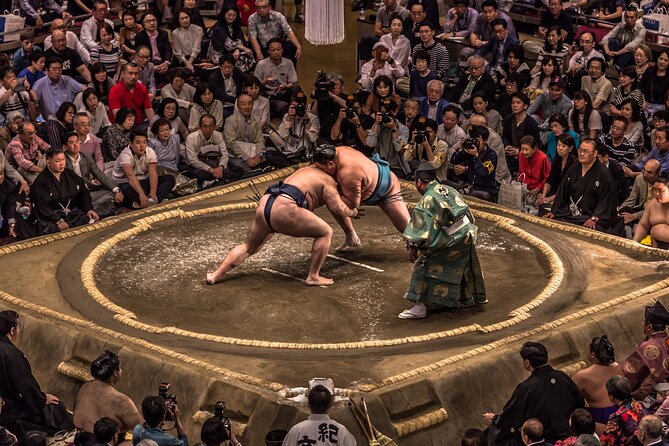
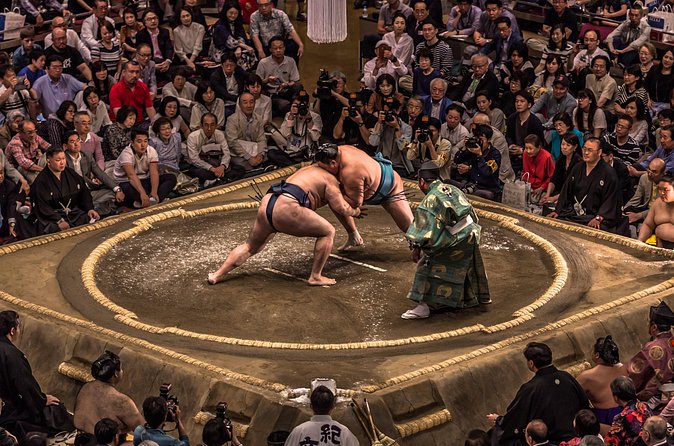
Sumo also gives you a window into a very old Japanese sporting tradition that remains tightly controlled today. Wrestlers generally live in communal heya, or training stables, where meals, clothing, training, and daily routines are closely managed. The rules are simple at first glance: force your opponent out of the ring or make any part of him other than the soles of his feet touch the ground. The customs around the match are where the sport becomes much more interesting.
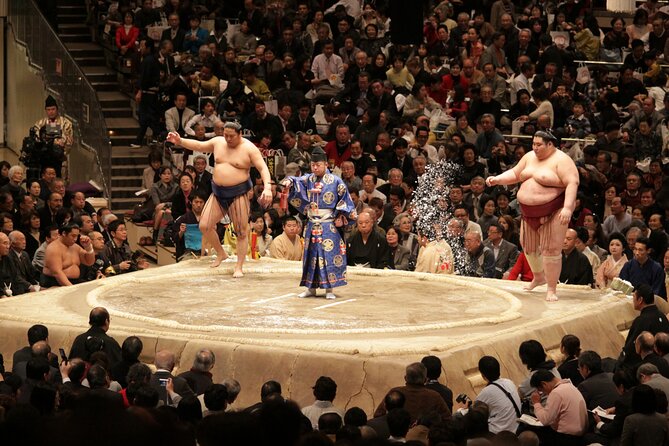
Your guide explains those customs as they happen. You learn why wrestlers throw salt, how the ranking table works, and why the pre-match ceremony can take time. Without that help, a first-time viewer may see two enormous athletes circle each other and wonder why the bout has not begun yet. With context, the pauses and gestures become part of the contest.
More sumo, taiko and stage shows:
- Osaka: Sumo Show & Experience w/ Optional Kimono & Hot Pot
★ 4.5 · 609 reviews - Osaka: Sumo Stage Show with Bento or Snack + Fight & Photo
★ 4.3 · 364 reviews - Osaka: English Stand Up Comedy Show at Osaka Comedy Club
★ 4.7 · 203 reviews
Meeting near EDION Arena Osaka
The experience begins at 2:00 pm, with the exact meeting point sent by email at least one week before the date. You should arrive at least 10 minutes early. This is a group outing, and the guide may not be able to wait for late arrivals.
The arena is near public transportation, so you can reach it without hotel pick-up or drop-off. Those transfers are not included, and you should allow enough time to find the meeting point. The guide’s phone number is provided before the experience, which gives you a way to reconnect if you miss the group and are told to meet at the next location.
The group size can reach 24 people. That is large enough to feel organized rather than private, but small enough for a guide to use an audio headset and keep everyone moving together. The tour needs at least 15 people to run, so do not treat the reservation as completely final until the minimum has been met.
There is also a ticket timing issue worth knowing. Group tickets are released by the Sumo Association about four to seven weeks before the tournament date. If Japan Awaits cannot secure the tickets, it says you will be notified within four weeks of the tour and offered another date or a full refund. Booking early is still recommended, ideally about three months ahead, or at least one month before your visit.
From salt purification to the first bout
Once inside EDION Arena Osaka, the guide helps you read the action. Sumo’s ceremonial details are not decoration added for tourists. They are part of the sport’s identity.
You will hear about salt purification, one of the best-known rituals before a match. Wrestlers also perform carefully prescribed movements before they clash. The guide explains what you are seeing and points out notable wrestlers from Japan’s past and present.
The audio headset is useful here. A live sumo arena is not quiet, and a guide speaking to a group can easily disappear under the crowd. With the headset, you can listen to the explanation and then turn your attention to the ring when the action starts.
The tour also includes a banzuke-hyo, the official ranking table. Keep it close. It gives you a practical way to follow the wrestlers and understand why certain matches carry more weight. Sumo has a strict ranking system, and a little preparation makes the afternoon much easier to follow.
One of the most appealing parts of the experience is the chance to cheer on and greet famous wrestlers as they enter the stadium for their matches. The exact timing and view will depend on the day and crowd, but this is a chance to see the event as a live public occasion, not just a series of bouts watched from a chair.
Picking the right seat
Your seat choice has a real effect on the afternoon. The arena is compact, so even the upper level gives you a full view of the ring, but the distance changes how clearly you see the wrestlers’ expressions and footwork.
Basic D seats are in the upper corners. They offer a complete, distant view and are the sensible budget choice if your main goal is to be inside the official tournament. Binoculars are recommended. The elevated angle can also help you see the ring clearly, even if the wrestlers look small.
Standard B or C seats are in the main arena and use chair seating. These give you a better balance of view, price, and atmosphere. You are close enough to feel more connected to the bouts, while still having a broad view of the ring. Binoculars are still recommended for the best look at details.
Premium A or S seats are in the front arena section, closest to the ring. Choose these if the physical drama matters most to you and the higher price fits your budget. You will be nearer to the wrestlers and ceremonial action, but you should still consider that much of the guide’s explanation comes through the headset rather than from a private conversation.
All seats are reserved in advance according to the option you select. You do not need to fight for a place when you arrive, which is a major convenience on a busy tournament day.
A completely different way to spend a day in Osaka:
- Osaka Go Karting Tour with Funny Costume
★ 5.0 · 2,658 reviews - Osaka Castle: Museum and Tower Entry Ticket
★ 4.5 · 2,380 reviews - Osaka: Shinsekai Food Tour with 13-15 Dishes at 5 Eateries
★ 4.8 · 2,204 reviews - Osaka Food Tour: 13 Dishes at 5 Local Eateries
★ 5.0 · 2,149 reviews
The wait before seating
The tour is described as lasting about four hours, though the full experience may run closer to five. You may have to wait before being seated because the group must wait for all sumo matches to finish before entering the reserved seating area.
That can feel awkward if you expect to sit down as soon as you reach the arena. It is a practical condition of the group arrangement, so plan your energy and expectations accordingly. The wait may also mean that the timing of each part of the experience is not perfectly predictable.
The Sumo Museum can be congested. If the crowd is heavy, the guide may ask you to visit it on your own because moving a group through the displays is difficult. Treat the museum as an optional stop rather than the main reason to book. The tournament itself is the central event.
No outside food or drinks are allowed in the arena, but vendors inside sell refreshments and food. Meals and drinks are not part of the basic price, so bring a payment method for purchases if you expect to eat during the event.
Adding chanko hot pot after the matches
The dinner option adds a useful cultural layer to the afternoon. Chanko nabe is a Japanese hot pot made with chicken stock and vegetables. It is associated with sumo stables because a large pot can feed many wrestlers at once, an efficient arrangement for athletes who eat heavily after training.
The meal is not included unless you choose it at checkout. Chanko is the default dinner option, without drinks. You can request sukiyaki, a vegetarian meal, or another dietary adjustment in the special requirements field.
You need to make those requests at least one week in advance. Traditional chanko broth commonly uses pork or chicken, though the restaurant may substitute the broth for a vegetarian request. Once the dinner request is accepted, changes are not possible within one week of the tour date.
I see the dinner as worthwhile if you want more than a ticket and a few explanations. It gives you something tangible to connect with the sport. If you already have a full dinner plan in Osaka, the basic tournament option may be enough, especially if you prefer to choose your own restaurant afterward.
Is $142.40 a fair price?
At $142.40 per person, this is not a low-cost afternoon at the arena. You are paying for more than admission: reserved seating, the service involved in securing the ticket, an English-speaking local sumo expert, the banzuke-hyo, audio equipment, and group coordination.
The value depends heavily on the seat category. Basic D seats make the price easier to justify if you mainly want access to the basho and cultural explanation. Standard B or C seats are likely the most balanced choice for many people because they provide a better arena position without the highest premium.
A premium A or S seat costs more, but the closer view can matter if you care about seeing the wrestlers at close range. You should compare the total price of your chosen option, rather than judging the advertised starting price alone.
The dinner option changes the calculation again. Chanko, sukiyaki, or a vegetarian meal adds convenience and a traditional food experience, but meals and drinks are otherwise separate. Group discounts are available, which can help if you are booking for several people.
The service fee also reflects work done before the day itself. Japan Awaits arranges the guide, ticket purchase, and restaurant reservations when needed. That can be useful for visitors who do not want to manage Japanese tournament ticket systems, but it also means cancellation terms are strict.
Who will enjoy this experience most?
I would choose this for a first-time sumo viewer who wants the sport explained while watching it live. It is also a good fit if your Osaka visit is built around local culture rather than a quick checklist of sights.
Families and mixed-age groups can take part, since most visitors can participate and the event uses chair seating for the standard category. The guide’s headset is helpful for anyone who wants a clear explanation without standing beside the guide.
You should think twice if you dislike fixed schedules, group tours, or waiting. The minimum group requirement, possible delay before seating, and no-refund policy leave little room for last-minute changes. You also need to be in Osaka during the March tournament, not simply during the month in general, since exact dates vary.
The experience is also less suitable if you want a private guide or a quiet museum visit. Up to 24 people may be present, and the museum may be left for independent viewing when crowded.
Booking and cancellation details to take seriously
This experience is non-refundable and cannot be changed after booking. If you cancel or request an amendment, the amount paid will not be returned.
That policy matters because tournament tickets and dinner reservations require advance planning. Book only after confirming your Osaka dates and choosing the correct seat and dinner options. If the minimum number of participants is not reached, the experience may be canceled and you will be offered another date or experience, or a full refund.
The ticket supply can also affect the booking. Group tickets are released four to seven weeks before the event. Japan Awaits says it will notify you within four weeks of the tour if tickets cannot be obtained and will offer a new date or a full refund.
Should you book the Osaka sumo experience?
Book it if your trip includes Osaka in March and you want to understand what you are watching, not just take a seat in the arena. The guide, audio headset, ranking sheet, and ritual explanations turn a complicated sport into an afternoon you can follow.
I would lean toward the Standard B or C seat for the best balance. Add dinner if the idea of eating chanko with the sumo connection appeals to you, and make any vegetarian or special meal request at least one week ahead.
Skip it if your schedule is uncertain, you need a refundable activity, or you are happy to attend without cultural explanation. For everyone else, this is a strong way to see Japan’s national sport in its proper setting, with the once-a-year Osaka timing providing an extra reason to plan ahead.
FAQ
When does the Osaka sumo tournament take place?
The official Osaka tournament takes place in March. The exact dates vary, and each official tournament lasts 15 days, beginning and ending on Sundays.
How long does the experience last?
The experience lasts approximately four to five hours. The listed tour duration is about four hours, but waiting before seating can affect the total timing.
Where does the experience take place?
It takes place at EDION Arena Osaka. The meeting point and full tour details are sent by email at least one week before the tour date.
What time does the tour start?
The start time is 2:00 pm. You should arrive at least 10 minutes before the designated meeting time because the group may not be able to wait for late arrivals.
What seats are available?
The options include Basic D seats in the upper corners, Standard B or C seats in the main arena, and Premium A or S seats in the front arena section. The seat type depends on the option selected at booking.
Is dinner included?
Dinner is not included unless you select the dinner option at checkout. Chanko hot pot is the default meal, and sukiyaki or a vegetarian option can be requested at least one week in advance.
Can I bring food or drinks into the arena?
No. Outside food and drinks are not allowed, but food and drinks are available for purchase from vendors inside the arena.
What happens if the tour does not operate?
The tour requires at least 15 participants. If it is canceled because the minimum is not reached, you will be offered a different date or experience, or a full refund.
Just added around Osaka
- Nara Day Trip from Osaka with a Licensed Guide★ 5.0 · 3 reviews
- Osaka Early Morning Osaka Castle Tour Avoid Crowds★ 5.0 · 3 reviews
- Guided Tour of Some Attractions in Osaka by Private Car★ 5.0 · 3 reviews
- Private Transfer Between Kyoto and Kansai Airport KIX★ 5.0 · 3 reviews
- Shared Arrival Transfer: Osaka Itami Airport to Osaka City★ 5.0 · 3 reviews
- Osaka: Sushi Making Class and Dotonbori Food Tour★ 4.7 · 3 reviews
- Osaka Night Photography Workshop★ 5.0 · 3 reviews
- Kyoto Full day Tour Kinkakuji, Kiyomizu-dera and Fushimi Inari★ 4.5 · 3 reviews
Osaka Sumo & Traditional Shows, compared.
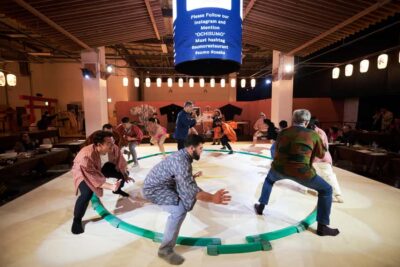
Sumo Show & Experience w/ Optional Kimono & Hot Pot
Read our review →
Sumo Stage Show with Bento or Snack + Fight & Photo
Read our review →
English Stand Up Comedy Show at Osaka Comedy Club
Read our review →
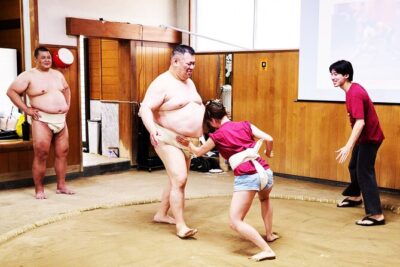
Osaka Sumo Experience with Live Show and Audience Challenge
Read our review →


Osaka Umeda: PICCADILLY DINNER SHOW & NIGHTCLUB with Tasting
Read our review →Browse the lists this tour appears in