
Reviewed · OSAKA HIGHLIGHTS & HIDDEN GEMS TOURS
Private Osaka City Tour: Fusion of Tradition and Modernity
Osaka’s appeal comes into focus when one day connects its feudal past, temple traditions, shopping arcades, street food, and neon nightlife. This private tour does exactly that, taking you from Osaka Castle to Dotonbori, Shinsaibashi, Shitennoji, and the old Shinsekai district.
I like the one-to-one attention of a private guide, especially when you want help choosing between takoyaki, okonomiyaki, and kushikatsu. I also like the mix of major sights and everyday Osaka, from the famous Glico sign to a covered shopping street and a local lunch stop.
The main drawback is cost. At $178 per person, this is not a bargain sightseeing walk, and you still pay for admission, lunch, and public transport. Six hours also leaves little room for lingering at every stop.
In This Review
- Key points to know before booking
- Why this route works for a first day in Osaka
- Osaka Castle: grand views with an extra admission fee
- Dotonbori: neon, food signs, and Osaka’s famous pose
- Shinsaibashi-suji: Osaka shopping under one roof
- Shitennoji: an older, quieter side of Osaka
- Tsutenkaku and Shinsekai: a nostalgic final chapter
- What the private guide adds to the day
- The real price of the six-hour experience
- Timing, transport, and the walking level
- Who should book this Osaka city tour
- Should you book it?
- FAQ
- How long does the private Osaka city tour last?
- Where does the tour begin?
- Where does the tour end?
- Is this a private tour?
- Is lunch included in the price?
- What admissions are not included?
- Can I cancel for a full refund?
Key points to know before booking
- Five very different Osaka stops: You’ll see a castle, an ancient temple, two major shopping and food districts, and a nostalgic tower neighborhood.
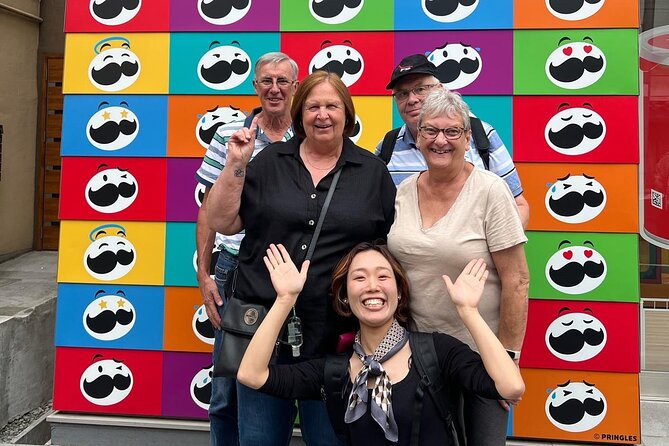
- Private group format: Only your party takes part, so you can ask questions and request help with food, shopping, or family needs.
- Kazu and Risa are named guide options: Kazu is praised for friendly conversation and family-friendly planning, while Risa has experience adjusting the day for an older group.
- Public transport connects the route: Plan on about ¥1,000 per person for transportation, with walking at each area.
- Lunch is separate: Budget ¥1,000 to ¥2,000 per person for a recommended local restaurant and Osaka specialties.
- Admission costs add up: Osaka Castle costs ¥1,200 per person, Shitennoji costs ¥500, and Tsutenkaku admission is not included.
Why this route works for a first day in Osaka
This tour gives you a useful cross-section of Osaka without asking you to plan several separate outings. You begin with the city’s best-known historical sight, move into its shopping and food center, then finish among temples and the retro streets of Shinsekai.
That variety matters. Osaka is not a city you understand from a single observation deck or one shopping street. Its character comes from the contrast between grand stone walls, quiet temple courtyards, covered arcades, bright signs, and casual food counters.
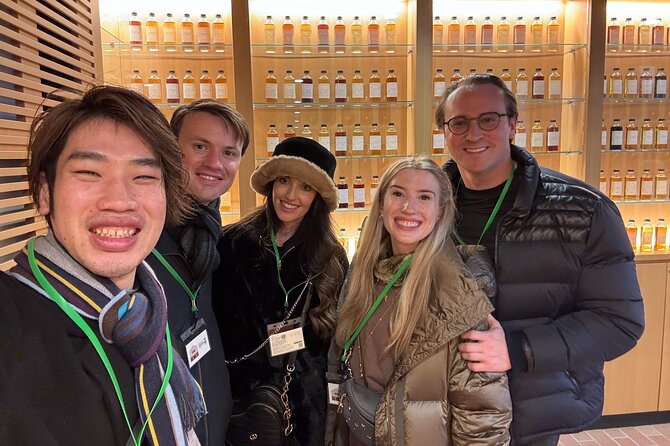
I also appreciate the private setup. With only your group taking part, you can ask why a place matters, pause for photos, or get help ordering food. A guide can also adjust the conversation for different ages. Kazu has been especially well received for spending time talking with families and finding shopping that suited a 14-year-old. Risa has been praised for looking after an older group and keeping the walking manageable with underground transport between areas.
The tour begins at the Osaka Tourist Information Center in the central concourse of JR Osaka Station. That is a practical meeting point, but you should allow time to find the correct section of the station. Osaka Station and Umeda are large, busy transport areas, so arriving early is sensible.
More highlights and hidden gems tours:
- Osaka Kickstart: Hotspots & Hidden Gems Tour
★ 5.0 · 1,306 reviews - Ultimate Osaka Walking Tour: Castle, Dotonbori & Hidden Gems
★ 5.0 · 862 reviews - Osaka: Main Sights and Hidden Spots Guided Walking Tour
★ 4.9 · 702 reviews
Osaka Castle: grand views with an extra admission fee
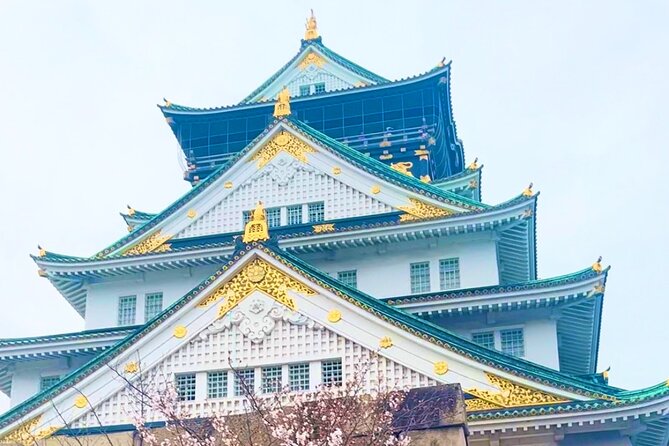
Osaka Castle is the opening stop and receives about one hour. Toyotomi Hideyoshi began construction in 1583, and the castle later played an important role in Japan’s unification. Today, the massive stone walls and formal grounds give you a strong introduction to Osaka’s past.
The setting is particularly attractive during cherry blossom season and in autumn, when the grounds take on a different look. Even outside those periods, the scale of the walls makes this more than a quick photo stop.
The top floor provides panoramic views across the city. That view helps you understand Osaka’s size before the tour moves into its tighter shopping and entertainment districts. I would treat the castle as both a historical visit and a way to get your bearings.
The Osaka Castle admission fee is ¥1,200 per person and is not included. The one-hour allotment is enough for a focused visit, but not for a slow, detailed examination of every exhibit. If you care deeply about Japanese military history, you may want more time here than the schedule allows.
Dotonbori: neon, food signs, and Osaka’s famous pose
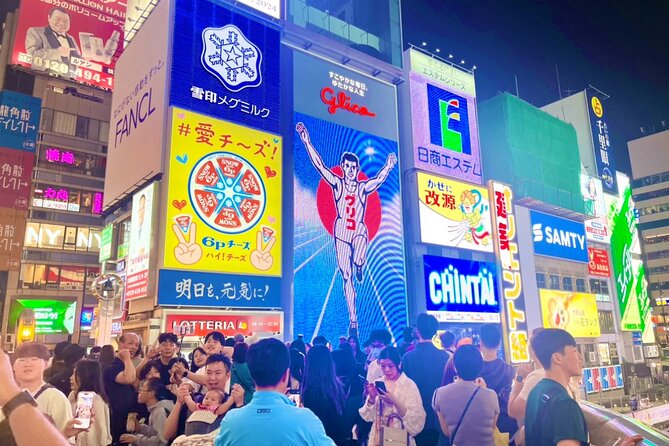
The tour then heads to Dotonbori for about 90 minutes. This is the Osaka most people picture first: bright signs, crowded lanes, restaurant displays, and the famous Glico Running Man sign beside the canal.
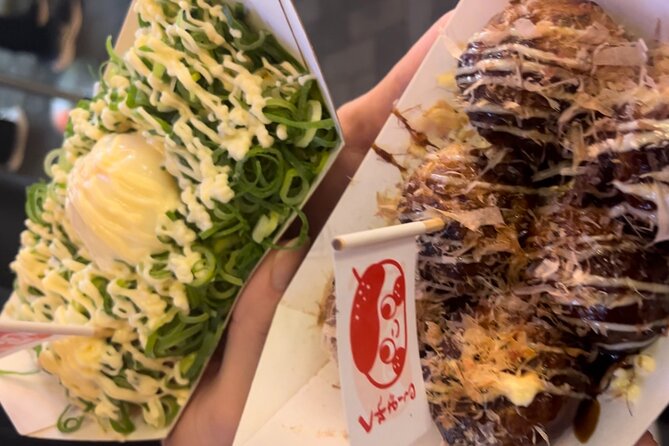
Dotonbori is best approached with an appetite. You can look for takoyaki, the hot octopus-filled snack associated with Osaka, along with okonomiyaki and kushikatsu. The guide’s help is useful here because the area offers far more choices than you can sensibly sort through in one visit.
Ninety minutes gives you time for photos, a walk, and perhaps a snack, but it is not a full food crawl. Your lunch is scheduled separately, so try not to fill up immediately. If you are keen on local food, tell the guide what you can and cannot eat at the start of the day.
Dotonbori can feel intense, particularly at popular times. That is part of its appeal, but it is not a quiet cultural stop. The private guide helps turn the noise and signs into a more readable experience, though you should not expect a slow pace in the busiest sections.
Shinsaibashi-suji: Osaka shopping under one roof
Shinsaibashi-suji Shopping Street receives about an hour, including lunch at a recommended local restaurant. The covered arcade stretches for more than 600 meters, with high-end boutiques, local shops, restaurants, and everyday retail.
This stop gives the tour a useful change of mood. Dotonbori is about spectacle and food, while Shinsaibashi shows how Osaka’s commercial life works during an ordinary day. You can browse, shop for gifts, or simply watch the flow of people under the long covered roof.
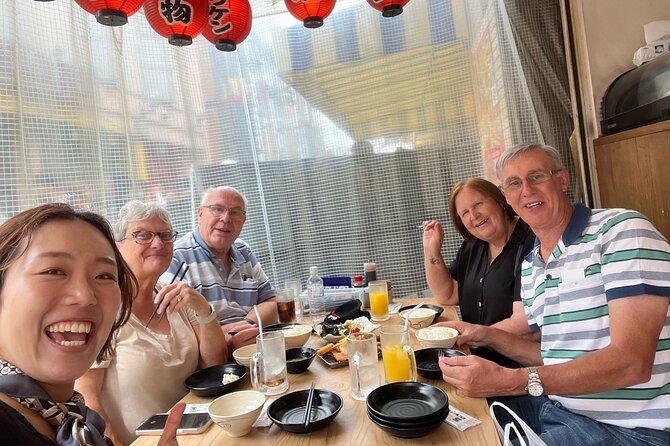
The lunch budget is ¥1,000 to ¥2,000 per person, paid separately. The plan highlights Osaka food such as takoyaki and kushikatsu, but the exact restaurant and meal choice are not specified. That gives your guide room to recommend a place suited to your group, though you should ask what is planned if you have dietary restrictions.
One hour goes quickly once you combine shopping and lunch. I would not book this tour expecting a serious shopping session. It is better for a first look, a local meal, and practical advice about where to return later on your own.
A few more Osaka tours and experiences worth a look
- Private Osaka Walking Tour: Highlights & Hidden Gems
★ 5.0 · 569 reviews - 3/4/5 Hours Private Tour in Osaka with Local Guide
★ 5.0 · 189 reviews - Osaka’s Best and Brightest: Private Full-Day Tour by Vehicle
★ 5.0 · 147 reviews - Full Day Tour of Kyoto with Private Transportation
★ 5.0 · 130 reviews
Shitennoji: an older, quieter side of Osaka
Shitennoji gets about one hour and offers the strongest contrast with Dotonbori. Prince Shotoku established the temple in 593, making it one of Japan’s oldest temple sites. Its traditional buildings and religious importance add a quieter, more reflective stop to the day.
After the castle and shopping districts, a temple visit helps balance the schedule. You can pay attention to the layout, architecture, and long history without the constant commercial signs found downtown.
Admission is ¥500 per person and is not included. The tour information does not specify which areas of the temple complex are included in that fee, so ask your guide what you will see during the hour. The stop is a good fit if you want more than shopping and food, but people focused only on modern Osaka may find it less immediately entertaining.
I like that Shitennoji is included rather than treating Osaka as a place of signs and restaurants alone. It gives the day some depth and shows that the city’s identity includes active religious traditions as well as entertainment.
Tsutenkaku and Shinsekai: a nostalgic final chapter
The final stop lasts about 90 minutes in Tsutenkaku and Shinsekai. Tsutenkaku Tower was first built in 1912 and rebuilt in 1956. At 103 meters, it offers another city view, but the neighborhood around it is the real reason to come.
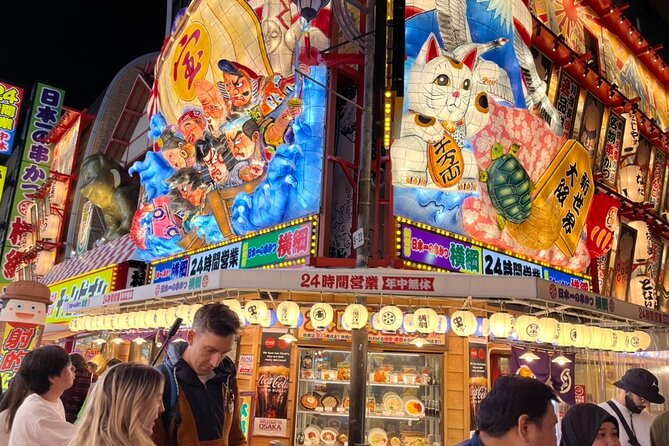
Shinsekai has a nostalgic character that feels different from both the polished shopping arcade and the bright center of Dotonbori. It is linked with kushikatsu and casual dining, making it a natural place to discuss Osaka’s food culture and older entertainment districts.
Admission to Tsutenkaku is not included. Since the tour already includes a castle view, you may want to decide with your guide if another tower visit is worth the extra fee for your group. If you enjoy city views, the two stops offer different settings. If you would rather spend more time on streets and food, you can ask how much of the tower visit is essential.
The 90-minute finish gives you time to look around instead of treating Shinsekai as a quick photograph. It also leaves you with a more relaxed final impression than ending only in a crowded shopping district.
What the private guide adds to the day
The strongest reason to choose this experience is not the route itself. You can reach all five areas independently. The value comes from having one person connect them and help you make decisions along the way.
A private guide can explain the shift from castle-era Osaka to temple-centered traditions and then to shopping, food, and popular entertainment. You can also ask practical questions that a fixed group tour may not handle well, such as where to shop for a teenager, which food to try first, or how to make a long day easier for an older relative.
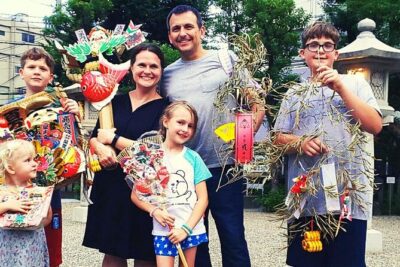
Kazu is associated with a warm, personal guiding style. His time with families has included conversation about daily life in Japan and shopping suited to a 14-year-old. That makes him a promising choice for families who want more than a scripted march between landmarks.
Risa is associated with careful attention to an older group. Her route used underground transport between areas, which is important because this is a walking tour as well as a public transport tour. You should still expect to walk at each site, but the subway connections can reduce the strain of crossing the city on foot.
Guide assignments are not guaranteed in the information provided, so consider these names useful context rather than a promise that one particular person will lead your departure.
The real price of the six-hour experience

The listed price is $178 per person. That is a substantial outlay for a six-hour Osaka tour, especially because several costs remain separate:
- Osaka Castle: ¥1,200 per person
- Shitennoji: ¥500 per person
- Lunch: ¥1,000 to ¥2,000 per person
- Public transportation: about ¥1,000 per person
That puts the stated extras at roughly ¥3,700 to ¥4,700 per person, before any Tsutenkaku admission or additional food. The final amount depends on what you eat and which optional admissions you choose.
The price makes more sense for a small private group that values personal attention. Split across several people, the guide’s time and planning may feel more reasonable than it does for one solo visitor. It is also useful if you have only one day in Osaka and do not want to spend hours working out train routes, restaurant choices, and the order of sights.
For a confident independent visitor, the value is harder to defend. Osaka Castle, Dotonbori, Shinsaibashi, Shitennoji, and Shinsekai can be visited without a private guide. You are paying for ease, explanation, photos and videos, and a day shaped around your group.
The included tour photos and videos are a nice extra. They give you a record of the day without requiring one person in your group to handle the camera constantly. Still, I would choose this tour for the guide and private format first, not for the media package.
Timing, transport, and the walking level
The schedule is tightly packed but logical:
- Osaka Castle: 1 hour
- Dotonbori: 1 hour 30 minutes
- Shinsaibashi-suji and lunch: 1 hour
- Shitennoji: 1 hour
- Tsutenkaku and Shinsekai: 1 hour 30 minutes
These times add up to roughly six hours. Public transportation is used between the main districts, with about ¥1,000 per person set aside for fares. The route is described as a walking tour, so comfortable shoes are important.
You should expect movement rather than long stops. The day works best if you want a broad introduction and are happy to keep going after a short visit at each place. It is less suitable if you prefer to spend half a day inside one museum, shop slowly, or sit over a long lunch.
Most people can participate, and the private format allows the guide to pay attention to your group’s pace. Even so, the supplied information does not give a detailed accessibility plan, so anyone with mobility concerns should ask in advance about station access, stairs, and walking distances.
Free cancellation is available until 24 hours before the start time. Changes or cancellations inside that window are not refunded, and the cut-off uses local Osaka time.
Who should book this Osaka city tour
I would recommend it to first-time visitors who want the main Osaka sights connected in one day. Families may find the private format especially useful, since the guide can balance castle history, shopping, food, and interests across different ages.
It also suits an older group that wants help using public transport between neighborhoods rather than navigating the full route alone. Risa’s reported care with an older group is encouraging, though guide assignment is not fixed.
Food-focused visitors will enjoy the chance to try Osaka staples with local help, but this is not a dedicated food tour. History fans will appreciate Osaka Castle and Shitennoji, but neither stop receives enough time for a very detailed study. Shoppers get a useful introduction to Shinsaibashi, not an entire day in the stores.
Solo visitors should think carefully about the price. The private attention may be excellent, but $178 plus several additional costs is a lot for one person. For a family or small group, the same price can feel more practical.
Should you book it?
Book this tour if you want a private, neatly connected introduction to Osaka and value a guide who can adapt the day to your family, age group, and food interests. The route gives you an honest look at the city, from castle walls and temple grounds to shopping arcades, neon signs, and Shinsekai’s older streets.
Skip it if you are comfortable planning public transport, choosing restaurants, and visiting these areas independently. The attractions themselves are easy to reach, and the extra admissions and lunch costs make the total higher than the headline price.
For most first-time visitors with limited time, I think the tour’s best value is its human touch. You get one local point of contact, a manageable six-hour plan, help with Osaka food, and a private day that can work for both a curious teenager and an older relative. Just confirm the guide, expected walking level, and optional admissions before paying.
FAQ
How long does the private Osaka city tour last?
The tour lasts approximately six hours.
Where does the tour begin?
It begins at the Osaka Tourist Information Center in the central concourse of JR Osaka Station, in Kita Ward, Osaka.
Where does the tour end?
The activity ends back at the meeting point.
Is this a private tour?
Yes. Only your group takes part in the activity.
Is lunch included in the price?
No. Lunch costs about ¥1,000 to ¥2,000 per person and is paid separately.
What admissions are not included?
Osaka Castle admission is ¥1,200 per person, and Shitennoji admission is ¥500 per person. Tsutenkaku admission is also not included, but no price is provided.
Can I cancel for a full refund?
Yes, if you cancel at least 24 hours before the experience start time. Cancellations or changes made less than 24 hours before the start time are not accepted for a refund.
Just added around Osaka
- Nara Day Trip from Osaka with a Licensed Guide★ 5.0 · 3 reviews
- Osaka Early Morning Osaka Castle Tour Avoid Crowds★ 5.0 · 3 reviews
- Guided Tour of Some Attractions in Osaka by Private Car★ 5.0 · 3 reviews
- Private Transfer Between Kyoto and Kansai Airport KIX★ 5.0 · 3 reviews
- Shared Arrival Transfer: Osaka Itami Airport to Osaka City★ 5.0 · 3 reviews
- Osaka: Sushi Making Class and Dotonbori Food Tour★ 4.7 · 3 reviews
- Osaka Night Photography Workshop★ 5.0 · 3 reviews
- Kyoto Full day Tour Kinkakuji, Kiyomizu-dera and Fushimi Inari★ 4.5 · 3 reviews
Osaka Highlights & Hidden Gems Tours, compared.

Ultimate Osaka Walking Tour: Castle, Dotonbori & Hidden Gems
Read our review →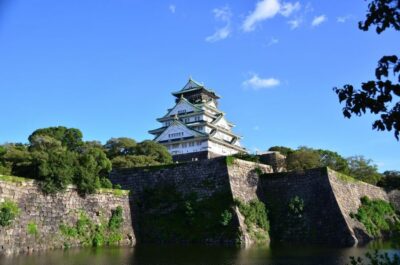
Main Sights and Hidden Spots Guided Walking Tour
Read our review →
Private Osaka Walking Tour: Highlights & Hidden Gems
Read our review →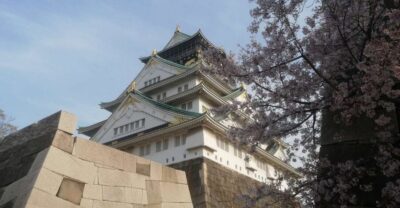
Five Must-See Highlights Walking Tour & Ramen Lunch
Read our review →
Ancient Capital Tour: Kyoto and Nara Highlights from Kyoto/Osaka
Read our review →
Walking Tour of Osaka’s 5 Must-See Sights, with Ramen for Lunch
Read our review →
Osaka Highlights: 4-Hour Walking Tour with Castle
Read our review →Browse the lists this tour appears in