
Reviewed · OSAKA TEMPLE & SHRINE TOURS
Osaka:Bamboo Healing Massage at the Temple <90-min>
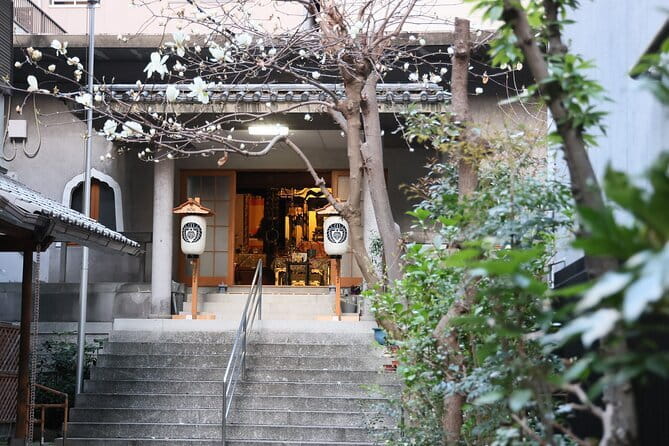
The unusual part comes first: this is not simply a massage in a hotel treatment room. You receive bodywork inside a traditional Japanese temple, with a foot bath, bamboo fascia work, a yukata photo, and tea ceremony built into the visit. The setting gives the treatment a cultural purpose, not just a spa feel.
I like the gentle sequence from foot bath to full-body oil massage, and I like that you can choose your essential oil. The short explanation of temple customs and worship adds meaning, while the yukata photo gives you a keepsake beyond a relaxed afternoon.
The main drawback is practical: the meeting point at Tossa de coracao, 1-chōme-6-19 Kitahorie, can be difficult to find, and the posted directions have caused confusion. Allow extra time to get there, and contact the provider by email rather than calling the temple directly.
In This Review
- Key points to know before booking
- A temple visit with a massage at its center
- Starting with a scented foot bath
- The 90-minute oil massage and bamboo treatment
- Wearing a yukata for a complimentary photo
- Worship guidance and a short moment of meditation
- Closing with tea and wagashi
- What the price includes in practical terms
- Finding the Kitahorie meeting point
- Who will enjoy this Osaka experience most
- The cancellation rule is friendly, but watch the clock
- Final decision: a calm cultural break in Osaka
- FAQ
- Where does the experience begin?
- Where does the activity end?
- How long does the experience last?
- What is included in the massage experience?
- Is the experience held at a temple?
- Can I wear a yukata?
- Is tea included?
- Is the activity private?
- Are service animals allowed?
- What is the cancellation policy?
Key points to know before booking
- Temple setting: Your massage takes place at a traditional Japanese temple rather than a standard spa.
- Several small rituals: The visit includes a foot bath, temple guidance, a possible meditation session, tea, and wagashi sweets.
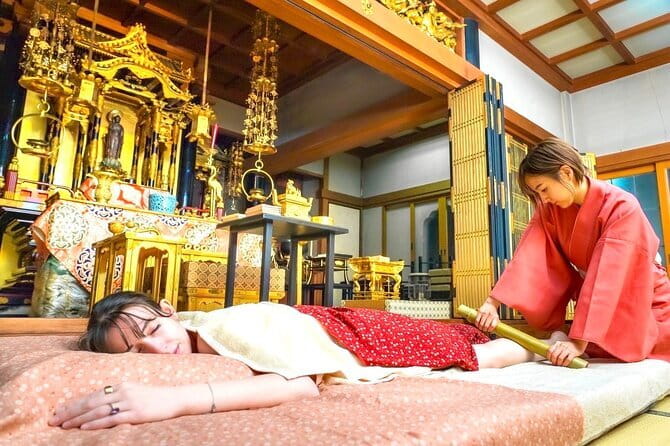
- Bamboo fascia work: A bamboo stick is used to address tightness after the oil massage.
- Yukata photograph: You can wear a yukata and receive a complimentary souvenir photo.
- Private experience: Only your group participates, which suits couples, families, or solo visitors seeking quiet time.
- Allow about two hours: The massage course is called 90 minutes, but the complete visit takes about two hours.
A temple visit with a massage at its center
The appeal here is the blend of care for the body and attention to Japanese customs. Staff in traditional kimono welcome you and explain the temple’s background and how to worship. Guidebooks are used, so you are not expected to know the proper steps before arriving.
That introduction matters. A temple can feel unfamiliar if you simply walk in, take a few photos, and leave. Here, the explanation gives you a basic sense of place before the quieter parts of the visit begin. It is a small lesson, but it helps the experience feel connected to Japan rather than pasted onto it.
The activity is private, and only your group participates. That can make a big difference during a massage. You do not need to share the room with strangers, match the mood of a large class, or worry about being watched during the cultural portions.
The program is advertised as a 90-minute course, while the overall duration is approximately two hours. That extra time likely covers changing, the temple introduction, the photograph, and the tea ceremony. Treat it as a half-day pause in your Osaka schedule rather than a quick treatment between major sightseeing stops.
More onsen and spa afternoons:
- From Osaka: Himeji Castle, Arima Onsen & Mt. Rokko Day Tour
★ 4.6 · 339 reviews - Osaka Temple Cool Foot Bath & Matcha Experience〈45min〉
★ 4.9 · 82 reviews - Osaka: Solaniwa Onsen Hot Spring Visit
★ 4.6 · 51 reviews
Starting with a scented foot bath
The first hands-on stage is a relaxing foot bath. This is a smart beginning, especially if you have been walking around Osaka. It gives you a chance to settle down before the full treatment and shifts your attention away from train stations, shopping streets, and a busy sightseeing plan.
The foot bath is also a gentle entry point for anyone who has never had a professional massage. You can get comfortable with the setting before lying down for the main treatment. The experience description refers to scented water, and you are later invited to select a favorite essential oil for the body massage.
Do not expect the foot bath to be the main event. It is a short opening ritual, not a separate long treatment. Its value is in the transition: you move from ordinary sightseeing into a slower, more ceremonial pace.
This part may also appeal to solo visitors. One of the strongest reasons to book an experience like this alone is that the small rituals give the visit structure. You are not left to figure out what to do next.
The 90-minute oil massage and bamboo treatment
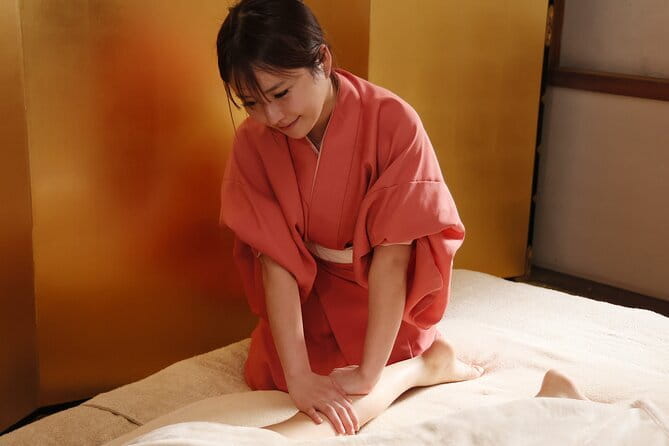
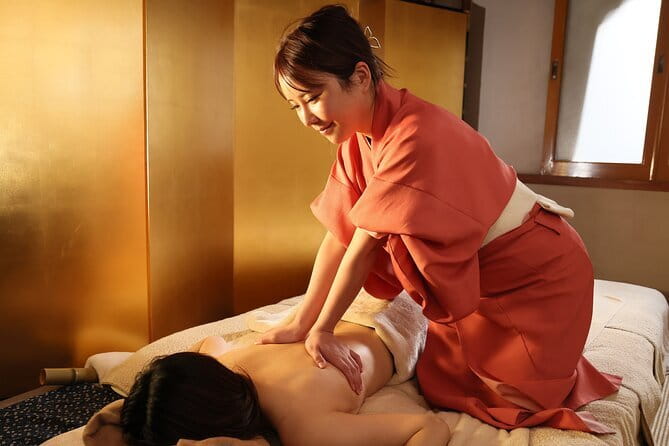
The central treatment is a full-body oil massage. The goal is to release tension and leave you feeling refreshed, with fascia release added to address areas that feel especially tight. A bamboo stick is used during this portion of the treatment.
That bamboo element makes the massage different from a standard oil session. It may feel more focused and purposeful than a light relaxation massage, particularly if you carry tension in specific areas. At the same time, the description presents it as part of a relaxing treatment, not as a medical procedure.
You should communicate clearly about pressure, sensitive areas, and any physical concerns before the treatment begins. The information provided does not list medical qualifications or promise treatment for an injury, so think of this as wellness care rather than healthcare.
The ability to select an essential oil adds a personal touch, but the available choices are not specified. If you have allergies or strong scent preferences, tell the staff before the massage starts. This is a simple precaution that can make the session more comfortable.
The treatment is also a good match for someone who has never tried a Japanese-style massage. The foot bath eases you in, the staff guide you through the setting, and the bodywork is framed as part of a larger cultural experience. You do not need to arrive as a spa expert.
Wearing a yukata for a complimentary photo
At some point during the visit, you have the chance to wear a yukata, a casual Japanese garment, and receive a complimentary photo. This is a small feature, but it helps give the afternoon a lasting souvenir.
The photo also breaks up the quiet rhythm of the massage. You are not simply receiving treatment and walking away. You get a visual memory of yourself in a traditional setting, which can be especially appealing if this is your first visit to Japan.
Keep your expectations sensible. The available information does not promise a formal photo shoot, several poses, professional styling, or a specific delivery method. It promises the opportunity to wear a yukata and receive a complimentary photograph.
You may find it useful to think of the photo as a cultural keepsake rather than the reason to book. The strongest part of the experience is the combination of temple, massage, and tea. The photograph is a pleasant extra.
More temples and shrines worth the walk:
- Osaka: Minoh, Katsuoji Temple, & Minoh Falls Full-day Tour
★ 4.9 · 172 reviews - Sagano Romantic Train & Arashiyama, Kiyomizudera, Fushimi Inari Taisha Day Tour
★ 4.5 · 171 reviews - Full Day Kyoto Tour : Bamboo Forest, Golden Temple, Fushimi Inari
★ 5.0 · 84 reviews - Osaka: Mind & Spirit Balance Temple Reiki Healing
★ 5.0 · 41 reviews
Worship guidance and a short moment of meditation
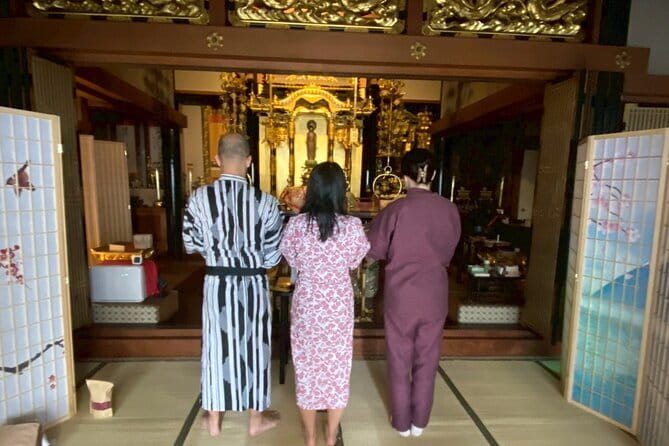
The staff explain the temple’s history and origins, then show you how to worship using guidebooks. One description of the experience also includes a short meditation in the shrine area.
The worship guidance is valuable because it keeps you from treating the temple like a decorative backdrop. You receive enough instruction to approach the place with care, even if you have never visited a Buddhist temple before. The meditation, if included in your session, adds another quiet pause between the body treatment and the closing tea.
The exact order and length of the meditation are not specified. I would not book this expecting a long religious class or an extended retreat. It is better understood as a brief introduction to temple practice within a wellness program.
This is also where the activity will appeal most to people who want more than a massage. If you only want firm bodywork and no cultural elements, some of the visit may feel like extra ceremony. If you enjoy learning through small, respectful experiences, these moments give the treatment more character.
Closing with tea and wagashi
The final stage is an authentic tea ceremony served with wagashi, traditional Japanese sweets. It is a fitting ending because tea gives you time to return to an ordinary pace before leaving.
The tea ceremony is described as part of the program, but no detailed lesson about tea preparation is promised. You should expect a short cultural presentation and a chance to enjoy tea and a sweet, not a full formal tea-school course.
Wagashi are often made to suit the season and are meant to pair with the tea, though the specific sweet served here is not stated. If you have a sweet tooth, this will be a welcome finish. If you do not, it is still worth trying because the food is part of the custom rather than an unrelated snack.
I like the order of the day: water for the feet, oil and bamboo work for the body, quiet temple instruction for the mind, then tea to close. The plan feels complete without requiring you to commit to an entire day away from Osaka.
What the price includes in practical terms
The listed price is $130.31 per person. That is more than you would pay for a basic massage in many places, so the value depends on how much you want the full package.
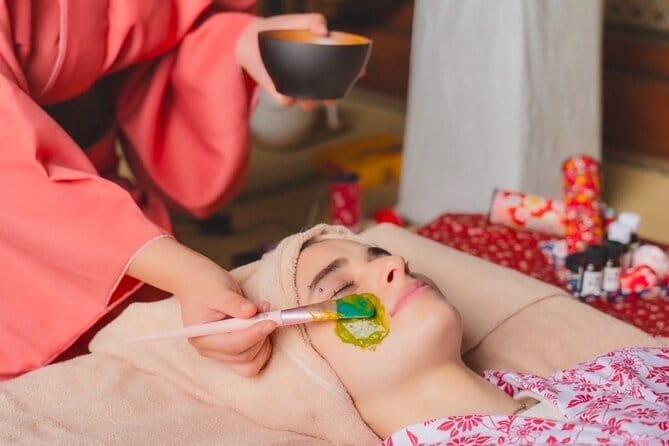
You are paying for more than hands-on treatment. The price covers a private temple experience, staff in kimono, a foot bath, a full-body oil massage, bamboo fascia work, temple guidance, the yukata opportunity, a complimentary photo, and tea with wagashi.
I would consider that fair value if you want a memorable cultural activity and a massage in the same booking. The private format also matters. A lower-priced group activity may offer a cultural demonstration, but it will not necessarily give you the same calm or personal space.
If your priority is simply a long massage at the lowest possible price, this may not be the best use of your budget. A large part of the cost pays for the setting, hospitality, cultural elements, and private arrangement.
The program is booked, on average, 46 days ahead. That is a useful sign that you should not wait until the last few days if your Osaka schedule is fixed. It does not guarantee that every date sells out, but early planning is sensible.
Finding the Kitahorie meeting point
The meeting point is Tossa de coracao, 1-chōme-6-19 Kitahorie, in Osaka’s Nishi Ward. The activity ends back at this same meeting point.
The location is near public transportation, but the directions can be difficult to follow. Make this one of the few Osaka activities for which you should check the route carefully before the day of the booking. Do not assume that a quick map search will take you directly to the correct entrance.
The temple itself should not be contacted by phone for reservations or questions. Use email to communicate with the experience provider, Japanese Massage 唯一無二-the one & only-. This is especially important if you need clarification about arrival instructions, the selected oil, or the order of the program.
Since the activity is private, arriving late could affect your group’s time more than it would on a large scheduled tour. I would aim to reach the neighborhood early, then use the extra minutes to confirm the exact meeting point.
Who will enjoy this Osaka experience most
I would recommend this for a first-time visitor who wants a softer introduction to Japanese customs. The worship guidance, yukata, tea, sweets, and temple setting give you several small cultural encounters without requiring a full-day excursion.
It also suits solo visitors. The activity has a private format, and the sequence gives you a planned, welcoming experience. A solo massage can feel awkward in some settings, but the cultural parts here help make the whole outing feel social without putting you in a large group.
Couples may like the souvenir photo and the shared tea ceremony. Friends and families can also take part, provided everyone is comfortable with an oil massage and the quiet tone of a temple setting.
You should think twice if you want a purely clinical massage, a high-energy sightseeing tour, or a formal, lengthy tea ceremony. This is a compact blend of relaxation and culture. Its strength is variety, not specialization in just one area.
Most travelers can participate, and service animals are allowed. The supplied information does not provide detailed guidance about mobility access, treatment-room setup, or specific health conditions. If you have accessibility needs, contact the provider by email before booking.
The cancellation rule is friendly, but watch the clock
Free cancellation is available if you cancel at least 24 hours before the local start time. You receive a full refund when you meet that deadline.
Inside the 24-hour window, the amount paid is not refunded, and changes are not accepted. The local-time cutoff matters if you are booking from another country or adjusting plans while crossing time zones.
I would book early because the experience is often reserved well ahead, but I would also mark the cancellation deadline in your itinerary. That gives you flexibility without risking the full $130.31 per person.
Final decision: a calm cultural break in Osaka
Book this experience if you want your Osaka schedule to include a meaningful pause, not just another attraction. The temple setting, foot bath, oil massage, bamboo work, yukata photo, and tea ceremony create a well-rounded visit, and the private format adds comfort.
The key caution is the meeting point. Plan the route carefully, use email for questions, and allow extra arrival time. Also remember that the 90-minute course becomes roughly a two-hour commitment once the cultural portions are included.
For a simple massage, choose a regular spa. For a private Japanese experience that leaves you rested and gives you a photograph, a temple memory, and a taste of tea ceremony, this is a strong choice.
FAQ
Where does the experience begin?
It begins at Tossa de coracao, 1-chōme-6-19 Kitahorie, Nishi Ward, Osaka, 550-0014, Japan.
Where does the activity end?
The activity ends back at the same meeting point.
How long does the experience last?
The massage course is described as 90 minutes, while the overall experience takes approximately two hours.
What is included in the massage experience?
You receive a relaxing foot bath, a full-body oil massage, fascia release using a bamboo stick, and the option to choose an essential oil.
Is the experience held at a temple?
Yes. The program takes place at a traditional Japanese temple in Osaka.
Can I wear a yukata?
Yes. You have the opportunity to wear a yukata, and a complimentary photo is provided.
Is tea included?
Yes. The experience ends with a traditional tea ceremony and wagashi, or Japanese sweets.
Is the activity private?
Yes. Only your group participates in the private activity.
Are service animals allowed?
Yes. Service animals are allowed.
What is the cancellation policy?
You can cancel for a full refund up to 24 hours before the local start time. Cancellations or changes made within 24 hours are not accepted for a refund.
Just added around Osaka
- Nara Day Trip from Osaka with a Licensed Guide★ 5.0 · 3 reviews
- Osaka Early Morning Osaka Castle Tour Avoid Crowds★ 5.0 · 3 reviews
- Guided Tour of Some Attractions in Osaka by Private Car★ 5.0 · 3 reviews
- Private Transfer Between Kyoto and Kansai Airport KIX★ 5.0 · 3 reviews
- Shared Arrival Transfer: Osaka Itami Airport to Osaka City★ 5.0 · 3 reviews
- Osaka: Sushi Making Class and Dotonbori Food Tour★ 4.7 · 3 reviews
- Osaka Night Photography Workshop★ 5.0 · 3 reviews
- Kyoto Full day Tour Kinkakuji, Kiyomizu-dera and Fushimi Inari★ 4.5 · 3 reviews
Osaka Temple & Shrine Tours, compared.
Minoh, Katsuoji Temple, & Minoh Falls Full-day Tour
Read our review →
Sagano Romantic Train & Arashiyama, Kiyomizudera, Fushimi Inari Taisha Day Tour
Read our review →Full Day Kyoto Tour : Bamboo Forest, Golden Temple, Fushimi Inari
Read our review →
Osaka Temple Cool Foot Bath & Matcha Experience〈45min〉
Read our review →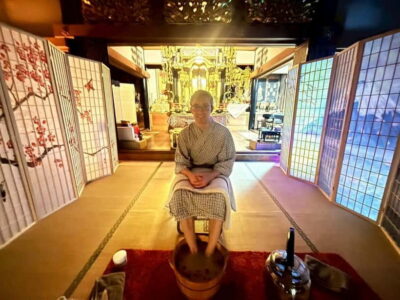
Katsuo-ji Temple, Arashiyama Forest, & Nara Park
Read our review →
Minoh Waterfall & Katsuo-ji Temple Half-Day Tour
Read our review →
Osaka Half-day E-bike Adventure: Minoh Falls & Katsuoji Temple
Read our review →Browse the lists this tour appears in