
Reviewed · OSAKA TEMPLE & SHRINE TOURS
Osaka Temple :Warm Bamboo Oil Massage – Deep Restore〈90min〉
The unusual appeal here is the setting: you are not simply booking a massage, but entering an Osaka temple for incense, meditation, matcha, and a treatment that uses warm bamboo tools to work through tight muscles and connective tissue. The massage lasts 90 minutes, while the full visit takes about two hours.
I like the way the experience connects Japanese worship customs with calm, practical bodywork. I also like the small-group format, capped at three people, and the chance to wear a simple yukata for a complimentary smartphone photo. The main consideration is that Zen meditation may be shared with other people unless you request a private experience.
In This Review
- Key points to know before booking
- A temple visit that happens to include a massage
- The opening ritual: yukata, incense, and kneaded incense
- Foot bath and scrub massage before the main treatment
- Warm bamboo and hand oil massage for 90 minutes
- Matcha, sweets, and a slower finish
- A yukata photo to take home
- What the $129 price buys you
- Timing, location, and the one map mistake to avoid
- Who will enjoy this experience most
- The practical booking choice
- FAQ
- How long does the Osaka temple massage experience last?
- What is included in the experience?
- How much does the experience cost?
- Is the experience available in English?
- How many people can join?
- How do I find the meeting point?
- Can I cancel or pay later?
Key points to know before booking
- Warm bamboo bodywork: A full-body oil massage combines hand techniques with warm bamboo and myofascial release.
- Temple customs included: You will offer incense and receive an introduction to the temple and Japanese worship culture.
- Matcha with context: The tea ceremony includes traditional sweets and an explanation of its cultural and historical meaning.
- Two-hour visit, 90-minute massage: The remaining time covers changing, meditation, foot care, temple activities, tea, and photos.
- Small group setting: Up to three people can book, but meditation may be shared unless you arrange a private session.
- Easy booking flexibility: You can cancel up to 24 hours ahead for a full refund, or reserve now and pay later.
A temple visit that happens to include a massage
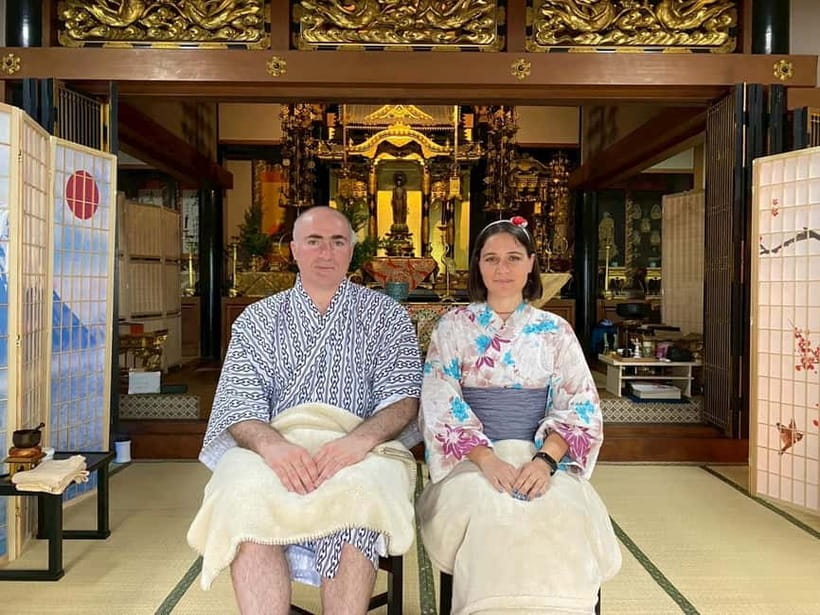
Many Osaka wellness options focus only on the treatment room. This one adds a quiet cultural visit before and after the bodywork. You begin with a welcome drink, change into a simple yukata, and receive an introduction to the temple’s history and Japanese worship customs.
That opening matters. Incense offering and prayer can feel more meaningful when you know what you are doing and why. You are not expected to arrive with prior knowledge of Japanese religious practice, and the English-speaking instructor can explain the basic steps.
The mood is calm rather than grand. This is not a sightseeing tour of several famous landmarks, and it is not designed for a long temple lecture. Instead, the temple setting gives the massage a sense of place. You get a short cultural encounter, then time to settle your mind and body.
The provider, japanese massage 唯一無二, uses the English name Japanese Massage, the one&only. English and Japanese are available. One customer specifically praised Arisa as both a talented masseuse and a guide through the full experience, so ask at booking if you hope to request her.
More onsen and spa afternoons:
- From Osaka: Himeji Castle, Arima Onsen & Mt. Rokko Day Tour
★ 4.6 · 339 reviews - Osaka Temple Cool Foot Bath & Matcha Experience〈45min〉
★ 4.9 · 82 reviews - Osaka: Solaniwa Onsen Hot Spring Visit
★ 4.6 · 51 reviews
The opening ritual: yukata, incense, and kneaded incense
After your welcome drink, you change into a simple yukata. This is not presented as a formal costume rental or a long dressing session. It is a comfortable way to mark the change from ordinary Osaka sightseeing to a slower appointment.
The incense offering follows. You receive guidance on prayer and incense, along with some background on Japanese worship. For many people, this will be the most unfamiliar part of the visit, and the explanation keeps it from feeling like a set of mysterious instructions.
Meditation comes with a temple bell and kneaded incense. The bell provides a clear beginning to the quiet period, while the fragrance helps create a sensory break from the city outside. You do not need to be an experienced meditator. The value is simply having a few minutes in which nobody is asking you to shop, navigate, photograph, or hurry.
One practical point: meditation may be shared with other people. If privacy is important to you, request a private experience in advance. With a maximum group size of three, the setting remains relatively intimate, but it is not automatically a solo retreat.
Foot bath and scrub massage before the main treatment
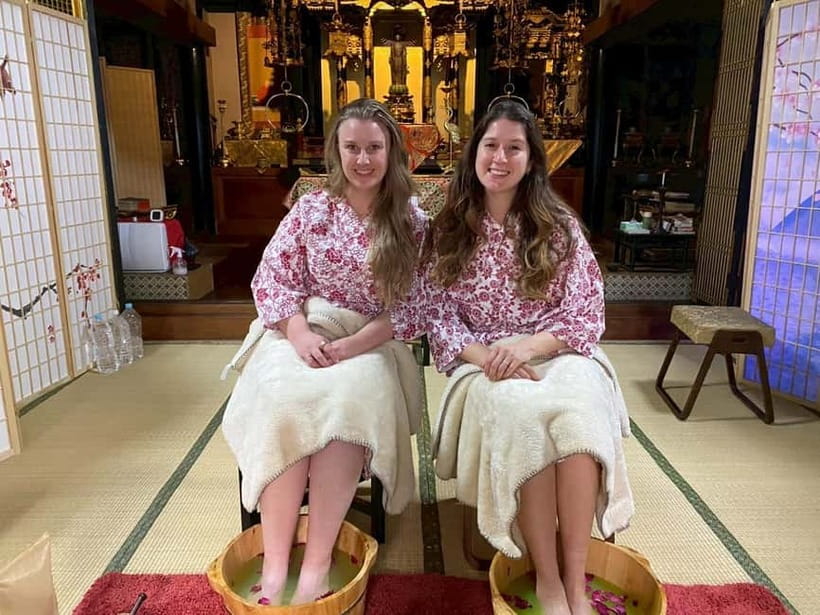
The hands-on portion begins with a foot bath and scrub massage. This is a useful transition, especially if you have spent the day walking around Osaka. It gives you time to slow down before the longer full-body treatment begins.
The foot care is also a reminder that this is more than a standard oil massage. Your feet receive direct attention before the practitioner works upward through the body. The supplied information does not specify the exact scrub ingredients or water temperature, so do not book it expecting a particular spa product or medical foot treatment.
You should also tell the practitioner about any areas that feel sensitive or tense. The experience includes oil massage and myofascial release, but the precise pressure and bamboo techniques can be adjusted only if you communicate what you need.
Warm bamboo and hand oil massage for 90 minutes
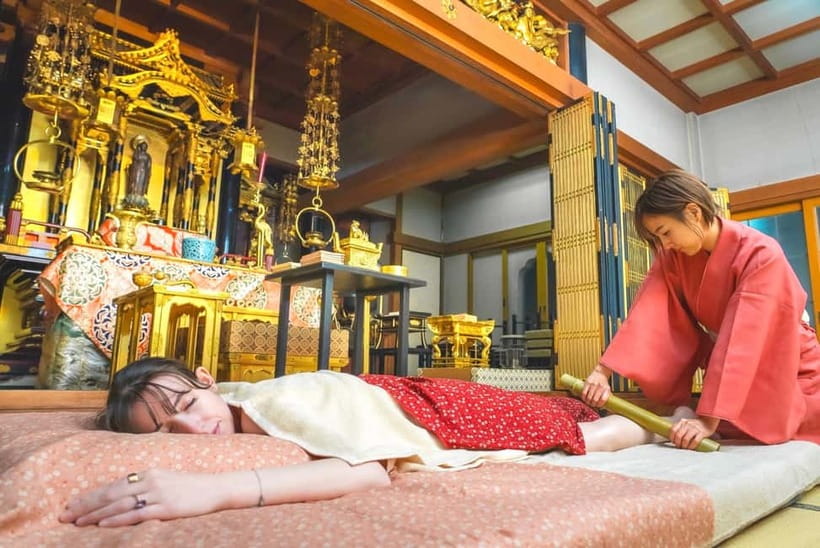
The main attraction is the 90-minute full-body massage. It uses oil, hands, warm bamboo, and myofascial release. Bamboo tools can provide a different sensation from a purely hands-on massage, with broader pressure across areas such as the back, legs, and shoulders.
The word warm is important. The bamboo is heated, creating a soothing feeling as it moves over the body. This is not the same as a hot-stone treatment, and the description does not promise a specific therapeutic result. Think of it as a relaxation-focused massage with a distinctive Japanese-inspired tool.
Myofascial release is aimed at easing tension in the connective tissue around muscles. If you spend long days walking, carry a bag, or sit through flights and train rides, this type of work may be especially appealing. Still, it is best treated as wellness care, not medical treatment. Anyone with an injury, serious health concern, or sensitivity to massage should ask questions before beginning.
Oil massage can leave you feeling slippery afterward. The practical advantage of changing into a yukata is that you are not worrying about your best travel clothes during the treatment. The activity information does not specify shower facilities, so avoid assuming that you can wash off the oil before heading to your next appointment.
The strongest theme in the feedback is relaxation. One customer from Hong Kong described feeling very calm afterward, while an American customer said the massage was wonderful and praised Arisa’s skill. A repeat customer returned for a second temple massage, which is a good sign if you want something gentle and restorative rather than a quick tourist novelty.
More temples and shrines worth the walk:
- Osaka: Minoh, Katsuoji Temple, & Minoh Falls Full-day Tour
★ 4.9 · 172 reviews - Sagano Romantic Train & Arashiyama, Kiyomizudera, Fushimi Inari Taisha Day Tour
★ 4.5 · 171 reviews - Full Day Kyoto Tour : Bamboo Forest, Golden Temple, Fushimi Inari
★ 5.0 · 84 reviews - Osaka: Mind & Spirit Balance Temple Reiki Healing
★ 5.0 · 41 reviews
Matcha, sweets, and a slower finish
The tea ceremony gives the visit a second focus after the massage. You receive matcha and an original Japanese sweet, with cultural and historical explanation along the way.
Do not expect a long formal ceremony with every traditional movement performed at full length. The supplied details describe a matcha experience with explanation, making it suitable for visitors who want an introduction rather than a specialist lesson. You will learn more if you ask questions about the tea, the utensils, and the role of sweets in the ceremony.
The timing works well. After 90 minutes of massage, sitting quietly with tea helps you return to the outside world at a reasonable pace. It is also a better cultural experience than simply drinking matcha at a cafe, because the tea is connected to the temple setting and the host’s explanation.
This part has received especially warm praise. One American customer came mainly for the massage but found the tea ceremony highly informative and relaxing. A Swiss customer described the treatment and tea ceremony as a particularly special experience, then booked a facial for the next day. That suggests the tea segment is not filler added to lengthen the appointment. For some people, it becomes one of the most memorable parts.
The original sweets are included. Since no flavor or type is specified, you should be ready for a seasonal or house-made Japanese sweet rather than a particular confection.
A yukata photo to take home
The experience includes complimentary smartphone photos in the temple. You wear the yukata, and the photos serve as a simple keepsake of the visit.
This is a small detail, but it adds value. A massage is pleasant and then disappears into the blur of a trip. A few well-timed phone photos give you something concrete to remember, without requiring you to arrange a separate photographer or ask another customer to take pictures.
Keep your expectations modest. The information promises smartphone photos, not a professional portrait session, printed images, or a full photo package. You are paying for the cultural visit and bodywork first. The photo is a thoughtful extra.
What the $129 price buys you
At $129 per person, this is not the cheapest massage in Osaka. It becomes easier to justify when you count the full two-hour visit: a welcome drink, yukata, temple introduction, prayer and incense, meditation, foot bath, scrub massage, 90-minute oil and bamboo treatment, matcha, sweets, and smartphone photos.
A standard massage may give you more treatment time for less money. On the other hand, it will not normally include a temple setting, guided incense offering, Zen meditation, tea ceremony, or yukata photo. You are paying for a combined cultural and wellness experience, not just minutes on a massage table.
For a couple, the format can be a pleasant shared pause during a busy trip. One French couple found it helped them relax during their holiday and praised both the welcome and the treatments. For solo visitors, the three-person limit makes the appointment feel more personal than a large group activity.
The best value comes when you genuinely want both parts. If you only want strong sports massage, spend your money on a specialist massage clinic. If you want a gentle cultural activity with bodywork, this price is more reasonable.
Timing, location, and the one map mistake to avoid
The listed duration is two hours, while the massage itself is 90 minutes. Allow the full two hours, especially if you want to enjoy the tea and take photos without rushing to your next stop.
The meeting-point instructions are unusually important. When using Google Maps, search for Japanese Massage, the one&only, not only the temple name. Entering the temple’s name may take you to a back entrance, where it is easy to get lost. If needed, search for the restaurant Tossa de coracao. The meeting point is right next to it.
This is the sort of small Osaka detail that can save you a stressful start. Arrive with enough time to find the correct entrance, since a calm temple appointment begins poorly if you are circling the block in a hurry.
The activity offers English and Japanese instruction. Three-person reservations are available by email. If you are booking for three, handle that request directly rather than assuming the standard online booking process will cover it.
Who will enjoy this experience most
I would recommend this for you if you want a quiet change of pace after several days of Osaka sightseeing. It suits couples, solo visitors, and small groups who like cultural explanation but do not want a long formal tour.
It is also a good choice if you are curious about Japanese rituals but feel unsure about participating. The temple visit, incense offering, bell, kneaded incense, and tea ceremony give you structure and guidance.
You may want something else if you dislike oil massage, prefer a very firm clinical treatment, or need complete privacy during meditation. The massage style is described as relaxing and restorative, with bamboo and myofascial release, but no specific pressure level is guaranteed.
Families should check the age suitability directly before booking, since no age policy is provided. The same goes for accessibility, shower access, and medical conditions. These details are not specified, so ask before paying if they matter to you.
The reference to Reiki describes a non-contact Japanese energy healing method intended to support relaxation and emotional balance. The listed treatment centers on oil massage, bamboo, foot care, meditation, and tea, so ask the provider if Reiki is part of your exact session or simply offered as background information.
The practical booking choice
You can cancel up to 24 hours before the activity for a full refund. You can also reserve now and pay later, which helps if you are building an Osaka schedule around changing train times or weather.
The experience has a rating of 5 from 14 reviews, and the strongest praise centers on three things: the calming temple atmosphere, the quality of the massage, and the warmth of the people running it. The feedback also includes repeat business, which matters more here than a single enthusiastic first visit.
Book it if you want an unhurried two-hour reset with real cultural content. The matcha, incense, and meditation are not mere decorations around a massage. They shape the mood of the visit.
Skip it if your only goal is the lowest-cost massage or a highly technical treatment. At $129, this is best understood as a small cultural outing plus a substantial massage, with a photo and sweets included.
FAQ
How long does the Osaka temple massage experience last?
The full experience lasts two hours. The warm bamboo and hand oil massage portion lasts 90 minutes.
What is included in the experience?
The experience includes a welcome drink, simple yukata, temple visit, incense offering, prayer, Zen meditation, kneaded incense, foot bath, scrub massage, warm bamboo and hand oil massage, matcha, an original Japanese sweet, and smartphone photos.
How much does the experience cost?
The listed price is $129 per person.
Is the experience available in English?
Yes. Instruction is available in English and Japanese.
How many people can join?
The activity is limited to three participants. Zen meditation may be shared with other people unless you request a private experience.
How do I find the meeting point?
Enter Japanese Massage, the one&only, in Google Maps. Do not use only the temple name, since that may direct you to the back entrance. You can also search for the restaurant Tossa de coracao, which is right next to the meeting point.
Can I cancel or pay later?
Yes. You can cancel up to 24 hours in advance for a full refund. Reserve now and pay later is also available.
Just added around Osaka
- Osaka Early Morning Osaka Castle Tour Avoid Crowds★ 5.0 · 3 reviews
- Guided Tour of Some Attractions in Osaka by Private Car★ 5.0 · 3 reviews
- Nara Day Trip from Osaka with a Licensed Guide★ 5.0 · 3 reviews
- Private Transfer Between Kyoto and Kansai Airport KIX★ 5.0 · 3 reviews
- Shared Arrival Transfer: Osaka Itami Airport to Osaka City★ 5.0 · 3 reviews
- Osaka: Sushi Making Class and Dotonbori Food Tour★ 4.7 · 3 reviews
- Osaka Night Photography Workshop★ 5.0 · 3 reviews
- Kyoto Full day Tour Kinkakuji, Kiyomizu-dera and Fushimi Inari★ 4.5 · 3 reviews
Osaka Temple & Shrine Tours, compared.
Minoh, Katsuoji Temple, & Minoh Falls Full-day Tour
Read our review →
Sagano Romantic Train & Arashiyama, Kiyomizudera, Fushimi Inari Taisha Day Tour
Read our review →Full Day Kyoto Tour : Bamboo Forest, Golden Temple, Fushimi Inari
Read our review →
Osaka Temple Cool Foot Bath & Matcha Experience〈45min〉
Read our review →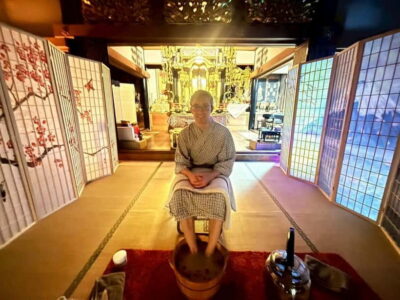
Katsuo-ji Temple, Arashiyama Forest, & Nara Park
Read our review →
Minoh Waterfall & Katsuo-ji Temple Half-Day Tour
Read our review →
Osaka Half-day E-bike Adventure: Minoh Falls & Katsuoji Temple
Read our review →Browse the lists this tour appears in