
Reviewed · SHINSEKAI & RETRO OSAKA TOURS
Let’s Dance Bon Odori Japanese folk Dance near Tsutenkaku
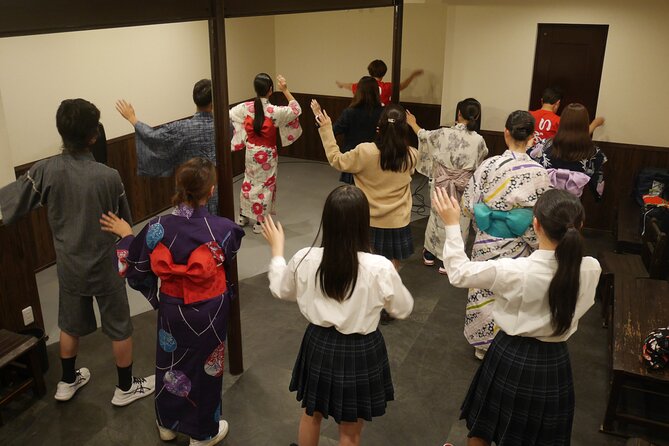
Bon Odori is Japanese festival dancing with an unexpectedly easygoing beat. At Ebisuza, near Osaka’s Tsutenkaku Tower, you learn the basic steps, join a circle, and let the rhythm carry you. The class can also include live shamisen and taiko, giving the 90 minutes more character than a standard dance lesson.
I like the low-pressure teaching style and the chance to handle traditional instruments. I also like the location, since you can pair the class with Tsutenkaku, Isshinji Temple, and a meal of takoyaki, okonomiyaki, or kushikatsu.
The main consideration is that this is a small cultural activity, not a full sightseeing tour. If you want a detailed lesson in Japanese music or a long guided visit around Osaka, you may find the 90-minute format too short.
In This Review
- Key points to know before you book
- Why Bon Odori works so well for first-time dancers
- Inside Ebisuza near Tsutenkaku
- The first half: watch, copy, and find the rhythm
- The second half: dance more freely
- Shamisen and taiko add a real hands-on moment
- Tsutenkaku and Isshinji Temple: what surrounds the class
- The value of $19.60
- Who will enjoy this Osaka activity most
- Timing your visit around Tsutenkaku
- Should you book Let’s Dance Bon Odori?
- FAQ
- How long does the Bon Odori experience last?
- Where does the activity begin and end?
- What drink is included?
- Do I need previous dance experience?
- How many people can join the class?
- Can I cancel for a full refund?
Key points to know before you book
- The dance uses a samba-like rhythm: You do not need formal dance experience to join the circle.
- The instructor starts with simple steps: The early part is structured, while the second half gives you room to dance more freely.
- Live music may be part of the fun: Shamisen and taiko are featured in the experience, and some participants get to try the instruments.
- You choose your session time: Early-afternoon and evening departures make it easy to fit around Osaka sightseeing.
- The studio is near Tsutenkaku: Isshinji Temple, the zoo, and local food spots are close by.
- The group is capped at 15 people: That allows for a more personal class without making it feel like a private lesson.
Why Bon Odori works so well for first-time dancers
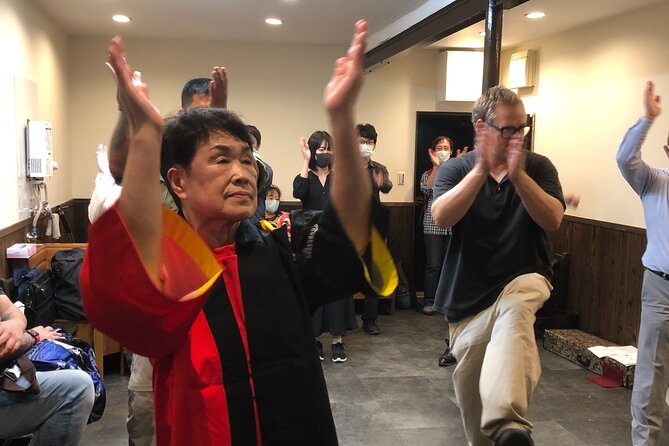
Bon Odori is often linked with Japanese summer festivals, when people dance in circles around a raised platform. You do not need to visit Osaka during festival season to try it here. Ebisuza presents the dance as a year-round cultural activity, which is useful if your trip does not match the traditional summer calendar.
The basic idea is simple. The instructor demonstrates the movements, you repeat the steps, and the group gradually forms a circle. Bon Odori has rules, but not the sort that make you freeze up when you miss one. The movement is designed to be repeated, so you can watch the person in front of you and pick up the pattern.
The samba-like rhythm gives the class a playful feel. It is less formal than a performance rehearsal and more social than a technical dance lesson. You may still need a few minutes to find the timing, but the structure gives you a clear way in.
I like this kind of activity for visitors who want contact with Japanese culture without having to sit quietly through a lecture. You are learning through movement. The memory of the trip becomes physical: a hand gesture, a step, a turn, and the sound of the music.
More of retro Shinsekai and the backstreets:
- Osaka: Shinsekai Food Tour with 13-15 Dishes at 5 Eateries
★ 4.8 · 2,204 reviews - Osaka Local Foodie Walking Tour in Dotonbori and Shinsekai
★ 5.0 · 985 reviews - Osaka: Tsutenkaku Tower Entry Ticket
★ 3.8 · 125 reviews
Inside Ebisuza near Tsutenkaku
The meeting point is at 1-chōme-3-13 Ebisuhigashi in Naniwa Ward. The studio, Ebisuza, is in central Osaka, near Tsutenkaku and the zoo. It is also close to restaurants and public transportation, so you do not have to make a long journey for a 90-minute activity.
This setting matters. You can build the class into a half-day around Shinsekai, the district associated with Tsutenkaku and Osaka’s classic local food culture. Arrive with time to spare, then explore afterward rather than treating the dance as an isolated appointment.
The activity ends back at the meeting point. That makes planning simple, especially if you have left a bag at your hotel or want to continue sightseeing nearby. The studio is not presented as a grand stage or formal theater. Its appeal is the direct contact between instructor, music, and participants.
The group limit is 15 people. That is large enough to create a proper dance circle, but small enough for the instructor to see how people are managing. A class this size should feel more approachable than a large public festival, where it can be difficult to understand the steps from the back.
The first half: watch, copy, and find the rhythm
The instructor begins by demonstrating Bon Odori. Your first task is not to perform perfectly. You watch the sequence, try the basic steps, and get used to moving with the beat.
This is the part where the class earns its place on an Osaka itinerary. You are not simply watching a cultural demonstration. You are learning a form that is normally shared by a whole community during a festival. The repeated movement also means you can improve quickly without memorizing a long routine.
The steps are described as slow and easy to follow. That makes the class suitable for beginners and for people who are not confident dancers. One participant even took part while dealing with knee pain, though that should not be read as medical advice. If you have a physical limitation, use your own judgment and tell the instructor before you begin.
You may still find the floor tiring if you are uncomfortable standing or stepping for 90 minutes. The supplied information does not specify seating, footwear rules, or a detailed accessibility plan, so ask Ebisuza directly if those points matter to you.
The second half: dance more freely
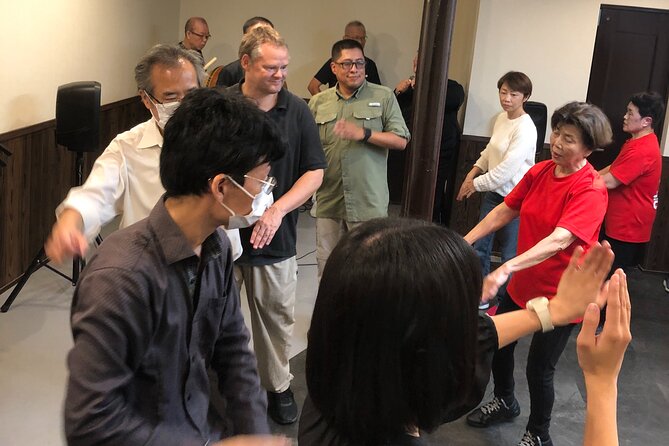
Once the basic pattern is familiar, the class loosens up. Bon Odori has few strict rules, and the second half is meant to let you move with more freedom. You continue dancing in a circle, but the focus shifts from copying each movement to enjoying the shared rhythm.
This is where the activity feels most social. The circle gives everyone a common point of focus, and no single person has to perform alone. If you lose the step, you can simply watch and rejoin. That makes the experience friendly for couples, families, and small groups of friends with different levels of confidence.
The drink also fits this relaxed part of the class. You can choose coffee, tea, water, or a canned alcoholic beverage. The phrase dance while feeling tipsy is part of the activity’s playful spirit, but alcohol is optional. Water, coffee, and tea are available if you want to stay clear-headed or are taking the class earlier in the day.
I would choose the nonalcoholic option if you are dancing in Osaka’s heat or have a full evening ahead. If you pick the canned alcoholic drink, keep in mind that it is a small refreshment included with the class, not a separate tasting experience.
More sumo, taiko and stage shows:
- Osaka: Sumo Show & Experience w/ Optional Kimono & Hot Pot
★ 4.5 · 609 reviews - Osaka: Sumo Stage Show with Bento or Snack + Fight & Photo
★ 4.3 · 364 reviews - Osaka: English Stand Up Comedy Show at Osaka Comedy Club
★ 4.7 · 203 reviews - Osaka: UTAGE Japanese Taiko Live Show
★ 4.9 · 167 reviews
Shamisen and taiko add a real hands-on moment

The strongest special feature is the chance to encounter Japanese instruments alongside the dance. Shamisen, a three-stringed instrument, and taiko drums are part of the activity. Some sessions include live playing, and participants may have the opportunity to touch and try the instruments.
That changes the pace in a good way. A dance class alone can feel repetitive if you are not used to the steps. Adding shamisen and taiko gives you another way to connect with the music. You may find yourself paying closer attention to the beat once you have held an instrument yourself.
The live shamisen and taiko performances have been especially praised for adding emotion and energy. Do not assume every class will unfold as a full concert, since the precise balance between dancing, demonstration, and instrument time is not specified. Still, these instruments are central enough to the experience that they are worth treating as a major reason to book.
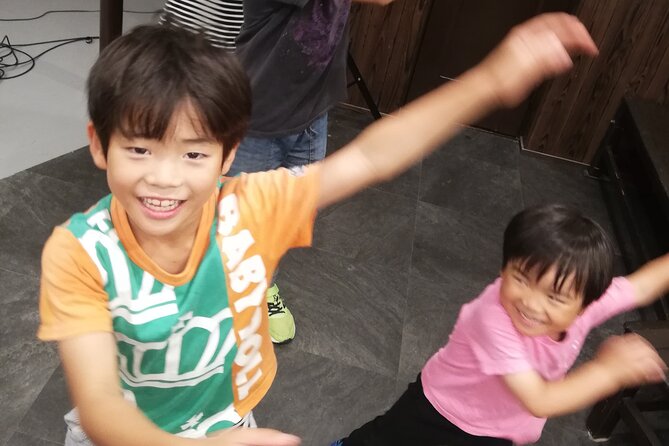
For children and families, the instruments may be the easiest entry point. A child who feels shy about dancing might first become interested through the drum or shamisen, then join the circle later. For adults, it is a chance to take part rather than simply photograph a cultural object.
Tsutenkaku and Isshinji Temple: what surrounds the class
Tsutenkaku is listed as the first stop, and the studio is located close to the tower. The activity gives you a convenient base in one of Osaka’s best-known sightseeing areas. You can combine the class with a visit to the tower or use the neighborhood as your meal stop before or after dancing.
The nearby food options are part of the appeal. Takoyaki, okonomiyaki, and kushikatsu are specifically noted around Ebisuza. If you want a classic Osaka evening, schedule the dance before dinner and eat afterward. That order also lets you enjoy the included drink without replacing a proper meal.
Isshinji Temple is listed as the second stop. It is near the activity area and gives you a quieter cultural counterpoint to the dance and food streets around Tsutenkaku. The supplied details do not describe a guided temple visit or a separate temple tour, so think of Isshinji as part of the surrounding itinerary rather than assuming the instructor will lead you through its grounds.
The zoo is also nearby. This makes the location useful for families or anyone planning a wider day in the area. The Bon Odori session itself lasts about an hour and 30 minutes, so you can place it between other plans without giving up an entire day.
The value of $19.60
At $19.60 per person, the price is reasonable if you want an active cultural experience rather than another observation-only stop. You are paying for instruction, the dance session, the use of the studio, and a choice of drink. The possible shamisen and taiko element gives the class extra value, especially if you have not had another way to try Japanese instruments.
The cost is less compelling if you are only looking for a short performance. This is participatory. You need to give the class your time and attention, and the main reward comes from learning enough to join in. If you dislike group activities or prefer museums and temples, the same money might serve you better elsewhere.
The small group limit helps justify the price. A maximum of 15 people gives the instructor room to demonstrate and correct the basic movements without turning the class into a crowded event. It also creates enough people for the circle to feel like a real group dance.
The free cancellation policy adds useful flexibility. You can cancel up to 24 hours before the start time for a full refund. Changes or cancellations made less than 24 hours before the session are not accepted for a refund, and the cut-off follows Osaka local time.
Who will enjoy this Osaka activity most
I would recommend Ebisuza to you if you want one of these experiences:
- A gentle introduction to Japanese folk culture
- An activity that works for beginners
- Something social for a couple, family, or small group
- A break from temples, shopping, and food stops
- A cultural session close to Tsutenkaku
- A chance to try taiko or shamisen as well as dance
The class is also a good fit if you are traveling with people who have different interests. One person can enjoy the music, another can focus on the cultural background, and another can simply have fun with the steps. You do not need to arrive as a dance enthusiast.
I would think twice if you want a private lesson, a long historical explanation, or a polished stage show. The format is built around shared participation, not one-on-one coaching. It is also not a substitute for attending a large traditional Bon Odori festival, where the setting and local crowd would be very different.
The experience is open to most participants, and service animals are allowed. Since the activity involves standing and dancing, contact the provider in advance if you need specific information about seating or physical access.
Timing your visit around Tsutenkaku
You can choose an early-afternoon or evening session. The best choice depends on how you want to use the Shinsekai area.
An afternoon class can break up a day of sightseeing. You might visit Tsutenkaku or the nearby zoo before dancing, then stop for food afterward. This option may suit families and people who prefer to finish organized activities before dinner.
An evening session fits naturally with Osaka’s food culture. You can explore the area during the day, attend the class, and then eat takoyaki, okonomiyaki, or kushikatsu nearby. The drink included with the activity becomes a pleasant pause before dinner, though it is not intended to replace one.
Allow enough time to find the meeting point at Ebisuhigashi. The provider sends confirmation when you book, and the activity is near public transportation. I would still avoid arriving at the last second, since a dance class is easier to enjoy when you are not entering hurriedly.
Should you book Let’s Dance Bon Odori?
Book it if you want to do something with Japanese culture instead of simply looking at it. The clear instruction, slow steps, shared circle, nearby sights, and possible live shamisen and taiko make this a warm, accessible introduction to Bon Odori.
At $19.60, the class offers good value for 90 minutes, particularly if you take advantage of the location by adding Tsutenkaku, Isshinji Temple, or a local meal. Just keep your expectations in the right place: this is a friendly hands-on lesson, not an in-depth music course or a guided tour of every nearby sight.
If you can spare the time and do not mind dancing with a small group, I would book it. Choose the afternoon or evening slot that fits your plans, wear something you can move in, and be ready to repeat a few simple steps until the circle begins to feel natural.
FAQ
How long does the Bon Odori experience last?
The activity lasts approximately 1 hour and 30 minutes.
Where does the activity begin and end?
It begins at 1-chōme-3-13 Ebisuhigashi, Naniwa Ward, Osaka, 556-0002, Japan, and ends back at the same meeting point.
What drink is included?
You can choose coffee, tea, water, or a canned alcoholic beverage.
Do I need previous dance experience?
No specific dance experience is required. The instructor demonstrates the Bon Odori and teaches the basic steps before the group dances more freely.
How many people can join the class?
The activity has a maximum group size of 15 people.
Can I cancel for a full refund?
Yes. You can cancel at least 24 hours before the start time for a full refund. Cancellations or changes made less than 24 hours before the start time are not accepted for a refund.
Just added around Osaka
- Nara Day Trip from Osaka with a Licensed Guide★ 5.0 · 3 reviews
- Osaka Early Morning Osaka Castle Tour Avoid Crowds★ 5.0 · 3 reviews
- Guided Tour of Some Attractions in Osaka by Private Car★ 5.0 · 3 reviews
- Private Transfer Between Kyoto and Kansai Airport KIX★ 5.0 · 3 reviews
- Shared Arrival Transfer: Osaka Itami Airport to Osaka City★ 5.0 · 3 reviews
- Osaka: Sushi Making Class and Dotonbori Food Tour★ 4.7 · 3 reviews
- Osaka Night Photography Workshop★ 5.0 · 3 reviews
- Kyoto Full day Tour Kinkakuji, Kiyomizu-dera and Fushimi Inari★ 4.5 · 3 reviews
Shinsekai & Retro Osaka Tours, compared.

Shinsekai Food Tour with 13-15 Dishes at 5 Eateries
Read our review →
Osaka Local Foodie Walking Tour in Dotonbori and Shinsekai
Read our review →

Shinsekai Food Tour – 13 Dishes at 5 Local Eateries
Read our review →
Night Soul Food Tour in Shinsekai with a local guide
Read our review →
Osaka Morning Tour: Shitennoji Temple, Shinsekai &Doutonbori
Read our review →Browse the lists this tour appears in