

Reviewed · OSAKA CASTLE TOURS
Ramen-Making Experience in the Osaka Castle Area with Souvenir
The best part of this Osaka class is that you make the whole bowl, not just a quick garnish or instant noodle snack. You mix Japanese wheat flour into fresh noodles, prepare tender chicken chashu, choose a soup base, and sit down to eat the result. The class takes place near Osaka Castle, so it fits neatly into a sightseeing day.
I like the small maximum group of eight, which gives you room to work and ask questions. I also like the practical teaching: the English-speaking instructors guide you through each step, and the class takes place in a spotless kitchen decorated with ramen and Japanese touches.
The main consideration is the price, $85.39 per person. That is more than a casual bowl of ramen, so this makes sense for you if you want a hands-on food lesson, a full meal, and a souvenir, not simply lunch. The two-hour format also means you should plan around it rather than treat it as a quick stop.
In This Review
- Key Points
- Making a Full Bowl Instead of Just Watching
- Fresh Noodles With Japanese Wheat Flour
- Choosing Tonkotsu, Shoyu, or Miso
- Preparing Chicken Chashu in Original Broth
- Eating the Ramen You Made
- A Studio Full of Japanese Details
- Getting There From Osaka Castle and Umeda
- What the $85.39 Price Really Covers
- Who Will Enjoy This Most
- Booking and Practical Details
- Should You Book This Ramen Class?
- FAQ
- How long does the ramen-making experience last?
- Where does the class meet?
- Is the studio close to Osaka Castle?
- Which train stations are near the studio?
- Which types of ramen soup can I choose?
- Do I make the noodles myself?
- Is the class suitable for beginners and families?
- How many people can join the class?
- Can I cancel for a full refund?
Key Points
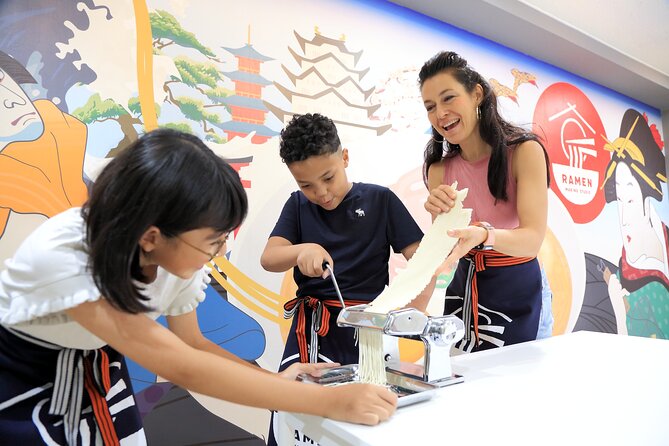
- Make noodles from Japanese ramen flour: You create your own chewy noodles rather than watching a demonstration.
- Pick your soup base: Choose tonkotsu, shoyu, or miso, each built from a recipe connected to a well-known ramen shop.
- Prepare chicken chashu: The meat is simmered in the studio’s original broth before becoming part of your bowl.
- Stay close to Osaka Castle: The studio is about a 20-minute walk from the castle and less than 10 minutes from several stations.
- Learn in English: The instructors can explain techniques and answer questions as you work.
- Take home a souvenir: The class ends with a gift, plus the memory of a meal you made yourself.
Making a Full Bowl Instead of Just Watching

Many cooking activities give you one narrow job, such as folding dumplings or stirring a sauce. This one covers the main building blocks of ramen. You work with the noodles, meat, and soup, then bring them together in one finished bowl.
That matters because ramen is less about a single ingredient than about balance. The noodles need the right texture. The broth needs enough flavor to support them. The chashu adds meatiness and softness. By handling each part, you get a clearer idea of why a good bowl tastes the way it does.
The experience lasts about two hours, which is enough time for real participation without turning the class into a full-day cooking course. You are not expected to arrive with kitchen skills. It is open to all skill levels and designed to be family-friendly.
I would plan to arrive ready to work with your hands. The class is practical rather than formal, and the strongest praise has focused on the clear instructions, friendly staff, and amount of participation. You should expect guidance throughout instead of being left to figure out the process alone.
More tours of Osaka Castle and its grounds:
- Osaka Castle: Museum and Tower Entry Ticket
★ 4.5 · 2,380 reviews - Osaka Castle Walking Tour and Castle Tower Admission
★ 5.0 · 561 reviews - 5-Hour Osaka Bike Tour to the Neighborhood of Osaka Castle
★ 5.0 · 319 reviews
Fresh Noodles With Japanese Wheat Flour
The noodle session is the heart of the class. You use Japanese wheat flour specially made for ramen to create your own noodles. Fresh noodles have a springy, chewy texture that is quite different from dried noodles, and the class lets you feel that change for yourself.
This is also the part most likely to appeal to families. Children can take part in a visible, hands-on step, while adults get a useful technique to remember. The class is not only about eating ramen. You get to see how flour becomes the foundation of the dish.
The information provided does not specify the exact tools or shaping method, so do not expect a particular style of noodle cutting or stretching. What is clear is that you make the noodles from scratch and cook them as part of your finished meal.
I like this approach because it gives you something you can try again at home. You may not reproduce the studio’s recipe exactly, but you will leave with a better sense of noodle texture and the role of fresh dough in ramen.
Choosing Tonkotsu, Shoyu, or Miso
Once you reach the soup stage, you choose among three familiar ramen styles:
- Tonkotsu: A hearty choice for you if you like a fuller, pork-style ramen profile.
- Shoyu: A soy sauce-based option with a savory character.
- Miso: A good pick if you prefer the deeper, fermented taste associated with miso ramen.
The studio bases each soup on secret recipes from well-known ramen shops. That gives the choice some useful context, but you should not expect a restaurant kitchen or a long professional broth-making session during a two-hour class. The value is in learning the flavor structure and assembling your own bowl.
If you are unsure, ask the instructor for help. The English-speaking staff can answer questions in real time, and this is exactly the sort of decision where a short explanation can help. You can also choose based on what you already enjoy at ramen shops.
The soup selection makes the activity more personal. Two people in the same class can work with different flavors and compare the results. For a family or small group, that adds variety without making the process difficult.
Preparing Chicken Chashu in Original Broth
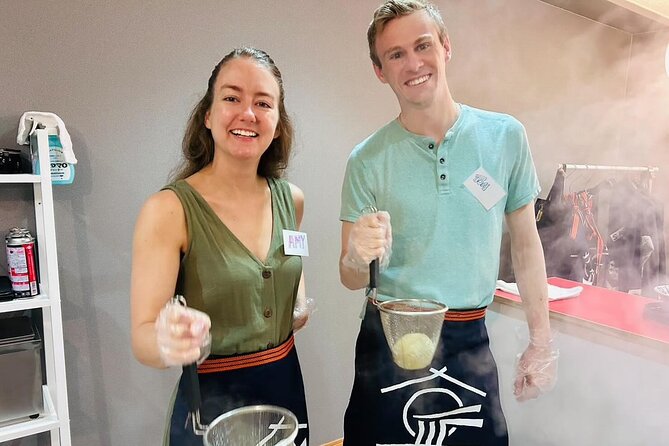
This class uses chicken for its chashu, rather than presenting the usual pork version many people associate with ramen. You prepare tender, juicy chicken simmered in the studio’s original broth, then use it as a topping for your soup.
That is an interesting detail for anyone who wants to learn beyond the standard restaurant bowl. Chicken chashu can be lighter in character, and the simmering method shows how meat takes on flavor from the cooking liquid.
You should expect the instructors to guide you through the preparation. The class is built for beginners, and the strongest praise has centered on professional instruction and the right amount of interaction. You get help without losing the feeling that you made the dish yourself.
The use of chicken may be a benefit or a limitation, depending on what you want. If your main goal is to recreate classic pork-belly ramen, this will not be an exact match. If you enjoy trying a different topping and want to learn a technique you can repeat at home, it adds useful variety.
More ramen and gyoza classes:
- Osaka: Five Must-See Highlights Walking Tour & Ramen Lunch
★ 4.7 · 411 reviews - Osaka: Ramen and Gyoza Cooking Class in Dotonbori
★ 5.0 · 378 reviews - Ramen and Gyoza Cooking Class in Osaka
★ 5.0 · 202 reviews - Walking Tour of Osaka’s 5 Must-See Sights, with Ramen for Lunch
★ 5.0 · 158 reviews
Eating the Ramen You Made
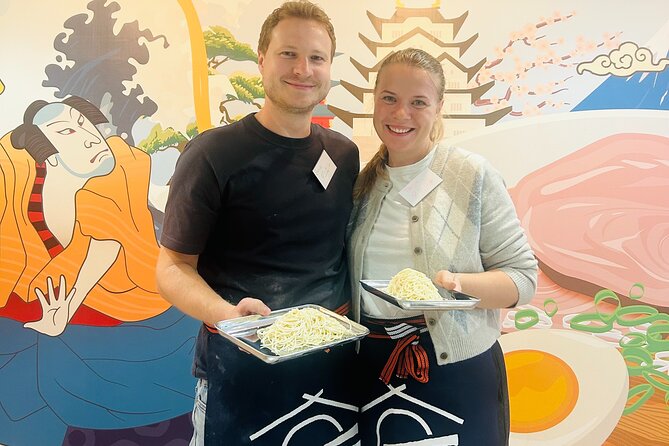
At the end, the separate pieces become lunch or dinner: fresh noodles, your chosen soup, and homemade chicken chashu. The finished bowl is the payoff, but it is also a useful test of what you learned.
The meal should feel more satisfying because you handled the ingredients yourself. You have seen the work behind the noodles and broth, and you can taste how the parts fit together. The class does not simply give you a bowl of ramen and call it a cooking experience.
Several strong comments have praised the food as tasty and the finished ramen as beautiful. The class also received praise for its clean kitchen, which matters when you are cooking in an unfamiliar place. A spotless work area helps you focus on the process.
Still, keep your expectations in proportion. This is a short class, not professional chef training. You will learn the main steps and techniques, but the exact recipes remain the studio’s specialty. Think of it as a useful introduction with a meal attached, not a complete ramen apprenticeship.
A Studio Full of Japanese Details
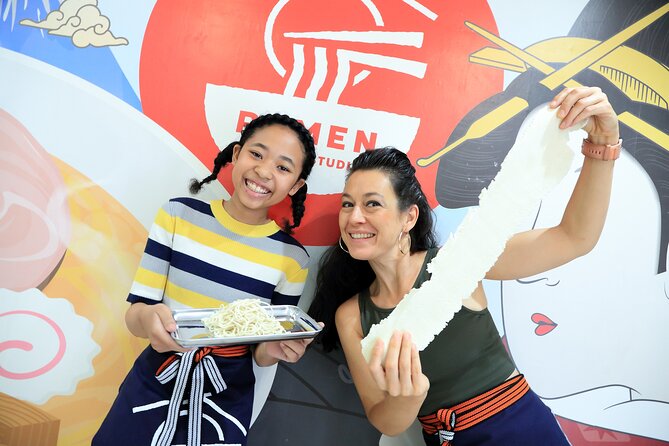
The room is designed to make the setting part of the experience. The walls feature ramen and Japanese motifs, giving you a good backdrop for photos while you cook. Staff may take photos and videos during the class for social media or advertising.
If you do not want your image used, tell the staff before the activity begins. That request needs to be made in advance of the class starting, so do not wait until the end.
One unusual feature is the entrance glass door. It was made more than 100 years ago using a technique that no longer exists. You will also find various objects connected to Japanese culture inside the studio, and the staff introduce some of them during your visit.
These details help the class feel like more than a rented kitchen. You are learning about ramen, but you are also spending time in a space that has been arranged to connect cooking with Japanese culture. The cultural material is a supporting feature rather than a separate museum visit, so keep your expectations modest.
The photo-friendly decoration may be especially useful if you want a few records of the experience. Just remember that the room is still a working cooking studio. The focus remains on preparing and eating ramen.
Getting There From Osaka Castle and Umeda
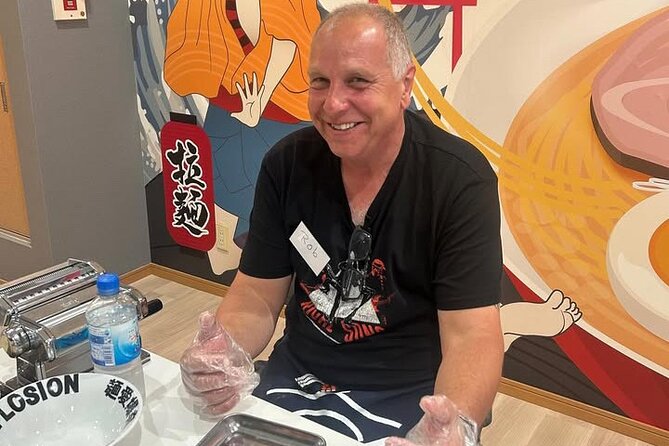
The studio address is in Higashitenma, Kita Ward, Osaka, at 1-chōme 4, Higashitenma Heights, postal code 530-0044. It is about a 20-minute walk from Osaka Castle, making the class easy to pair with castle sightseeing if your schedule allows enough time.
Three nearby stations offer practical alternatives:
- Tenmabashi Station, Exit 13, about a 10-minute walk
- Minamimorimachi Station, Exit 6, about a 10-minute walk
- Osaka Temmangu Station, Exit 7, about a 5-minute walk
The station information is one of the strongest planning points here. You are not dependent on a single route, and Osaka Temmangu is particularly close. From the studio, Umeda Sky Building and Namba are each about 20 to 30 minutes away by train.
Morning and late-afternoon classes are available. A morning booking can work before more sightseeing, while a late-afternoon session may fit after Osaka Castle. Since the class takes about two hours, add time for walking from the station and for finding the entrance.
The activity begins and ends at the same meeting point. That makes the schedule easier to understand, but it also means you need to arrange your own transport to and from the studio. A mobile ticket is provided, and booking confirmation arrives at the time of booking.
What the $85.39 Price Really Covers
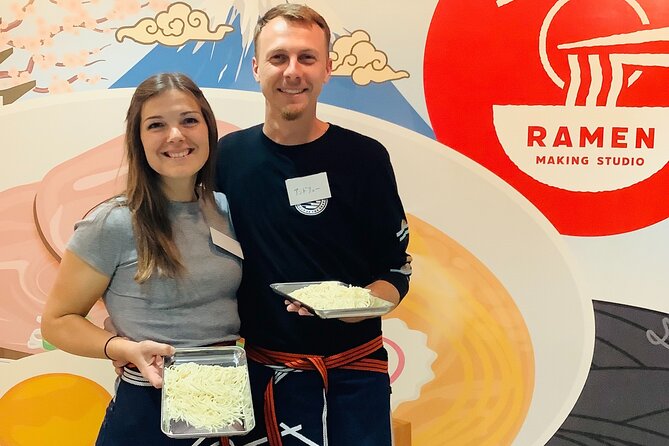
At $85.39 per person, this is not a budget meal. You could buy ramen in Osaka for far less, and you should not book this solely because you want something inexpensive to eat.
The price makes more sense when you count the full package: about two hours of instruction, fresh noodle preparation, chicken chashu, a choice of soup base, the finished meal, a small-group setting, cultural details, and a souvenir. You are paying for participation and teaching, not only ingredients.
The group limit of eight is important. A large cooking class can turn into a demonstration where you wait for a turn. With fewer people, you have a better chance to ask questions and receive corrections while working. The available information does not promise private instruction, but the maximum group size is small enough to keep the lesson personal.
I would call the value strongest for families, couples, food-focused visitors, and anyone who wants an activity with a clear result. It is less attractive for a person who already knows how to make ramen or simply wants a quick, cheap lunch.
The souvenir adds a small extra benefit, though its exact type is not specified. Do not choose the experience based on the gift alone. The noodles, soup, meal, and instruction are the main value.
Who Will Enjoy This Most
This is a good choice for you if you want an activity that mixes food, culture, and practical instruction. Beginners are welcome, and the English-speaking instructors make it easier to follow the process and ask questions as you go.
Families should find the hands-on format appealing, particularly if younger participants enjoy mixing, shaping, and assembling food. The two-hour length is long enough to feel worthwhile but short enough to fit into a busy Osaka itinerary.
It also suits people who have already visited a few ramen shops and want to understand the dish more clearly. Making your own noodles gives you a better sense of texture, while choosing the soup lets you compare styles in a direct way.
You may want to skip it if you are looking for a traditional pork chashu lesson, a professional-level cooking course, or the lowest-cost meal in Osaka. The chicken topping and short class format are important details to consider before booking.
The experience has received a 5 out of 5 rating from 22 reviews, with 100 percent recommending it. The most praised points are consistent: friendly staff, excellent English, clear instruction, a very clean kitchen, tasty ramen, and plenty of hands-on work. Those are the qualities I would give the most weight when deciding.
Booking and Practical Details
Free cancellation is available if you cancel at least 24 hours before the scheduled start time. Cancellations or changes made less than 24 hours before the experience are not accepted for a refund, and the cut-off uses Osaka local time.
The class is near public transportation, but the meeting point is a specific address rather than Osaka Castle itself. Allow time to reach Higashitenma and identify the studio. The close station options make this manageable, especially Osaka Temmangu Station, which is listed as about five minutes away.
Tell the staff before the class if you do not want photos or videos used for social media or advertising. The activity ends back at the meeting point, so you can plan your next stop from there.
Should You Book This Ramen Class?
I would book this if you want to make a complete bowl of ramen from scratch and enjoy learning in a small group. The combination of fresh noodles, chicken chashu, three soup choices, English instruction, and a souvenir gives the two-hour class a clear purpose.
At $85.39, it is best treated as a cooking activity plus a meal, not a restaurant substitute. Book it for the hands-on work and the chance to understand ramen better. If that sounds more appealing than simply ordering a bowl, this is a practical and well-located addition to an Osaka itinerary.
FAQ
How long does the ramen-making experience last?
The activity lasts approximately two hours.
Where does the class meet?
It meets at Higashitenma 1-chōme 4, Higashitenma Heights, in Osaka’s Kita Ward, postal code 530-0044.
Is the studio close to Osaka Castle?
Yes. The studio is within walking distance of Osaka Castle, about 20 minutes away.
Which train stations are near the studio?
Tenmabashi Station, Exit 13, and Minamimorimachi Station, Exit 6, are each about a 10-minute walk away. Osaka Temmangu Station, Exit 7, is about five minutes away.
Which types of ramen soup can I choose?
You can choose tonkotsu, shoyu, or miso soup.
Do I make the noodles myself?
Yes. You use Japanese wheat flour specially made for ramen to create fresh noodles.
Is the class suitable for beginners and families?
Yes. The class is family-friendly and open to all skill levels.
How many people can join the class?
The maximum group size is eight people.
Can I cancel for a full refund?
Yes, if you cancel at least 24 hours before the experience start time. Cancellations made less than 24 hours in advance are not refundable.
Just added around Osaka
- Nara Day Trip from Osaka with a Licensed Guide★ 5.0 · 3 reviews
- Osaka Early Morning Osaka Castle Tour Avoid Crowds★ 5.0 · 3 reviews
- Guided Tour of Some Attractions in Osaka by Private Car★ 5.0 · 3 reviews
- Private Transfer Between Kyoto and Kansai Airport KIX★ 5.0 · 3 reviews
- Shared Arrival Transfer: Osaka Itami Airport to Osaka City★ 5.0 · 3 reviews
- Osaka: Sushi Making Class and Dotonbori Food Tour★ 4.7 · 3 reviews
- Osaka Night Photography Workshop★ 5.0 · 3 reviews
- Kyoto Full day Tour Kinkakuji, Kiyomizu-dera and Fushimi Inari★ 4.5 · 3 reviews
Osaka Castle Tours, compared.

Osaka Castle Walking Tour and Castle Tower Admission
Read our review →
5-Hour Osaka Bike Tour to the Neighborhood of Osaka Castle
Read our review →
Castle History Walking Tour / Castle Tower Admission
Read our review →

PRIVATE 6hr, Food tour from Osaka Castle, Kuromon, Dotonbori.
Read our review →
A Tour to Explore the Symbol of Osaka: Osaka Castle
Read our review →Browse the lists this tour appears in