
Reviewed · OSAKA
Osaka: LGBTQ+ Life Past and Present
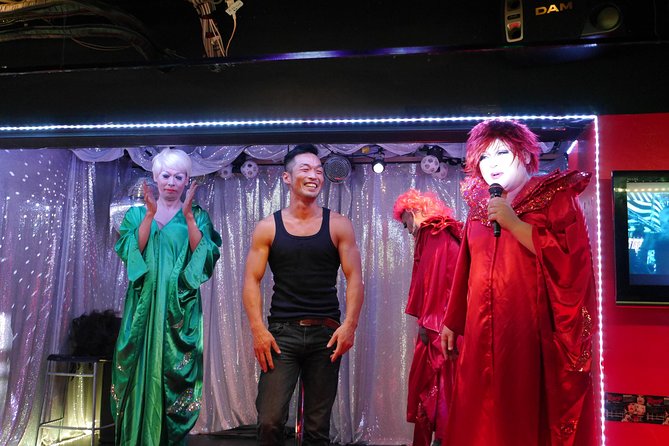
Osaka’s LGBTQ story comes in two very different chapters. In Shinsekai, you’ll hear about the discreet bars and saunas that once gave gay men a private social world. In Doyama, you’ll see a younger, more open scene spread across more than a hundred bars and clubs.
I like the way the tour links social history with real neighborhoods, rather than keeping the discussion in a museum or lecture room. I also like that dinner, two drinks, and the train ride are included, so you can focus on the city instead of counting costs. The main consideration is the tour’s narrow focus: it is built around gay male culture, especially in Shinsekai, so it may not match every LGBTQ visitor’s interests.
In This Review
- Key points at a glance
- Osaka LGBTQ life told through two neighborhoods
- Starting at Dobutsuen-Mae Station at 6:30 pm
- Shinsekai and the era of discreet gay life
- The 15-minute train ride north
- Doyama’s modern bar and club scene
- Why guide Kevin matters
- What the $96.79 price covers
- Who will get the most from this evening
- Practical details before you book
- Should you book Osaka: LGBTQ+ Life Past and Present?
- FAQ
- Where does the tour begin?
- What time does the experience start?
- How long does the tour last?
- Where does the tour end?
- What neighborhoods does the tour visit?
- Is transportation included?
- Is dinner included?
- Are drinks included at a bar?
- What is the minimum age?
- Can I cancel for a full refund?
Key points at a glance
- Two sides of Osaka nightlife: Visit old-school Shinsekai, then compare it with modern Doyama near Umeda.
- Guide Kevin’s personal approach: Kevin leads in English and helps make Osaka’s maze of station exits less stressful.
- A meal and two drinks included: You receive a light dinner, one drink with the meal, and another at an LGBTQ-oriented bar.
- Included train transfer: The approximately 15-minute ride between the two districts is part of the experience.
- Private group format: Only your own group takes part, making it easier to ask direct questions.
- A late-evening finish in Doyama: The tour ends in a nightlife district, with suggestions about where to go next.
Osaka LGBTQ life told through two neighborhoods
This three-hour experience begins at 6:30 pm near Dobutsuen-Mae Station and ends in Doyamacho, close to Osaka Station and Umeda. That route matters. You are not simply walking through one nightlife district. You are moving from a southern neighborhood associated with discreet, older forms of gay life to a northern district where LGBTQ venues are more visible and varied.
The contrast gives the evening a clear shape. Shinsekai supplies the social background and a look at what came before. Doyama supplies the present-day setting, where small bars, dance clubs, and other venues serve different tastes.
The tour is private, and only your group participates. That can make a real difference on a subject that may involve personal questions, local customs, and the less polished corners of city life. You can ask without worrying about a large audience, and the English-speaking guide can explain details that would be difficult to pick up by simply walking around alone.
A few more Osaka tours and experiences worth a look
- Osaka: LGBTQ+ Tour with Dinner and Drinks
★ 5.0 · 8 reviews
Starting at Dobutsuen-Mae Station at 6:30 pm
Your meeting point is Dobutsuen-Mae Station at 1-chōme-6-12 Taishi in Nishinari Ward. The station is near Shinsekai, but Osaka stations can have many exits, so pay close attention to the exact meeting instructions. Kevin has helped participants who were unsure how to navigate the station, a useful service in a city where a short walk can begin from several different underground exits.
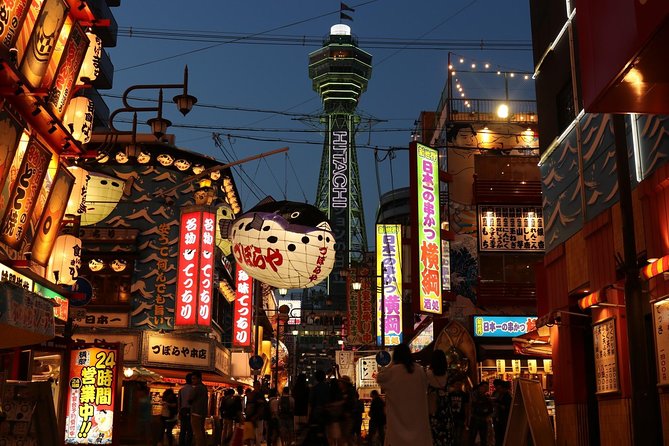
Starting at 6:30 pm puts the tour firmly into evening mode. Shinsekai’s food stalls, bright signs, and theatrical streets provide the first setting, but the purpose here is not simply sightseeing. You’ll use the neighborhood as a doorway into Osaka’s LGBTQ past.
The timing also allows the light meal to fit naturally into the evening. You receive a meal and one alcoholic or non-alcoholic drink at a local restaurant. The food is described as light, so do not book this expecting a full dinner with several courses. It is better understood as a practical meal break that keeps the three-hour outing moving.
Shinsekai and the era of discreet gay life
Shinsekai is widely known for Osaka-style food and flashy sights. On this tour, you look past that surface to learn about the older gay social world that existed behind it.
The discussion centers on a period when many gay men in Japan married women and kept their same-sex lives private. Membership bars and gay saunas offered places to meet, socialize, and find companionship away from public view. The experience presents this past as recent enough to matter, not as a distant chapter sealed away in history.
That is one of the strongest parts of the route. You are standing in an ordinary working neighborhood while hearing how social pressure shaped private lives. The setting helps you understand that LGBTQ history is not limited to famous landmarks. It also lives in bars, back rooms, routines, and the choices people made to get through daily life.
The tour also touches on the change toward greater openness. Some men who once kept one foot outside public view now live more openly, though the description does not suggest that every old barrier has disappeared. That balance is useful. You get a sense of progress without being handed a simple story of total acceptance.
Shinsekai may be the less immediately glamorous stop. If you want a fast parade of nightlife venues, the first two hours could feel slow. Its value is in the conversation and the local context. You are learning to read the neighborhood through a social lens rather than simply collecting photos.
The 15-minute train ride north
After about two hours in Shinsekai, you take a train for roughly 15 minutes to Doyama. Transit is included, which removes one small but annoying part of planning. You do not need to work out the fare or figure out the best route while also trying to follow the group.
The ride also creates a useful break between the two moods. The evening shifts from a discussion of hidden and semi-hidden life to an area with a much more visible LGBTQ presence. Since the guide stays with you, this is not just a transfer. It becomes part of the way the tour explains Osaka’s geography.
Doyama is in Kita Ward, close to Osaka Station and Umeda. The tour ends there, so you can continue your night without returning to the starting point. That is especially handy if your hotel or evening plans are in northern Osaka.
A completely different way to spend a day in Osaka:
- Osaka Go Karting Tour with Funny Costume
★ 5.0 · 2,658 reviews - Osaka Castle: Museum and Tower Entry Ticket
★ 4.5 · 2,380 reviews - Osaka: Shinsekai Food Tour with 13-15 Dishes at 5 Eateries
★ 4.8 · 2,204 reviews - Osaka Food Tour: 13 Dishes at 5 Local Eateries
★ 5.0 · 2,149 reviews
Doyama’s modern bar and club scene
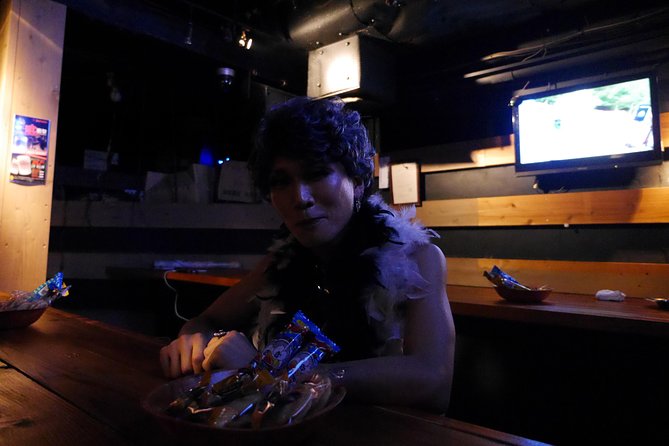
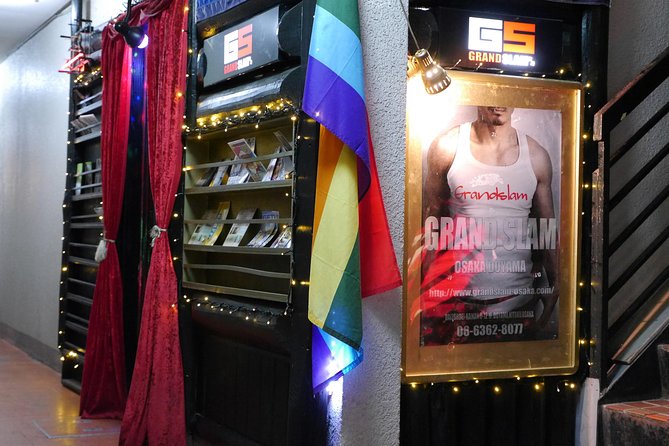
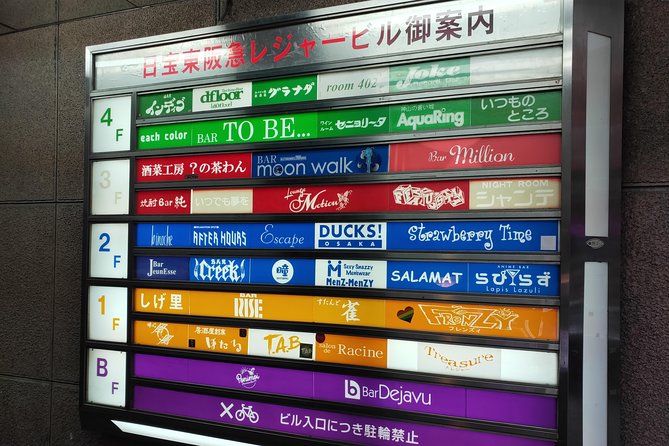
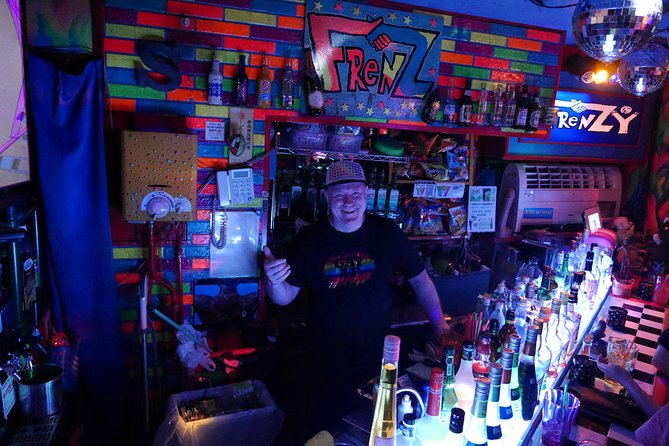
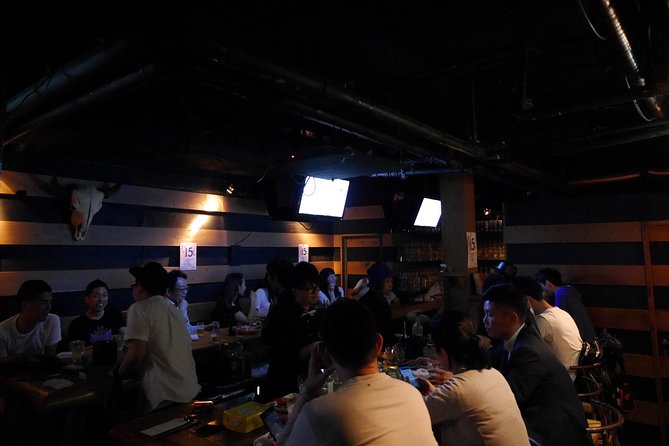
Doyama presents a different kind of gay culture. It is open enough to be found, but not framed as a loud public statement. The area includes more than a hundred bars and other venues, ranging from tiny bars to larger dance clubs. The focus is on gay men, younger people, admirers, and those young at heart, with different styles and social settings mixed together.
You should not expect to visit all those venues during one hour. The point is to walk through the district, understand its layout, and get an introduction before stopping at one LGBTQ-oriented bar for your included drink.
That drink is the second beverage covered by the tour. It may be alcoholic, but the experience also includes a non-alcoholic drink with dinner, and Japan’s legal drinking age is 20. The minimum age for joining is also 20, so this is not an outing for younger participants.
The Japanese-speaking ability of the guide is particularly useful here. Small bars can feel hard to approach when you do not know the language or local etiquette. Having an English-speaking guide who can also communicate in Japanese makes the area more accessible and can help you understand what kind of venue you are entering.
The Doyama portion is also where the tour becomes most flexible. The group can stop for the included drink, talk about the area, and finish with suggestions about where you might go next. The guide is not described as judgmental or prescriptive, so you can ask for directions that fit your own mood rather than being pushed into a fixed nightlife plan.
Why guide Kevin matters
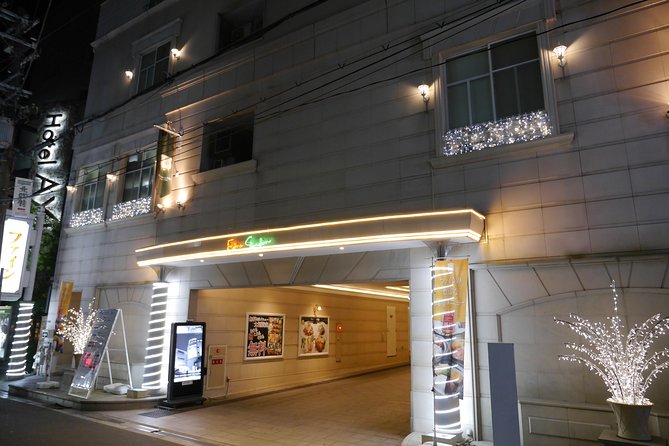
A city nightlife walk depends heavily on the guide. Kevin is the named guide associated with this experience, and his role goes beyond pointing out streets. He explains the area’s social background, answers questions, and helps bridge the language gap in Doyama.
His approach is informal. The evening is meant to feel more like friends walking around with a shared interest than a formal classroom tour. That tone suits the subject. LGBTQ history can become stiff when presented as a list of dates and facts, while an easy conversation gives you room to ask about the things you actually notice.
Kevin also appears to be attentive to practical problems. If you are confused by Osaka’s many station exits, meeting him can be easier than trying to guess which street corner the group means. Still, you should arrive with enough time to find Dobutsuen-Mae Station and confirm the exact meeting point. Help at the station is useful, but it is not a substitute for reading your booking details.
The evening may also include a karaoke session, depending on how the night unfolds. The provided information connects karaoke with the experience’s relaxed ending, but it does not promise it as a fixed stop. Treat it as a possible extra rather than a guaranteed part of the schedule.
What the $96.79 price covers
At $96.79 per person, the cost is not simply an admission fee. It covers about three hours with a local LGBTQ guide, a light dinner, one drink with that meal, a second drink at an LGBTQ-oriented bar, and transit between Shinsekai and Doyama.
That bundle makes the price easier to assess. Osaka is easy to explore cheaply on your own, but an independent visit would not automatically give you the historical explanation, a Japanese-speaking escort, or a clear introduction to Doyama’s many small venues. You would also pay separately for food, drinks, and the train.
The value is strongest if you are new to Osaka or want social context rather than a self-guided bar crawl. If you already know Doyama well, speak Japanese, and prefer choosing every stop yourself, the price may feel less attractive. The tour gives you access and orientation, not an unlimited nightlife package.
Group discounts are available, and the activity is booked as a private experience for your own group. That makes the per-person price more reasonable for friends traveling together, particularly if you value privacy and want to ask direct questions.
Who will get the most from this evening
I would recommend this experience to an LGBTQ visitor who wants to understand Osaka beyond its food districts and major sights. It suits someone who is curious about how gay life changed from discreet membership spaces to a more visible bar scene.
It is also a good choice if you are traveling alone and want a guided introduction to nightlife without having to enter unfamiliar bars by yourself. The private format can make the evening feel less exposed, while the guide provides a practical bridge into Doyama.
Couples and small groups may like the flexible ending. You get a structured introduction, then finish in a district where you can continue on your own. The tour is also useful for visitors who want an English-speaking guide with Japanese language ability.
I would think twice if your main interest is lesbian, bisexual, transgender, or queer nightlife outside the gay male scene described here. The experience is explicitly centered on gay male culture, especially in its Shinsekai history and Doyama bar focus. It may still be interesting, but you should book with realistic expectations.
You should also be comfortable with walking through nightlife areas and using public transportation. The information says most participants can take part, but it does not provide a detailed accessibility statement, so contact the provider before booking if you have specific mobility needs.
Practical details before you book
The experience starts at 6:30 pm and lasts about three hours. You begin at Dobutsuen-Mae Station and finish in Doyamacho, within walking distance of Osaka Station and Umeda Station. Because the route is one-way, plan your evening around ending in northern Osaka rather than returning to Shinsekai.
Confirmation arrives when you book, and a mobile ticket is available. The activity requires decent weather. If poor weather causes cancellation, you can choose another date or receive a full refund.
You can cancel for a full refund up to 24 hours before the start time. Changes or cancellations made inside that 24-hour window are not accepted or refunded, so keep the local start time in mind.
Only the listed food, drinks, and transit are included. Any extra food or drinks are your responsibility. Since the tour ends in Doyama, bring a little extra money if you plan to continue at another bar or club.
Should you book Osaka: LGBTQ+ Life Past and Present?
Book it if you want more than a list of nightlife addresses. The best reason to go is the contrast between Shinsekai and Doyama, paired with a guide who can explain both the social past and the practical present.
The included meal, two drinks, and train ride add solid value at $96.79, especially for a first evening in Osaka. Kevin’s friendly, open style is another major strength, and his help with station navigation can save you an early dose of Osaka confusion.
Skip it if you want a broad LGBTQ tour covering every part of the community, or if you prefer a completely self-directed night. For the right reader, though, this is a thoughtful way to meet Osaka through its people, neighborhoods, and changing gay culture.
FAQ
Where does the tour begin?
It begins at Dobutsuen-Mae Station, at 1-chōme-6-12 Taishi in Osaka’s Nishinari Ward.
What time does the experience start?
The start time is 6:30 pm.
How long does the tour last?
The experience lasts approximately three hours.
Where does the tour end?
It ends in Doyamacho in Kita Ward, within walking distance of Osaka Station and Umeda Station.
What neighborhoods does the tour visit?
The route includes Shinsekai in southern Osaka and Doyama in northern Osaka.
Is transportation included?
Yes. The train transit between Shinsekai and Doyama is included. The ride takes about 15 minutes.
Is dinner included?
Yes. You receive a light meal and one alcoholic or non-alcoholic drink at a local restaurant.
Are drinks included at a bar?
Yes. One additional drink is included at an LGBTQ-oriented bar in Doyama.
What is the minimum age?
The minimum age is 20. Japan’s legal drinking age is also 20.
Can I cancel for a full refund?
Yes. You can cancel at least 24 hours before the local start time for a full refund. Cancellations or changes made less than 24 hours before the start time are not refunded or accepted.
Just added around Osaka
- Nara Day Trip from Osaka with a Licensed Guide★ 5.0 · 3 reviews
- Osaka Early Morning Osaka Castle Tour Avoid Crowds★ 5.0 · 3 reviews
- Guided Tour of Some Attractions in Osaka by Private Car★ 5.0 · 3 reviews
- Private Transfer Between Kyoto and Kansai Airport KIX★ 5.0 · 3 reviews
- Shared Arrival Transfer: Osaka Itami Airport to Osaka City★ 5.0 · 3 reviews
- Osaka: Sushi Making Class and Dotonbori Food Tour★ 4.7 · 3 reviews
- Osaka Night Photography Workshop★ 5.0 · 3 reviews
- Kyoto Full day Tour Kinkakuji, Kiyomizu-dera and Fushimi Inari★ 4.5 · 3 reviews