
Reviewed · OSAKA BIKE & CYCLING TOURS
Osaka E-Bike Tour with a Local Guide
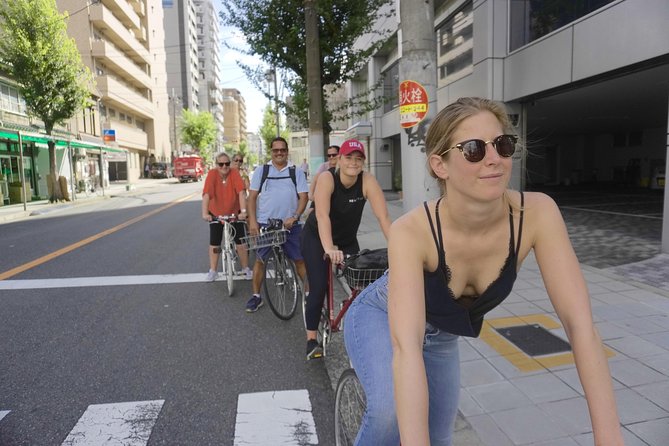
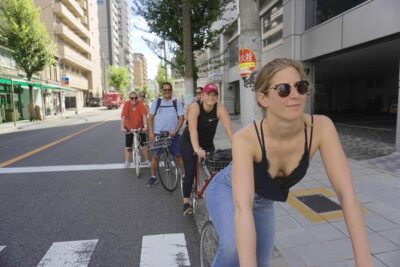
Osaka reveals itself best at street level, and this three-hour e-bike ride lets you cover far more ground than a walking tour. You pedal through temple grounds, castle parks, shopping districts, and back streets, with a local guide pointing out how old customs fit into modern Osaka.
I like the mix of famous sights and everyday neighborhoods, especially Denden Town and America Mura. I also like the careful routing on mostly flat streets, with guides such as Ko and Sukuna Ueda keeping the group together and stopping often for history, photos, and questions.
The main thing to consider is the distance: you’ll ride about 17 to 18 kilometers. Osaka cycling still means sharing space with pedestrians, bicycles, and cars, so this suits confident riders who are at least 140 centimeters tall and fit enough for a half-day ride.
In This Review
- Key points at a glance
- Why an e-bike works so well in Osaka
- Starting in Nipponbashi and entering Denden Town
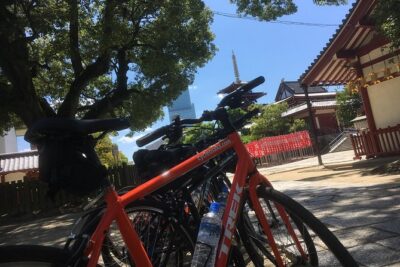
- Shitennoji and Osaka’s Buddhist traditions
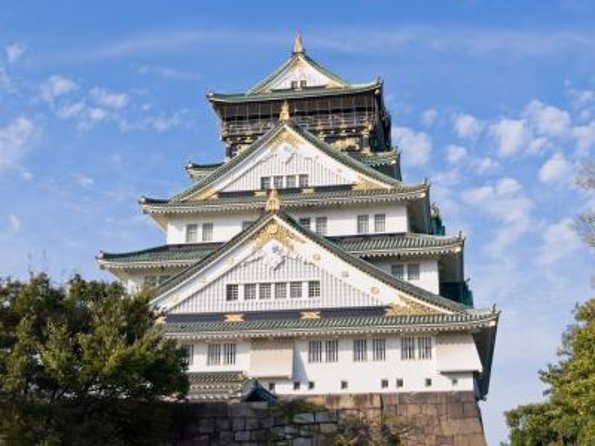
- Osaka Castle through its broad park
- A pause at Nakanoshima Park
- America Mura, Osaka’s casual shopping district
- Finishing at Namba Yasaka Shrine
- The guides and the small-group feel
- Safety, fitness, and what to bring
- Is $59.56 a good value?
- Who should book this Osaka e-bike tour?
- Should you book it?
- FAQ
- How long is the Osaka e-bike tour?
- How far will I ride?
- What attractions are included?
- Where does the tour start?
- Where does the tour end?
- Are the bicycle and helmet included?
- How tall do I need to be to ride?
- Is luggage storage available?
- What happens if the weather is poor?
- Can I cancel for a full refund?
Key points at a glance
- About 17 to 18 kilometers in three hours: A practical way to connect several parts of Osaka without spending the day on foot or trains.
- Small group riding: The booking information lists a maximum of five people, while the tour description refers to groups of up to eight, so confirm the exact group size when you book.
- Local guides with personality: Ko, Sukuna Ueda, and Scona are names associated with this experience, with English-language guiding and a strong focus on Osaka culture.
- A smart mix of stops: You’ll see Osaka Castle and Shitennoji, then shift to Nakanoshima, Denden Town, America Mura, and Namba Yasaka Shrine.
- Mostly quieter, flatter roads: The route is planned to reduce traffic, though you still need basic awareness around cars, bicycles, and pedestrians.
- Bring only what you need: Bicycles and helmets are included, but there is no luggage storage at the meeting point.
Why an e-bike works so well in Osaka
Osaka is spread out. Its best-known places are not all clustered around one station, and moving between them on foot can eat up much of a day. An e-bike gives you a wider view of the city without turning the outing into a test of endurance.
You still get the feel of Osaka at street level. You pass through local districts rather than looking out from a train window, and the guide can pause when a neighborhood, shrine, or park deserves a closer look. The electric assist matters most when you are covering long stretches and want to save energy for the stops.
This is not a racing tour. The pace is built around staying together, hearing the guide, and making regular stops. The route includes roughly 17 to 18 kilometers of riding, with about 30 minutes at most major stops. That makes the tour active, but not rushed in the way a point-to-point cycling workout would be.
The road experience is one reason the guide matters. Osaka streets can bring together cars, bicycles, pedestrians, and narrow side roads. The route aims for quieter streets, and guides are attentive to where the group is at all times. Still, you should be comfortable braking, turning, and watching for others.
More rides by bike:
- 5-Hour Osaka Bike Tour to the Neighborhood of Osaka Castle
★ 5.0 · 319 reviews - One-Day Osaka Bike Adventure: 5–6 Hours
★ 5.0 · 246 reviews - Eat, Drink & Cycle: Osaka Foodie Bike Tour
★ 5.0 · 224 reviews
Starting in Nipponbashi and entering Denden Town
The tour begins at the Lawson Nihombashinishi 1 Chome Store, at 1-chōme-3-19 Nipponbashinishi in Naniwa Ward. The starting point is near public transportation, and the activity returns to the same place at the end.
The first stop is Nipponbashi Denden Town, Osaka’s anime and electronics district. You get about 15 minutes to look around this unusual shopping area, known for its pop-culture shops and eccentric character. It is a quick introduction to a side of Osaka that does not appear on a standard castle-and-temple sightseeing route.
The short stop means you should think of Denden Town as a taste rather than a dedicated shopping session. If you have specific stores in mind, three hours will not leave room for a long browse. The value here is seeing how Osaka’s commercial districts change from one block to the next, especially when the guide explains the local setting.
This is also a useful early test of the bikes and the group pace. You can settle into riding before the longer sections of the route begin.
Shitennoji and Osaka’s Buddhist traditions
From Denden Town, the ride continues to Shitennoji, where you spend about 30 minutes walking around the temple grounds. The guide places Japanese Buddhism in the context of modern life, which gives the stop more purpose than a quick photo outside a historic building.
Shitennoji is one of the tour’s quieter cultural pauses. After the colorful shops of Denden Town, the temple offers a change in mood and subject. You can listen to an explanation of Buddhist customs, then consider how religious traditions continue alongside Osaka’s dense urban life.
The stop is free to enter according to the tour details, though the experience does not promise access to every paid area or interior. Plan on walking around the grounds rather than treating this as a full temple visit with extensive free time.
I would pay attention here if you want cultural context, not only landmarks. The guide’s role is particularly useful because the tour connects the physical site with everyday Japanese customs. That kind of explanation can be hard to pick up while sightseeing alone.
Osaka Castle through its broad park

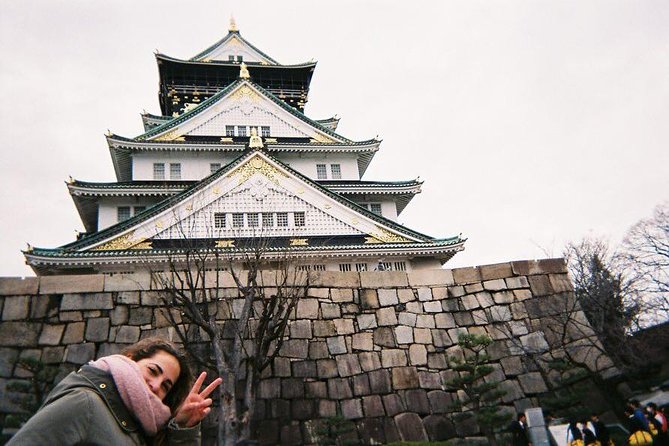
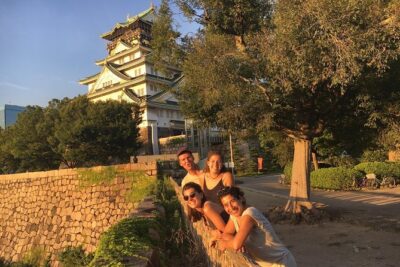
Osaka Castle is given about 30 minutes, including a ride through the large park around the castle. This is one of the best sections for photographs, especially because you experience the grounds by bicycle rather than arriving only at the main entrance.
The park gives you room to appreciate the castle setting. The route is especially appealing during cherry blossom season, when the surrounding trees add color to the ride. The experience focuses on the park and exterior surroundings, so do not book this tour expecting a long interior visit to the castle museum.
That limitation is also part of the tour’s strength. You are not spending most of the three hours in one attraction. Instead, the castle becomes one chapter in a larger picture of Osaka, followed by neighborhoods and green spaces that show how the city functions around its major landmarks.
The castle section can also be physically pleasant after the first urban riding stretches. Several people specifically enjoyed riding through the park, and the mostly flat route helps keep the outing manageable. In hot weather, though, the open park can feel exposed. Bring water and dress for the conditions.
A few more Osaka tours and experiences worth a look
- Osaka: Main Sights and Hidden Spots Guided Walking Tour
★ 4.9 · 702 reviews - Osaka: Guided Food Tour with 12 Dishes at 4 Local Eateries
★ 5.0 · 533 reviews - Osaka: Namba Pub Bar Crawl with a Local Guide
★ 4.9 · 424 reviews - Osaka: Izakaya Bars Guided Walking Tour
★ 4.9 · 385 reviews
A pause at Nakanoshima Park
At Nakanoshima Park, you stop for about 30 minutes in the rose garden and have time for a small picnic-style break. This is a useful change of rhythm. The tour is not only about checking off sights, and the park gives you a place to rest while still staying in the middle of Osaka.
Nakanoshima is an island between rivers, and the park offers a calmer setting than the surrounding streets. The rose garden is the focus of the stop, though the exact appearance depends on the season. You might find flowers in full display, or you might find the garden more subdued outside its peak period.
The picnic wording does not mean a meal is supplied. Treat this as a rest stop, and bring food only if you want something to eat. Because there is no luggage storage, keep anything you bring compact and easy to carry.
I like this stop for practical reasons. A 17 to 18 kilometer ride needs pauses, and a park is a better place to catch your breath than a narrow sidewalk. It also keeps the tour from feeling like a nonstop sequence of traffic crossings and historical explanations.
America Mura, Osaka’s casual shopping district
The next major neighborhood is America Mura, also called America Town. You get roughly 30 minutes to browse this hip, casual shopping district, known for a younger style and a different feel from the traditional temple and castle stops.
This part of the tour helps explain Osaka through its current street culture. The contrast is the point: within the same outing, you move from Buddhist architecture to pop-culture retail, then into a modern shopping area with its own look and energy.
The stop is better for getting a feel for the district than for serious shopping. Thirty minutes goes quickly, particularly if you want to enter several stores. You’ll need to keep an eye on the meeting time and avoid buying anything bulky, since the tour does not provide luggage storage.
For a first look at Osaka, this is a strong inclusion. A standard sightseeing route can leave you with a polished picture of temples and monuments. America Mura shows you a more casual side of the city and gives the guide another chance to explain local habits and neighborhoods.
Finishing at Namba Yasaka Shrine
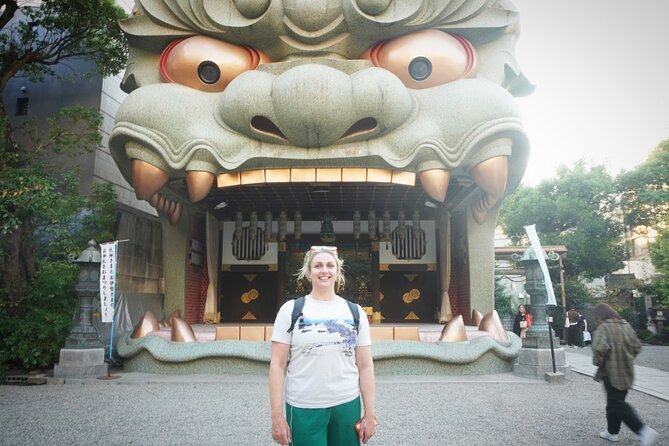
The final stop is Namba Yasaka Shrine, where you spend about 30 minutes. The guide introduces Shinto and gives you time to enter the shrine before the group gathers to review the experience.
This closing stop works well because it returns the focus to Japanese religious life after the modern districts. Shinto and Buddhism are not presented as isolated museum subjects. Instead, the guide can explain how they fit into daily life in Japan, using the shrine as a place to make those ideas concrete.
Ending here also gives the tour a natural pause before returning to the starting point. You can ask final questions, compare the different districts you have seen, and get a clearer sense of Osaka’s layout.
The tour finishes back at the original meeting point. Since the activity ends where it starts, you do not need to arrange a separate pickup or figure out where your bicycle ride leaves you.
The guides and the small-group feel
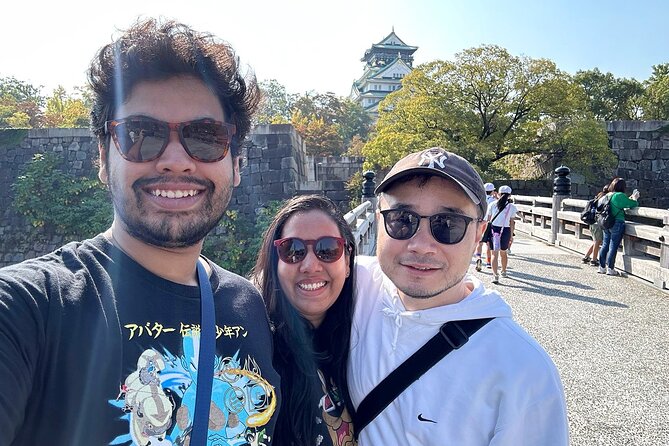
Ko is repeatedly identified as an Osaka native who enjoys sharing his home city. His guiding style combines local stories, history, humor, and practical attention to safety. His English is described as very strong, and he is also willing to take photos during the ride.
Sukuna Ueda is another guide connected with the experience. The tour under his lead has been described as patient and thoughtful, including an effort to find shade during hot weather. Scona is also named as a guide who kept the group together and explained the neighborhoods along the route.
Guide assignments can vary, so you should not assume one particular person will lead your departure. The important point is the local perspective. You are not simply following a route between attractions. You can ask about Osaka’s customs, districts, and history as the city passes around you.
The group size deserves a small note of caution. The description emphasizes groups limited to eight, while the additional booking details state a maximum of five participants. Either way, this is intended to be a small outing rather than a large bike convoy. Check the current confirmation for the exact number attached to your date.
Safety, fitness, and what to bring
You need to be taller than 140 centimeters to ride the e-bike safely. You also need enough fitness to cycle 17 to 18 kilometers, even with electric assistance and rest stops.
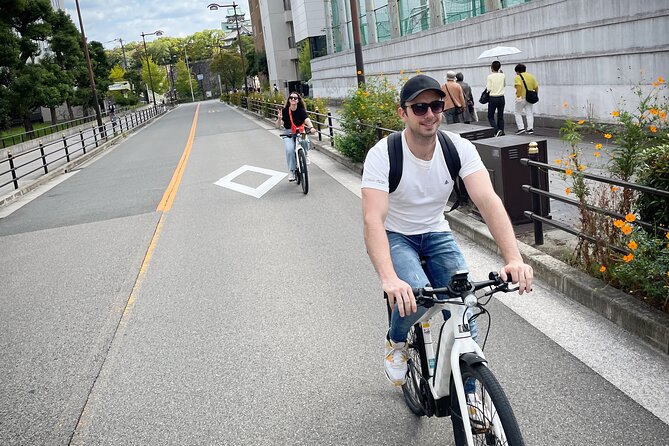
The streets are described as mostly flat, and the route is planned with as little traffic as possible. That makes the ride more approachable, but it does not remove the need for basic city-cycling skills. You will encounter pedestrians, bicycles, and cars, particularly on busier streets.
I would choose this tour if you can ride confidently in an urban setting and follow a guide’s signals. I would not choose it for a child or adult who is uneasy around traffic, has limited bicycle control, or expects a completely separated cycle path.
A helmet and bicycle are included. You should bring water, sun protection in warm weather, and only a small personal bag. The lack of luggage storage is an easy detail to miss, so leave suitcases and larger shopping bags elsewhere.
Weather matters. The tour requires good conditions and may be canceled in poor weather, with a choice of another date or a full refund. If you cancel yourself, you receive a full refund only when you do so at least 24 hours before the start time. Cancellations inside 24 hours are not refunded.
Is $59.56 a good value?
At $59.56 per person, this is reasonably priced for an approximately three-hour guided ride that includes bicycle use, a helmet, and several widely separated parts of Osaka. The real value is not admission savings, since the listed stops are free. You are paying for the bike, route planning, local explanations, safety management, and the ability to see more in one morning or afternoon.
Compared with a walking tour, the e-bike gives you a much wider range. Compared with arranging the same route alone, it removes the work of planning streets that are comfortable for a group. You also get context at the stops instead of simply marking them on a map.
The price makes less sense if you want long visits inside each attraction or a dedicated shopping trip. The route gives you a broad overview, not deep time at Osaka Castle, Denden Town, or America Mura. Think of it as an orientation tour that helps you decide where to return later.
I especially like it as an early Osaka activity. You cover major districts quickly, learn how they relate to each other, and finish with a better sense of where to spend the rest of your stay.
Who should book this Osaka e-bike tour?
This ride is a good match for you if you want to:
- See several major areas during a single half-day
- Prefer outdoor sightseeing to long indoor visits
- Learn history and customs from a local guide
- Ride confidently in city traffic
- Mix temples and shrines with shopping districts and parks
- Get your bearings early in an Osaka visit
It is less suitable if you want a slow temple tour, extensive time inside Osaka Castle, or a fully traffic-free ride. It is also a poor fit if you need to carry luggage or large shopping purchases during the activity.
Should you book it?
Book this tour if you want a fast, friendly introduction to Osaka that goes beyond the usual central shopping streets. The combination of Osaka Castle, Shitennoji, Nakanoshima Park, Denden Town, America Mura, and Namba Yasaka Shrine gives you a useful cross-section of the city in only three hours.
I would choose it early in a trip, when the 17 to 18 kilometer route can help you decide where to return on foot or by train. Skip it if you are not comfortable cycling around people and vehicles, or if your priority is spending substantial time inside individual attractions.
FAQ
How long is the Osaka e-bike tour?
The tour lasts approximately three hours.
How far will I ride?
You should be physically fit enough to ride about 17 to 18 kilometers.
What attractions are included?
The route includes Nipponbashi Denden Town, Shitennoji, Osaka Castle, Nakanoshima Park, America Mura, and Namba Yasaka Shrine.
Where does the tour start?
It starts at the Lawson Nihombashinishi 1 Chome Store, located at 1-chōme-3-19 Nipponbashinishi, Naniwa Ward, Osaka, 556-0004, Japan.
Where does the tour end?
The activity ends back at the original meeting point.
Are the bicycle and helmet included?
Yes. Use of the bicycle and a helmet are included.
How tall do I need to be to ride?
You must be taller than 140 centimeters to safely ride the e-bike.
Is luggage storage available?
No. The activity does not provide storage for luggage.
What happens if the weather is poor?
If poor weather causes the tour to be canceled, you will be offered another date or a full refund.
Can I cancel for a full refund?
Yes, if you cancel at least 24 hours before the experience start time. Cancellations made less than 24 hours before the start time are not refunded.
Just added around Osaka
- Osaka Early Morning Osaka Castle Tour Avoid Crowds★ 5.0 · 3 reviews
- Guided Tour of Some Attractions in Osaka by Private Car★ 5.0 · 3 reviews
- Nara Day Trip from Osaka with a Licensed Guide★ 5.0 · 3 reviews
- Private Transfer Between Kyoto and Kansai Airport KIX★ 5.0 · 3 reviews
- Shared Arrival Transfer: Osaka Itami Airport to Osaka City★ 5.0 · 3 reviews
- Osaka: Sushi Making Class and Dotonbori Food Tour★ 4.7 · 3 reviews
- Osaka Night Photography Workshop★ 5.0 · 3 reviews
- Kyoto Full day Tour Kinkakuji, Kiyomizu-dera and Fushimi Inari★ 4.5 · 3 reviews
Osaka Bike & Cycling Tours, compared.
5-Hour Osaka Bike Tour to the Neighborhood of Osaka Castle
Read our review →
Osaka Half-day E-bike Adventure: Minoh Falls & Katsuoji Temple
Read our review →Browse the lists this tour appears in